Attractions and Places To See around Margaret Marsh - Top 20
Best attractions and places to see around Margaret Marsh include its tranquil rural setting within the Blackmore Vale in North Dorset, England. The hamlet itself features the historic Church of St Margaret, a Grade II* listed building with 15th-century and 13th-century elements. The surrounding Blackmore Vale offers a landscape of open fields, hedgerows, and small hills, providing a base for exploring regional historical sites and natural features.
Best attractions and places to see around Margaret Marsh
- The most popular attractions…
Last updated: May 25, 2026
Win Green Summit
Highlight • Historical Site
Tip by

Shillingstone Railway Station & Museum
Highlight (Segment) • Historical Site
Tip by

Sign up now to discover places like this
Get recommendations on the best single tracks, peaks, & plenty of other exciting outdoor places.
Sign up for free
Hambledon Hill Iron Age hill fort
Highlight • Viewpoint
Tip by
Zig Zag Hill Climb
Highlight (Segment) • Viewpoint
Tip by

Gold Hill, Shaftesbury
Highlight • Climb
Tip by
Sign up for free to discover even more attractions around Margaret Marsh.
Sign up for free
Already have an account?
Start today with a free account
Your next adventure awaits.
Login or Signup


Tips from the Community


Shillingstone railway station was a station on the Somerset and Dorset Joint Railway (S&DJR), serving the village of Shillingstone in the English county of Dorset. Shillingstone is the last surviving example of a station built by the Dorset Central Railway (one of the forerunners of the S&DJR). The station closed in 1966, when services were withdrawn from the S&DJR route. Since 2001, enthusiasts have been working to re-open the station as a heritage railway attraction.[1] The main building has now been renovated, and opened to the public as a museum, shop and refreshment room in 2008.[ The station was opened on 31 August 1863 by the Somerset and Dorset Railway, although planned and designed by one of its two predecessors, the Dorset Central Railway. Initial train services were provided by the London and South Western Railway (LSWR). In 1875, the Midland Railway and the LSWR together took over a joint lease of the line, forming the Somerset and Dorset Joint Railway.
0
0
One of the most beautiful places in the south of England 🏴 and amazing views of Wiltshire and Dorset 🤩
0
0
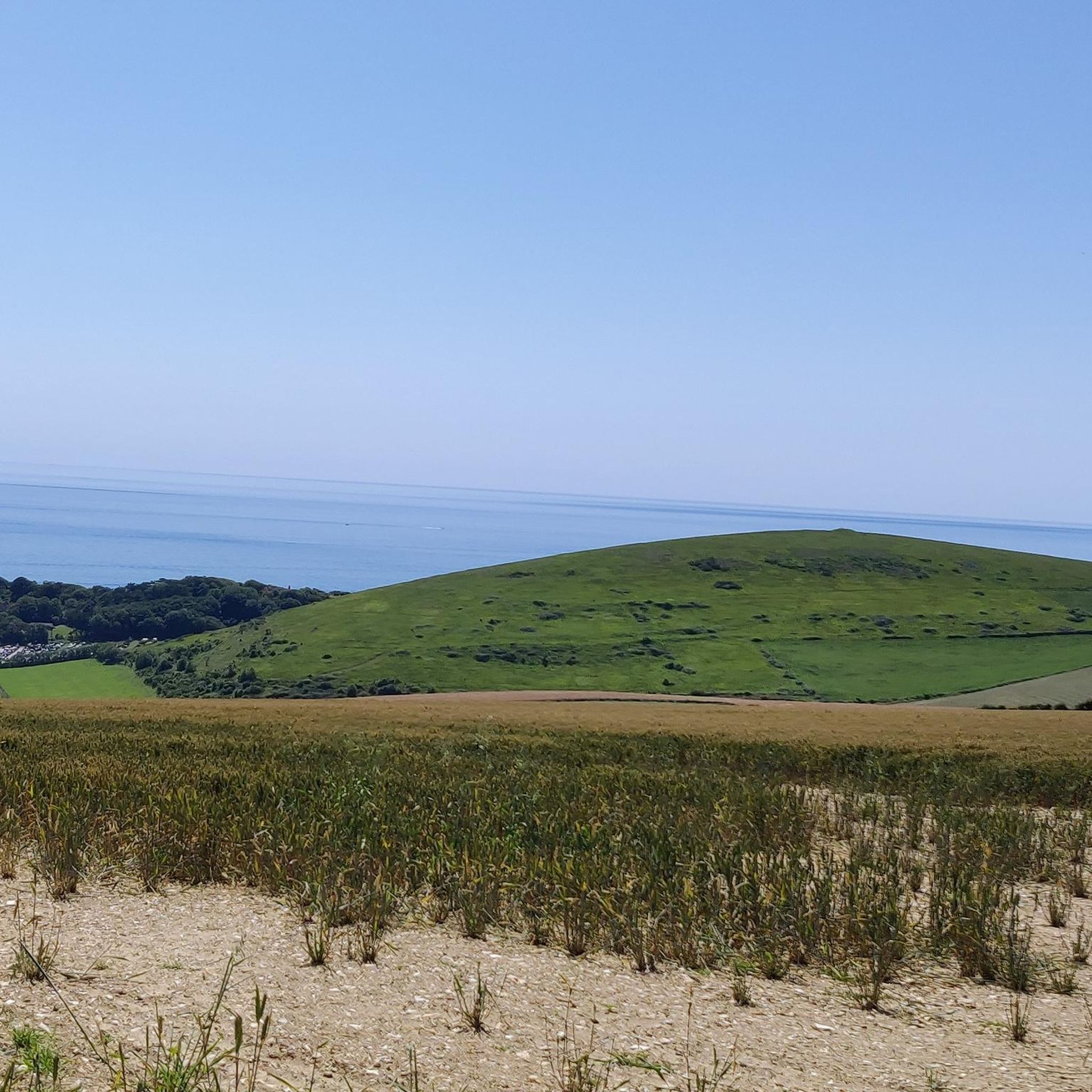
The hill is now a National Nature Reserve (NNR) with common plants including milkwort, salad burnet, horseshoe vetch, squinancywort, pyramidal orchid and wild thyme. Rarer species include bastard toadflax, meadow saxifrage, early gentian and dwarf sedge. Butterflies include dingy skipper, grizzled skipper, chalkhill blue and Adonis blue. In August 2014, Hambledon Hill fort was acquired by the National Trust for £450,000. The money to buy the hill had come from a Natural England grant and a legacy gift left to benefit Dorset countryside. The hillfort is a Scheduled Monument, as is the adjacent Neolithic causewayed camp.
2
0

Win Green at 277 m is the highest point on Cranbourne Chase. The tree topped summit also has a Bronze Age hill barrow, topography stone and trig point. Lots of great running loops from here as well as easy parking close by.
0
0

Not as stunning from below as from above!
2
0
Tip: We have been here three times over the last few years and each time we managed to get a table in the café at the top of the street. One of the most beautiful views in England is made even more beautiful with cream tea or another treat! Here you sit quietly and just wait until no one is in sight: and then quickly take your dream photo! In addition, the service is friendly and the prices are not too high. The view of Gold Hill is nowhere better than from here.
2
0
Frequently Asked Questions
What historical sites can I explore near Margaret Marsh?
Beyond the historic Church of St Margaret in the hamlet itself, you can visit the well-preserved Hambledon Hill Iron Age hill fort, which offers a glimpse into ancient history and panoramic views. Another significant site is Win Green Summit, the highest point in Cranborne Chase, crowned by beech trees atop a Bronze Age bowl barrow. The nearby town of Shaftesbury also features the foundations of Shaftesbury Abbey, established by King Alfred the Great.
Are there any natural viewpoints offering scenic views of the Blackmore Vale?
Yes, the region is rich in scenic viewpoints. Win Green Summit provides breathtaking panoramic views over the Blackmore Vale and Salisbury Plain, even stretching to the Isle of Wight on clear days. Hambledon Hill Iron Age hill fort also offers expansive views across the Blackmore Vale and the River Stour valley. You can also enjoy views from the top of Gold Hill in Shaftesbury.
What family-friendly attractions are available around Margaret Marsh?
Families can enjoy several attractions in the area. The Shillingstone Railway Station & Museum is a restored station with rolling stock and engines, offering a fun historical experience. Many of the natural sites like Win Green Summit and Hambledon Hill are suitable for family outings, with opportunities for walks and picnics. The North Dorset Trailway, a disused railway line, is also excellent for family walks and cycling.
Can I find easy hiking trails near Margaret Marsh?
Absolutely. The Blackmore Vale offers many gentle routes suitable for easy hikes. You can find several options, including a loop from Stour Provost to Duncliffe Wood Car Park and Duncliffe Trig Point, or the Hammoon Manor loop from Manston. For more details and routes, explore the Easy hikes around Margaret Marsh guide.
Are there options for mountain biking or road cycling in the area?
Yes, the region provides diverse cycling opportunities. For mountain biking, you can explore trails like the Hod Hill & Hambledon Hill route from Sturminster Newton or the Shaftesbury Singletrack. Road cyclists can enjoy scenic routes such as the 'Piglets in Pasture' loop from Stour Provost or the 'Gold Hill Organic Farm Café' loop from Todber. Find more routes in the MTB Trails around Margaret Marsh and Road Cycling Routes around Margaret Marsh guides.
What is the Church of St Margaret in Margaret Marsh known for?
The Church of St Margaret is the primary landmark within the hamlet itself. It is a Grade II* listed building, notable for its 15th-century tower and 13th-century font. Although much of the building was rebuilt in 1873, these older elements contribute to its historical charm, showcasing its construction from Shaftesbury Sandstone and Corallian limestone.
Where can I experience the literary heritage of the Blackmore Vale?
The Blackmore Vale has inspired notable literary figures. Thomas Hardy lived in Sturminster Newton for three years and featured the local mill and Colber Bridge in his writings. William Barnes, a poet known for his Dorset dialect works, also hailed from this area. Exploring towns like Sturminster Newton allows you to connect with this rich literary past.
What is Gold Hill in Shaftesbury, and why is it famous?
Gold Hill in Shaftesbury is a steep, cobbled street renowned for its picturesque cottages and stunning views over the Blackmore Vale. It gained widespread fame after being featured in a well-known 1973 Hovis bread advert, making it one of England's most iconic and photographed streets.
Is there a heritage railway or museum nearby?
Yes, the Shillingstone Railway Station & Museum is a restored station that serves as a mini-museum. Volunteers have worked to restore the station and lay track, with plans to extend it into a heritage railway service. It features some rolling stock and engines, and includes a cafe and shop.
What is the best time of year to visit Margaret Marsh and the surrounding Blackmore Vale?
The Blackmore Vale is beautiful year-round, but spring and summer (April to September) offer the most pleasant weather for outdoor activities like hiking and cycling, with lush green landscapes and blooming wildflowers. Autumn brings vibrant foliage, while winter offers crisp, quiet walks, though some facilities might have reduced hours.
Are there any notable woodlands or nature reserves to explore?
Yes, Duncliffe Wood is one of the oldest and largest woodland areas in North Dorset, offering waymarked trails for walks. Additionally, Hambledon Hill is a National Nature Reserve, recognized for its unimproved calcareous grassland and home to many rare plant and animal species, including various butterflies and orchids.
What do visitors enjoy most about the attractions around Margaret Marsh?
Visitors particularly appreciate the stunning panoramic views from viewpoints like Win Green Summit and Hambledon Hill. The historical significance of sites such as the Iron Age hill forts and the restored Shillingstone Railway Station is also highly valued. The tranquil rural setting and opportunities for peaceful walks through the Blackmore Vale are consistently highlighted as key draws.
Most popular attractions around Margaret Marsh

Get inspired with the komoot mobile app


Explore more
Still not found the Highlight you’re looking for? See guides of the top attractions in other regions:
