The best traffic-free bike rides around Sète
4.4
(123)
921
riders
67
rides
Gravel biking around Sète offers a diverse landscape situated between the Mediterranean Sea and the Thau Lagoon. The terrain features coastal plains, lagoon shores, and gentle hills, providing varied cycling experiences. Extensive cycling infrastructure, including paths along oyster farms and salt marshes, characterizes many routes. The region also includes sections along the historic Canal du Midi and the prominent Mont Saint-Clair hill.
Best no traffic gravel bike trails around Sète
- The most popular no traffic gravel bike trail is View…
Last updated: October 7, 2026
4.5
(13)
76
riders
Moderate gravel ride. Good fitness required. Mostly paved surfaces. Suitable for all skill levels.
4.4
(19)
86
riders
Easy gravel ride. Great for any fitness level. Mostly paved surfaces. Suitable for all skill levels.

4.3
(4)
26
riders
Moderate gravel ride. Good fitness required. Mostly paved surfaces. Suitable for all skill levels.
5
riders
119km
08:37
1,300m
1,300m
Hard gravel ride. Very good fitness required. Mostly paved surfaces. Suitable for all skill levels.
4.7
(3)
9
riders
Moderate gravel ride. Good fitness required. Mostly paved surfaces. Suitable for all skill levels.
Get access to more routes and recommendations from other explorers.
Already have an account?
Our route recommendations are based on thousands of hikes, rides, and runs completed by other people on komoot.
Start today with a free account
Your next adventure awaits.


Tips from the Community

The view plunges over the Thau lagoon and its immense checkerboard of shellfish farms. These regular alignments are the breeding facilities where the oysters and mussels of the lagoon are produced. Bouzigues holds a special place in this history: in 1925, Antoine Louis Tudesq and other Bouzigues oyster farmers developed the "Pyramid" technique, which contributed to the development of shellfish farming in the lagoon. Thus, the panorama allows us to read the landscape differently: behind this vast expanse of water lies a real production area, shaped for over a century by the work of the "sea farmers".
0
0
From La Catonnière, the view plunges over the étang de Thau and its immense checkerboard of shellfish tables. These regular alignments are the breeding facilities where the lagoon's oysters and mussels are produced. Bouzigues holds a special place in this history: in 1925, Antoine Louis Tudesq and other Bouzigues oyster farmers developed the "Pyramid" technique, which contributed to the development of shellfish farming in the étang. The panorama thus allows us to read the landscape differently: behind this vast expanse of water lies a true production space, shaped for over a century by the work of the "sea peasants".
0
0
The greenway runs here on a narrow strip of land between the Étang de la Moulière and the Crique de l’Angle. To the south, the view opens up beyond the Crique de l’Angle over the Étang de Thau, then over Sète, dominated by the silhouette of Mont Saint-Clair (183 m).
0
0

This remarkable structure composed of mobile aqueducts allows boats navigating the Canal du Midi to cross the small river Libron. Created in 1855 by Urbain Maguès, an engineer also responsible for the bridge-canal of Béziers.
0
0

⚓ Écluse du Bagnas – one of the last locks on the Canal du Midi The Écluse du Bagnas is located near Agde at the eastern end of the Canal du Midi. It was built around 1676 and is therefore one of the historic locks from the canal's early days. 📍 Canal kilometer: approx. 235.3 km from Toulouse ⚙️ Type: single lock with one chamber 🌊 Altitude: only about 2 meters above sea level 🚤 Distance to Les Onglous / Étang de Thau: only just under 5 km Historically, the lock chambers here were about 30 meters long and 6 meters wide at the gates. The eastern section of the Canal du Midi was later modernized for larger ships; today, the usable lock dimensions in this area are around 40.6 × 5.85 meters. Its location is particularly interesting: the Bagnas lock is situated in the middle of a wetland and separates different water areas here. Behind it, you are practically on the final straight of the Canal du Midi – via Les Onglous, the canal flows into the Étang de Thau, and from there, there is the connection towards Sète and the Mediterranean Sea. 🌊🇫🇷 After more than 235 kilometers of canal route, you have almost reached the Mediterranean Sea here – a small but historically interesting structure at the end of the Canal du Midi. 🚲👌🏼 Greetings Marcus ✌🏼
1
0
😂😂 Apparently, I was already thinking about the second cold blonde. 🫣🍺 🚲 On the Canal du Midi near Vias A really beautiful section on the Canal du Midi near Vias. Sometimes directly along the water, sometimes under shady trees, and in between on small, narrow paths through reeds and nature. 🌿🚲 The alternation between well-developed cycle paths, gravel, and small natural passages makes the route varied. In addition, there are always beautiful views of the canal, passing boats, and that typical relaxed atmosphere of Southern France. 🇫🇷☀️ Especially around Vias, the Canal du Midi can be wonderfully explored by bike – quiet, scenically beautiful, and definitely a section that is worth riding a little slower to enjoy the surroundings. 👌🏼 Greetings Marcus ✌🏼
1
0
Built around 1676, the Bagnas lock is a simple lock on the Canal du Midi, located between Agde and the Étang de Thau. It is one of the last structures on the canal before its outlet at Les Onglous, where the canal joins the lagoon. In the immediate vicinity of Bagnas, a vast coastal wetland, the lock is also associated with a spillway intended to drain excess water.
3
0

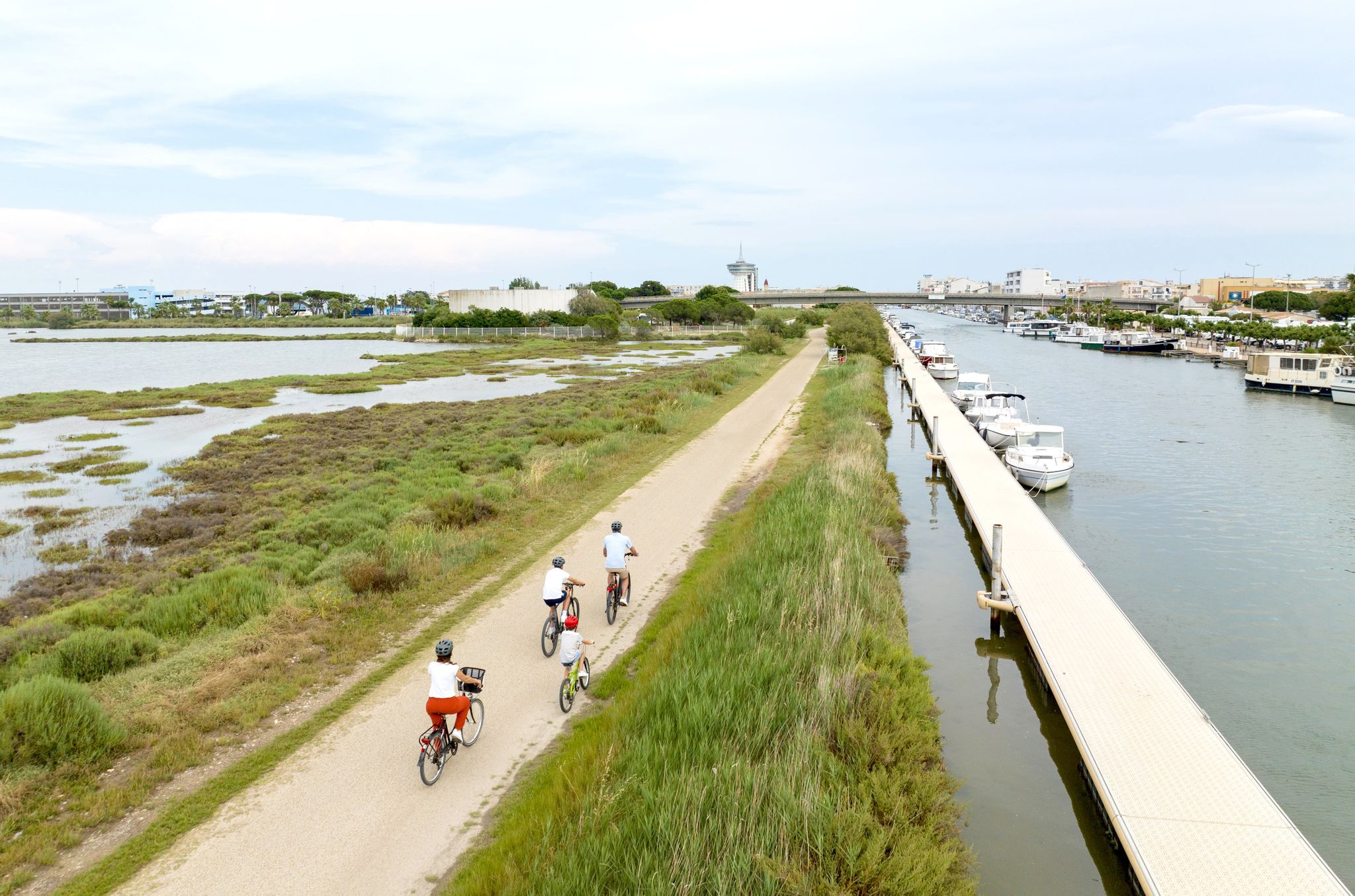
The coastline between Sète and Marseillan-Plage, called the Lido, is a sandy spit about 12 kilometers long separating the Mediterranean Sea from the Thau lagoon. The Voie Verte du Lido: A 12 km secure path reserved for cyclists and pedestrians, built on a former section of road moved to combat erosion.
1
0
Frequently Asked Questions
How many traffic-free gravel bike trails are available around Sète?
There are over 50 traffic-free gravel bike trails around Sète, offering a wide range of experiences for all skill levels. These routes are designed to keep you away from vehicle traffic, allowing for a more peaceful and immersive ride through the region's diverse landscapes.
What kind of terrain can I expect on gravel bike trails near Sète?
The terrain around Sète is quite varied, ranging from flat coastal plains and lagoon shores to gentle hills. You'll find routes along extensive cycling infrastructure, including paths beside oyster farms and salt marshes, as well as sections utilizing old railway tracks for a distinctive gravel experience. Some areas, like those leading towards the Massif de la Gardiole, offer more challenging gravel tracks with varied surfaces and greater elevation changes.
Are there any family-friendly traffic-free gravel routes in Sète?
Yes, Sète offers several options suitable for families. Routes along the Thau Lagoon and sections of the Canal du Midi are generally flatter and less challenging, making them ideal for riders of all ages. These paths often follow dedicated bike paths or 'voies vertes' (greenways) that are perfect for a relaxed family outing away from traffic.
What are the best times of year to go gravel biking in Sète?
The best times to enjoy gravel biking in Sète are typically spring (April to June) and autumn (September to October). During these seasons, the weather is pleasantly mild, and the natural scenery is at its most vibrant. Summer can be very hot, especially midday, while winter can bring cooler temperatures and occasional rain, though many routes remain rideable year-round.
What natural attractions can I see along the traffic-free gravel bike trails?
Many routes offer stunning views and access to natural attractions. You can cycle along the shores of the Thau Lagoon, known for its oyster farms and rich biodiversity. The View of the Étang de Thau is a popular highlight. You might also encounter the Vic Pond or explore the Bagnas Nature Reserve, which is featured on routes like the View of the Étang de Thau – Bagnas Nature Reserve loop from Marseillan.
Are there any circular gravel bike routes around Sète?
Absolutely! Many of the traffic-free gravel routes around Sète are designed as loops, allowing you to start and end in the same location. For example, you can explore the Bagnas Nature Reserve – Voie Verte Canal du Midi loop from Marseillan-Plage, which offers a great circular experience along the lagoon and canal.
What do other gravel bikers enjoy most about the trails in Sète?
The komoot community highly rates the gravel biking experience in Sète, with an average score of 4.3 stars. Reviewers often praise the region's unique blend of coastal beauty, the tranquility of the traffic-free paths, and the scenic views of the Thau Lagoon and Mediterranean Sea. The diverse terrain, from flat lagoon-side paths to more challenging climbs in areas like La Gardiole, is also frequently highlighted.
Are there any challenging traffic-free gravel routes for experienced riders?
Yes, for experienced riders seeking a challenge, there are several difficult traffic-free gravel routes. These often involve more significant elevation gains and varied surfaces. An example is the Entrance to La Gardiole – Greenway under the bridge loop from Frontignan, which takes you through more demanding terrain with substantial climbing.
Can I find routes that offer panoramic viewpoints?
Definitely. The region around Sète is known for its stunning viewpoints. Mont Saint-Clair, though not directly on a gravel trail, offers panoramic views of the city, the Mediterranean, and the Thau Lagoon. Many routes around the Thau Lagoon, such as those with a View of the Étang de Thau, provide expansive vistas of the water and surrounding landscapes, and from higher points, you can even glimpse the distant Cévennes mountains.
Are there any routes that follow canals or waterways?
Sète, often called the 'Venice of Languedoc,' is crisscrossed by canals, and several traffic-free gravel routes incorporate these waterways. You can find paths along the historic Royal Canal of Sète and sections of the UNESCO-listed Canal du Midi. These routes offer flat, scenic rides amidst a unique historical landscape, such as the Along the Canal du Midi highlight.
What are some notable landmarks or points of interest along the trails?
Beyond natural beauty, you can encounter several points of interest. The Bouzigues oyster farms offer a glimpse into local traditions. The Lido Cycle Path from Sète to Marseillan is a highlight in itself, connecting coastal towns. For those exploring the more challenging routes, the Col de Gigean Grotto – La cabane de la Gardiole loop from Frontignan passes by interesting geological features.
Most popular attractions around Sète

Get inspired with the komoot mobile app


Explore more
Browse the best Gravel rides in other regions.
