The best gravel rides around Royan
4.5
(19)
185
riders
13
rides
Gravel biking around Royan offers a diverse landscape characterized by its Atlantic coastline, featuring sandy beaches, coastal paths, and limestone cliffs. Inland, the terrain transitions to pine forests, marshlands, and agricultural fields, providing varied surfaces for gravel routes. Elevation changes are generally gentle, with some moderate climbs, making the region accessible for different skill levels.
Best gravel bike trails around Royan
- The most popular gravel bike trail is Royan Promenade and Beach – View of the La Roche cliff loop…
Last updated: May 5, 2026
5.0
(1)
38
riders
81.7km
05:19
690m
690m
Hard gravel ride. Very good fitness required. Mostly paved surfaces. Suitable for all skill levels.
4.2
(5)
33
riders
52.4km
03:13
380m
380m
Moderate gravel ride. Good fitness required. Mostly paved surfaces. Suitable for all skill levels.

Sign up for free
4.3
(4)
60
riders
36.5km
02:16
90m
90m
Moderate gravel ride. Good fitness required. Mostly paved surfaces. Suitable for all skill levels.
5.0
(2)
23
riders
Moderate gravel ride. Good fitness required. Mostly paved surfaces. Suitable for all skill levels.
5.0
(2)
6
riders
23.1km
01:15
130m
130m
Easy gravel ride. Great for any fitness level. Mostly paved surfaces. Suitable for all skill levels.
Get access to more routes and recommendations from other explorers.
Sign up for free
Already have an account?
Our route recommendations are based on thousands of hikes, rides, and runs completed by other people on komoot.
Start today with a free account
Your next adventure awaits.
Login or Signup
Popular around Royan


Tips from the Community

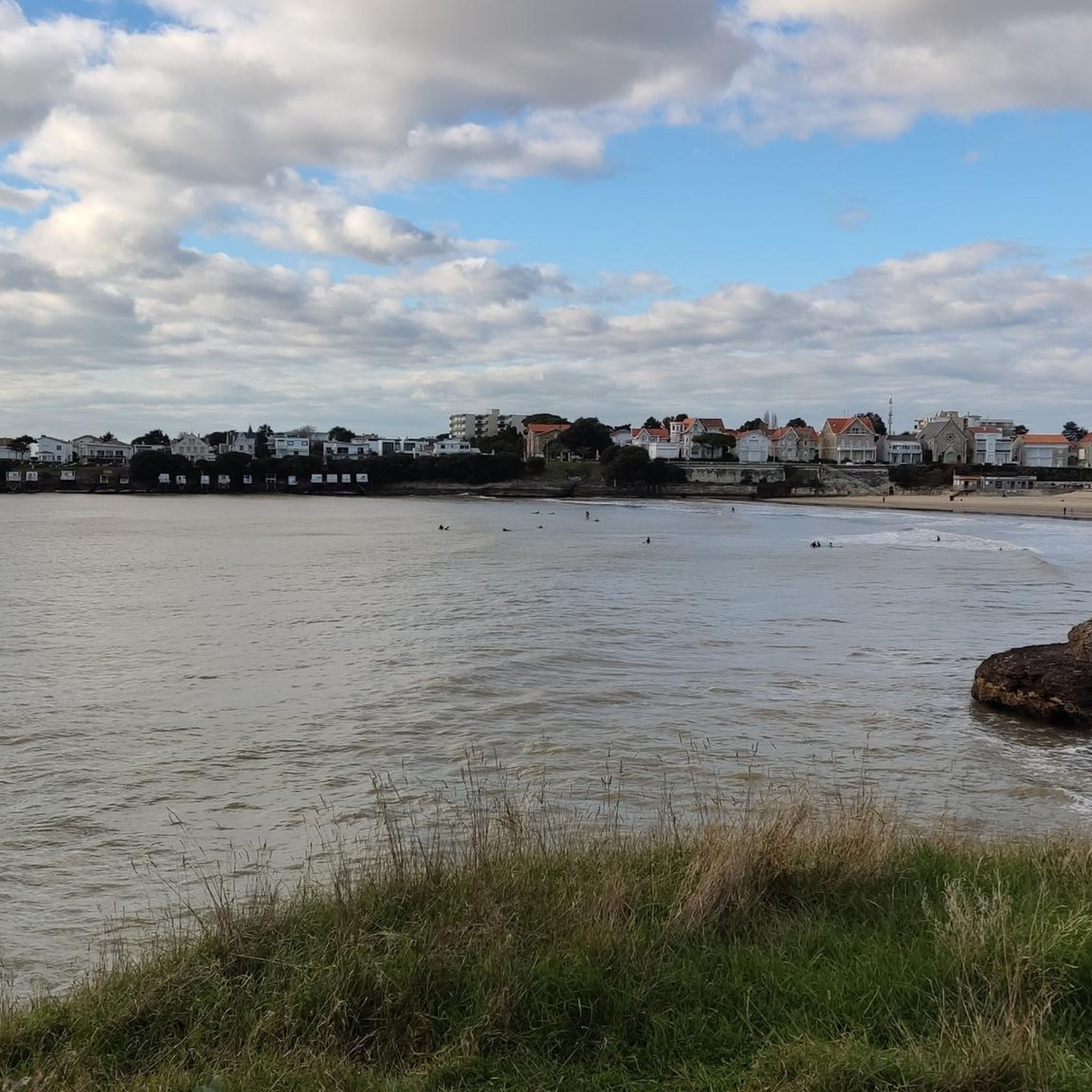
The carrelets of Saint-Palais-sur-Mer are among the most emblematic elements of the Charente coastline. Their history blends traditional fishing, tourist development, and local heritage. 🐟 Origin of the carrelets Originally, the word "carrelet" referred to a square fishing net used since the 17th century. A precise description can be found as early as 1769, in the writings of the scholar Henri-Louis Duhamel du Monceau, who mentioned this type of fishing on the Saintonge coast. 👉 At that time, these were not yet the current huts, but simply a net operated from rudimentary structures. ⚓ Artisanal fishing structures The first local carrelets were simple wooden platforms, built by the fishermen themselves to stand above the water. They were mainly used to catch shrimp, fish, and crabs near the shore, without going out to sea. 👉 It was a family and coastal fishery, less dangerous than sea fishing. 🏖️ 19th – early 20th century: transition to a leisure activity At the turn of the 20th century, with the rise of seaside resorts like Saint-Palais, the carrelets evolved. Holidaymakers and notable figures adopted this practice: construction of fixed jetties, appearance of huts on stilts. The carrelets then became places for relaxation as much as for fishing. 👉 They already contributed to the postcard image of the coast. 🪵 After 1945: democratization and multiplication After the Second World War, the number of carrelets increased sharply. They became a symbol of popular leisure and conviviality. The transition was gradually made from a means of subsistence to a recreational activity. 🌊 Storms and reconstruction The carrelets are fragile in the face of storms: 1999: massive destruction (up to 90% in some areas) 2010 (Xynthia storm): new damage Many have been rebuilt identically, respecting tradition. 🏛️ Today: protected heritage In Charente-Maritime, there are about 400 carrelets. They are: integrated into the public maritime domain allocated by administrative authorization (often renewed every 5 years) Since 2018, they have been recognized as cultural heritage of the department. 👉 In Saint-Palais, they can be observed in particular: at Pont du Diable at the conche du Concié at the Puits de l’Auture
0
0

Here you'll find a romantic little lighthouse, and behind it lies a garden with a bench overlooking the sea, a lovely place to stop for a break. Afterwards, you can continue along the cliff to the right until you reach Euro Velo 1 again.
0
0

Easily accessible place, only the last meters are prohibited for cyclists.
0
0

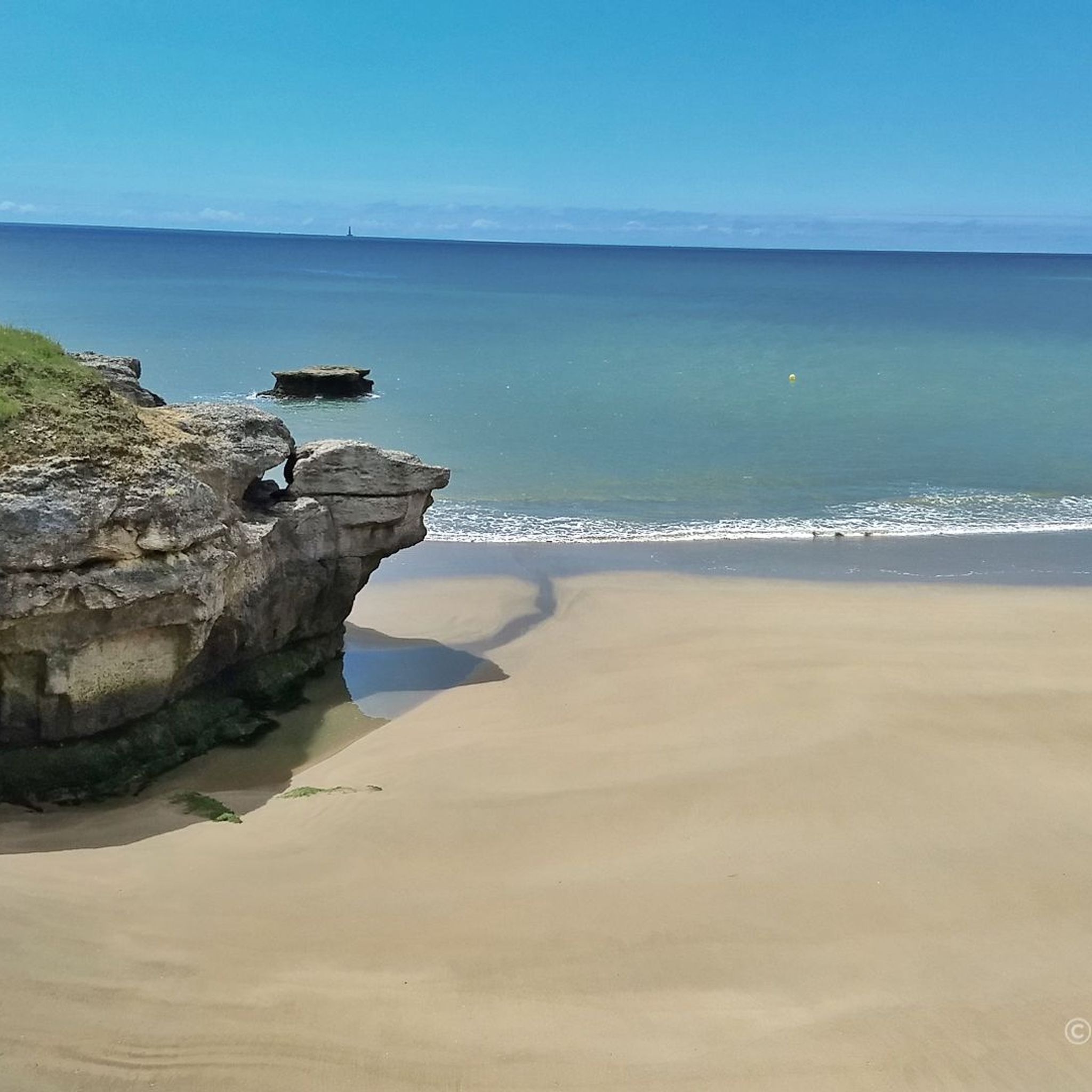
Long sandy beach and beautiful sunset
1
0

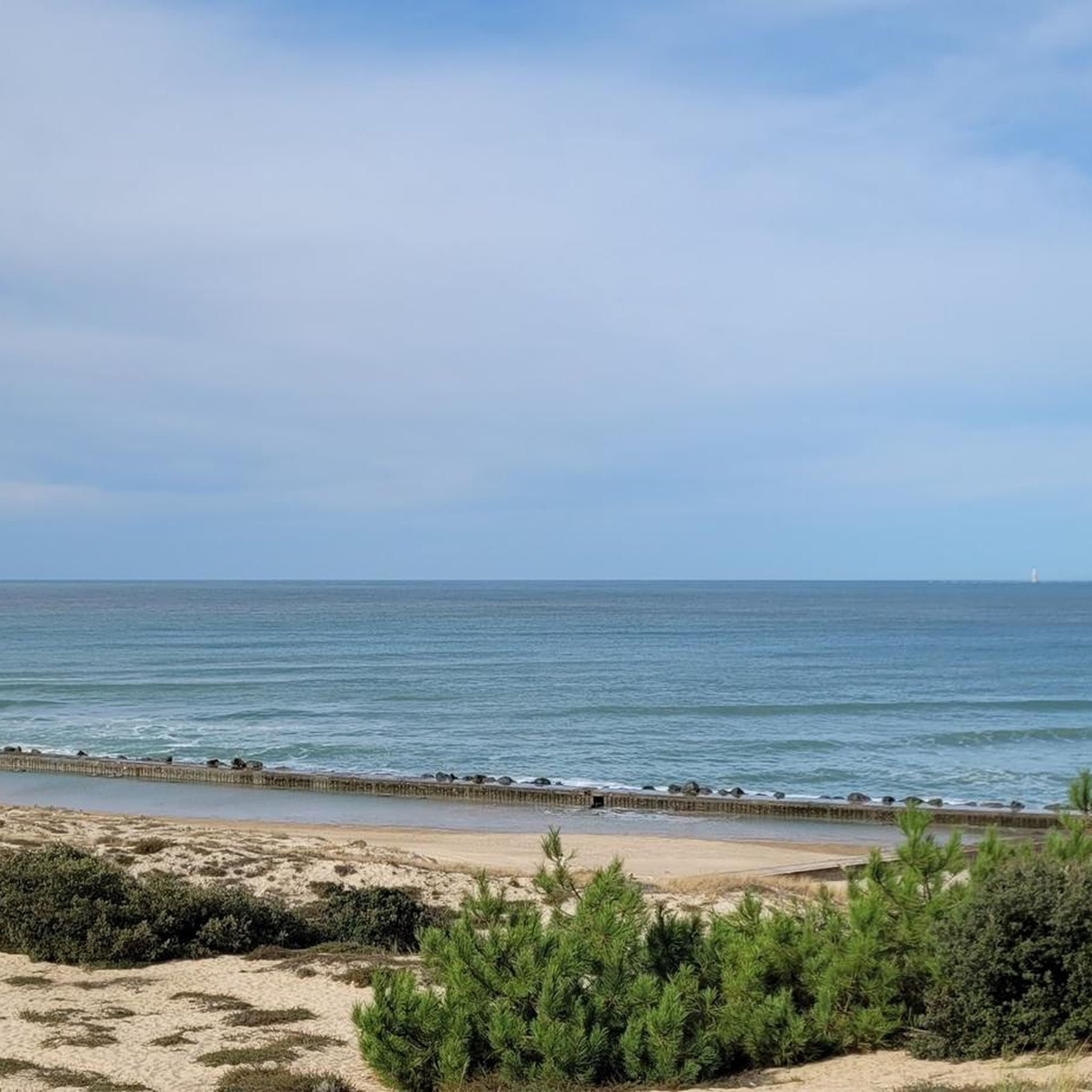
the cycle path is great and comfortable because it is easy and smooth
0
0

The sight of the lady with the sonorous name "La Liberté éclairant le monde" (in English, "Lady Liberty" for short), impressively raising her arm with the torch, is probably familiar to almost everyone, and most people naturally immediately have the image of New York Harbor in the United States in mind. But perhaps many do not know that the famous Statue of Liberty was given to the American people by France (inaugurated in 1886 by US President Grover Cleveland).
0
0
The Terre-Nègre lighthouse is a landmark forming a cylindrical tower a little over 26 meters high. Located on the tip of Terre-Nègre, in the commune of Saint-Palais-sur-Mer, in Charente-Maritime, it is intended to mark the southern pass of the Gironde estuary and to signal the presence of a dangerous sandbank, the "Anglais bar". This building forms a tower-column 3.16 meters in diameter and 26.60 meters high. A spiral staircase with a central core of 143 steps leads to a summit platform equipped with a directional light. The tower is painted in two different colors to make it more visible: the upper part is red, the lower part is white. The base of the lighthouse is hidden by a building that once served as the keeper's accommodation. The installation of a beacon at this location was considered as early as 1763. De Kearney took over the beaconing plan four years later. Construction work on the tower began in 1770 and was completed in 1773, probably under the supervision of the Bordeaux engineer Claude Tardy. In 1807, the tower was raised. However, this work was considered insufficient by some of the estuary's navigators. In 1834, sailors from the nearby port of Royan sent a request to the Ministry of the Navy to study the possibility of equipping the tower with a light. However, this request was postponed the following year due to lack of sufficient funds. A new request from sailors prompted the lighthouse commission to experiment with a first light in 1836. Finally, on October 15, 1838, a fixed white 4th order light was permanently installed. The latter was replaced in 1856 by a fixed white light of the 4th order of a small dioptric model with a reinforced sector of the 5th order catoptric. It was equipped with new lights in 1899 and 1904. In 1939, it was electrified. During the German occupation, the lighthouse served as an observatory for the soldiers of the Wehrmacht. Damaged during the fighting of 1945 (presence of breaches at the top of the tower), it was restored in the immediate post-war period. In March 1947, the lighthouse was operational again. A light with 3 occultations — changing every 12 seconds — was installed. Its colors are white, red and green. Its current range is 18 miles. Listed as a Historic Monument since 2011, the lighthouse is not open to visitors. However, it can be admired from the outside and a pretty passage provides direct access to the coastal path.
0
0
The 12th century church (the oldest), was raised in the 18th century when the bell tower was transformed into a beacon for navigation. It is known as "Le Vieux Clocher". Saint-Pallais is a saint of the Catholic Church and the Orthodox Church. He was in the 6th century, the ninth bishop of Saintes. The history of the Romanesque church and the Old Bell Tower is perfectly summed up on the small information panel placed a few meters from the entrance: "The Romanesque church built under the name of Saint-Palais dates from the second half of the 12th century. At present, all that remains of this remarkable building are the choir, the apse, part of the bell tower and a section of the drip wall of the nave (in a construction, the drip wall is the wall carrying a gutter or a channel ending the roof slope and receiving the water as opposed to the gable wall). "The Old Bell Tower" dominates the tombs of the old cemetery, one of the exits of which opens onto the square on the south side of the new church. This 12th century church is distinguished by its architectural sobriety, a refined style and forms of a very Cistercian elegance. Unfortunately, time and wars have largely amputated the building. The octagonal bell tower is in its lower part authentically Romanesque: a semicircular bay adorned each of the faces, but only two of them have been preserved to the south and east. In order for the bell tower to serve as a landmark, a first raising of more than 2 meters was carried out in the first half of the 17th century. A second, a few years later, gave it its current height. Around 1770, a timber spire was added. The apse, vaulted in a cul-de-four is decorated with five basket-handle arcades resting on engaged columns. 3 bays with deep embrasure and framed by two small columns with bare capitals, provide lighting. A chamfered cord goes around the choir and the apse and delimits the vaults of the load-bearing walls. The climb to the top of the bell tower is recommended to enjoy a superb panorama of the Gironde estuary, the ocean, the Cordouan lighthouse, the residential areas of Saint-Palais, the national forest and the surrounding countryside.
0
0
Frequently Asked Questions
How many gravel bike trails are available around Royan?
There are over 25 gravel bike trails in the Royan region, offering a variety of experiences. These include 7 easy routes, 12 moderate routes, and 8 more challenging options, catering to different skill levels.
Are there any family-friendly gravel bike routes in Royan?
Yes, Royan offers several family-friendly gravel routes, particularly those with gentle elevation changes and scenic coastal paths or forest trails. Look for routes categorized as 'easy' or 'moderate' for a comfortable family outing. The region's diverse landscape, from sandy beaches to pine forests, provides enjoyable scenery for all ages.
What are some of the longer gravel bike routes near Royan?
For those seeking a longer ride, the Royan Promenade and Beach – View of the La Roche cliff loop from Royan is a challenging 50.7-mile (81.7 km) path offering extensive coastal views. Another substantial option is the Royan Promenade and Beach – Boulevard du Marais loop from Royan, which covers 36.3 miles (58.5 km) and takes you through varied coastal and marshland scenery.
When is the best time of year to go gravel biking in Royan?
Gravel biking in Royan is enjoyable for much of the year due to its Atlantic climate. Spring and autumn offer pleasant temperatures and fewer crowds, making them ideal. Even winter can be suitable, as the region experiences milder conditions compared to inland areas, though some coastal paths might be exposed to wind.
Are there circular gravel bike trails around Royan?
Yes, many of the gravel bike routes around Royan are designed as circular loops, allowing you to start and finish at the same point. For example, the Promenade des Deux Phares – Côte sauvage loop from Vaux-sur-Mer is a moderate 23-mile (37 km) circular route exploring the wild coast.
What kind of terrain can I expect on gravel bike trails in Royan?
The terrain around Royan is quite varied. You'll encounter Atlantic coastline paths, often featuring sandy sections and limestone cliffs. Inland, routes transition to pine forests, marshlands, and agricultural fields, providing a mix of surfaces suitable for gravel bikes. Elevation changes are generally gentle, with some moderate climbs.
What do other gravel bikers enjoy most about the trails in Royan?
The gravel trails in Royan are highly rated by the komoot community, with an average score of 4.6 stars from over 30 reviews. Riders frequently praise the diverse scenery, from the wild coast to tranquil pine forests, and the well-maintained paths that cater to various skill levels.
Are there any scenic viewpoints along the gravel bike trails?
Absolutely. Many routes offer stunning coastal vistas. The View of the La Roche cliff – Boulevard du Marais loop from Saint-Georges-de-Didonne, for instance, provides excellent views of the La Roche cliff and coastal areas. The region's Atlantic coastline is dotted with picturesque spots perfect for a break.
What attractions can I see near the gravel bike trails in Royan?
While gravel biking, you can explore various attractions. You might pass by beautiful beaches like Saint-Georges-de-Didonne Beach or Chay Beach. The Boulevard du Marais offers scenic stretches, and the Marsh Cycle Path in Meschers-sur-Gironde provides a unique natural experience.
Where can I park my car when starting a gravel bike ride in Royan?
Parking is generally available in the towns and villages that serve as starting points for these routes. For example, you can find parking in Saint-Augustin for routes exploring the wild coast, or in Royan and Saint-Georges-de-Didonne for coastal and marshland loops. Always check local signage for specific parking regulations.
Are there any routes that explore the marshlands around Royan?
Yes, the region's marshlands are a unique feature for gravel biking. The View of the La Roche cliff – Boulevard du Marais loop from Saint-Georges-de-Didonne takes you through coastal areas and marshlands, offering a different kind of scenery and a chance to observe local wildlife.
Most popular attractions around Royan

Get inspired with the komoot mobile app


Explore more
Browse the best Gravel rides in other regions.
