The best running trails around Royan
4.6
(50)
5,629
runners
62
runs
Jogging routes around Royan offer a diverse landscape along France's Atlantic coast. The region features extensive coastal paths and beaches, providing invigorating seaside runs. Inland, runners can explore vast forests like the Coubre Forest, which offers shaded routes through maritime pines. Additionally, tranquil marshes and estuaries, such as the Seudre estuary, present unique running experiences.
Best jogging routes around Royan
- The most popular jogging route is Vallières Point – The Grande Conche loop from Royan, a 9.4 miles (15.1…
Last updated: November 25, 2026
5.0
(6)
1,425
runners
16.1km
01:43
80m
80m
Hard run. Very good fitness required. Mostly paved surfaces.
4.4
(9)
647
runners
8.89km
00:58
30m
30m
Moderate run. Good fitness required. Mostly paved surfaces.

5.0
(5)
773
runners
11.7km
01:15
50m
50m
Moderate run. Good fitness required. Mostly paved surfaces.
5.0
(1)
296
runners
11.8km
01:13
80m
80m
Moderate run. Good fitness required. Mostly paved surfaces.
5.0
(2)
49
runners
Moderate run. Good fitness required. Mostly paved surfaces.
Get access to more routes and recommendations from other explorers.
Already have an account?
Our route recommendations are based on thousands of hikes, rides, and runs completed by other people on komoot.
Start today with a free account
Your next adventure awaits.
Popular around Royan



Tips from the Community

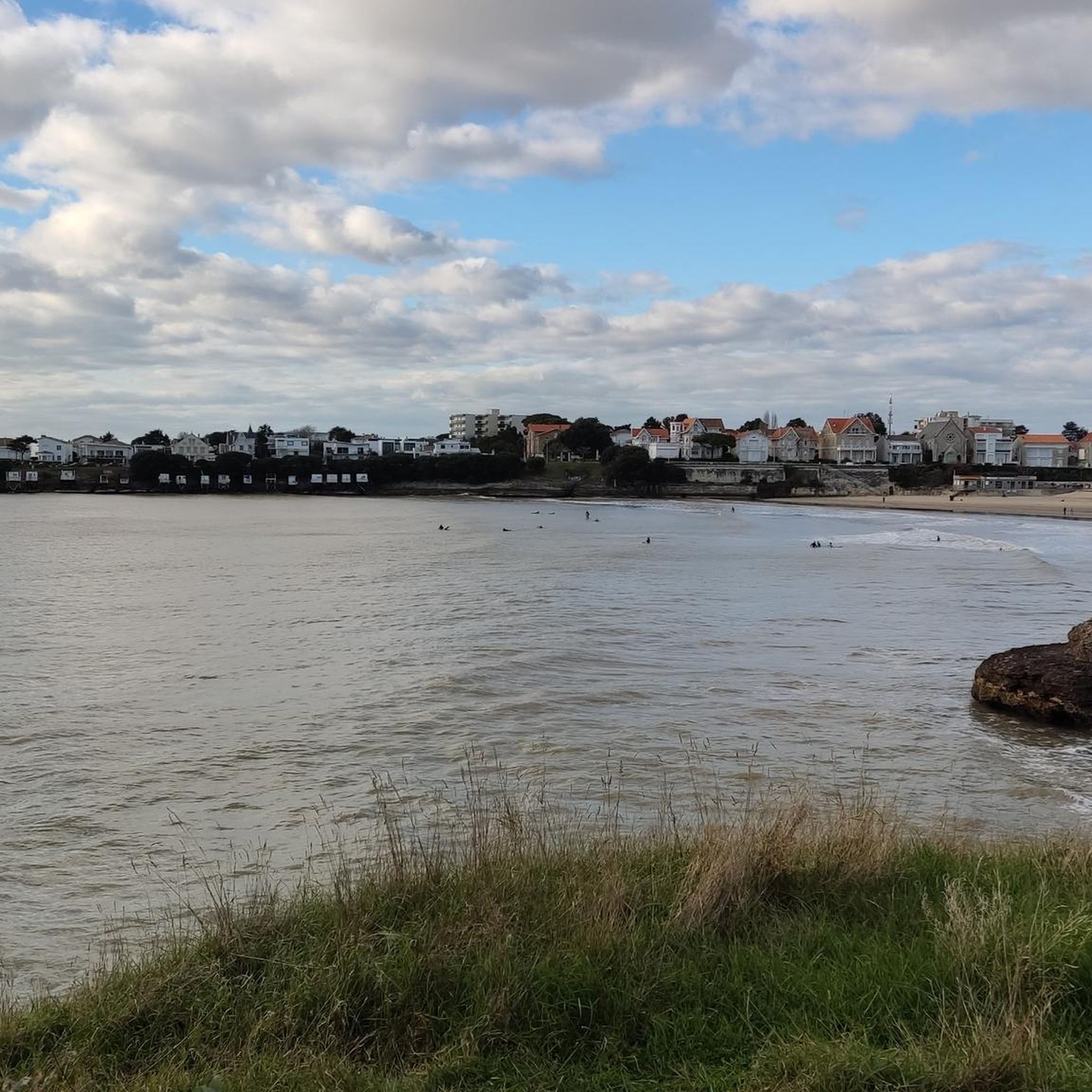
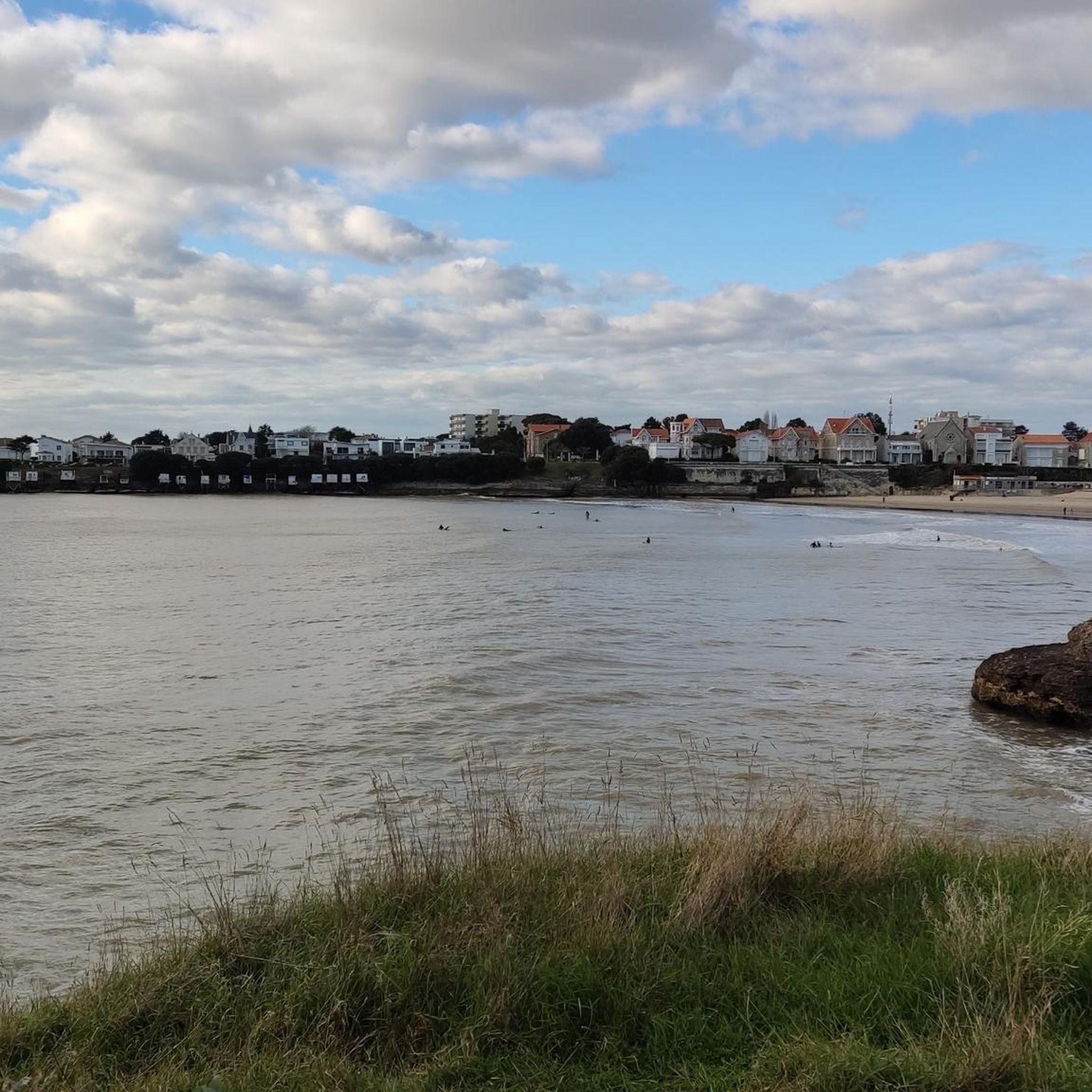
The carrelets are today part of the emblematic images of Royan and the Côte de Beauté. However, contrary to what the current landscape might suggest, the large pontoons with huts are relatively recent. A much older fishing The word carrelet originally designates the square net used for very simple fishing. Fishing with a carrelet has been attested in the region since at least the 18th century. At that time, these were not yet the elegant huts on stilts that we know today. The fisherman used a square frame with a net, which he lowered into the water and then quickly pulled up. This fishing was particularly practiced by women and could provide a dietary supplement. The turning point of 1900: the birth of the pontoons It was around 1900 that the carrelet began to change its nature. With the development of sea bathing and seaside tourism in Royan, fixed structures appeared on the quays, rocks, and cliffs. In Royan, they can be found in particular on the rocks of Pigeonnier and at Pontaillac. Initially, they were essentially simple masts equipped with a winch. The users were often merchants, liberal professions, retirees, or wealthy owners rather than professional fishermen. A particularly interesting old photograph shows the conche de Pontaillac in 1918, with fishing installations. The carrelets become leisure spots Between the two wars, and especially after 1945, the carrelets multiplied. The generalization of paid holidays, the increase in free time, and the development of popular holidays favored their transformation into real small holiday resorts. The installations gradually became more substantial: cliff → footbridge → pontoon → hut → mast and winch → square net Owners often built their own installations with wood or salvaged materials. In the 1950s, this practice experienced a real boom around Royan. Why are there so many carrelets around Royan? The relief of the Côte de Beauté is particularly well-suited for this. They can be found in particular: * in Royan, at the Pointe du Chay, at Pigeonnier and at Pontaillac; * in Vaux-sur-Mer, particularly towards the conche de Gilet; * in Saint-Palais-sur-Mer, along the headlands of Terre-Nègre and Perrières, towards the Pont du Diable and the Concié; * in Saint-Georges-de-Didonne, particularly towards Suzac; * in Meschers-sur-Gironde, along the cliffs and coves. The carrelet is indeed identified today as a viewpoint in Royan. The 1999 storm: a catastrophe The carrelets are extremely vulnerable to storms. The storms of 1996 and especially 1999 destroyed a very large part of the installations in Charente-Maritime. On the coasts of Aunis and Saintonge, nearly 90% of the approximately 700 carrelets had been destroyed during the January 2000 storm. They were then gradually rebuilt, with the help of owners and public schemes. Today: a heritage of Royan The carrelet is therefore not just a fishing equipment. It has become an element of the maritime and landscape heritage of Royan. The Musée du patrimoine du Pays Royannais classifies it as 20th-century maritime heritage and points out that the current installations are essentially the result of the development of this practice in the 20th century. An interesting historical point: the carrelets that we spontaneously associate with Royan today are therefore mainly the result of the evolution of seaside tourism after 1900 and their extraordinary development after 1945, and not the intact survival of a very old tradition of fishing huts.
0
0
The Church of the Assumption of Our Lady, also known as the Pontaillac Chapel, is a small 19th-century chapel built to serve the parishioners of the Pontaillac seaside district. Replaced around 1890 by a larger chapel (Our Lady of the Angels), it was deconsecrated and converted into a private residence, while retaining its heritage exterior: a discreet yet significant witness to the religious and urban history of Royan and its beaches. 📍 Location and context • The building is located on Boulevard de la Falaise in Royan, facing the ocean, in the Pontaillac/Vaux-sur-Mer district, right on the beach. 🏛️ Origins and Religious History 🛠️ Construction • Faced with the rise of seaside tourism in the mid-19th century, the Catholic community of Pontaillac wanted a place of worship near the beaches and the developing villas. • After disagreements with the parish priest of Royan regarding the location of a church, parishioners had this small Neo-Romanesque/Neo-Gothic chapel built in 1870 on the cliff, then administratively within the territory of Vaux-sur-Mer (and therefore outside the parish jurisdiction of Royan). 🙏 Liturgical Role and Replacement • For a few years, it served as the local place of worship for the faithful of the seaside district. • With the development of Pontaillac, the building proved too small and too far from the town center. • Thus, the construction of the larger Notre-Dame-des-Anges Chapel (still a Catholic chapel today) in the center of Pontaillac in 1891 eventually replaced this first place of worship. 🏗️ Deconsecration and Transformation 🏡 End of Religious Function • Once the new chapel (Notre-Dame-des-Anges) was built, the old chapel on the cliff gradually lost its religious function and ceased to be used for regular services. 🏠 Conversion into a Private Residence • The building was then deconsecrated (that is, removed from official Catholic worship) and transformed into a private residence. • Today, while the exterior still reflects its original function with its simple and traditional architecture, the interior has been adapted for residential use, having lost its liturgical purpose. 🗺️ Architecture and Style 🧱 Original Style The chapel features modest architecture, typical of small rural/seaside chapels of the 19th century: simple volumes, use of local materials, and small proportions suited to a limited community. • In the Neo-Gothic style, it forms a single nave of five bays, lit by a series of round-arched windows. • The façade, pierced by a rose window, is flanked by two buttresses and surmounted by a simple stone cross. 🏖️ Landscape Setting • Perched on the cliff above the beach, the building formerly offered worshippers a direct view of the ocean, a setting very characteristic of seaside chapels on the Atlantic coast. 📌 Historical and Heritage Significance • The former chapel illustrates the beginnings of organized religious life in Pontaillac before the growth and complete urban development of the area. • It is an architectural and historical testament to the first phase of the local community's development, before the construction of larger buildings in the town center. • Its conversion into a residence reflects the evolving uses of religious heritage in areas where the population and needs have changed over time.
0
0
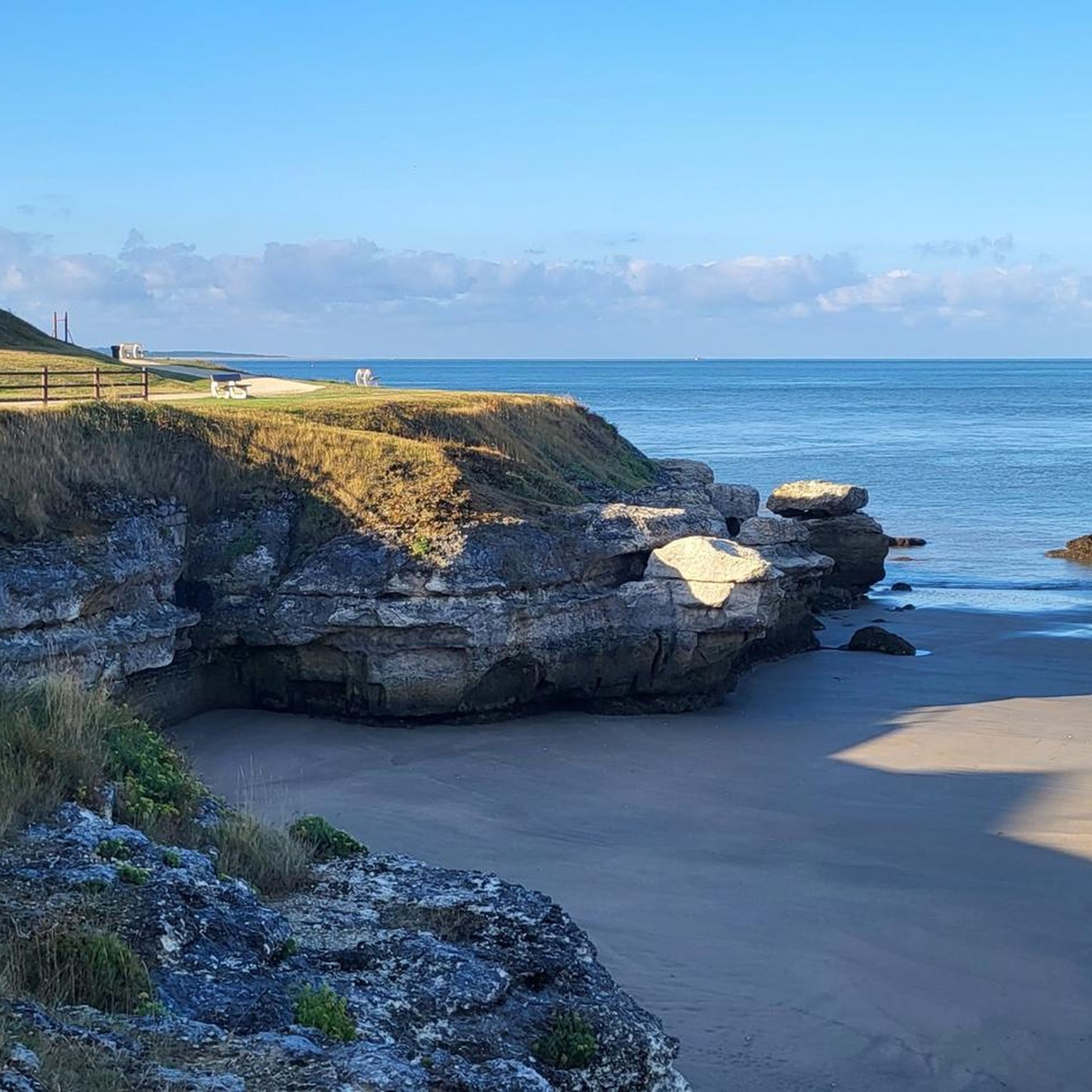
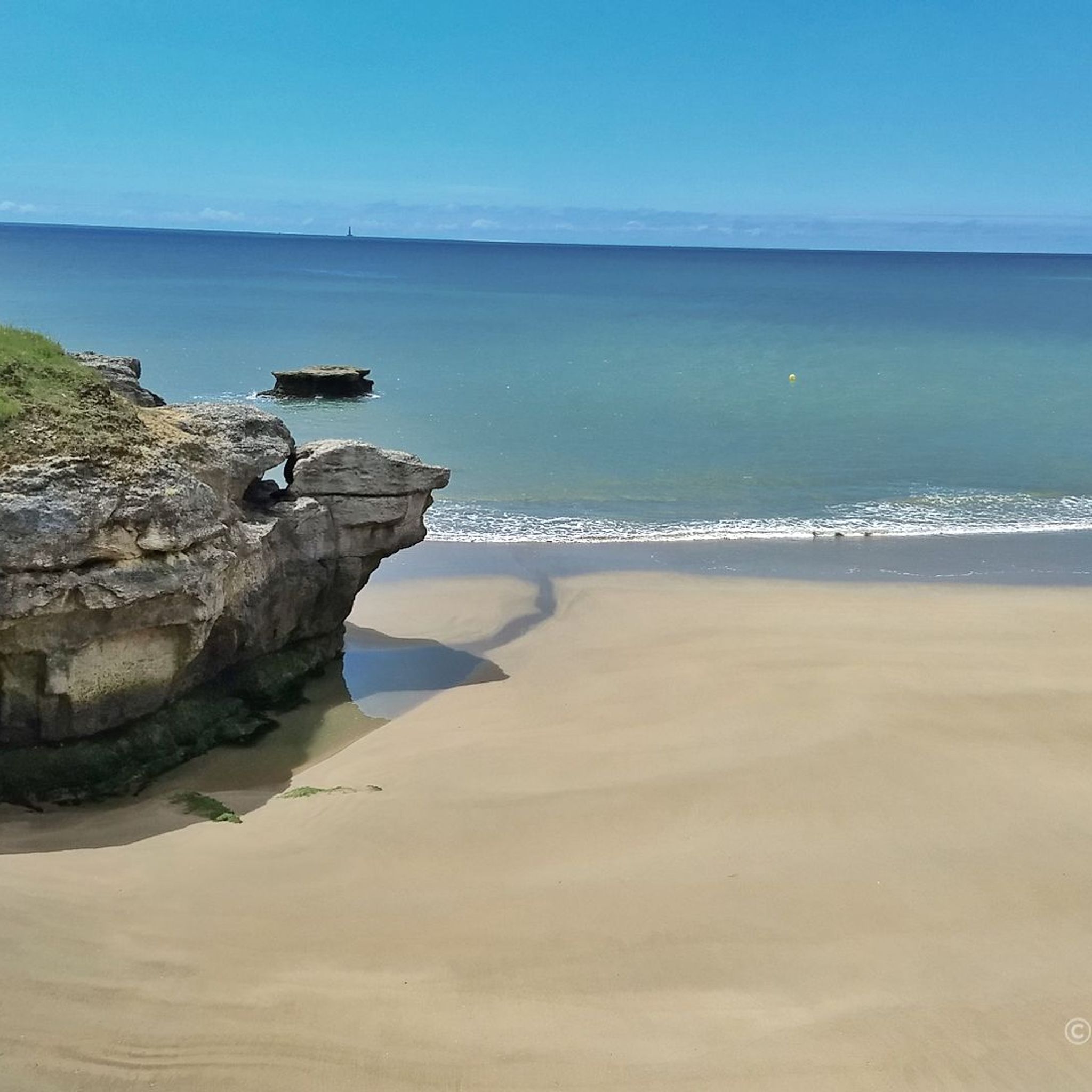
📍 Introducing the Gilet Cove The Gilet Cove is a small, natural beach on the oceanfront, located on Boulevard de la Conche de Gilet / Boulevard de la Falaise, in the town of Vaux-sur-Mer, just before Royan. 🌿 It's a sheltered, rocky cove, appreciated for its tranquility and more intimate setting compared to the larger urban beaches nearby. 🏖️ At high tide, the sea can completely cover this small beach, making the space very limited; at low tide, you can enjoy a patch of sand and rocks for relaxing or swimming. 🧭 Features & Tips 📍 Type of place: small, unsupervised beach, nestled among the rocks with sand and cliffs. 🏖️ Tides: access is best at low tide — at high tide the beach can disappear underwater. 🐶 Animals: prohibited from April 1st to September 30th (subject to municipal regulations). 👣 Access: via stairs from the boulevard above, surrounded by villas with sea views. 🚫 Lifeguard services: no lifeguard station or marked services. 📍 Location La Conche de Gilet is often considered the last small beach in Vaux-sur-Mer before reaching Royan/Pontaillac when following the coastline from Saint-Palais-sur-Mer.
0
0
🏖️ General Overview Chay Beach is a family-friendly, fine sandy beach located in Royan (Charente-Maritime), on the Côte d’Argent promenade between Pigeonnier Beach and Pointe du Chay. It stretches for approximately 200 meters and boasts a pleasant natural setting, with a cove bordered by rocks typical of the Charente coastline. 🏝️ Features • 🌊 Beach type: fine sand, sheltered cove. • 🏄♂️ Atmosphere: relatively calm and family-friendly, ideal for children and vacationers seeking relaxation away from the large urban beaches. • 🐾 Pets: prohibited from April 1st to September 30th. • 🫧 Water quality: excellent (Blue Flag label awarded for 2025). 🧭 Lifeguard and Safety • Swimming is supervised during the season (June to early September), with areas marked by red and yellow flags. • The area is classified as a Category 3 "Supervised Beach" and lifeguards are present during the indicated hours. 🪑 Amenities On-site, you can find: • 🏖️ Sun loungers, parasols, and mattresses for rent. • 🚿 Foot rinse and public restrooms. • 📶 Wi-Fi access, first aid station, and an area accessible to people with reduced mobility (assistance may be required depending on the slope). • 🍴 Beachfront restaurant ("Le Chay" bar-restaurant with sea views). 🚶♂️ Atmosphere and Activities • 🎈 Ideal for families and leisurely strolls. • 🌞 People come here for swimming, playing on the sand, flying kites, or simply relaxing by the ocean. • 🅿️ Parking is available nearby, and the beach is easily accessible on foot or by bike from Royan town center in just a few minutes. 🧭 Practical Tips • 📆 Best time to visit: summer for supervised swimming and full services, but also during the off-season for a more peaceful atmosphere. • ☀️ Arriving early in the morning makes parking easier during peak season. • 🐶 Dogs are not allowed during the summer season; check the signs on site during the off-season.
0
0
Newspaper vendors, carriages traversing the rocky paths, the ringing of the bell as the tram passes, absinthe drinkers on terraces... These photographs reflect the spirit and breath of a peaceful and carefree era before the First World War. Royan experienced the fruits of this "Belle Époque" when the seaside resort trend, which had come from across the Channel, gradually elevated this small fishing and farming village to the status of a seaside resort. The Bordeaux elite, and later the whole of Paris, took to the train to travel to the seaside resort. The town was connected to the national railway network in 1875. It has been served locally by a tramway since 1890. Royan then developed an infrastructure and leisure offering in line with this new tourist economy. The town was covered in casinos. Of the five establishments that were established there between 1843 and 1960, only one remains today. The former Sporting, on Pontaillac beach, was built at the dawn of the 1930s, with its back to the sea. The new location was built in a concrete setting in the Art Deco style. After the war, it saw the cream of French showbiz (Bécaud, Montand, Aznavour, Brel, Ferré, and Brassens, among others). The final bombings of 1945 reduced the architecture of the Belle Époque and the Roaring Twenties to dust. Only the former Jules Ferry school (1907), the Émile Zola college (1904), and the former Hôtel du Golf in Pontaillac remain. Approximately 250 of the 4,000 seaside villas recorded before the war also escaped destruction. These villas, characteristic of a triple stylistic influence (chalet, mansion, or cottage), line Boulevard Frédéric-Garnier, along the banks of the Grande Conche. Today, more than 200 residences are survivors of a bygone era. Some of them are associated with great names in culture who came here to seek inspiration. Émile Zola was invited by his publisher, who was having a large house built in the Parc (the future "Paradou," demolished in 1978). Forty years later, the playwright Sacha Guitry fell in love with the Charente resort, where he spent several summers. He regularly met up with his neighbor at number 100, the photographer Jacques-Henri Lartigue, who was staying for two seasons at the famous Villa Aigue-Marine. From 1926, he settled in the Villa Rose Rouge, built six years earlier (at number 38). The Spanish painter Pablo Picasso found refuge in the seaside resort on the eve of the declaration of war on September 2, 1939. He moved into the Hôtel du Tigre, then to the Villa Gerbier de Jonc, and ended up renting a studio on the third floor of the Villa Les Voiliers from 1940. The latter is located a stone's throw from the Café des Bains, which he immortalized in a famous painting five years before its destruction. Also worth seeing in the same area is the astonishing Villa Kosiki (1885). The storefront, adorned with an oriental-style terrace depicting a Japanese pagoda, is one of Royan's great heritage attractions. Guided tours of Royan allow visitors to learn more about this prosperous period for the town and discover its remarkable villas.
0
0

The port of Royan is located between the Foncillon district and the Grande Conche beach, in the heart of the city. Ideally located at the mouth of the Gironde, in the immediate vicinity of the Atlantic Ocean and opposite Port-Médoc, it consists of a marina with a thousand rings and a fishing port, specializing in “noble” species (sole, meagre, sea bass, etc.). You will find the harbor master's office, the Fishing Port and the auction, as well as a covered shopping arcade, “Les voûtes du Port”, which extends the shopping arcades of the “Front de Mer”. Port, 1100 sheltered places – Reception pontoon – Secure pontoons. Access pass is 0.30 m above the zero of the nautical charts. Basins after dredging 2.30 m from the zero of the nautical charts. Services: water, electricity (220 V) on pontoon, toilets, WC, showers, handling in closed technical area, recovery of careening water, grey water and black water pumps, maintenance and ship repair workshops, ship chandlers on the port, wifi, 24/24 CB fuel, slipway. V.H.F. 9. The port is sheltered from all winds because it is protected by the landing stage of the ferries which ensure the crossing of the Gironde for the crossings to the Pointe de Grave/Le Verdon-sur-Mer.
1
0
Of the first star-shaped fort (1811), only a few things remain today. In 1859 its plan was redesigned with a solid ground facing the sea separated by a large ditch cutting the fort in two. The redoubt is cut off and allows the access bridge located to the north to be monitored. This redoubt has the particularity of having a specific plan. It only has a machicolation on three of its sides to the north (inland side) and on its two short sides (east and west). The tour of the solid ground is reinforced by a large masonry wall now. At the rear, the star-shaped device protects against attacks coming from the land. The site was affected by erosion and especially lost its relief after the Second World War. The battery line is still visible from the air and on the ground, only a few German and French bunkers are still outcropping. They are inaccessible. Transformed into a promenade, the site borders the coastal path that starts from the port of Royan and continues to the Grande Côte. Today, nearly 75% of the militarized surface of the late 19th century is occupied by residences and the Cordouan Thalazur hotel. The site still has some visible remains, mainly of French origin
0
0
Frequently Asked Questions
How many running routes are available in Royan?
Royan offers a wide selection of running routes, with over 50 trails available for you to explore. These routes cater to various preferences, from easy jogs to more challenging runs.
Are there running routes for all skill levels in Royan?
Yes, Royan provides a diverse range of running routes suitable for all abilities. You'll find approximately 11 easy routes perfect for beginners or a relaxed run, over 40 moderate trails, and a few more challenging options for experienced runners looking to push their limits.
What kind of scenery can I expect on Royan's running trails?
Royan's running trails offer a beautiful mix of landscapes. You can enjoy invigorating seaside runs along extensive coastal paths and beaches like the Grande Conche, or explore tranquil marshes and estuaries. For those who prefer shade, the vast Coubre Forest provides refreshing routes through maritime pines and holm oaks.
Are there any specific attractions or landmarks I can see while running in Royan?
Many running routes in Royan pass by notable attractions. For instance, you might run past the beautiful Saint-Georges-de-Didonne Beach or Chay Beach. Some trails offer glimpses of the Cordouan lighthouse in the distance, or even the remains of the Atlantic Wall near the Pointe de Suzac. The region also features natural highlights like the Suzac Forest and unique caves such as Grottes de Matata.
Are there circular running routes available in Royan?
Yes, many of Royan's running routes are designed as loops, offering convenient circular options. For example, you could try the challenging Pontaillac – Nice view westwards loop from Royan, which is about 16 km, or the moderate The Carrelets of Royan – Conche de Nauzan loop from Royan, covering around 10.7 km.
What do other runners enjoy most about jogging in Royan?
The running experience in Royan is highly rated by the komoot community, with an average score of 4.4 stars from over 30 reviews. Runners often praise the diverse terrain, from invigorating coastal paths to peaceful forest trails, and the stunning views offered along the Atlantic coast.
Are there any urban running routes in Royan?
Absolutely. For those who enjoy an urban backdrop, there are easy routes that take you through towns. For instance, Saint-Georges-de-Didonne offers a circuit passing by the port, the Charles Martel promenade, and the Vallières lighthouse. Saint-Palais-sur-Mer also features a pleasant urban running route.
Can I find shaded running trails in Royan?
Yes, if you prefer running in the shade, the vast Coubre Forest is an excellent choice. This 'green lung' of the region offers numerous marked circuits, such as the Gardour trail, where you can enjoy the scent of pines and a refreshing change of scenery away from the coast.
Are there running routes that combine both urban and natural elements?
Many routes in Royan beautifully blend urban and natural environments. A great example is the moderate Port of Royan – Royan Promenade and Beach loop from Saint-Georges-de-Didonne, which combines urban promenades with scenic sandy beach sections, offering a varied and engaging run.
What is the terrain like on Royan's running trails?
Royan's running trails feature a varied terrain, providing different experiences for runners. You'll encounter a mix of surfaces, including paved paths along promenades, soft sand on the beaches, and dirt tracks within the forests and marshlands. This variety allows for diverse training and keeps runs interesting.
When is the best time of year to go running in Royan?
Royan's climate is generally conducive to outdoor activities. While running is enjoyable year-round, spring and autumn offer pleasant temperatures and fewer crowds. Summer provides warm weather perfect for coastal runs, and even winter can be mild enough for invigorating jogs, especially along the sheltered forest trails.
Are there any longer, more challenging running routes for experienced runners?
Yes, experienced runners will find routes that offer a good challenge. The Vallières Point – The Grande Conche loop from Royan is a difficult 15.1 km trail with some elevation, providing expansive coastal views and a rewarding workout. Another challenging option is the Pontaillac – Nice view westwards loop from Royan, which spans over 16 km.
Most popular attractions around Royan

Get inspired with the komoot mobile app


Explore more
Browse the best Running Trails & Routes in other regions.
