The best MTB trails in Paisagem Protegida Da Serra De Montejunto
4.8
(10)
292
riders
42
rides
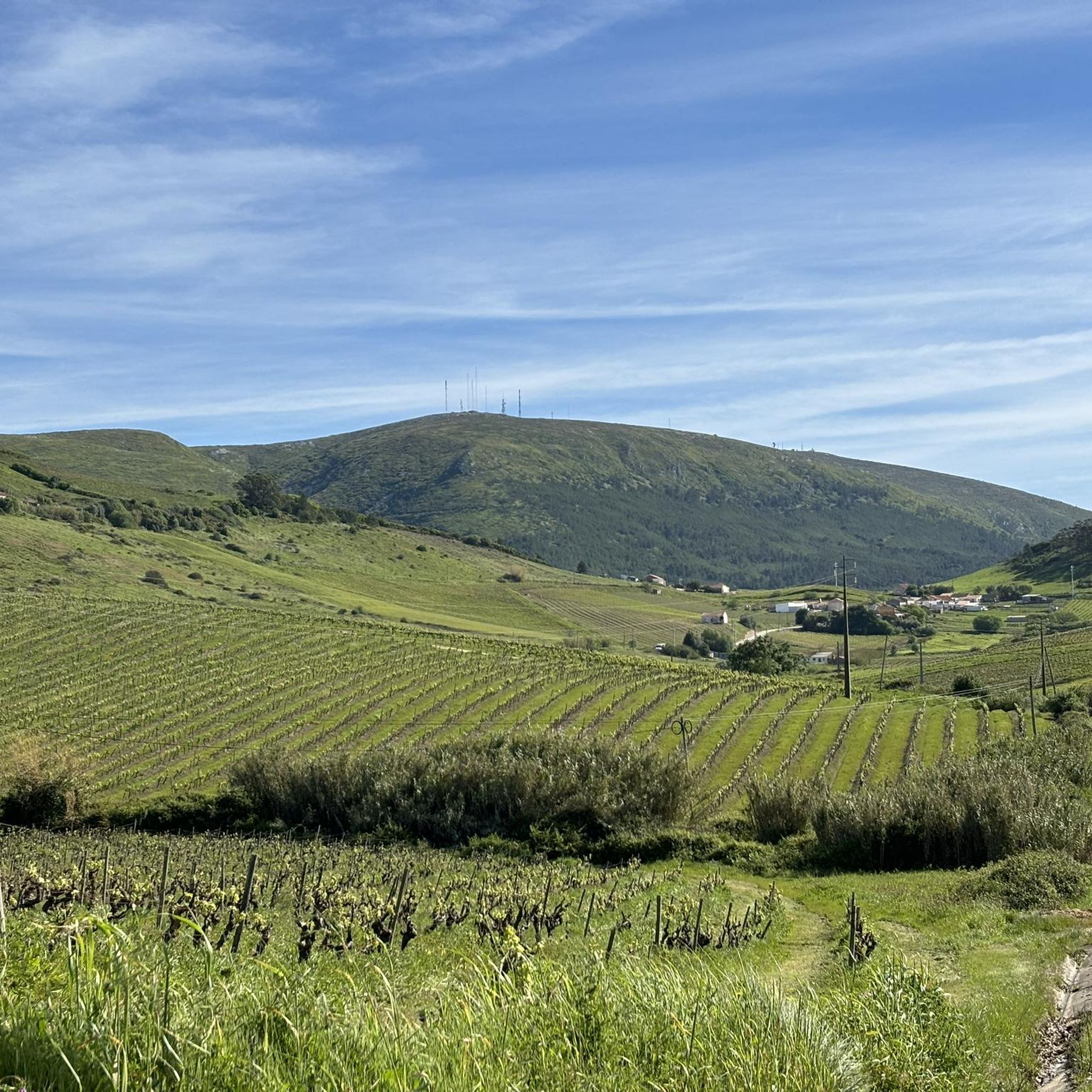
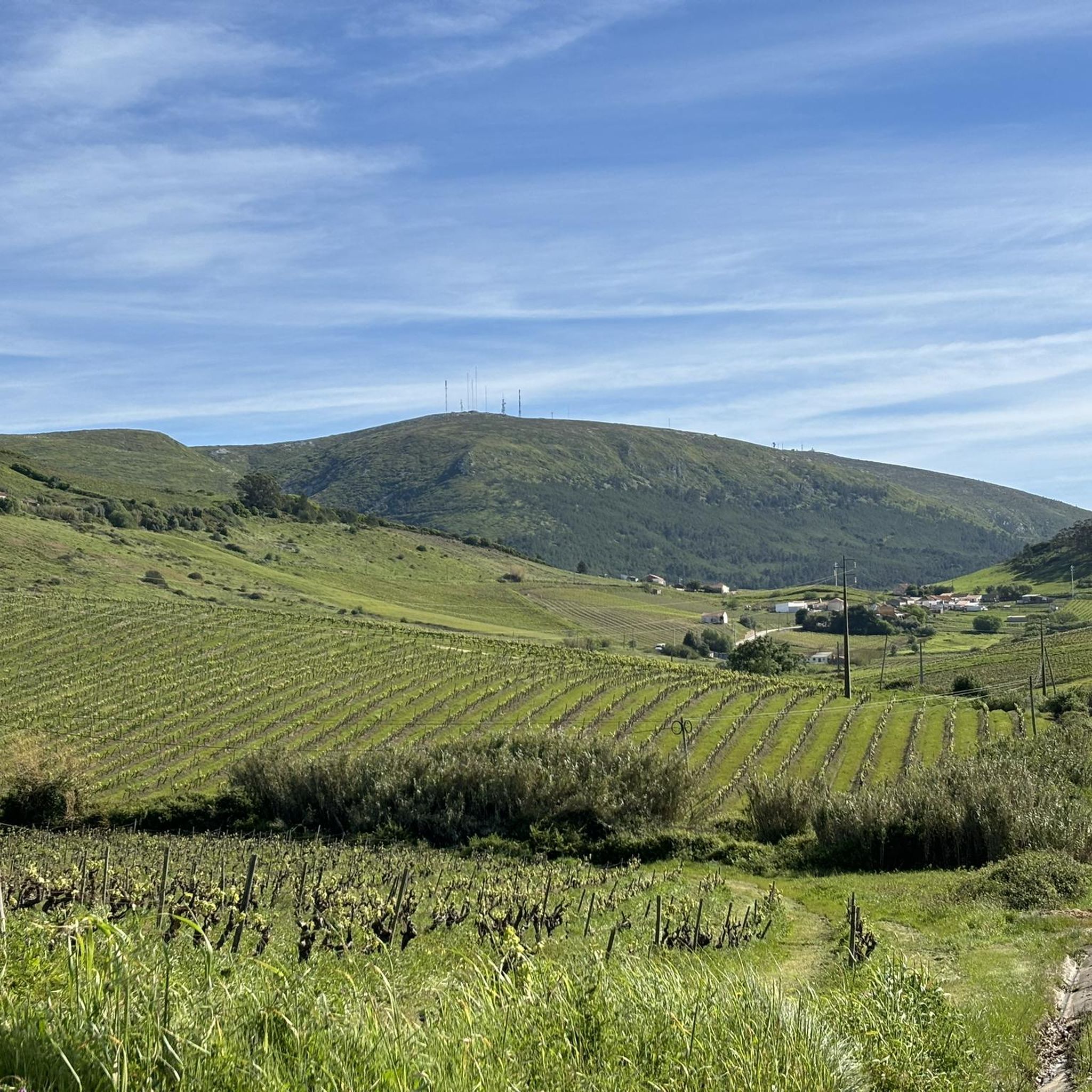
Mountain biking in Paisagem Protegida Da Serra De Montejunto offers diverse terrain with significant elevation, making it a popular destination for outdoor activities. The region is characterized by its limestone massif, featuring stony sections and varied landscapes that provide challenging and rewarding experiences. As the highest natural viewpoint in Extremadura, it offers expansive panoramic views from its summit. Mountain bike trails often wind through untouched, rough landscapes, including relict oak forests and areas with sparse vegetation.
Best mountain bike trails…
Last updated: October 11, 2026
4
riders
58.2km
04:52
910m
910m
Hard mountain bike ride. Very good fitness required. Suitable for all skill levels.
4.0
(1)
5
riders
51.5km
05:05
1,260m
1,260m
Hard mountain bike ride. Very good fitness required. Advanced riding skills necessary.

2
riders
Moderate mountain bike ride. Good fitness required. Suitable for all skill levels.
15
riders
34.0km
02:47
490m
490m
Moderate mountain bike ride. Good fitness required. Suitable for all skill levels.
2
riders
31.7km
02:54
850m
850m
Moderate mountain bike ride. Good fitness required. Suitable for all skill levels.
Get access to more routes and recommendations from other explorers.
Already have an account?
Our route recommendations are based on thousands of hikes, rides, and runs completed by other people on komoot.
Start today with a free account
Your next adventure awaits.

Tips from the Community

Using only the natural power of the wind as the driving force, the heavy millstones are moved, and for example, grain kernels are ground into flour (grain mills) or olives are pressed into oil (oil mills). Miguel de Cervantes (1547 to 1616) also created a literary monument to the ancient tradition of windmills: the most famous character of the author, considered Spain's national poet, whose work can certainly be appreciated as world literature: "Don Quixote," also known as the "Knight of the Sorrowful Countenance." He is always accompanied by his loyal squire Sancho Panza, and in one of the highly imaginatively narrated episodes, he engages in a – naturally hopeless – battle against windmills, in which he believes he recognizes four-armed giants.
0
0

Came in handy to wash the mud and fix a flat.
1
0

Along the Caminho da Meia Encosta you will find three old Forest Ranger's Houses. All of them were renovated a few years ago, and then left abandoned. Unfortunately, vandalism took over.
2
0
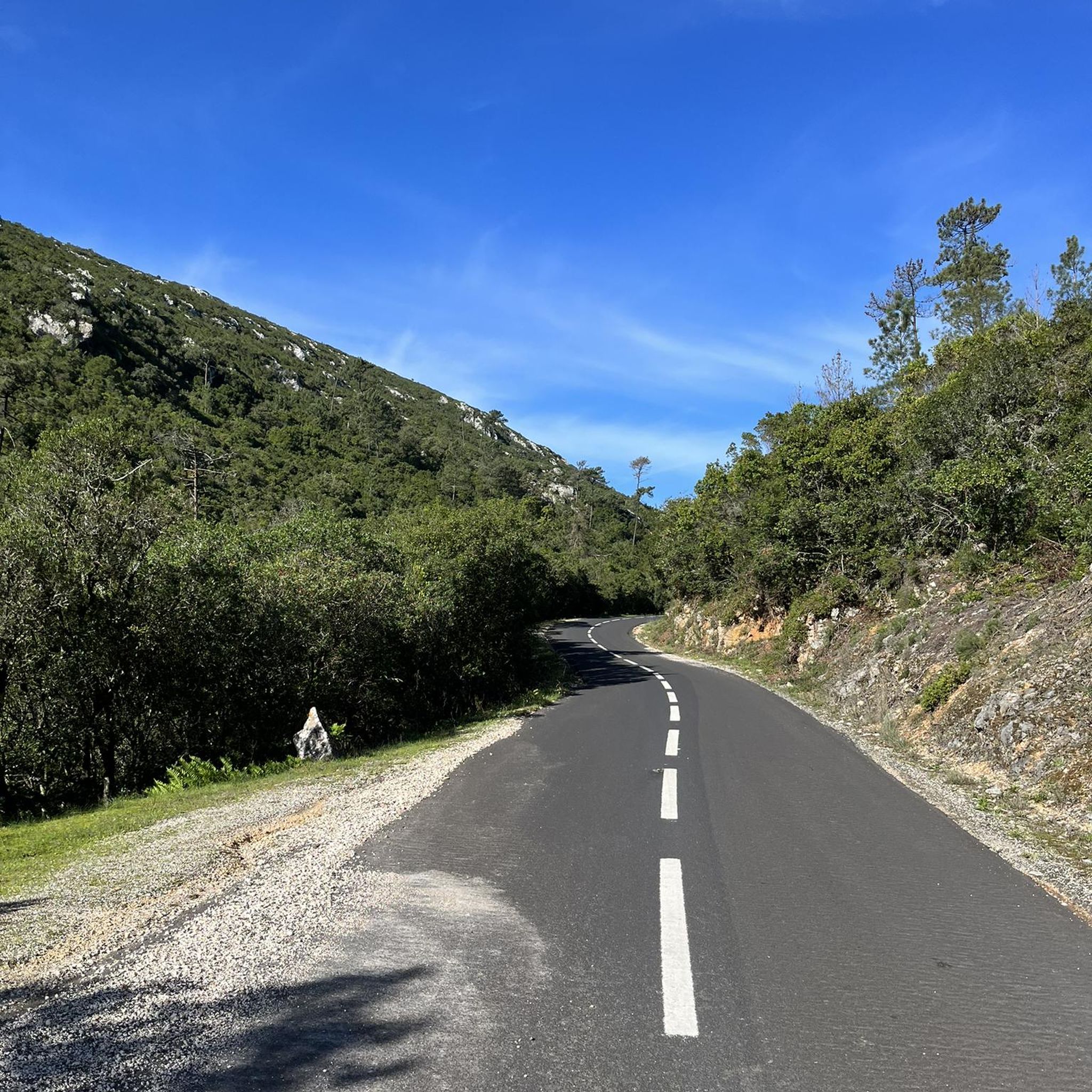
The Caminho da Meia Encosta runs along the southern side of the Serra de Montejunto and is suitable for cycling in both directions, although the east-west route is predominantly uphill. The terrain is quite uneven in some sections and you can expect to find some loose stones. The views over the southern side of the Serra de Montejunto are superb.
3
0
The area of the springs, on the Ota River, was once a leisure area for the local population, including the local bathing area in the summer. This site remained natural for a long time after the EPAL was installed, but at a certain point, the intensification of agriculture with the use of chemical fertilizers and pesticides, intensive livestock farming, and urban sewage made the flow from upstream a polluting threat to EPAL's water intakes, and EPAL paved several dozen meters of the river course near the site where it is installed with reinforced concrete.
1
0
At this location at the top of the Serra de Montejunto, also known as "Torre" due to the various antennas that were installed there, is the Chapel of Our Lady of the Snows, which may have been built in the 13th century and remodelled and expanded during the 16th century and later. Inside, the altars covered with 17th century tiles and the altarpiece of the main altar, from the 18th century, stand out. Next to the Chapel of Our Lady of the Snows, are the ruins of what is considered to be the first Dominican Convent in Portugal, built in the 12th century and abandoned after the extinction of the religious orders, and is currently in ruins. Also nearby are the ruins of the Royal Ice Factory, classified as a National Monument. Here, in the 18th century, the Dominican monks took advantage of the climatic and geological conditions and opened large tanks connected by narrow passages, one part for the production of ice and the other for its preparation, storage and conservation. The ice was later transported to Lisbon, to supply the court and the café at Terreiro do Paço, later known as Martinho da Arcada (Fernando Pessoa's Café)
2
0
Road that connects the village of Abrigada to the Serra de Montejunto, crossing one of the most beautiful sections of the Serra de Montejunto. A steep route but worth the effort.
2
0
The origins of the Ermida Bridge possibly date back to the end of the 15th century. A Royal Road passed through here, which was intended to connect the river port of Vila Nova da Rainha and Caldas da Rainha. It was the route of the royal and court routes since D. João II, and was also frequently used by D. João V and D. Carlos. All that remains of this 15th century Royal Road is the emblematic Ermida Bridge, a work of art structured and built in dressed stone and its sumptuous Romanesque arch, or round arch. Due to its total lack of conservation and because it has to support loads (heavy agricultural machinery) for which it was not designed, it is currently at risk of collapse, and its passage is even closed.
1
0
Frequently Asked Questions
How many mountain bike trails are available in Paisagem Protegida Da Serra De Montejunto?
There are over 45 mountain bike trails recorded in Paisagem Protegida Da Serra De Montejunto on komoot. These routes offer a diverse range of experiences, from moderate paths to challenging technical single trails.
Are there mountain bike trails suitable for beginners in Serra de Montejunto?
Yes, Paisagem Protegida Da Serra De Montejunto offers 6 easy mountain bike routes. These trails are generally less demanding in terms of elevation and technical sections, making them suitable for those new to mountain biking or looking for a more relaxed ride.
What kind of challenge can advanced mountain bikers expect in Paisagem Protegida Da Serra De Montejunto?
Advanced mountain bikers will find 8 difficult routes in Paisagem Protegida Da Serra De Montejunto. These trails often feature significant elevation gains, stony sections, and winding single tracks through rough landscapes, providing a rewarding and challenging experience. An example is the Gravel Bend – Chapel of Saint George loop from Capela de Nossa Senhora das Neves, which includes extensive climbs and panoramic views.
Are there circular mountain bike routes in Serra de Montejunto?
Many of the mountain bike routes in Serra de Montejunto are designed as loops, allowing you to start and finish at the same point. For instance, the Ponte da Ermida – Ota River loop from Cabanas de Torres and the Meia Encosta Trail – Gravel Bend loop from Paisagem Protegida da Serra de Montejunto are popular circular options.
What are the best times of year for mountain biking in Paisagem Protegida Da Serra De Montejunto?
The region is generally pleasant for mountain biking for much of the year. Spring and autumn offer milder temperatures, which are ideal for tackling the significant elevations. Summer can be warm, but the higher altitudes provide some relief. Winter rides are possible, though some trails might be more challenging due to weather conditions.
What natural features and viewpoints can I expect to see along the trails?
Paisagem Protegida Da Serra De Montejunto is known for its expansive panoramic views, especially from its summit, which is the highest natural viewpoint in Extremadura. You can also encounter unique karst formations, relict oak forests, and escarpments. Notable viewpoints include the Serra de Montejunto Watchtower and the Salvé Rainha Viewpoint - Salvé Rainha Cross Viewpoint.
Are there any historical landmarks or attractions to explore near the mountain bike routes?
Yes, the area is rich in history. At the summit, you can explore the ruins of an old monastery. Other historical sites include the Chapel of Our Lady of the Snows (Ruins) and the Chapel of Saint John the Baptist. The famous Real Fábrica de Gelo (Royal Ice Factory), a national monument, is also nearby.
What do other mountain bikers enjoy most about mountain biking in Paisagem Protegida Da Serra De Montejunto?
The komoot community highly rates the mountain biking experience in Paisagem Protegida Da Serra De Montejunto, with an average score of 4.8 stars from around 10 reviews. Reviewers often praise the diverse terrain, the challenging climbs, and the stunning panoramic views from the elevated sections. The untouched, rough landscapes and winding single trails are frequently highlighted as key attractions.
Is there parking available for mountain bikers in Serra de Montejunto?
While specific parking areas for each trailhead are not detailed, the region is well-accustomed to outdoor visitors. Many routes start from villages or designated areas where parking is typically available. It's advisable to check the starting point of your chosen route for specific parking information.
Can I reach the mountain bike trails using public transport?
Access to Paisagem Protegida Da Serra De Montejunto by public transport can be limited, especially for reaching specific trailheads with a mountain bike. While some villages around the protected landscape might be served by local buses, direct connections to the higher, more remote trail starting points are less common. Planning for personal transport is often recommended for convenience.
Are there any facilities like picnic areas or campsites in the area?
Yes, for those looking to extend their stay or take a break, there are facilities available. You can find the Picnic Area of Serra de Montejunto for a rest stop, and the Montejunto Rural Campsite offers accommodation options for overnight stays.
What is the typical terrain like for mountain biking in this region?
The terrain in Paisagem Protegida Da Serra De Montejunto is diverse and often challenging. You'll encounter significant elevation changes, stony sections, and varied landscapes. Trails frequently wind through untouched, rough areas, including relict oak forests and sparse vegetation, characteristic of the limestone massif.
Most popular routes in Paisagem Protegida Da Serra De Montejunto
Most popular attractions in Paisagem Protegida Da Serra De Montejunto

Get inspired with the komoot mobile app


Explore more
Browse the best MTB trails in other regions.
