Attractions and Places To See around Sant Jaume De Frontanyà - Top 20
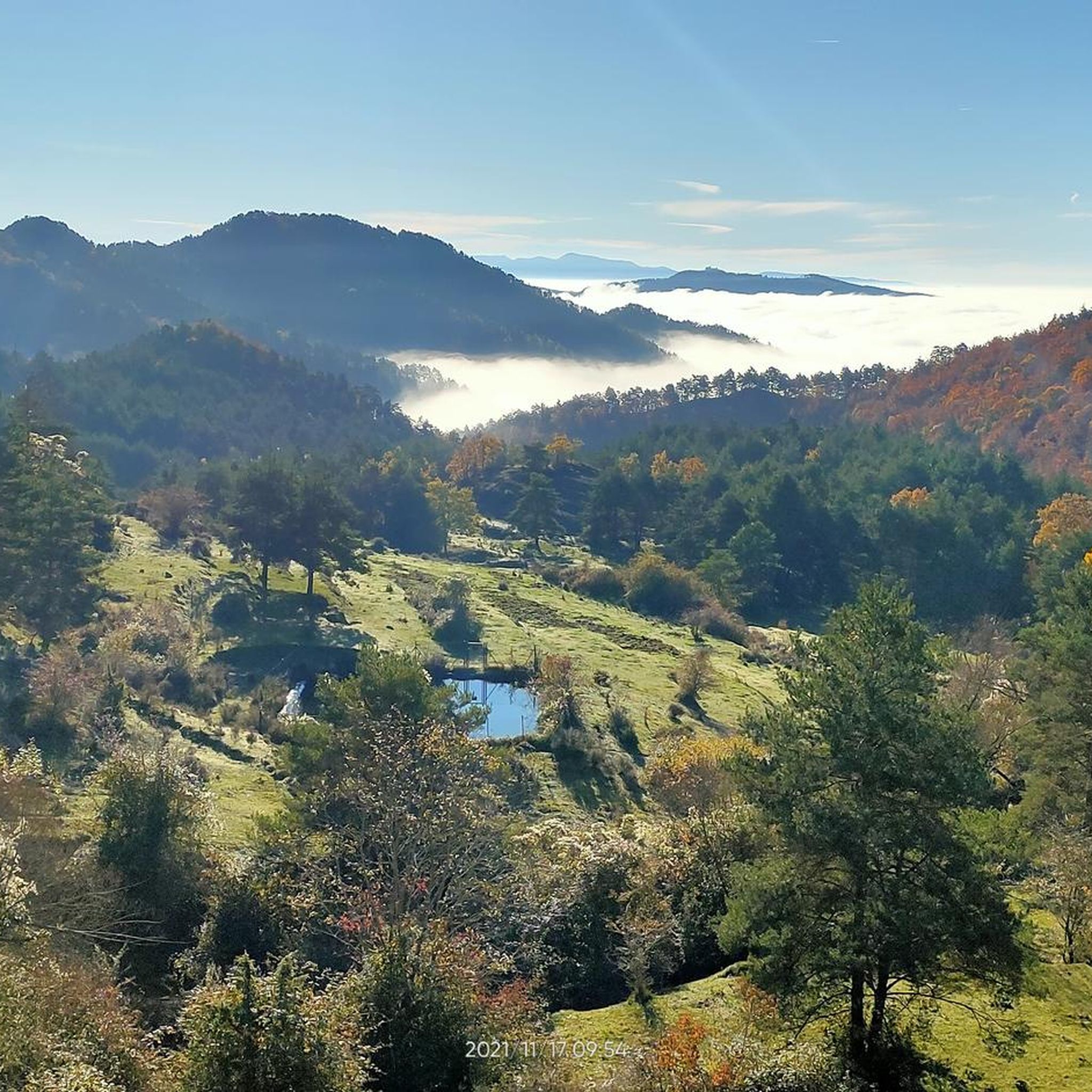
Best attractions and places to see around Sant Jaume De Frontanyà include a blend of historical sites and natural features. This small village in Catalonia, Spain, is situated in the Pyrenees and is recognized for its well-preserved Romanesque architecture. The region offers diverse landscapes, from mountain peaks to dense forests and waterfalls. It serves as a destination for those interested in cultural heritage and outdoor exploration.
Best attractions and places to see around Sant Jaume De Frontanyà
- The most popular…
Last updated: May 9, 2026
Coll de la Creueta
Highlight • Mountain Pass
Translated by Google •
Tip by

Torrent de la Cabana Waterfalls
Highlight (Segment) • Waterfall
Translated by Google •
Tip by

Sign up now to discover places like this
Get recommendations on the best single tracks, peaks, & plenty of other exciting outdoor places.
Sign up for free
Coll de Merolla
Highlight • Mountain Pass
Good food and a fantastic morning in the foothills of the Pyrenees
Translated by Google •
Tip by

Castellar de n'Hug
Highlight • Settlement
Tip by

Sanctuary of Mare de Déu de Montgrony
Highlight • Religious Site
There is also a restaurant.
Translated by Google •
Tip by
Sign up for free to discover even more attractions around Sant Jaume De Frontanyà.
Sign up for free
Already have an account?
Start today with a free account
Your next adventure awaits.
Login or Signup

Tips from the Community

A beautiful village located in the Cadí-Moixeró Natural Park. A stroll through it, visiting the Llobregat springs, and buying something from its bakeries are highly recommended.
0
0

In the summer the influx of people makes this natural space lose all its charm and beauty, it has been an idea Positive regular entry To this tour in summer To preserve it from the masses..!!
1
1

Small mountain village of Berguedà, halfway to Coll de la Creueta and also the end of Montgrony from Gombrèn. It is known for the Llobregat River Springs, but also for its beauty. A good point to rest and refuel.
0
0

My first visit to this beautiful high mountain town was in 1992, when I was barely 11 years old, in the middle of June. I remember it rained a lot and it was very cold. It coincided with the Monte Bondone stage of that year's Giro d'Italia. From then on I knew that I would pass by there on a bicycle. Castellar de N'Hug is a beautiful town that is characterized by: - birth of the Llobregat river (its sources are very pleasant) - gigantic ham and cheese croissants and other tastes.
0
0
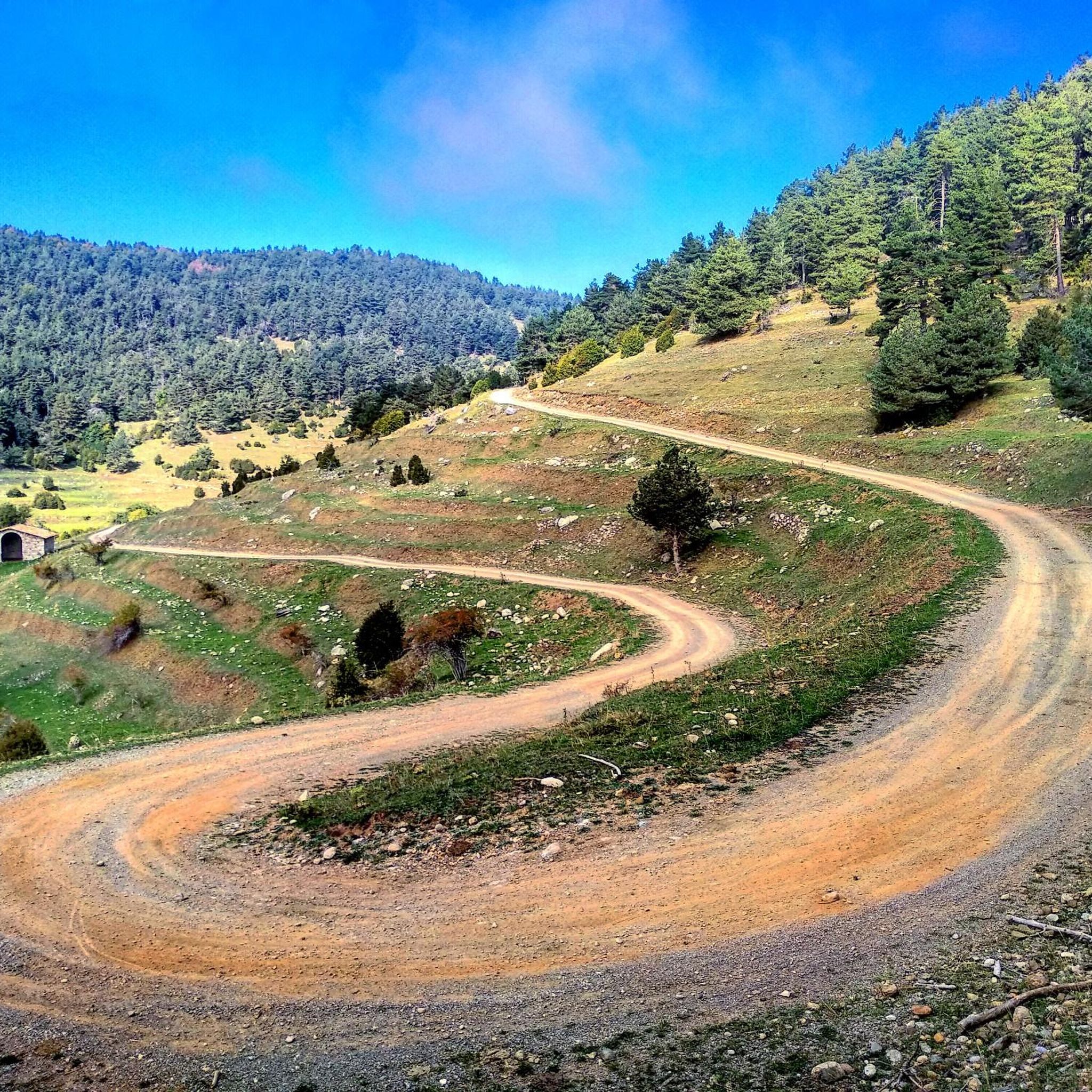
It is a very steep and fun climb on both sides. The road is very winding, with continuous curves and countercurves, some of these counterbanks. The asphalt is rough and there is no shoulder, although it is true that traffic is very scarce. The eastern slope, which starts from Campdevánol and passes through Gombrèn, is approximately 14 km and in no case does the slope exceed 5%. It is a sunny climb, very favorable for the colder months. In summer it is usually very hot. The western slope, which starts from Guardiola de Berguedà, is a little longer and presents a first section to La Pobla de Lillet characterized by long straights. It has some sections at 6-7% and the last 3 km are the hardest.
0
0
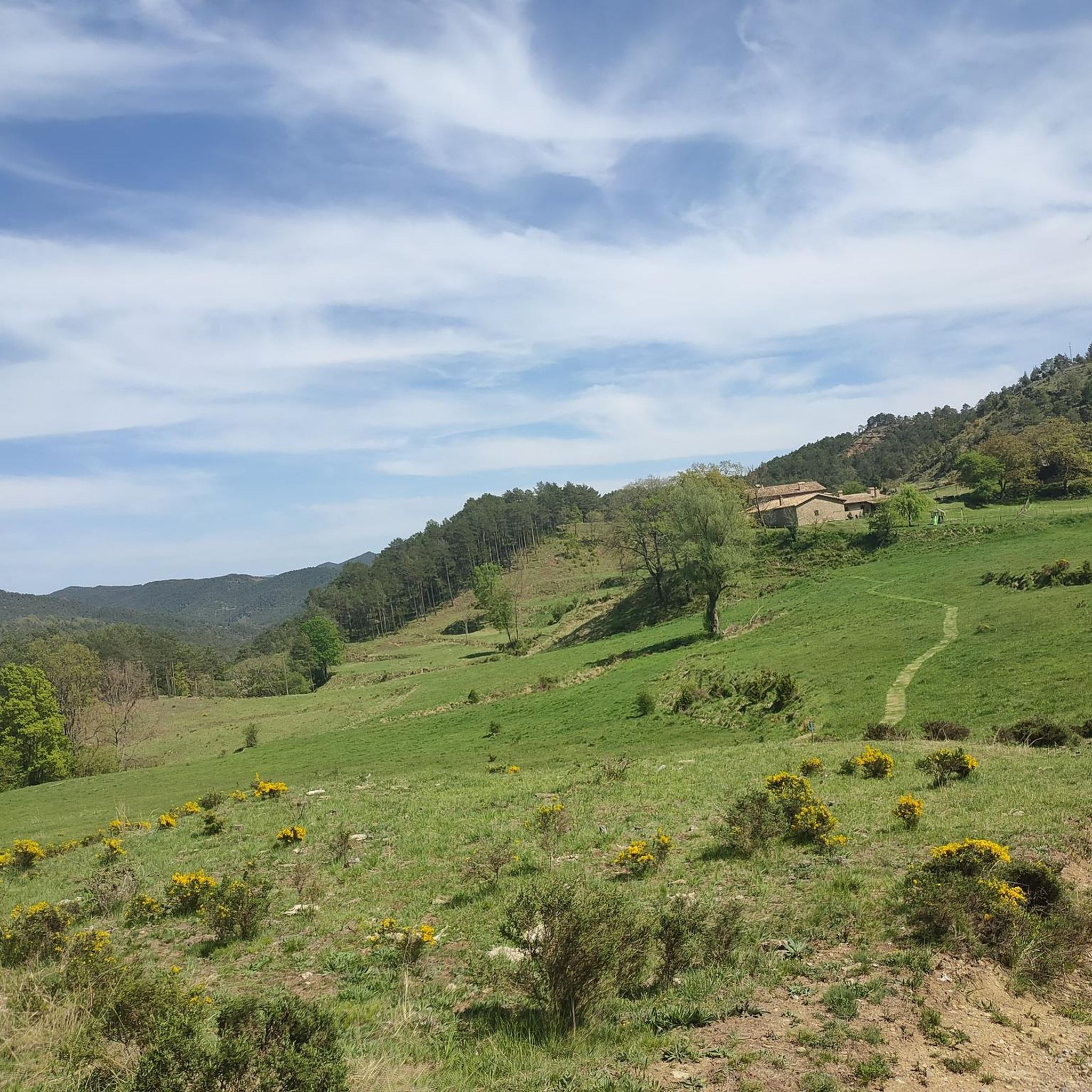
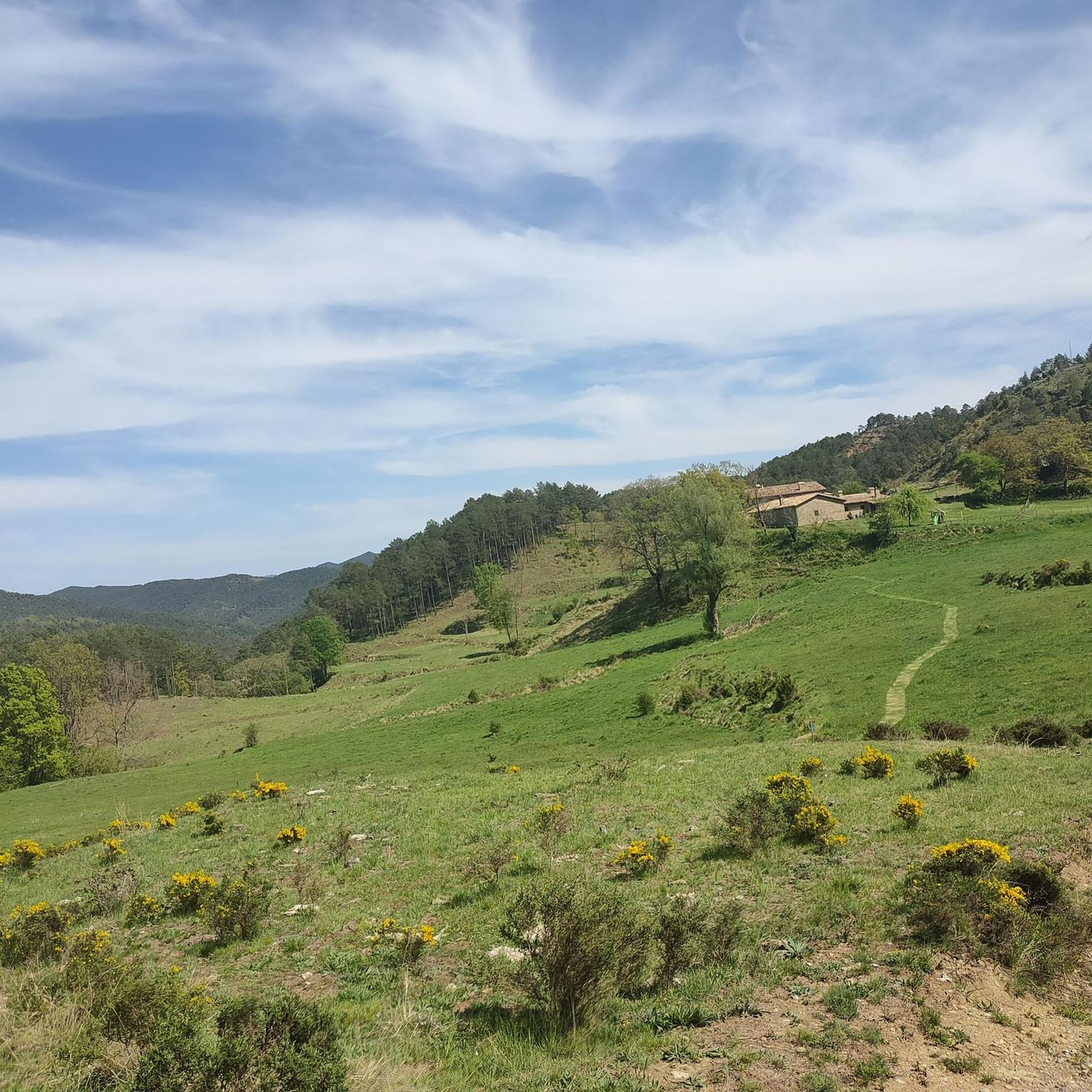
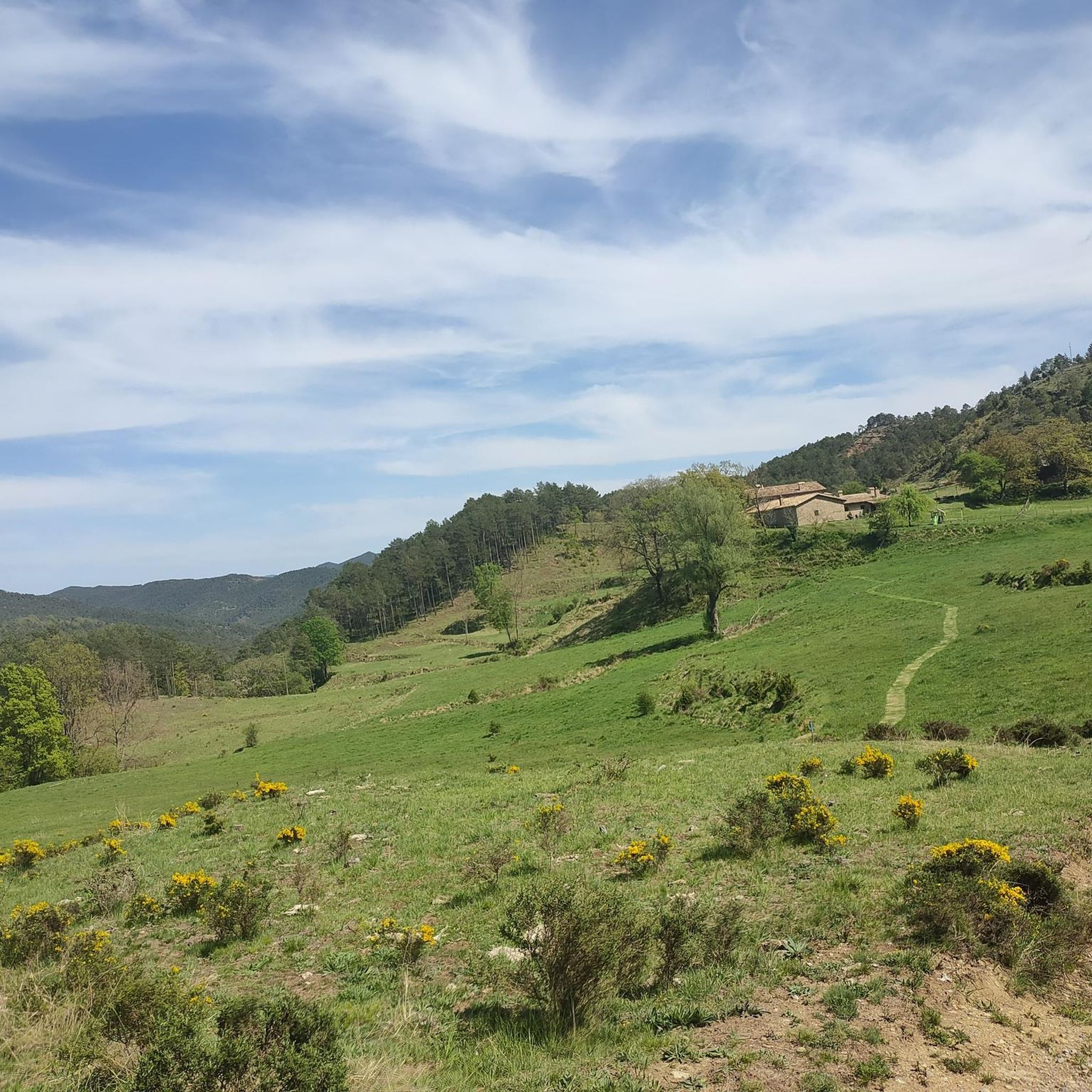
The Coll de Merolla is the crossing point between the Pobla de Lillet and Campdevànol, that is to say between the upper Berguedà and the Ripollès. The two slopes are gentle, and halfway, near Gombrèn, there is the link with the Carretera de Montgrony, to continue climbing up to Castellar de N'Hug. At the top is the Merolla refuge, site of the legendary full moon brevet dinner.
0
0

Castellar de n'Hug is a town located at 1,450 meters above sea level, within the Cadí-Moixeró natural park, on the south side of the Pyrenees. It appears for the first time documented in the year 839, in the act of consecration of the cathedral of Urgell. Most likely the first building was the parish church of Santa Maria, replaced in the 11th century by the Romanesque church that has been partially preserved to this day. The castle that gave rise to the place name has already disappeared, although some remains can be seen. The town has traditionally lived off livestock farming, and also on smuggling, especially in times of war and post-war. The area has always been a transit area for refugees and fugitives. At the beginning of the 20th century, with the opening of the Portland cement factory, one of the best examples of industrial architecture in Catalonia, its economic activity was revitalized. Currently, and thanks to the fact that the popular architecture of the area has been preserved, based on the use of stone, wood and tiles, the municipality is a tourist attraction, and has been declared by the Ministry of Tourism as one of the most beautiful towns in Spain.
1
0
The Coll de Merolla refuge is located at 1090 meters above sea level, next to the road that connects Pobla de Lillet and Gombrèn. It consists of a kitchen and dining room and four rooms with bunk beds and capacity for 23 people. There is also a community kitchen and bar and restaurant service.
0
0
Frequently Asked Questions
What types of attractions can I find around Sant Jaume de Frontanyà?
The region around Sant Jaume de Frontanyà offers a rich blend of historical sites and natural wonders. You can explore well-preserved Romanesque architecture, such as the magnificent Church of Sant Jaume de Frontanyà, alongside stunning natural landscapes including mountain peaks, waterfalls, and extensive forests.
Are there any notable historical or cultural sites to visit?
Absolutely. The main highlight is the mid-12th-century Church of Sant Jaume de Frontanyà, a prime example of early Catalan Romanesque architecture with a unique 12-sided lantern tower. Other significant sites include the pre-Romanesque Hermitage of Sant Esteve de Tubau and the 18th-century Shrine of Our Lady of Oms, built upon a 13th-century Romanesque foundation. Further afield, the Sanctuary of Mare de Déu de Montgrony also offers historical and scenic interest.
Where can I experience the natural beauty of the area?
For natural beauty, visit the Torrent de la Cabana Waterfalls, an itinerary following the refreshing Estiula torrent with seven gorges and diverse plant life. You can also explore the vast Cadí-Moixeró Natural Park, located about 15 km away, which offers diverse landscapes and outdoor experiences. The peak of Pedró de Tubau (1543 m) also provides scenic views.
What outdoor activities are popular near Sant Jaume de Frontanyà?
The region is a haven for outdoor enthusiasts. You can find numerous routes for hiking, cycling, and mountain biking. For road cycling, explore routes like "El Coll de la Creueta – return via Coll de Merolla" or "Bagà – Collada de Sobirana loop from la Pobla de Lillet." For running, consider trails such as "Roca dels Coloms – Puig Lluent loop from Castell de l'Areny." Mountain biking options include "Colomer Pool – Gorg del Colomer Waterfall loop from Gombrèn." You can find more details on these activities in the dedicated guides for Road Cycling Routes, Running Trails, and MTB Trails around Sant Jaume De Frontanyà.
Are there any family-friendly attractions?
Yes, the settlement of Castellar de n'Hug is considered family-friendly. It's a picturesque town known for its Romanesque church of Santa Maria and the Llobregat springs, offering a pleasant environment for all ages.
What is the best time to visit the Torrent de la Cabana Waterfalls?
While beautiful year-round, it's worth noting that the Torrent de la Cabana Waterfalls can become quite crowded in summer. To fully appreciate its natural charm and beauty without the large influx of people, consider visiting during the spring or autumn months.
What are some popular mountain passes for cyclists or hikers?
The region features several popular mountain passes. Coll de Merolla divides the Berguedà and Ripollès regions and offers a refuge and facilities. Another challenging pass is Collada de Sobirana, known for its varying difficulty depending on the approach, with some sections reaching up to 15% gradient.
What do visitors enjoy most about the attractions around Sant Jaume de Frontanyà?
Visitors particularly appreciate the blend of historical and natural experiences. The Torrent de la Cabana Waterfalls are loved for their visual beauty and refreshing waters. Places like Coll de Merolla are noted for being very nice and relaxing, offering good food and fantastic mornings in the Pyrenean foothills. The picturesque town of Castellar de n'Hug is also a favorite for its charm, plaza, church, and castle.
Are there any viewpoints offering panoramic scenery?
Yes, several locations provide excellent views. The peak of Pedró de Tubau (1543 m) offers scenic vistas of the Pyrenees. Mountain passes like Coll de Merolla and Collada de Sobirana also serve as great viewpoints. Additionally, the Sanctuary of Mare de Déu de Montgrony is situated on cliffs, providing expansive views of the surrounding landscape.
What kind of terrain can I expect on hiking and cycling trails?
The terrain around Sant Jaume de Frontanyà is diverse, ranging from gentle ascents to challenging climbs. You'll find trails through extensive pine forests, lush riparian vegetation, and open pastures. Some mountain passes, like Collada de Sobirana, feature steep ramps up to 15%, while others, such as Coll de Merolla, offer more gentle gradients. The region's natural features include river valleys and elevated positions, providing varied experiences for all skill levels.
Most popular routes around Sant Jaume De Frontanyà
Most popular attractions around Sant Jaume De Frontanyà

Get inspired with the komoot mobile app


Explore more
Still not found the Highlight you’re looking for? See guides of the top attractions in other regions:
