The best cycling routes around San Amaro
4.7
(5)
218
riders
46
rides
Touring cycling around San Amaro features routes that traverse river valleys, including the Avia river, and connect historical sites such as the Monastery of San Clodio de Leiro. The landscape includes varied terrain with notable elevation changes, indicating a mix of rolling hills and more challenging ascents. Routes often pass through areas with natural features like hot springs and cross significant landmarks like the Millennium Bridge.
Best touring cycling routes around San Amaro
- The most popular touring cycling route is…
Last updated: May 23, 2026
Hard bike ride. Very good fitness required. Mostly paved surfaces. Suitable for all skill levels.
4.3
(3)
31
riders
43.7km
03:25
610m
610m
Hard bike ride. Very good fitness required. Mostly paved surfaces. Suitable for all skill levels.

Sign up for free
20
riders
78.6km
05:10
990m
990m
Hard bike ride. Very good fitness required. Mostly paved surfaces. Suitable for all skill levels.
21
riders
54.1km
04:39
1,010m
1,010m
Hard bike ride. Very good fitness required. Mostly paved surfaces. Suitable for all skill levels.
14
riders
Hard bike ride. Very good fitness required. You may need to push your bike for some segments of this route.
Get access to more routes and recommendations from other explorers.
Sign up for free
Already have an account?
Our route recommendations are based on thousands of hikes, rides, and runs completed by other people on komoot.
Start today with a free account
Your next adventure awaits.
Login or Signup
Tips from the Community

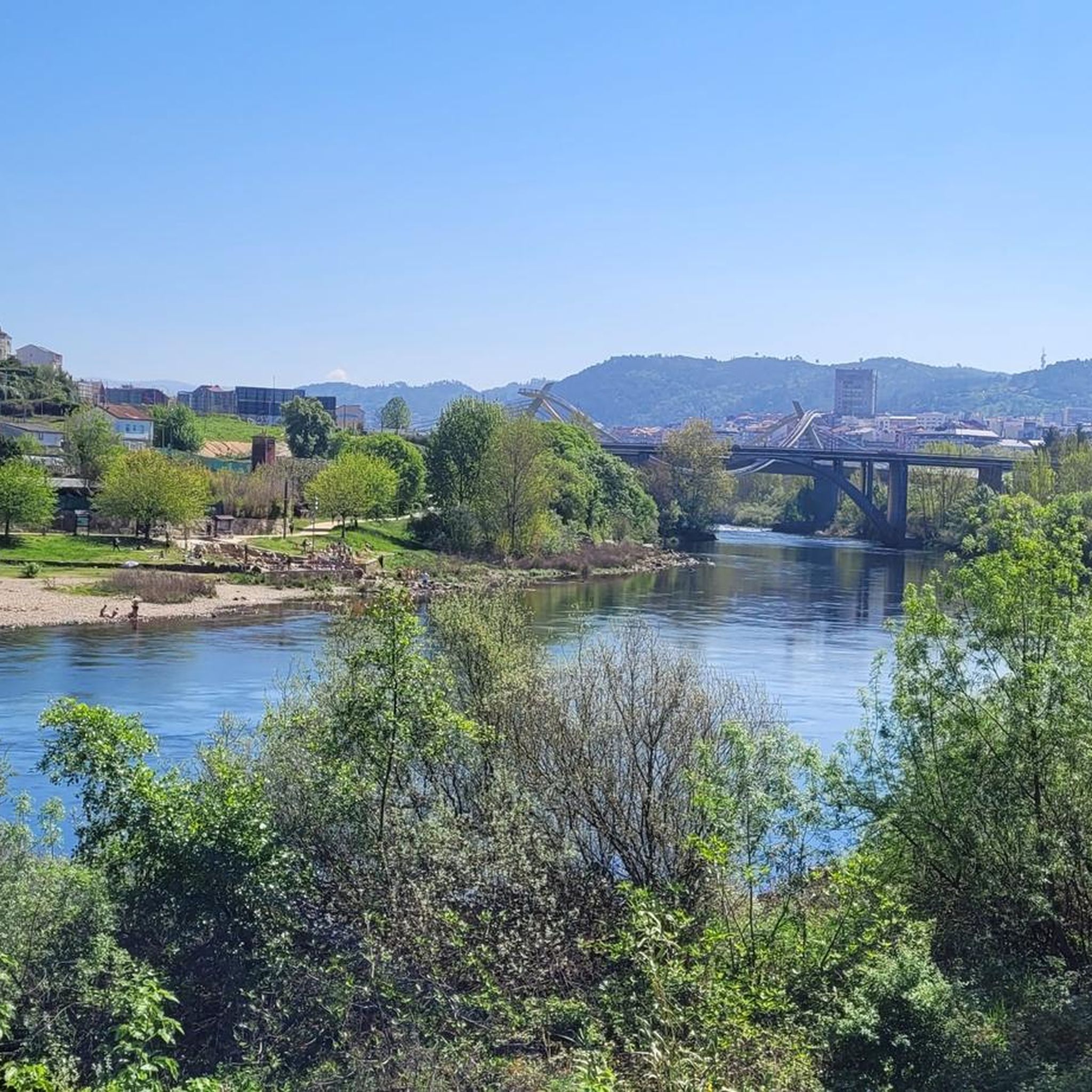
Located on the banks of the Miño River, in the Outariz area, west of Ourense, right on the city's "Thermal Promenade." Parking: The Outariz/Reza parking lot (on the opposite bank) is available, as the Muiño da Veiga parking lot is closed for renovations. Public transport: City bus line 5; the unique Thermal Train, which stops at the facility.
1
0
The Monastery of Santa María la Real de Oseira is located in the parish of Oseira (municipality of San Cristovo de Cea, Ourense), about 34 km from the city of Ourense and near the borders with Pontevedra and Lugo. Founded in 1137 by a group of hermits, it joined the Cistercian Order of Clairvaux in 1141. During the 12th and early 13th centuries, its main church was built, becoming one of the largest Cistercian monasteries in Spain. In 1552, a fire devastated the complex, but the church survived and retains an elegant, understated architectural style.
1
0
It spans the Miño River, linking the historic center of Ourense with the A Ponte neighborhood. It was built in the 1st century AD as a branch of the Via Nova (Via XVIII), connecting Bracara Augusta (Braga) with Asturica Augusta (Astorga). Only traces of the original Roman phase remain, such as rusticated stonework at the ends near the banks. It suffered damage during the Middle Ages; in 1228, under Bishop Lorenzo and with the support of Ferdinand III, it was rebuilt with pointed arches and renovated approaches. Until the 17th century, the bridge repeatedly collapsed. The final work was directed by Melchor de Velasco Agüero around 1660, establishing its current appearance.
1
0
The Roman bridge in Ourense, known as Ponte Vella or Puente Mayor, over the Miño River, was built in the 1st century AD as part of a branch of the Via Nova (Eighteenth Century). According to tradition, it dates back to the time of Trajan, although its construction characteristics place it close to the time of Augustus. Of that first bridge, only a few cushioned ashlars from the bases remain, as silent witnesses of the past.
1
0

They are one of the most popular thermal complexes in the city. These open-air thermal baths have several natural hot water pools, with temperatures around 38-41ºC, known for their therapeutic and relaxing properties thanks to their high mineral content. The complex is inspired by Japanese baths, and offers both free access in public areas and a private paid area. The Termas de Outariz are part of the thermal circuit of Ourense, famous for its tradition of spas and hot springs, making them an ideal destination for well-being and relaxation.
0
0
Lonia Park in Ourense is a large green space located in the As Lagoas area, which follows the course of the Lonia River. It offers trails, rest areas and children's areas, making it ideal for walking, relaxing and enjoying nature in a peaceful setting within the city.
0
0
The Millennium Bridge, also known as the Gaviota Bridge due to its shape, is one of the six bridges over the Miño River in the city of Ourense, located between the medieval bridge and the N-525 bridge.
1
0

Great architecture and an invitation for the curious to walk around the ring.
1
1
Frequently Asked Questions
How many touring cycling routes are available in San Amaro?
There are over 40 touring cycling routes available around San Amaro, offering a diverse range of experiences. Most of these routes are classified as difficult, with a few moderate options for those seeking a less strenuous ride.
Are there touring cycling routes suitable for beginners in San Amaro?
While San Amaro is known for its more challenging terrain, with 34 routes classified as difficult, there are 9 moderate touring cycling routes that might be more suitable for beginners or those looking for a less intense ride. There are no routes specifically classified as easy.
Can I find circular touring cycling routes around San Amaro?
Yes, many of the touring cycling routes in San Amaro are designed as loops, allowing you to start and finish in the same location. An example is the Leiro – loop via Avia river, San Amaro and Monastery of San Clodio de Leiro, which offers a scenic circular journey.
What natural attractions can I see while touring cycling in San Amaro?
San Amaro's touring cycling routes often traverse beautiful natural landscapes. You can find routes that pass by the Outariz Hot Springs, Barbantes Thermal Park, and the Barbantiño Waterfall. Many routes also follow the scenic Miño and Avia river valleys.
Are there historical sites to visit on a touring bike in San Amaro?
Absolutely. The region is rich in history. Routes often connect historical sites such as the Monastery of San Clodio de Leiro. You can also find highlights like the Medieval Rock Tombs of Castro de Santa Mariña, offering a glimpse into the past.
What do other touring cyclists enjoy most about cycling in San Amaro?
The touring cycling routes in San Amaro are highly rated by the komoot community, with an average score of 4.7 stars from over 5 reviews. Cyclists often praise the varied terrain, the beautiful river valleys, and the opportunity to discover historical sites and natural hot springs along the way.
Are there any longer touring cycling routes for experienced riders?
For experienced riders seeking a longer challenge, the Outariz Hot Springs – Millennium Bridge loop from O Carballiño is a significant option, covering 48.8 miles (78.6 km) with considerable elevation gain. Another demanding route is the Oseira Monastery – Oseira Fountain loop from O Carballiño, spanning 54.1 miles (87.1 km).
What is the best time of year for touring cycling in San Amaro?
San Amaro, located in Galicia, experiences a mild climate. Spring and autumn generally offer the most pleasant conditions for touring cycling, with moderate temperatures and less rainfall than winter. Summer can be warm, especially in the river valleys, while winter can bring more rain, though temperatures usually remain above freezing.
Are there touring cycling routes that pass by hot springs?
Yes, San Amaro is known for its natural hot springs. The Outariz Hot Springs – Millennium Bridge loop from O Carballiño and the Outariz Hot Springs – Millennium Bridge loop from Barbantes are excellent options that lead through areas featuring these natural thermal baths.
Is public transport available to access touring cycling routes in San Amaro?
While specific public transport connections directly to all trailheads may vary, major towns in the region, such as Ourense, often have bus or train services. It's advisable to check local transport schedules for connections to the starting points of your chosen routes.
Are there any touring cycling routes that offer views of the Millennium Bridge?
Yes, the iconic Millennium Bridge is a prominent landmark in the area. The Lonia Park – Millennium Bridge loop from Barbantes is a difficult route specifically designed to offer views of this impressive structure while following sections of the river.
Can I bring my dog on touring cycling routes in San Amaro?
While komoot does not specifically classify routes as 'dog-friendly' for touring cycling, many public paths and trails in natural areas are generally accessible for dogs on a leash. However, it's always best to check local regulations for specific areas or protected natural parks you plan to visit, and ensure your dog is comfortable with the distance and terrain.
Most popular attractions around San Amaro

Get inspired with the komoot mobile app


Explore more
Browse the best Cycling routes in other regions.
