Attractions and Places To See around Castelnau-Pégayrols - Top 20
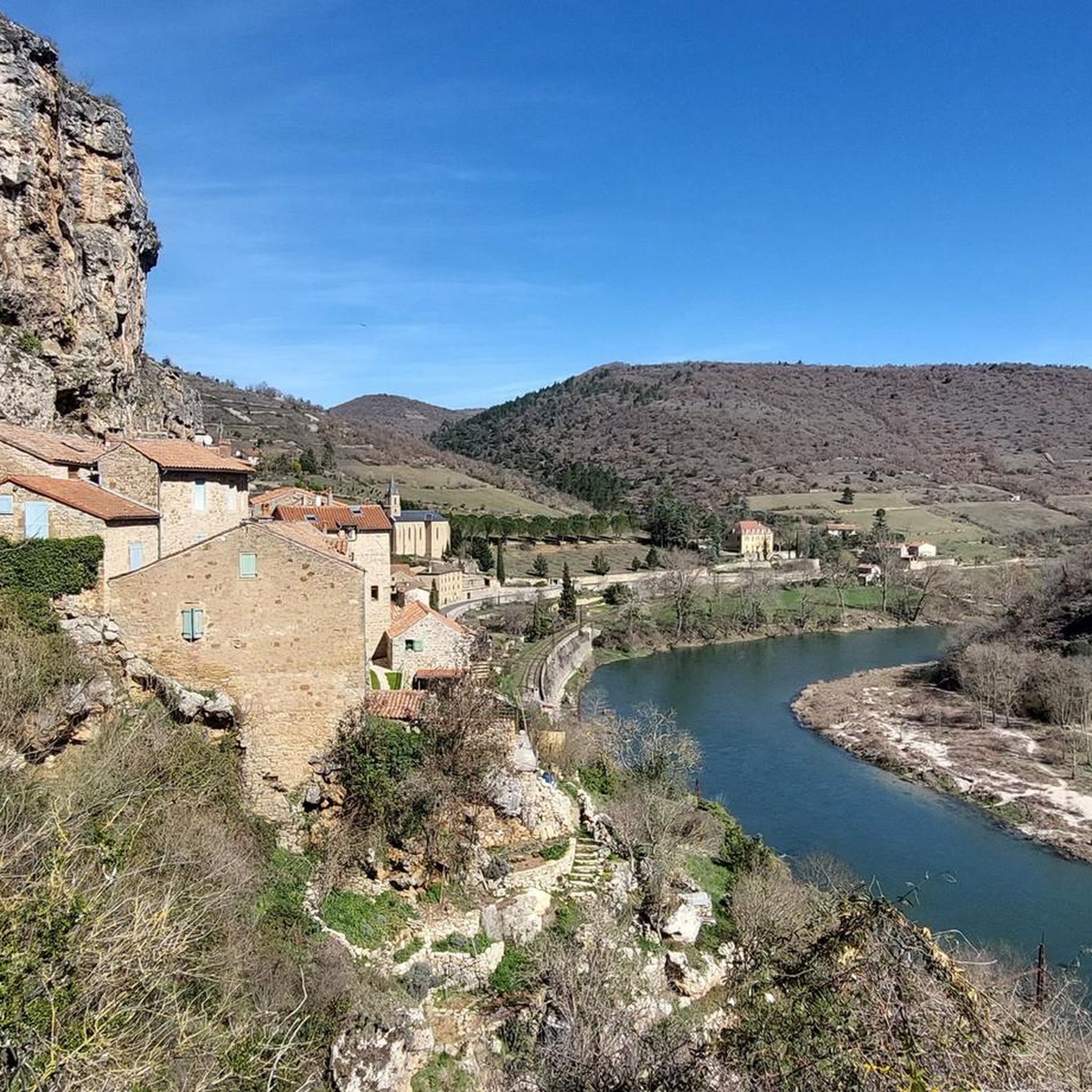
Best attractions and places to see around Castelnau-Pégayrols, a medieval village in Aveyron, include historical landmarks, cultural sites, and natural features. Situated on a rocky outcrop, the village dominates the Muse valley and is part of the Grands Causses Regional Natural Park. Its architectural heritage features five historical monuments, including Romanesque churches and a castle. The surrounding area offers diverse landscapes and points of interest for exploration.
Best attractions and places to see around Castelnau-Pégayrols
- The most popular attractions is…
Last updated: October 9, 2026
The Creissels waterfalls
Highlight • Waterfall
Translated by Google •
Tip by

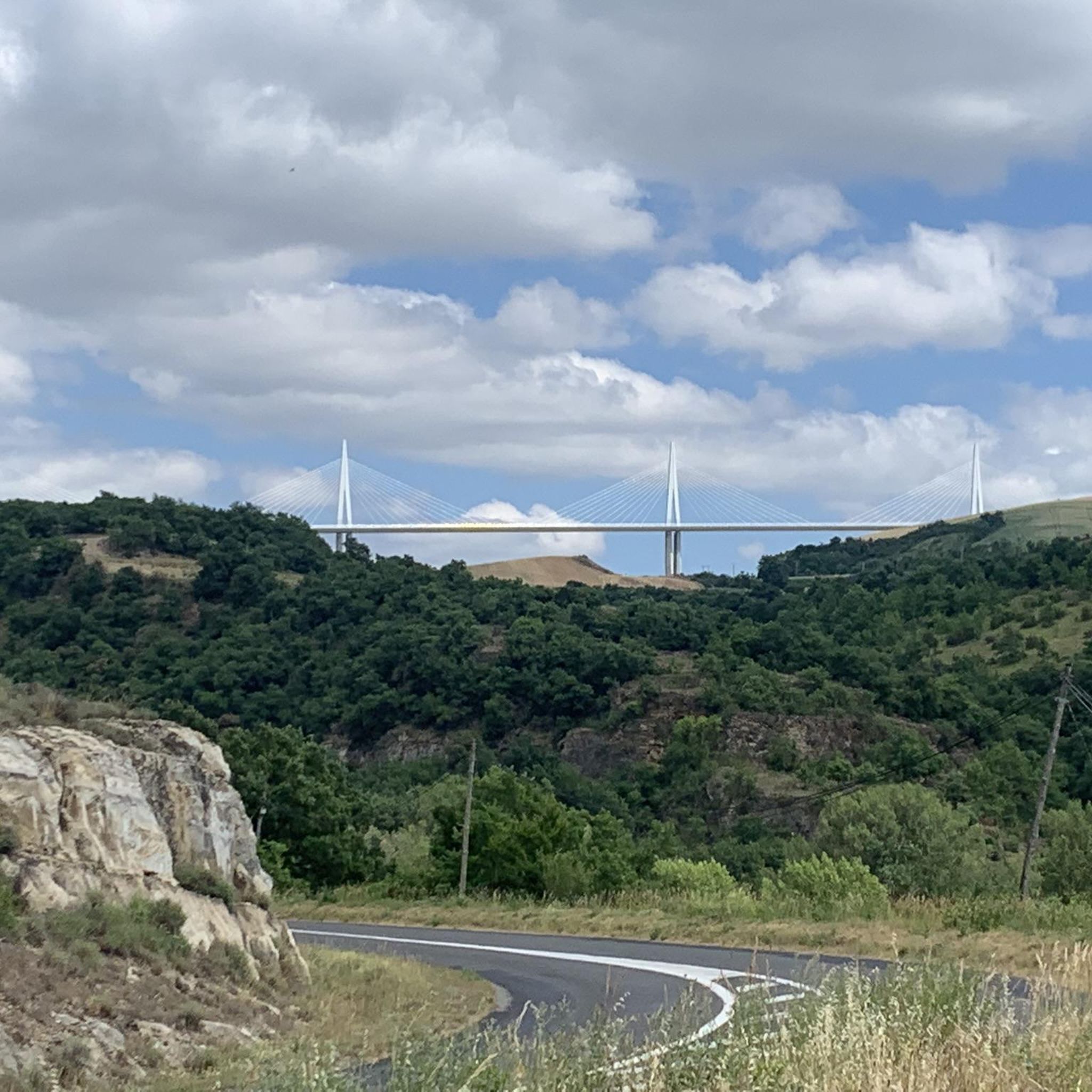
Millau Viaduct
Highlight • Bridge
Translated by Google •
Tip by

Sign up now to discover places like this
Get recommendations on the best single tracks, peaks, & plenty of other exciting outdoor places.
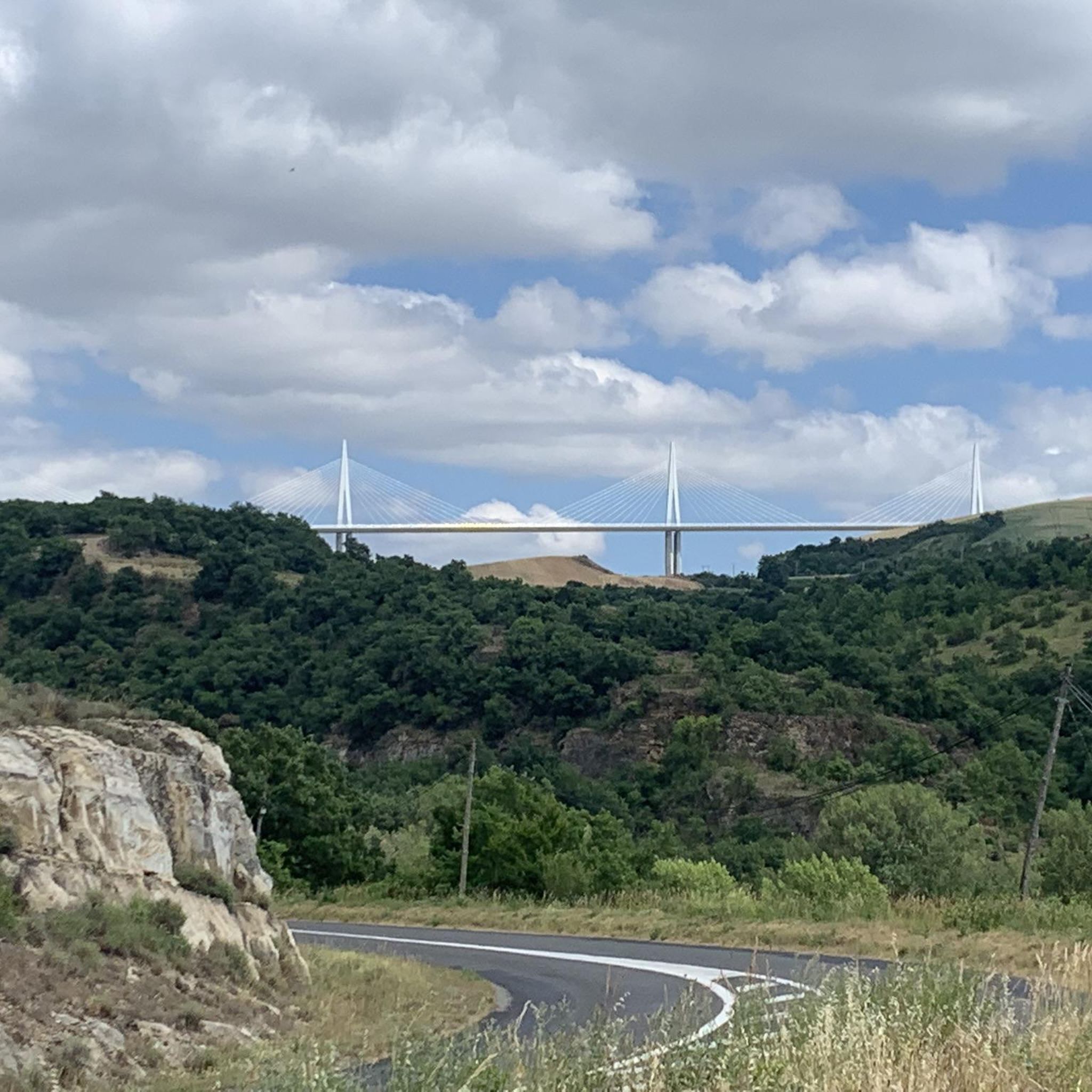
Millau Viaduct
Highlight • Bridge
Translated by Google •
Tip by

Pont Lerouge
Highlight • Bridge
The fascinating Pont Lerouge historical gem on the River Tarn.
Translated by Google •
Tip by

Pas Destrech Cross
Highlight • Viewpoint
Translated by Google •
Tip by

Sign up for free to discover even more attractions around Castelnau-Pégayrols.
Already have an account?
Start today with a free account
Your next adventure awaits.

Tips from the Community

Built between 1818 and 1821, the Lerouge bridge became one of the main structures for crossing the Tarn in Millau. It replaced the Pont Vieux, several arches of which had been destroyed by a flood in 1758, leaving the town without a permanent bridge for over sixty years. During this long period, crossing the Tarn was mainly done by ferry. The project was launched on the initiative of the prefect of Aveyron, d’Estourmel. The plans were drawn up by Pierre-Jacques Le Rouge, an engineer for the district. The first stone was laid on June 20, 1818, and the bridge was opened to traffic in January 1821. Its name therefore comes from its designer, not from the color of its stones. A curious detail: its construction was largely financed by private individuals, and a toll was collected until 1875. This tax even caused tensions with the inhabitants of Creissels, some of whom continued to cross the Tarn on foot or by boat to avoid paying it.
3
0
From this point at the foot of the structure, the regular succession of piers and guyed pylons can be particularly well distinguished. The deck, 2,460 m long, crosses the valley at a height of approximately 270 m above the Tarn. Pier P2, the tallest, culminates at 245 m, while the assembly formed by the pier and its pylon reaches 343 m: a height greater than that of the Eiffel Tower. This perspective also recalls the technical feat that the construction of the viaduct represented. The metal deck was assembled in sections from either side of the valley, then progressively launched across the void. The joining of the two parts was carried out on May 28, 2004, 268 m above the Tarn, before the official inauguration a few months later. An interesting detail can be discerned here: despite its exceptional dimensions, the structure appears remarkably light. This impression is not accidental. The viaduct was specifically designed to blend into the valley by limiting the visual impact of its structure, with a very slender deck and piers that branch out in a "Y" shape.
2
0
From the greenway, the Millau Viaduct is revealed from a particularly spectacular angle! One becomes aware of the extraordinary dimensions of the structure. Built between 2001 and 2004, the viaduct crosses the Tarn valley over 2,460 m and connects the Causse Rouge to the north with the Causse du Larzac to the south. Its metal deck, approximately 32 m wide, rests on seven concrete piers extended by seven cable-stayed pylons. At its highest point, the entire structure reaches 343 m above the ground; the deck is up to about 270 m above the Tarn. Designed by engineer Michel Virlogeux and British architect Sir Norman Foster, the viaduct combines a very slender metal structure with piers whose "Y" shape helps to visually lighten the whole. The deck was manufactured in metal elements and then gradually launched from both ends of the valley. The joining of the two parts was finally carried out on May 28, 2004, at 268 m above the Tarn.
2
0

Absolutely worth seeing - view it from below and definitely join the architecture tour.
0
0

because it remains planted there, in the middle of nature, in perfect harmony
1
0

The Pas Destrech Cross, which the biker encounters here at the top, is a truly remarkable small sacred monument. Approaching it from behind, it appears to be made of black metal, but then you realize that this is only the basic framework for the wooden beams of the actual cross. Its shape is also rather unusual for a summit cross: the longitudinal and transverse beams, which are of equal length, are each provided with another short beam at the end, giving the viewer the impression of a square floor plan.
1
0
The Pas Destrech Cross, which hikers encounter here on the summit, is a truly remarkable small sacred monument. Approaching it from behind, it appears to be made of black metal, but then one realizes that this is only the basic framework for the wooden beams of the actual cross. Its shape is also rather unusual for a summit cross: the longitudinal and transverse beams are of equal length, with each end provided with another short beam, giving the viewer the impression of a square floor plan.
2
0
Frequently Asked Questions
What historical landmarks can I explore in Castelnau-Pégayrols?
Castelnau-Pégayrols is rich in history, featuring five historical monuments. You can explore the village's 11th-century castle, the Romanesque Church of Saint-Michel with its crypt, and the Church of Notre-Dame, known for its purified style and 17th-century choir paintings. The Priory of Saint-Michel also offers a glimpse into medieval monastic life with its Romanesque rooms and courtyard.
Where can I find the best panoramic views around Castelnau-Pégayrols?
For breathtaking views, the village itself is perched on a rocky outcrop dominating the Muse valley, offering expansive panoramas towards the Cévennes and Montagne Noire. Additionally, the Pas Destrech Cross provides a dizzying panorama over the town of Millau from impressive cliffs. Another excellent spot is the Millau Viaduct Viewpoint, offering spectacular perspectives of the famous cable-stayed bridge.
Are there family-friendly activities or attractions near Castelnau-Pégayrols?
Yes, several attractions are suitable for families. The town of Millau, known for its rich heritage and outdoor opportunities, is considered family-friendly. The Millau Viaduct Viewpoint and the Millau Viaduct itself are also noted as family-friendly. Beyond the immediate area, nearby Lake Pareloup offers activities like swimming, pedal boating, and water skiing, while Micropolis, the city of insects, is a unique family attraction.
What kind of outdoor activities can I do near Castelnau-Pégayrols?
The region around Castelnau-Pégayrols, situated within the Grands Causses Regional Natural Park, is ideal for outdoor enthusiasts. You can find numerous opportunities for mountain biking, hiking, and horse riding. For specific routes, explore hiking trails, road cycling routes, and running trails in the area.
Are there hiking trails suitable for different skill levels near Castelnau-Pégayrols?
Yes, the area offers a variety of hiking trails. For an easy walk, consider the 'Peyre Troglodyte Village – Peyre Village loop'. Moderate options include the 'Dinosaur Footprints of Peyre loop' and the 'Castelmus singletrail loop'. More challenging routes are also available. You can find detailed information on these and other trails in the Hiking around Castelnau-Pégayrols guide.
What is the best time to visit Castelnau-Pégayrols for cultural events?
The warmer months are generally best for cultural events. The Church of Saint-Michel hosts concerts and recitals during this period, and the Church of Notre-Dame features the 'Notre Dame des Arts' exhibition every summer. The village also hosts an annual Chestnut Fair, indicating a vibrant cultural calendar throughout the year.
What unique architectural features can I see in Castelnau-Pégayrols?
The village itself is an architectural treasure. Wander through its typical narrow streets to discover ancient houses, vaulted passages, sculpted stones, and old doors. You'll also notice mullioned windows and remnants of fortifications, including a tower wall on the west side. A remarkable 15th-century medieval hydraulic network, which once supplied water and powered three mills, is another unique feature.
What natural features define the landscape around Castelnau-Pégayrols?
Castelnau-Pégayrols is nestled within the Grands Causses Regional Natural Park, offering a diverse natural landscape. The village overlooks the deep gorge of the Muse valley. The surrounding area features the dry limestone soils of the Causse Rouge and the sandstones and schists of the Lévézou plateau, providing a scenic backdrop for exploration.
What do visitors enjoy most about the attractions near Castelnau-Pégayrols?
Visitors frequently praise the impressive views and the unique engineering marvels. For instance, the Millau Viaduct Viewpoint is highlighted for its spectacular views, especially when clouds make the viaduct appear to float. The Pas Destrech Cross is appreciated for its dizzying panorama. The overall historical and cultural heritage of Millau and the surrounding natural beauty are also highly valued.
Are there any other medieval villages to visit near Castelnau-Pégayrols?
Yes, the Muse valley is home to several other charming medieval villages worth exploring. These include Montjaux, Saint-Beauzély, and Saint-Léons, each offering its own historical character and architectural interest.
Can I take guided tours of Castelnau-Pégayrols?
Yes, guided tours of the medieval village are available to help visitors fully appreciate its historical value and listed buildings. The 'La Terrasse des Grands Causses' association organizes these tours, along with educational activities.
What are some notable nearby attractions beyond the immediate village?
Beyond Castelnau-Pégayrols, you can visit natural sites like Montpellier-le-Vieux and the Cirque de Navacelles. The fortified village of La Couvertoirade offers another historical experience. For a unique culinary experience, the famous Roquefort cellars are nearby for cheese tasting.
Most popular routes around Castelnau-Pégayrols
Most popular attractions around Castelnau-Pégayrols

Get inspired with the komoot mobile app


Explore more
Still not found the Highlight you’re looking for? See guides of the top attractions in other regions:
