The best traffic-free bike rides around Castelnau-Pégayrols
4.2
(67)
744
riders
36
rides
No traffic gravel bike trails around Castelnau-Pégayrols are situated within the diverse landscapes of the Grands Causses Regional Natural Park, characterized by vast limestone plateaus, deep canyons, and river valleys. The region offers varied terrain for gravel cyclists, including accessible gravel tracks, forest trails, and panoramic ridges. Proximity to the Lévézou plateau further expands the network with a mix of unpaved surfaces and significant elevation changes. This area provides extensive off-road cycling opportunities amidst unique geological formations.
Best no traffic…
Last updated: November 2, 2026
5.0
(2)
30
riders
74.1km
05:19
1,220m
1,220m
Hard gravel ride. Very good fitness required. Mostly paved surfaces.
4.0
(1)
62
riders
24.9km
01:51
570m
570m
Hard gravel ride. Very good fitness required. Mostly paved surfaces.

4.8
(12)
49
riders
38.2km
02:44
710m
710m
Hard gravel ride. Very good fitness required. Mostly paved surfaces.
3.0
(4)
41
riders
28.3km
01:47
240m
240m
Moderate gravel ride. Good fitness required. Mostly paved surfaces.
4.6
(5)
27
riders
38.4km
02:50
800m
800m
Hard gravel ride. Very good fitness required. Mostly paved surfaces.
Get access to more routes and recommendations from other explorers.
Already have an account?
Our route recommendations are based on thousands of hikes, rides, and runs completed by other people on komoot.
Start today with a free account
Your next adventure awaits.
Popular around Castelnau-Pégayrols
Tips from the Community

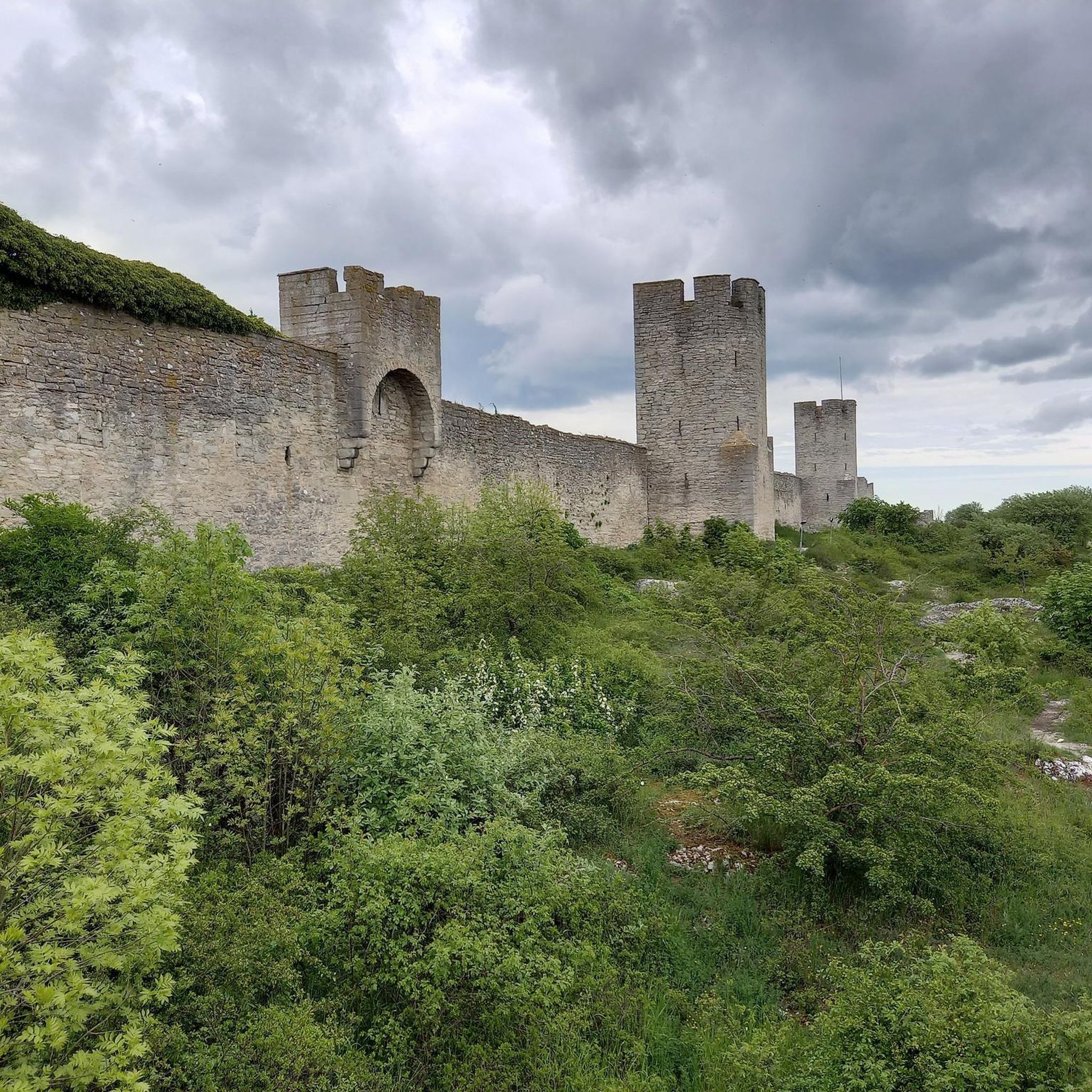
This place is the starting point of the Voie Verte which runs along the Tarn and leads to Creissels. You can discover the troglodytic village of Peyre in particular, a very pleasant forest section which, in places, forms a real green tunnel. Further on, you can enjoy a magnificent view of the Millau Viaduct.
3
0
From the Larzac plateau, the Brunas site offers a vast panorama of the Millau valley. Stretched between the two banks of the Tarn, the viaduct with its seven concrete piers appears in its entirety. Behind it unfolds the entire causse Rouge, a large limestone plateau whose undulations dominate the valley. Then, the Puech d’Andan is distinguished by its wooded silhouette, cut in two by a clear central notch. Further to the right stands the Pouncho d'Agast, a pyramidal promontory marking the beginning of the causse Noir at an altitude of 841 m. Brunas is also a true site for free flight. The take-off area is located directly on the plateau; the site is mainly used with a north wind and allows paragliders to take off and then land in the vicinity of the same sector, with approximately 370 m of elevation difference down to the valley. The spectacle of the sails evolving in front of the viaduct adds a particular dimension to this panorama.
3
0
Perché at an altitude of approximately 730 meters, the Cap de Coste viewpoint overlooks the eastern end of the Boundoulaou cirque. It reveals a vast panorama of the Millau basin and its surrounding massifs. To the left, the easily recognizable Millau Viaduct spans the Tarn valley, connecting the Larzac to the Causse Rouge. Further to the right stretches the latter: a large limestone plateau whose undulations dominate the valley. Then, the Puech d’Andan stands out with its wooded silhouette, cut in two by a clear central notch. Finally, further away, the Pouncho d’Agast, an emblematic relief of the Causse Noir, is easily recognized by its profile like a true limestone pyramid.
3
0
This section of the greenway follows a narrow and shaded path, where dense vegetation forms a real green tunnel in places. The natural surface is particularly pleasant to ride on. These wooded sections alternate with a few openings, which allow you to reconnect with the Tarn river and, further on, the Millau viaduct.
3
0
From this point at the foot of the structure, the regular succession of piers and guyed pylons can be particularly well distinguished. The deck, 2,460 m long, crosses the valley at a height of approximately 270 m above the Tarn. Pier P2, the tallest, culminates at 245 m, while the assembly formed by the pier and its pylon reaches 343 m: a height greater than that of the Eiffel Tower. This perspective also recalls the technical feat that the construction of the viaduct represented. The metal deck was assembled in sections from either side of the valley, then progressively launched across the void. The joining of the two parts was carried out on May 28, 2004, 268 m above the Tarn, before the official inauguration a few months later. An interesting detail can be discerned here: despite its exceptional dimensions, the structure appears remarkably light. This impression is not accidental. The viaduct was specifically designed to blend into the valley by limiting the visual impact of its structure, with a very slender deck and piers that branch out in a "Y" shape.
3
0
From the greenway, the Millau Viaduct is revealed from a particularly spectacular angle! One becomes aware of the extraordinary dimensions of the structure. Built between 2001 and 2004, the viaduct crosses the Tarn valley over 2,460 m and connects the Causse Rouge to the north with the Causse du Larzac to the south. Its metal deck, approximately 32 m wide, rests on seven concrete piers extended by seven cable-stayed pylons. At its highest point, the entire structure reaches 343 m above the ground; the deck is up to about 270 m above the Tarn. Designed by engineer Michel Virlogeux and British architect Sir Norman Foster, the viaduct combines a very slender metal structure with piers whose "Y" shape helps to visually lighten the whole. The deck was manufactured in metal elements and then gradually launched from both ends of the valley. The joining of the two parts was finally carried out on May 28, 2004, at 268 m above the Tarn.
3
0

Absolutely worth seeing - view it from below and definitely join the architecture tour.
0
0

Frequently Asked Questions
How many no traffic gravel bike trails are available around Castelnau-Pégayrols?
There are 22 dedicated no traffic gravel bike trails around Castelnau-Pégayrols. These routes offer a fantastic way to explore the diverse landscapes of the Grands Causses Regional Natural Park and the Lévézou plateau without vehicle interference.
What is the typical difficulty level for no traffic gravel biking in this region?
The majority of no traffic gravel trails around Castelnau-Pégayrols are classified as difficult, with 19 out of 22 routes falling into this category. These often feature significant elevation changes and technical sections, requiring good fitness. There are also 2 moderate and 1 easy route available for those seeking a less strenuous ride.
Are there any family-friendly no traffic gravel bike trails near Castelnau-Pégayrols?
While many routes are challenging, there is one easy no traffic gravel trail available, which could be suitable for families or beginners. The region's varied terrain means that even easier routes might have some elevation, so always check the route details before heading out. The Lévézou plateau, with its lakes, might offer gentler sections, but specific family-friendly gravel routes are less common than challenging ones.
What kind of natural features and viewpoints can I expect along the quiet gravel routes?
The no traffic gravel routes often lead to stunning natural features and panoramic viewpoints. You can discover highlights such as the Cap de Coste Viewpoint, the impressive Cascade des Raspes du Tarn, or the unique Dinosaur Footprints of Peyre. Many trails also offer views of the deep Muse Valley and the dramatic Cliffs of the Cirque du Boundoulaou.
Are there any historical or cultural landmarks to explore while gravel biking?
Absolutely. Castelnau-Pégayrols itself is a medieval village with rich heritage. You can integrate visits to historical sites like the Pas Destrech Cross or explore the town of Millau, which is often a starting point for many routes. The iconic Millau Viaduct and its dedicated viewpoint are also popular attractions accessible from some routes, such as the Old bridge – Millau Viaduct loop from Millau.
What is the best time of year for no traffic gravel biking in Castelnau-Pégayrols?
The region is generally pleasant for gravel biking from spring through autumn. Spring offers lush greenery and comfortable temperatures, while autumn brings beautiful foliage. Summers can be warm, especially on exposed plateaus, so early morning rides are recommended. Winters can be cold, and some higher elevation trails might be less accessible due to weather conditions.
What do other gravel bikers enjoy most about the no traffic trails in this area?
The komoot community highly rates the gravel biking experience around Castelnau-Pégayrols, with an average score of 4.34 out of 5 stars from 43 ratings. Reviewers often praise the sense of freedom on the quiet, varied terrain, the breathtaking panoramic views, and the challenging yet rewarding climbs through the Grands Causses and Lévézou landscapes.
Are there any circular no traffic gravel bike routes available?
Yes, many of the no traffic gravel routes are designed as circular loops, allowing you to start and finish in the same location. Examples include the challenging La Roque-Sainte-Marguerite – Old bridge loop from Millau or the Millau – View from Pouncho d'Agast loop from Millau, which offers stunning vistas.
Can I find routes that pass by the Millau Viaduct?
Yes, several routes offer views of or pass near the famous Millau Viaduct. For instance, the Old bridge – Millau Viaduct loop from Millau is a challenging route that incorporates this architectural marvel. You can also visit the Millau Viaduct Viewpoint as a highlight along your ride.
Are there any services for cyclists, like bike rentals, in the Castelnau-Pégayrols area?
While Castelnau-Pégayrols is a small village, the broader Aveyron department and particularly the Lévézou plateau offer support for cyclists, including bike rental services. It's advisable to check in larger nearby towns like Millau or on the Lévézou plateau for specific rental options before your visit.
What kind of terrain should I expect on these no traffic gravel trails?
Expect a highly varied terrain, typical of the Grands Causses and Lévézou regions. Routes feature a mix of gravel tracks, forest trails, rustic roads, and sometimes small singletrack sections. You'll encounter vast limestone plateaus, deep canyons, and dramatic cliffs, often with significant elevation changes. This diversity provides both a sense of adventure and a physical challenge.
Is public transport available to reach Castelnau-Pégayrols for cyclists?
Castelnau-Pégayrols is a rural village, and direct public transport options might be limited. It's generally more accessible by car, especially if you're bringing your own bike. For information on regional transport, it's best to consult local Aveyron transport services or plan your journey to a larger hub like Millau and then cycle or arrange a transfer.
Most popular routes around Castelnau-Pégayrols
Most popular attractions around Castelnau-Pégayrols

Get inspired with the komoot mobile app


Explore more
Browse the best Gravel rides in other regions.
