The best road cycling routes around Étain
4.7
(27)
299
riders
14
rides
Road cycling around Étain, France, offers a diverse landscape for cyclists of varying skill levels. The region is characterized by varied terrain, including gentle rolling hills and open countryside, providing a scenic backdrop for exploration. Cyclists can experience both natural beauty and areas of historical significance, particularly those related to World War I. These cycling routes Étain France allow for immersion in the local environment, with opportunities to pass by natural features and historical sites.
Best road cycling routes around…
Last updated: November 9, 2026
5.0
(1)
14
riders
54.4km
02:30
430m
430m
Moderate road ride. Good fitness required. Mostly well-paved surfaces and easy to ride.
5.0
(1)
11
riders
34.3km
01:26
130m
130m
Easy road ride. Mostly well-paved surfaces and easy to ride.

5
riders
59.9km
02:24
310m
310m
Moderate road ride. Good fitness required. Mostly well-paved surfaces and easy to ride.
5.0
(1)
6
riders
53.4km
02:13
260m
260m
Moderate road ride. Good fitness required. Mostly well-paved surfaces and easy to ride.
5
riders
53.5km
02:09
210m
210m
Moderate road ride. Good fitness required. Mostly well-paved surfaces and easy to ride.
Get access to more routes and recommendations from other explorers.
Already have an account?
Our route recommendations are based on thousands of hikes, rides, and runs completed by other people on komoot.
Start today with a free account
Your next adventure awaits.


Tips from the Community

The monument was created in 1930 by the sculptor Duilio Donzelli, originally from Lacroix-sur-Meuse. Like many French villages after the Great War, Bonzée erected this monument to pay tribute to the local soldiers who gave their lives for France. The names of the fallen are listed on the monument, often with inscriptions such as "Mort pour la France" or "Tué à l'ennemi". What makes it extra special is that Bonzée is located in an area that was badly affected during the war, near the infamous ridge of Les Éparges. The monument is therefore not only a symbol of mourning, but also of the deep scars that the conflict has left in this region.
6
0
The Saint-Laurent church in Bonzée, originally from the 18th century, destroyed in 1914, rebuilt in 1927.
7
0
The Ossuary of Douaumont is an impressive memorial that holds the remains of more than 130,000 unknown French and German soldiers who died during the Battle of Verdun (1916). The bones are visible through small windows in the base – a confronting reminder of the horrors of war. In front of the ossuary is the Nécropole nationale de Douaumont, the largest French military cemetery of the First World War, with 16,142 graves, including a Muslim and Jewish plot. The complex was recognized as a UNESCO World Heritage Site in 2023.
8
0
The Mémorial de Verdun, located near the ruined village of Fleury-devant-Douaumont, is a leading museum and commemoration site for the Battle of Verdun (1916). The museum displays more than 2,000 objects and uses authentic objects, photographs and audiovisual installations to show how French and German soldiers experienced this battle – in the exact same place where they fought.
8
3

The Myth of the First World War “In memory of the French soldiers who sleep standing, rifle in hand, in this trench – their brothers in America.” This is the inscription in front of the Memorial of the Battle of Verdun in the ghost town of Douaumont. The monument was financed by a wealthy American banker, George T. Rand, who was moved by the famous legend surrounding the site. It is said that French soldiers buried standing, with weapons in hand, died from enemy shells. Bayonet Trench is one of the myths of the First World War. In 1922, it was classified as a historical monument and in 2014 it was considered a site of national importance. After the war, excavations uncovered 21 bodies of French soldiers. Fourteen were identified and buried in the Necropolis of Fleury, opposite Douaumont. The seven other bodies that remained unknown were reburied in the "Bayonet Trench". For many, the myth persists, while others question it. Especially since no body was found standing upright. In any case, the legend of the "Bayonet Trenches" shows above all how much the Great War left an almost indelible mark on the collective imagination. As the bloody conflict of the Battle of Verdun drew to a close, glorious stories quickly emerged in which the nation sacrificed itself for the fatherland. Source: https://www.landofmemory.eu/sites-historiques/tranchee-des-baionnettes/
7
0

Take a moment to pause between the ossuary and this stone garden; tranquility reigns here. Don't forget to thank our brave soldiers for their ultimate sacrifice.
1
0

A landscape marked by the madness of destruction and even scarred by WW1
1
0

The Verdun Memorial is a museum dedicated to the history and memory of the Battle of Verdun in 1916. The museum is very comprehensive, with an immersive experience that offers a complete chronology of the First World War. Living conditions and technological advancements during the war are well illustrated. From the top floor, there is a beautiful view of Verdun, including the ossuary.
6
2
Frequently Asked Questions
How many road cycling routes are available around Étain?
There are over 10 road cycling routes around Étain, offering a variety of experiences for different skill levels. The komoot community has explored these routes more than 200 times.
Are there easy road cycling routes suitable for beginners in Étain?
Yes, Étain offers several easy road cycling routes perfect for beginners. For instance, the Étang de Tronquino loop from Étain is an easy 21.2-mile (34.1 km) trail that takes about 1 hour 22 minutes to complete, leading through varied terrain.
What are some options for longer distance road cycling in Étain?
For those seeking longer rides, Étain has several moderate to difficult routes. The Monthairons Castle – Domaine de Sommedieue loop from Étain is a popular moderate route spanning 45.4 miles (73.1 km), exploring the countryside and historical landmarks. Another option is the Douaumont Ossuary – Verdun Memorial loop from Étain, a moderate 46.9-mile (75.6 km) path through significant historical areas.
Can I find circular road cycling routes around Étain?
Yes, many of the road cycling routes around Étain are designed as loops, allowing you to start and finish at the same point. Examples include the Verdun Memorial – Douaumont Ossuary loop from Étain and the Castle of La Fontaine loop from Base aérienne d'Etain-Rouvres.
What kind of landscapes can I expect to see while road cycling in Étain?
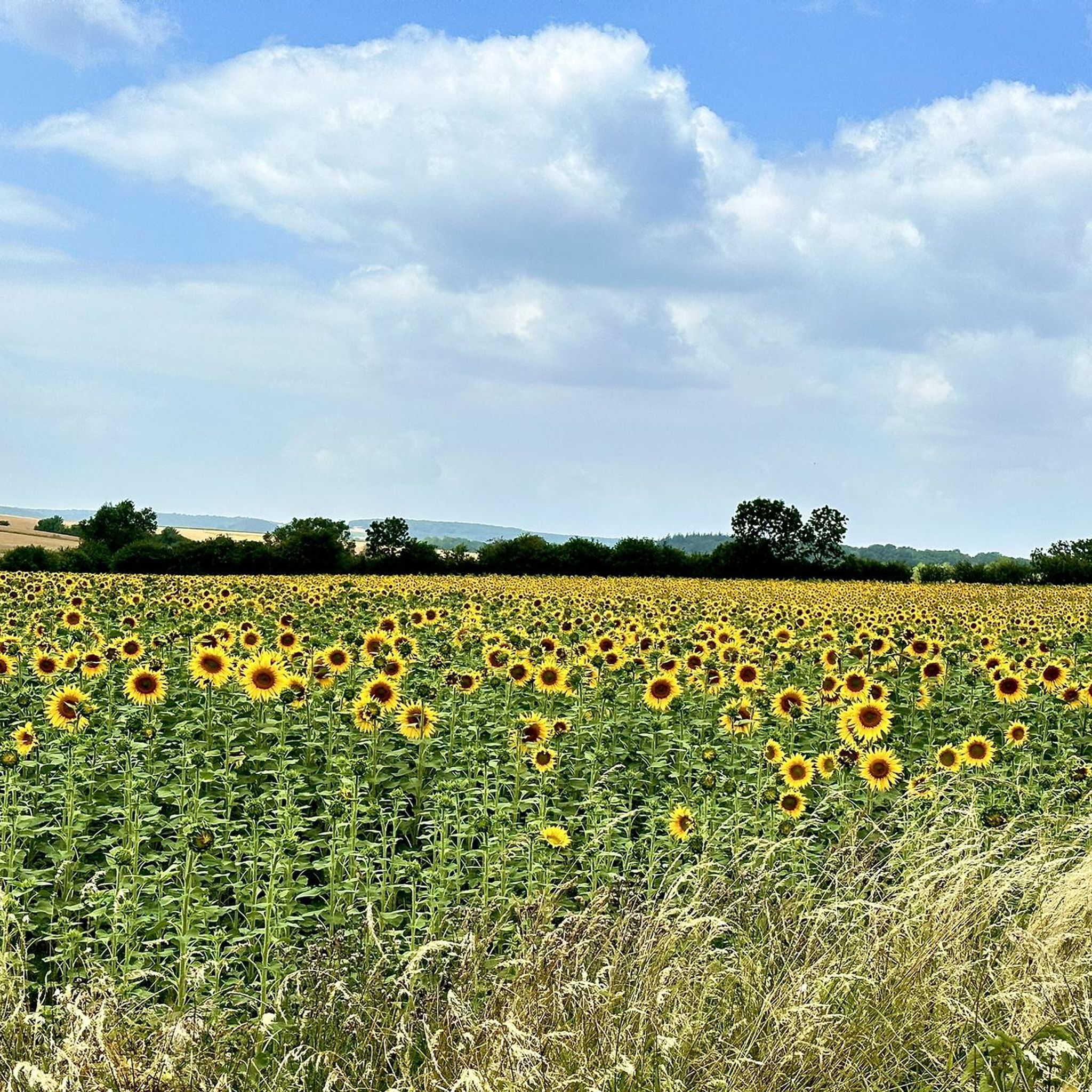
Road cycling around Étain offers diverse landscapes, from gentle rolling hills and open countryside to areas of historical significance. You'll experience a blend of natural beauty and historical sites, particularly those related to World War I.
Are there any historical sites or landmarks I can visit along the road cycling routes?
Étain's region is rich in history, especially related to World War I. Cyclists can pass by significant sites such as Fort de Vaux, the Verdun Memorial, and the rebuilt village of Vaux-Devant-Damloup, offering a unique blend of active exploration and cultural immersion.
Are there any natural attractions or viewpoints along the routes?
While cycling, you can discover natural features like the Amel Pond Observatory, a tranquil spot known for its bird species and protected plant life. You might also find viewpoints such as the Fort Vaux panoramic viewpoint, offering scenic vistas of the surrounding area.
What do other cyclists say about road cycling in Étain?
The road cycling routes in Étain are highly rated by the komoot community, with an average score of 4.6 stars from more than 10 reviews. Cyclists often praise the varied terrain and the opportunity to combine scenic rides with historical exploration.
What is the best season for road cycling in Étain?
While specific data on the best season isn't provided, the diverse landscapes of Étain suggest that spring and autumn would offer pleasant temperatures and beautiful scenery for road cycling. Summer can also be enjoyable, but it's always wise to check local weather conditions.
Are there routes suitable for advanced road cyclists looking for a challenge?
Yes, Étain offers routes that cater to advanced cyclists. While most are moderate, there is at least one difficult route available, providing more significant elevation gains and longer distances for those seeking a challenging ride through the region's varied terrain.
Is parking available near the road cycling routes in Étain?
Many road cycling routes around Étain typically start from the town itself or nearby villages, where public parking is generally available. It's advisable to check the specific starting point of your chosen route for the most convenient parking options.
Can I access road cycling routes in Étain using public transport?
Étain is a commune in northeastern France, and while specific public transport links directly to route starting points are not detailed, regional bus services or train connections to nearby larger towns might be available. Cyclists often travel to Étain by car to access the routes directly.
Most popular attractions around Étain

Get inspired with the komoot mobile app


Explore more
Browse the best Road cycling routes in other regions.
