Attractions and Places To See around Kington - Top 20
Best attractions and places to see around Kington include a variety of historical sites, natural features, and cultural points of interest. This historic market town in Herefordshire, England, is situated at the confluence of the River Arrow and Cynon Brook. The region is characterized by its position along the English-Welsh border, offering access to ancient earthworks and panoramic views from elevated ridges. It serves as a base for exploring both natural landscapes and significant historical landmarks.
Best attractions and places to see around Kington
- The most popular attractions is Coughton Court, a historical site that is a wonderful place to visit with extensive grounds. The house features a Tudor Gatehouse dating from 1530 and has been owned by the Throckmorton family since 1409.
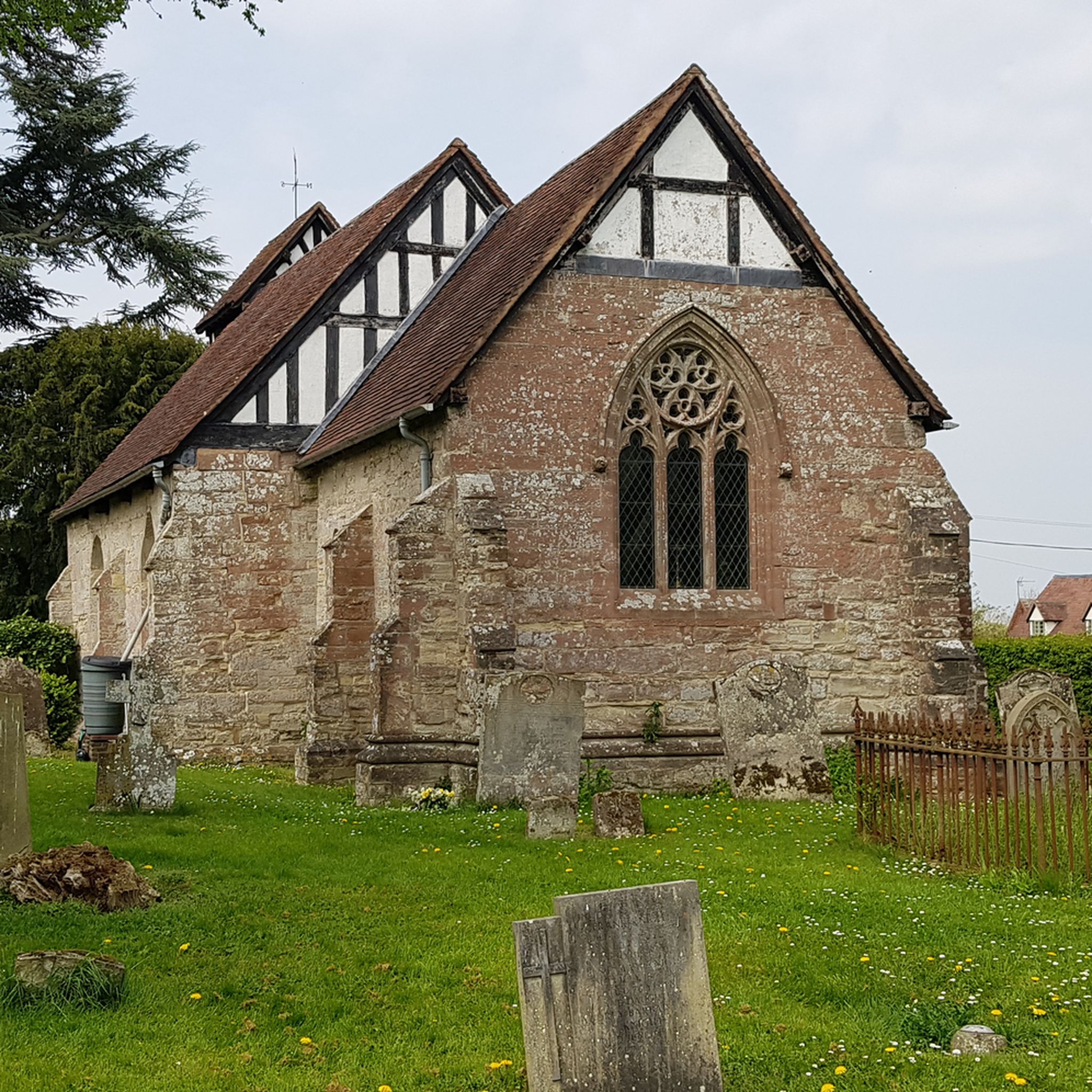
- Another must-see spot is St John the Baptist Church, Grafton Flyford, a historical site and religious building. Visitors can expect to see a quiet Anglican church with a 14th-century tower and some gorgeous mosaics inside.
- Visitors also love Grafton Wood Nature Reserve, an ancient woodland with coppice and large oaks. This natural monument is known as the center of the only colony of brown hairstreak butterflies in the Midlands and supports a distinctive flora.
- Kington is known for historical sites, natural monuments, and religious buildings. The area offers a variety of attractions to see and explore, from ancient woodlands to historic churches and manor houses.
- The attractions around Kington are appreciated by the komoot community, with 3 highlights featuring 6 photos and receiving 18 upvotes.
Last updated: May 21, 2026
Coughton Court
Highlight • Historical Site
The house has a long crenelated façade directly facing the main road, at the centre of which is the Tudor Gatehouse, dating from 1530; this has hexagonal turrets and oriel windows in the English Renaissance style. The gatehouse is the oldest part of the house and is flanked by later wings, in the Strawberry Hill Gothic style, popularised by Horace Walpole.
The Coughton estate has been owned by the Throckmorton family since 1409. The estate was acquired through marriage to the De Spinney family.Coughton was rebuilt by Sir George Throckmorton, the first son of Sir Robert Throckmorton of Coughton Court by Catherine Marrow, daughter of William Marrow of London. The great gatehouse at Coughton was dedicated to King Henry VIII by Throckmorton, a favourite of the King. Throckmorton would become notorious due to his almost fatal involvement in the divorce between King Henry and his first wife Catherine of Aragon.Throckmorton favoured the queen and was against the Reformation. Throckmorton spent most of his life rebuilding Coughton. In 1549, when he was planning the windows in the great hall, he asked his son Nicholas to obtain from the heralds the correct tricking (colour abbreviations) of the arms of his ancestors' wives and his own cousin and niece by marriage Queen Catherine Parr (see gallery drawing). The costly recusancy (refusal to attend Anglican Church services) of Robert Throckmorton and his heirs restricted later rebuilding, so that much of the house still stands largely as he left it.
After Throckmorton's death in 1552, Coughton passed to his eldest son, Robert. Robert Throckmorton and his family were practicing Catholics therefore the house at one time contained a priest hole, a hiding place for priests during the period when Catholics were persecuted by law in England, from the beginning of the reign of Elizabeth I of England. The Hall also holds a place in English history for its roles in both the Throckmorton Plot of 1583 to murder Queen Elizabeth, and the Gunpowder Plot of 1605, although the Throckmorton family were themselves only indirectly implicated in the latter, when some of the Gunpowder conspirators rode directly there after its discovery.
The house has been in the ownership of the National Trust since 1946. The family, however, hold a 300-year lease and previously managed the property on behalf of the Trust. In 2007, however, the house reverted to management by the National Trust. The management of the property is renewed every 10 years. The family tenant until recently was Clare McLaren-Throckmorton, known professionally as Clare Tritton QC, until she died on 31 October 2017.
The house, which is open to the public all year round, is set in extensive grounds including a walled formal garden, a river and a lake.
Tip by

St John the Baptist Church, Grafton Flyford
Highlight • Historical Site
The church, with the exception of the 14th-century tower, was entirely rebuilt in 1875, but the old work appears to have been very largely re-used. The modern work is already getting into a very bad state of repair.
The chancel has a 15th-century east window of three lights with a segmental pointed head. In the north wall is a square-headed 14th-century window of two ogee trefoil-headed lights. In the south wall are two square-headed two-light windows and a priest's door, mostly modern. On this side is a single sedile with a cusped head, and near it a pointed piscina with the bowl missing. An internal string-course, largely modern, is carried round the chancel. The chancel arch is of two chamfered orders dying into the wall; the voussoirs are small and regular and are of late 13th or early 14th-century date.
In the north wall of the nave is a pointed 14thcentury arch of two chamfered orders opening into a small chapel with a single-light window on the east and west. Further west is a pointed window of the same date with two lights and a traceried head. In the south wall are two windows, each of two lights and similar to that on the north of the chancel; between them is a plain pointed door. All these features have apparently been restored and reset.
The 14th-century tower is faced with ashlar and three stages high with low diagonal buttresses to the western angles of the ground stage. The tower arch is acutely pointed and of two chamfered orders. This stage rests on a deeply moulded plinth and has a pointed 15th-century west window of three cinquefoiled lights. The second stage is lighted by loops only, but the third stage has a pointed 14th-century window of two trefoiled ogee lights in each face. The parapet is embattled, with carved gargoyles at the angles of the string and panelled and crocketed pinnacles rising above them. From within it rises a low octagonal pyramid of stone capped by a truncated pinnacle set diagonally.
The fittings include a 17th-century communion table with turned legs, a 15th-century semi-octagonal pulpit (on a modern base) having a moulded rail and traceried heads to the panels, and a modern font. In the north chapel is a broken marble monument to Roger Stonehall, who died in 1645. Under the tower are roughly designed paintings on boards of the evangelistic symbols with black letter labels, perhaps of the 16th century; here is also a painted achievement of the royal arms of Charles II inscribed 1687 C.R. In the tracery of the east window are some fragments of 15th-century glass tabernacle work and in the north chancel window are two shields, one with the arms of Mortimer and the other imperfect with those of Beauchamp. In the west window are fragments of white and yellow 15th-century glass in the tracery.
There are five bells, all cast by John Martin in 1676: the tenor is inscribed, 'All men that here my roring sound repent before you ly in ground, M. Robert Baker 1676'; the fourth, 'We wish in heven theer souls may sing that caused us six here for to ring, Amell Doxly, Richard Haynes C.W. 1676'; the third, 'Be it known to all that doth wee see John Martin of Worcester, he made wee 1676'; the second, 'All prayse and glory be to God for ever 1676'; and the treble, 'Jesus be our good speed, God Save the King 1676.'
The plate includes a cup and cover paten, London, 1571, and a plate, London, 1679, inscribed 'Grafton Flyford.'
The registers are in one volume as follows: baptisms 1676 to 1813, burials 1676 to 1812, marriages 1678 to 1777.
Tip by
Sign up now to discover places like this
Get recommendations on the best single tracks, peaks, & plenty of other exciting outdoor places.
Sign up for free
Alcester War Memorial Town Hall
Highlight • Monument
Tip by

Grafton Wood Nature Reserve
Highlight (Segment) • Natural Monument
Jointly owned with Butterfly Conservation, Grafton has been at the heart of one of Worcestershire’s great conservation successes. The wood is the centre of the only colony of brown hairstreak butterflies in the Midlands. These elusive butterflies, on the wing in August and September, have been the subject of a long-term project to ensure their survival. By working with local landowners and encouraging appropriate maintenance of hedgerows, volunteers from both conservation charities have helped the butterflies to increase in range and in numbers.
Grafton Wood is an ancient semi-natural broad-leaved woodland and, until the 1950s was traditionally managed as coppice-with-standards that provided materials for products such as broom handles, pea sticks, hedge-laying, clothes pegs, spars for thatching and firewood. Our management today aims to replicate this tradition and involves widening the rides through the woodland, coppicing and creating glades. We also ensure that there are scrubby areas containing the young blackthorn bushes that are vital for brown hairstreaks to survive.
The majority of the canopy at Grafton is ash and oak although we also have a small-leaved lime coppice stool that we think must have originally started as one lime tree at least a thousand years ago. In many places there is a dense shrub layer of field maple, hawthorn and hazel. The two compartments of conifers that were planted in the 1960s have largely been removed in 2010.
It’s not just brown hairstreak butterflies that visitors to Grafton Wood should keep a look out for. The wood is also important for other woodland butterflies including silver-washed fritillaries and white admirals. After careful surveying of the habitat and flowering species in the wood pearl-bordered fritillaries were released into the woodland in 2011 in the hope that they would then naturally re-colonise the wood after a 30 year absence. Notable moths include drab looper, rosy footman, Devon carpet and waved black.
Many fungi have been recorded in the wood and it also supports a distinctive flora including herb-Paris, adder’s-tongue fern, violet helleborine, spurge laurel and bird’s-nest orchid. Birds including buzzard, goldcrest, treecreeper, lesser and great spotted woodpeckers are regularly seen in the wood and the adjacent meadows and orchards are important for green woodpeckers. Bechstein’s bats were recently discovered in the wood and the colony is thought to be the most northerly breeding roost in the UK.
Tip by
Inkberrow Millennium Green
Highlight • Viewpoint
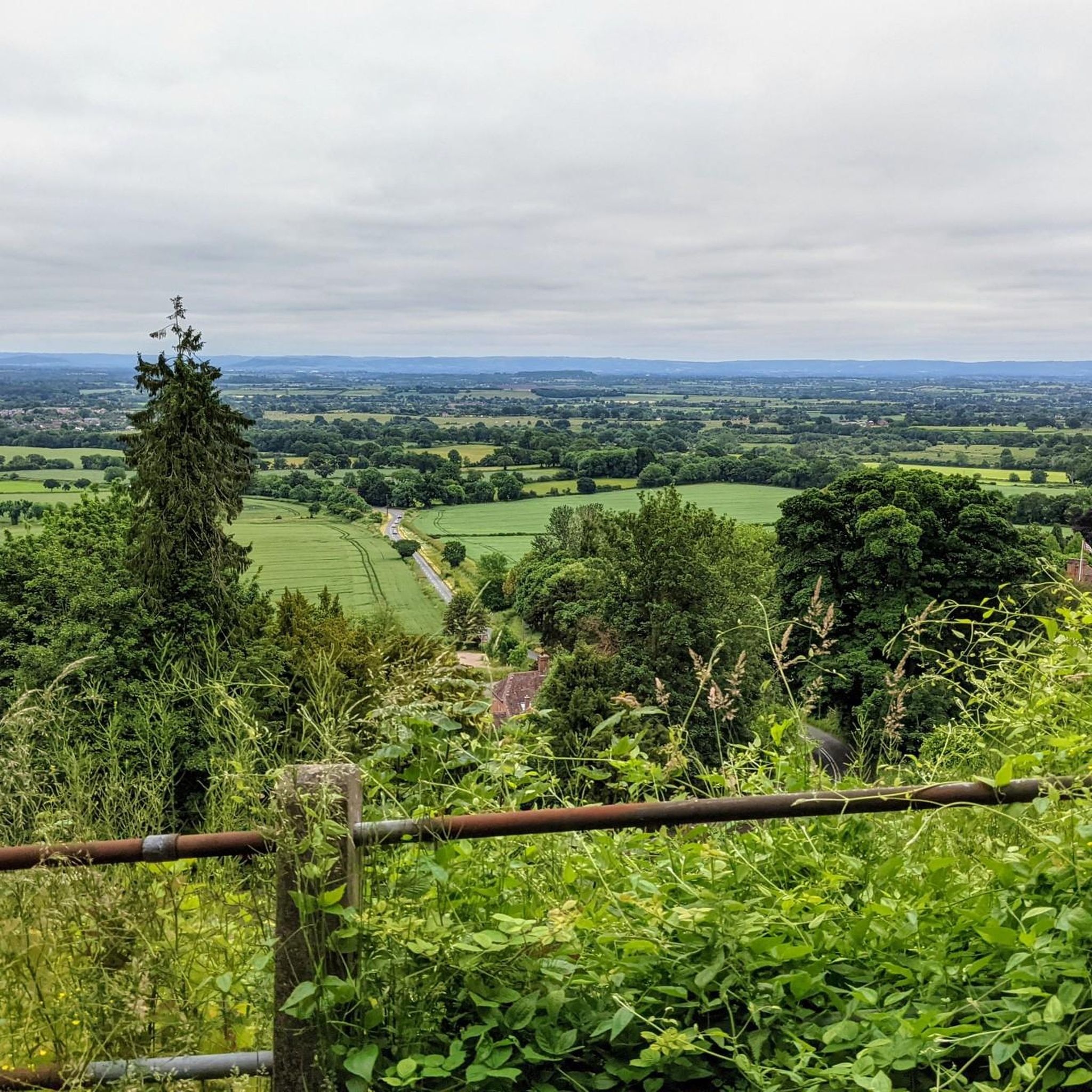
Inkberrow is on the A422 main road about half way between Worcester and Stratford-upon-Avon in the English West Midlands.
The entrance can be found at the bottom of the hill down the lane past the church. In the centre of the village, by the village green, go towards the Old Bull Inn, past the lychgate entrance to St Peter's Church, and down the hill. (approx 250 yards from the A422).
The Millennium Green was officially opened in June 2000. It was supported by Inkberrow Parish Council, The Millennium Commission, English Heritage, The Countryside Agency, Worcestershire County Council and Aqua Vitae 21. It has since been designated a Special Wildlife Site and is now in the
Higher Level Stewardship scheme administered by Natural England.
The Green is some 8.3 acres in extent, divided into two fields. It is owned and managed as a charity - the Inkberrow Millennium Green Trust - with the land vested in the Official Custodian of Charities. The Trust deeds require that the Green be open and "be able to be enjoyed by people of all ages and physical abilities, be an attractive place for people to exercise, pursue leisure activities and pastimes consistent with shared enjoyment of the whole of the land" and to "include significant 'natural' areas where people can enjoy nature and wildlife at first hand".
The Green is managed by the Trustees to meet these objectives, including regular work to sustain, restore and enhance a variety of habitats with ecological and social benefits for the Inkberrow community. The Trustees work in conjunction with outside agencies, such as Historic England and Natural England to ensure compliance with requirements such as those contained in the Ancient Monuments and Archaeological Areas Act (1979) and the Higher Level Stewardship (HLS) agreement.
Tip by
Sign up for free to discover even more attractions around Kington.
Sign up for free
Already have an account?
Start today with a free account
Your next adventure awaits.
Login or Signup
Tips from the Community

Such a beautiful place full of wildflowers and ponds. It is a circular walk. With a slow pace and rest on the bench at the top, it will take you about 30 minutes to walk around. Surrounded by meadows and benches all over the place. Beautiful little village
0
0

Quiet Anglican church with some gorgeous mosaics inside. Nice brown signpost on the nearest A-Road, so you won't miss the turn.
0
0

Pretty building hidden behind the church in a pretty square
0
0


Great little cycling stop, a bench in the car park and places to lock your bikes.
0
0

Absolutely stunning location to visit in its own right, however, if cycling past & have the time, certainly check it out. If on route & not stopping, continue along Coughton lane to the right side of the Court & you have 2 options, pass via the ford & continue head towards Alcester (right) or Great Lane (left) otherwise, directly after the ford, turn left & follow the dirt/gravel track & come out the other side of great Alne, much nice views.
0
0

This Grade I-listed town hall in the heart of Alcester boasts stunning wooden beams inside. Constructed in 1641, the hall was first a market. These days, the hall is used as an event space and has a calendar of upcoming concerts, activities, workshops and more.
1
0

An ancient woodland with coppice and large oaks Jointly owned with Butterfly Conservation, Grafton has been at the heart of one of Worcestershire’s great conservation successes. The wood is the centre of the only colony of brown hairstreak butterflies in the Midlands. These elusive butterflies, on the wing in August and September, have been the subject of a long-term project to ensure their survival. By working with local landowners and encouraging appropriate maintenance of hedgerows, volunteers from both conservation charities have helped the butterflies to increase in range and in numbers. Grafton Wood is an ancient semi-natural broad-leaved woodland and, until the 1950s was traditionally managed as coppice-with-standards that provided materials for products such as broom handles, pea sticks, hedge-laying, clothes pegs, spars for thatching and firewood. Our management today aims to replicate this tradition and involves widening the rides through the woodland, coppicing and creating glades. We also ensure that there are scrubby areas containing the young blackthorn bushes that are vital for brown hairstreaks to survive. The majority of the canopy at Grafton is ash and oak although we also have a small-leaved lime coppice stool that we think must have originally started as one lime tree at least a thousand years ago. In many places there is a dense shrub layer of field maple, hawthorn and hazel. The two compartments of conifers that were planted in the 1960s have largely been removed in 2010. It’s not just brown hairstreak butterflies that visitors to Grafton Wood should keep a look out for. The wood is also important for other woodland butterflies including silver-washed fritillaries and white admirals. After careful surveying of the habitat and flowering species in the wood pearl-bordered fritillaries were released into the woodland in 2011 in the hope that they would then naturally re-colonise the wood after a 30 year absence. Notable moths include drab looper, rosy footman, Devon carpet and waved black. Many fungi have been recorded in the wood and it also supports a distinctive flora including herb-Paris, adder’s-tongue fern, violet helleborine, spurge laurel and bird’s-nest orchid. Birds including buzzard, goldcrest, treecreeper, lesser and great spotted woodpeckers are regularly seen in the wood and the adjacent meadows and orchards are important for green woodpeckers. Bechstein’s bats were recently discovered in the wood and the colony is thought to be the most northerly breeding roost in the UK.
0
0
Frequently Asked Questions
What historical sites can I explore around Kington?
Kington and its surroundings are rich in history. You can visit Coughton Court, a historical site with a Tudor Gatehouse dating from 1530, or the Alcester War Memorial Town Hall, a Grade I-listed building from 1641. Another notable religious building is St John the Baptist Church, Grafton Flyford, known for its 14th-century tower and mosaics. Beyond these, the region features the ancient earthwork of Offa's Dyke Path, the historic Kington Museum, and the 13th-century St. Mary's Church with its unique detached tower.
Are there any natural attractions or scenic viewpoints near Kington?
Yes, the area offers several natural highlights. Hergest Ridge provides breathtaking panoramic views across the English-Welsh border, where you can spot the Shropshire hills and Brecon Beacons on clear days. Grafton Wood Nature Reserve is an ancient woodland known for its diverse flora and as a habitat for brown hairstreak butterflies. For an accessible viewpoint, Inkberrow Millennium Green offers a pleasant circular walk with wildflowers and ponds.
What family-friendly attractions are available in the Kington area?
Families can enjoy several attractions. Coughton Court offers extensive grounds for exploration. The Alcester War Memorial Town Hall hosts various family-friendly events. Nature lovers will appreciate Grafton Wood Nature Reserve for its ancient woodland and wildlife. Additionally, the Small Breeds Farm Park and Owl Centre in Kington Rural is a popular choice for meeting miniature animals and owls.
Where can I find unique gardens or plant collections near Kington?
Hergest Croft Gardens, located within the grounds of Hergest Court, is a must-visit. These historic gardens span over 70 acres and are renowned for their rare trees and shrubs, including National Collections of maples and birches, and over 80 'champion' trees. They feature distinct areas like an Azalea Garden, Maple Grove, and Park Wood with Himalayan plants.
Are there opportunities for walking or hiking around Kington?
Kington is known as a 'centre for walking' with numerous routes. The famous Offa's Dyke Path passes through the town and over Hergest Ridge. You can also explore parts of the historic Kington Tramroad. For specific routes, consider the easy hikes around Kington, which include trails like the Inkberrow Millennium Green loop. The town also hosts annual walking festivals.
What kind of outdoor activities can I do near these attractions?
Beyond hiking, the area around Kington offers various outdoor activities. You can find several running trails, such as the Inkberrow Millennium Green loop. For cyclists, there are numerous road cycling routes, including scenic loops from Inkberrow and Kington itself.
Is there anything unique about Kington's local heritage or architecture?
Kington boasts several unique aspects. St. Mary's Church is notable for its detached tower, a rare feature in Herefordshire. The town is also an excellent base for exploring the Black and White Village Trail, which showcases hundreds of timber-framed buildings in the surrounding villages. The Kington Market Hall and Clock Tower are distinctive red-brick structures that contribute to the town's historic streetscape.
Are there any accessible attractions for visitors with mobility considerations?
Yes, Inkberrow Millennium Green is designated as wheelchair accessible, offering a pleasant and inclusive outdoor experience with its circular walk and benches.
What are some of the lesser-known or 'hidden gem' attractions in the area?
While not widely known, the Kington Tramroad, built in 1820, offers a unique historical walk. Parts of this former tramway, crucial for transporting goods, can still be explored today. Additionally, the ancient Neolithic chambered tomb of Arthur's Stone on Dorstone Hill is a fascinating, less-frequented historical site a short drive from Kington.
What is the best time of year to visit Kington for outdoor activities?
Kington is particularly popular for walking, and the town hosts annual walking festivals, suggesting that spring and autumn are excellent times to visit when the weather is mild and the landscapes are vibrant. These seasons are ideal for exploring Offa's Dyke Path, Hergest Ridge, and the various gardens and nature reserves.
Can I find any ancient monuments or prehistoric sites near Kington?
Yes, a significant prehistoric site nearby is Arthur's Stone, a Neolithic chambered tomb located on Dorstone Hill, accessible by a short drive from Kington. Additionally, the area features hillforts like Wapley Hill and Croft Ambrey, which represent earlier settlements and offer historical insights along with scenic views.

Get inspired with the komoot mobile app


Explore more
Still not found the Highlight you’re looking for? See guides of the top attractions in other regions:
