The best running trails around Kington
4.5
(12)
1,568
runners
96
runs
Jogging around Kington offers access to a diverse landscape of green, rolling hills and varied terrain on the border of Herefordshire and Wales. The region features an extensive network of trails, including sections of long-distance paths, providing options for different fitness levels. Runners can expect a mix of wooded paths, open uplands, and routes alongside river valleys. The topography ranges from gentle slopes to more demanding inclines, characteristic of the area's natural features.
Best jogging routes around Kington
- The most popular jogging route is Inkberrow Millennium Green – The Old Bull loop from Inkberrow, a 3.3 miles (5.3 km) trail that takes about 33 minutes to complete. This route offers a moderate experience through varied local scenery.
- Another top favourite among local runners is The Old Bull loop from Inkberrow, a moderate 3.3 miles (5.2 km) path. This trail provides a pleasant run through the countryside, suitable for a steady pace.
- Local runners also love the Running loop from Inkberrow, a 3.3 miles (5.3 km) trail leading through local green spaces, often completed in about 33 minutes.
- Jogging around Kington is defined by green, rolling hills, extensive trail networks, and varied countryside. The network offers options for different ability levels, from gentler paths to more challenging, hilly sections.
- The routes in Kington are highly rated by the komoot community with an average score of 4.5 stars from more than 10 reviews. More than 1600 runners have used komoot to explore Kington's varied terrain.
Last updated: May 9, 2026
21
runners
5.28km
00:33
60m
60m
Moderate run. Good fitness required. Mostly paved surfaces. Suitable for all skill levels.
20
runners
5.23km
00:33
50m
50m
Moderate run. Good fitness required. Mostly paved surfaces. Suitable for all skill levels.

Sign up for free
6
runners
5.30km
00:33
50m
50m
Moderate run. Good fitness required. Mostly paved surfaces. Suitable for all skill levels.
6
runners
9.84km
01:01
40m
40m
Moderate run. Good fitness required. Mostly paved surfaces. Suitable for all skill levels.
6
runners
13.5km
01:24
100m
100m
Moderate run. Good fitness required. Mostly paved surfaces. Suitable for all skill levels.
Get access to more routes and recommendations from other explorers.
Sign up for free
Already have an account?
Our route recommendations are based on thousands of hikes, rides, and runs completed by other people on komoot.
Start today with a free account
Your next adventure awaits.
Login or Signup
Tips from the Community

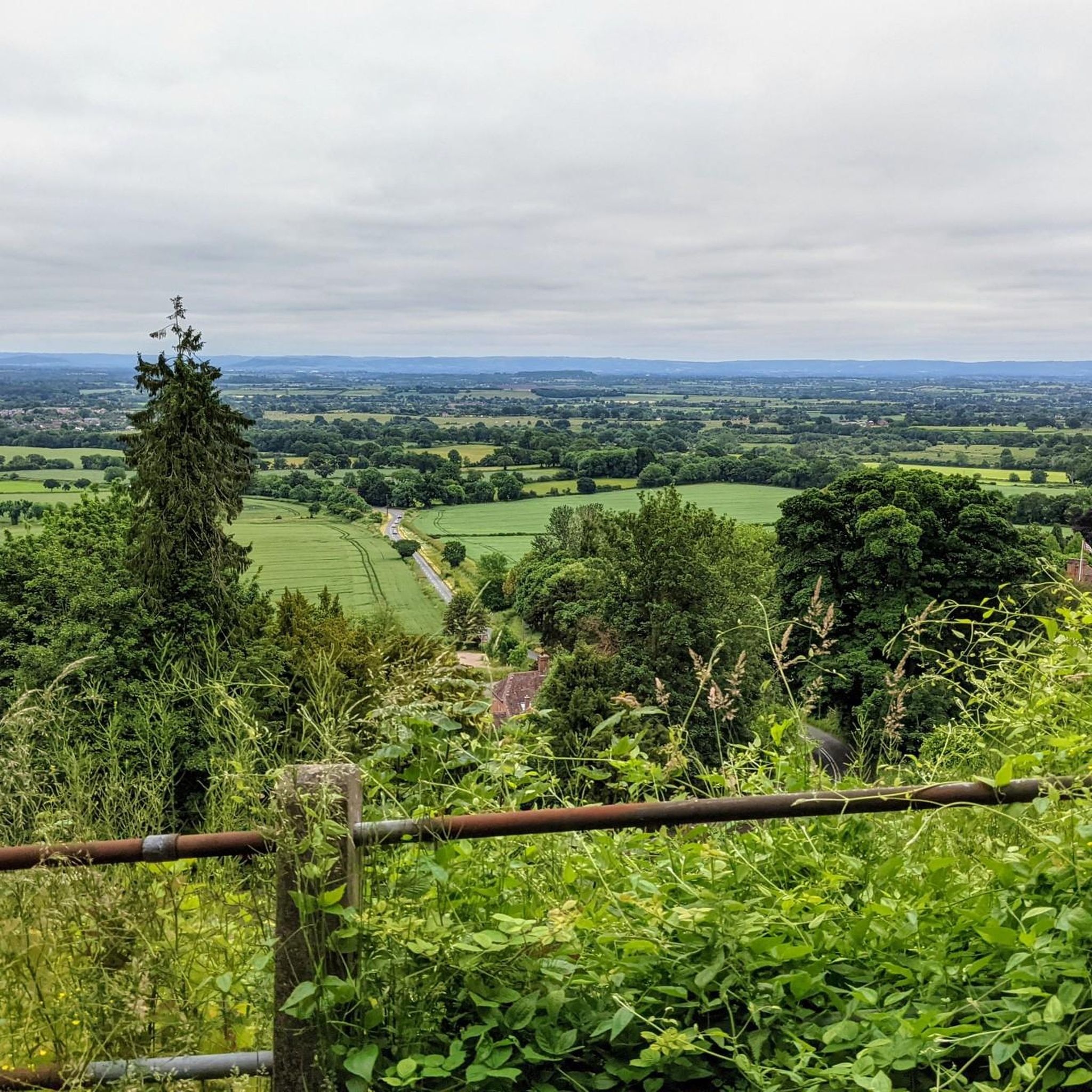
Such a beautiful place full of wildflowers and ponds. It is a circular walk. With a slow pace and rest on the bench at the top, it will take you about 30 minutes to walk around. Surrounded by meadows and benches all over the place. Beautiful little village
0
0

A scattering of traditional houses, a quaint village shop, a couple of pubs and its pretty St Peter's church makes Flyford Flavell a tremendously picturesque village nestled amongst beautiful Worcestershire countryside. Lodgings and exellent pub food can be found at the Boot Inn, whilst Auntea Rita's is an ideal spot for brunch. Myriad footpaths splay out from the village to explore the surrounding land.
0
0

Small collection of historic farm equipment. Fantastic to see the steel wheels and how they function on both hard surfaces and in muddy ground.
0
0
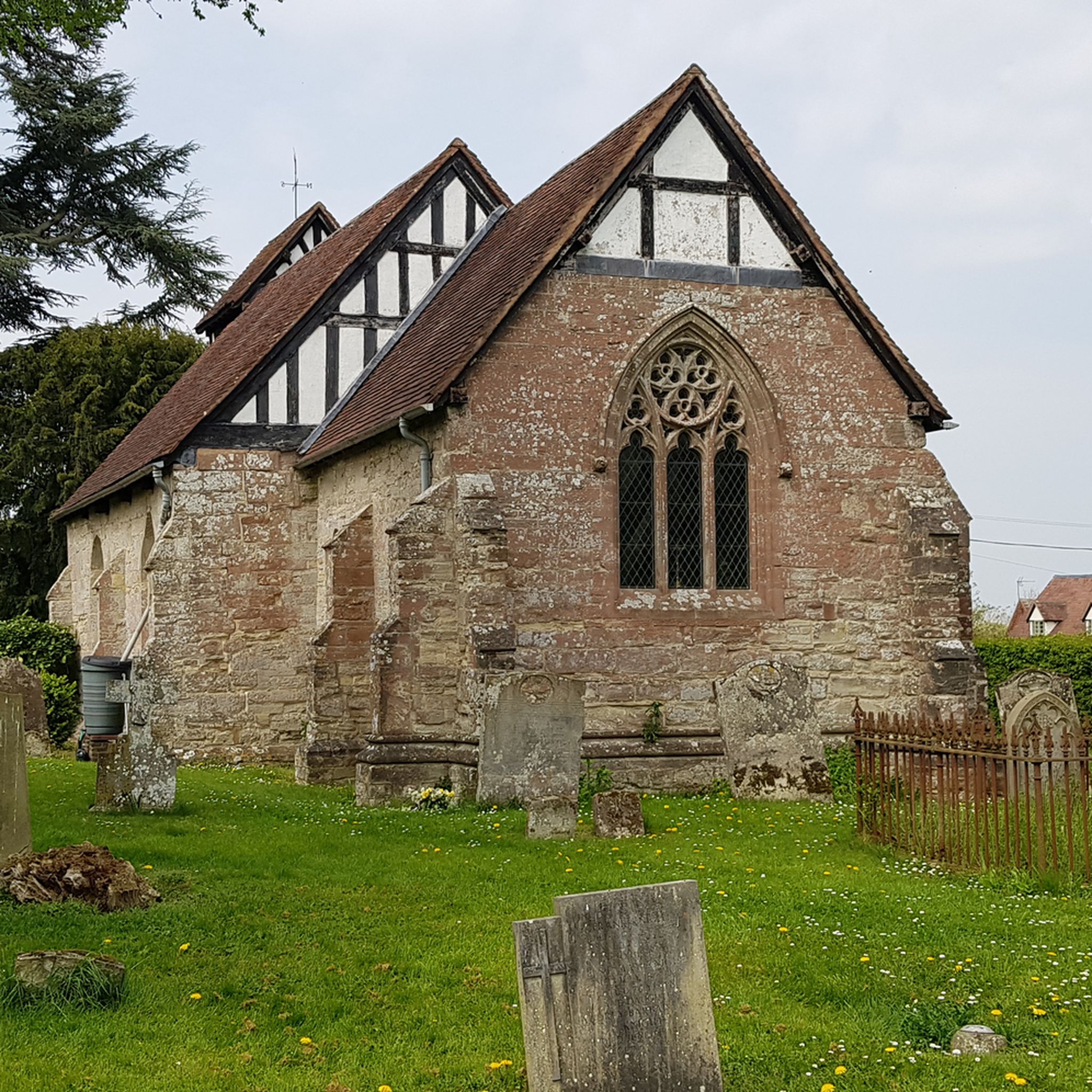
Medieval parish church rebuilt in 1883 by W.J. Hopkins. Grey and red sandstone in squared blocks and laid in regular courses, tile roof. Nave with lower and narrower chancel, west tower, south porch and north vestry. The 2-stage tower has diagonal buttresses and embattled parapet. It has a renewed 3-light Perpendicular west window, and square-headed 2-light belfry openings with labels. The remainder of the church is C19 Gothic-revival style. The nave has buttresses set well back from the west end, and south-east angle buttress. The south doorway has continuous moulding, with 2-light square-headed window to its right and cusped pointed window to its left. The porch is timber-framed on a dwarf wall, incorporating a trefoil arcading on turned posts, and entrance arch with carved spandrels and pierced-quatrefoil barge boards. The north side has similar windows to the south, with the addition of a 3-light square-headed central window. There is also a blocked round-headed north doorway. The chancel has angle buttresses. There are 3 cusped south windows with sill and impost bands. The east wall has 3 stepped windows with quatrefoil tracery lights, linked hoodmoulds and head stops. On the north side is one window similar to the south side, and the integral vestry, which has a 3-light square-headed transomed north window. Walls are exposed red and grey sandstone, creating a mild polychrome effect. Nave and chancel have keeled, boarded wagon roofs, with moulded ribs, foliage bosses. The tall tower arch has a very broad chamfer. The C19 chancel arch has moulding dying into the imposts. The east wall has shafted rere-arches incorporating dogtooth friezes. A piscina in the south-east angle is on a stiff-leaf corbel and beneath a trefoil-headed canopy. Beneath the tower are late-medieval floor tiles. Other tiles are C19. The nave has a floor of red and black tiles, with raised wood floors below the pews. In the chancel are decorative tiles. The octagonal font is C15 and has roses and fleurs-de-lis on the hollow-chamfered underside, but the stem and base are modern. The benches with moulded ends are of 1883, but there are also 2 plain Jacobean benches. The polygonal wooden pulpit has blind Gothic panels incorporating some C16 tracery, and foliage trail cornice of similar date. A chancel screen also incorporates older wood, probably from a C16 rood screen. It has 3 bays either side of the entrance, with delicate tracery to main lights, and C16 foliage trail and brattishing. Choir seats have moulded ends with arm rests. The wooden communion rail is on iron standards with scrollwork brackets. There are fragments of medieval glass in one south window. HISTORY: The C15 tower of the medieval church has survived, but the remainder of the present building is mainly a rebuilding in 1883 by W.J. Hopkins (1820-1901), architect of Worcester, for William Laslett of Abberton Hall. Only parts of the nave south wall and buttresses, and the blocked north doorway, are earlier.
0
0
The Millennium Green is situated on the eastern side of the village of Inkberrow in Worcestershire. Inkberrow is on the A422 main road about half way between Worcester and Stratford-upon-Avon in the English West Midlands. The entrance can be found at the bottom of the hill down the lane past the church. In the centre of the village, by the village green, go towards the Old Bull Inn, past the lychgate entrance to St Peter's Church, and down the hill. (approx 250 yards from the A422). The Millennium Green was officially opened in June 2000. It was supported by Inkberrow Parish Council, The Millennium Commission, English Heritage, The Countryside Agency, Worcestershire County Council and Aqua Vitae 21. It has since been designated a Special Wildlife Site and is now in the Higher Level Stewardship scheme administered by Natural England. The Green is some 8.3 acres in extent, divided into two fields. It is owned and managed as a charity - the Inkberrow Millennium Green Trust - with the land vested in the Official Custodian of Charities. The Trust deeds require that the Green be open and "be able to be enjoyed by people of all ages and physical abilities, be an attractive place for people to exercise, pursue leisure activities and pastimes consistent with shared enjoyment of the whole of the land" and to "include significant 'natural' areas where people can enjoy nature and wildlife at first hand". The Green is managed by the Trustees to meet these objectives, including regular work to sustain, restore and enhance a variety of habitats with ecological and social benefits for the Inkberrow community. The Trustees work in conjunction with outside agencies, such as Historic England and Natural England to ensure compliance with requirements such as those contained in the Ancient Monuments and Archaeological Areas Act (1979) and the Higher Level Stewardship (HLS) agreement.
3
0
16th Century half timbered pub between the village green and the parish church, reputed to have served William Shakespeare in its time. Has 2 Inglenook fireplaces, open beams, roof trusses and a flagstone floor. Said to be the"Bull" in "The Archers", Photographs and memorabilia adorn the walls. There are three regular beers on hand pull and food is served every day.
0
0
Frequently Asked Questions
How many running routes are available around Kington?
There are nearly 100 jogging routes available around Kington, offering a wide variety of options for runners of all abilities. These routes explore the diverse landscapes of Herefordshire and the Welsh border.
What kind of terrain can I expect on jogging routes near Kington?
Jogging routes around Kington feature a diverse terrain, from the green, rolling hills of Herefordshire to the wild uplands of Wales. You'll find a mix of wooded paths, open expansive areas like Hergest Ridge, and scenic runs along waterways such as the Arrow Valley. The topography ranges from gentle slopes to more demanding inclines.
Are there easy jogging routes suitable for beginners in Kington?
Yes, Kington offers several easy jogging routes perfect for beginners or those looking for a gentler run. Out of nearly 100 routes, 8 are classified as easy, providing accessible paths through the scenic countryside.
Are there any circular running routes around Kington?
Many of the jogging routes around Kington are circular, allowing you to start and finish in the same location. For example, the St Peter's Church, Abberton loop from Flyford Flavell offers a pleasant circular run, as does the Running loop from Stock and Bradley.
What are some popular long-distance trails that pass through the Kington area?
Kington is a hub for several significant long-distance paths, offering extensive options for runners. These include sections of the Offa's Dyke National Trail, the Herefordshire Trail, Mortimer's Trail, the Arrow Valley Trail, Vaughan's Way, and the Wyche Way. These trails provide varied terrain for longer runs.
What do other runners think about the trails in Kington?
The jogging routes around Kington are highly rated by the komoot community, with an average score of 4.5 stars from more than 10 reviews. Over 1600 runners have used komoot to explore the varied terrain, often praising the diverse landscapes and extensive trail networks.
Are there any natural features or landmarks to look out for on runs near Kington?
Yes, the Kington area is rich in natural features and landmarks. You might encounter the prominent Hergest Ridge with its expansive views, or explore wooded paths and historical earthworks around Park Wood and Offa's Dyke. The Arrow Valley and areas around Kington Mills and Weirs also offer scenic points of interest.
Can I find family-friendly running routes in Kington?
While specific family-friendly routes are not detailed, the diverse network of trails around Kington includes gentler paths suitable for a family outing. Areas like Park Wood offer a combination of wooded paths and historical interest that can be enjoyable for all ages. The Small Breeds Farm Park & Owl Centre is also located on one of Kington's designated walks, making it a potential destination for a family run.
Are there any routes that offer views or points of interest like Inkberrow Millennium Green?
Yes, some routes incorporate scenic viewpoints and points of interest. For instance, the Inkberrow Millennium Green – The Old Bull loop from Inkberrow offers a moderate experience through varied local scenery, including the Inkberrow Millennium Green itself, which is a designated viewpoint.
What is the typical difficulty level of jogging routes in the Kington area?
The majority of jogging routes around Kington are classified as moderate, with 76 out of nearly 100 routes falling into this category. This means they offer a good balance of challenge and accessibility, suitable for regular runners. There are also 8 easy routes and 14 difficult routes for those seeking less or more strenuous options.
Are there any historical sites or attractions near the running trails?
Yes, the region around Kington offers several historical sites that can be incorporated into or seen near your running routes. These include Coughton Court, Alcester War Memorial Town Hall, and St John the Baptist Church, Grafton Flyford. The ancient Offa's Dyke National Trail itself is a significant historical pathway.
What is the longest running route available around Kington?
Among the listed routes, the Running loop from Stock and Bradley is one of the longer options, covering approximately 13.5 km (8.4 miles). This route provides a more extended run through the countryside.
Most popular attractions around Kington

Get inspired with the komoot mobile app


Explore more
Browse the best Running Trails & Routes in other regions.
