The best running trails around Landen
4.2
(22)
1,490
runners
189
runs
Jogging around Landen offers a variety of routes through its characteristic landscape of open fields, wooded sections, and gentle inclines. The region provides diverse running experiences, from flatter paths ideal for steady paces to areas with slight elevation changes that add variety to a workout. These routes often follow quiet country lanes and paths, providing a peaceful setting for runners.
Best jogging routes around Landen
- The most popular jogging route is De Beemden loop from Landen, a 5.4 miles…
Last updated: July 29, 2026
3.0
(1)
33
runners
Moderate run. Good fitness required. Mostly paved surfaces. Suitable for all skill levels.
37
runners
10.7km
01:07
60m
60m
Moderate run. Good fitness required. Mostly paved surfaces. Suitable for all skill levels.

Sign up for free
30
runners
20.6km
02:08
100m
100m
Hard run. Very good fitness required. Mostly paved surfaces. Suitable for all skill levels.
22
runners
7.49km
00:47
40m
40m
Moderate run. Good fitness required. Mostly paved surfaces. Suitable for all skill levels.
22
runners
10.6km
01:06
50m
50m
Moderate run. Good fitness required. Mostly paved surfaces. Suitable for all skill levels.
Get access to more routes and recommendations from other explorers.
Sign up for free
Already have an account?
Our route recommendations are based on thousands of hikes, rides, and runs completed by other people on komoot.
Start today with a free account
Your next adventure awaits.
Login or Signup

Tips from the Community

The church was built around 1200 in tuff stone, a type of yellow sandstone from nearby Lincent. The design of the church is somewhat unusual, a two-aisled nave with a square choir, while the tower stands on the south side of the main nave. The block altar in tuff stone which, apart from the rosettes, shows great similarity to that of the sister church in Wezeren, is covered with a tabletop in Gobertange stone. The colourful stained glass windows are a true feast for the eyes.
3
0
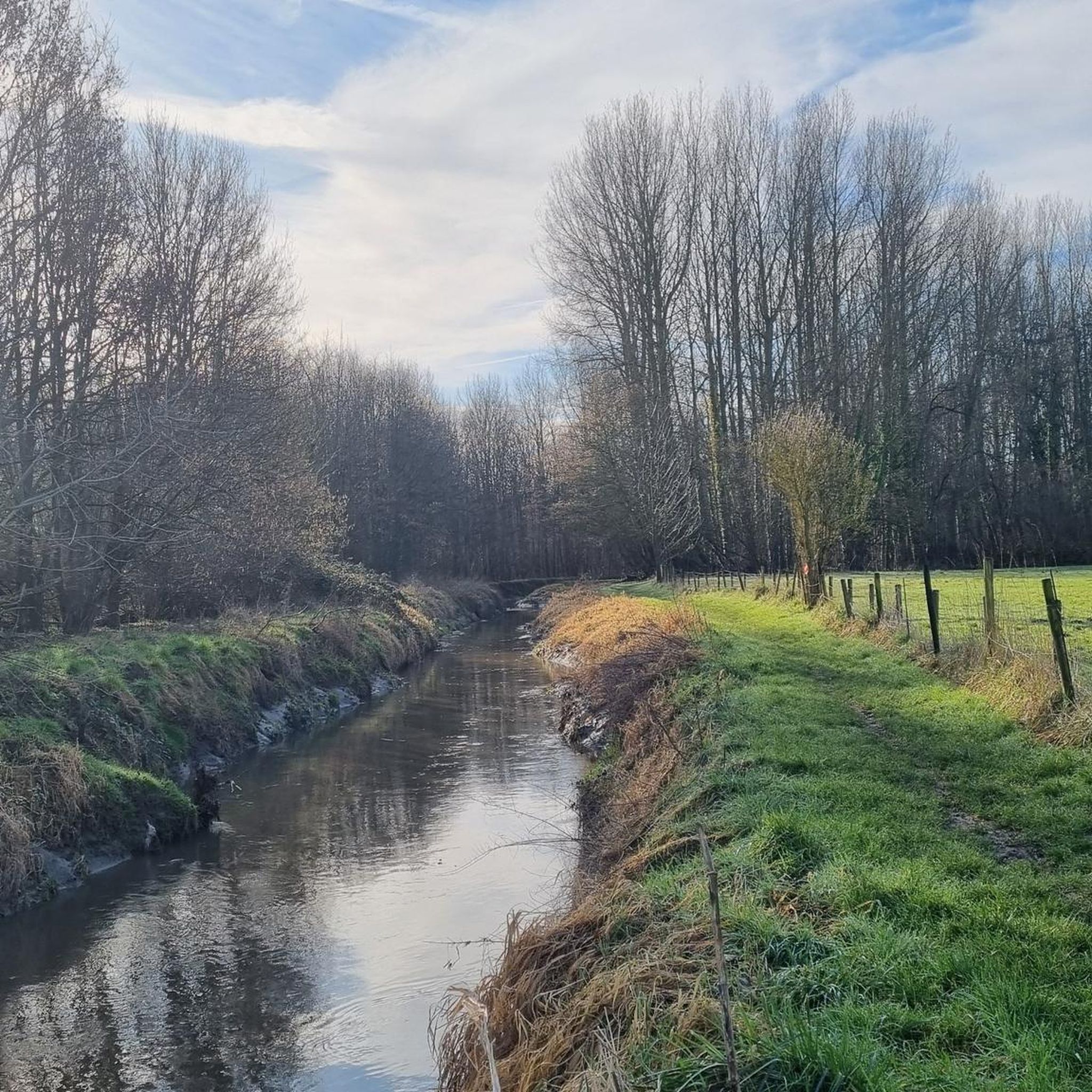
Probably already in the Middle Ages and certainly from the 17th century onwards, the wet valley of the Dormaalbeek and the Zeyp was used by the villagers of Attenhoven and Rumsdorp as hay meadows, hence the name 'Beemden'. After WWII, land use changed. The wet areas became unprofitable for agriculture and were abandoned. The hay meadows were drained and used as pasture for cattle or sheep. Certain parts were planted with poplars. Here and there you can still find remnants of former hay meadows, but from the 1960s onwards, the appearance of the Beemden changed drastically, and currently there are about seven distinct biotopes. This rich variety ensures a great diversity of wild species. Organisms from both wet and dry soils, from running and stagnant water, from forest and hay meadow feel at home there.
3
0

Walshoutem (French: Houtain-l'Évêque) is a village in the Belgian province of Flemish Brabant and a sub-municipality of Landen. The oldest mentions of the place refer to Holtheim (1118) and Houthem (1262). In 1548, Wals-Houtem is mentioned for the first time. The name etymologically comes from the Germanic compound of hulta ("tall forest") and haima ("home"). The name is comparable to numerous other Houtems, such as Sint-Margriet-Houtem near Tienen. Houtem near Landen was expanded with Wals. The village was likely predominantly French-speaking in the 16th century, hence the addition of 'Wals' (Walloon). Around 1650, Dutch became the dominant language again. The village was donated to the Bishop of Liège in 1036. Hence the French name Houtain-l'Evêque ("Bishop's Houtem"), with old forms such as: Houthem episcopi Leodiensis (1269), Houtaing le Vesque (1349) and Bisschops houthem (1731).Walshoutem (French: Houtain-l'Évêque) is a village in the Belgian province of Flemish Brabant and a sub-municipality of Landen. The oldest mentions of the place refer to Holtheim (1118) and Houthem (1262). In 1548, Wals-Houtem is mentioned for the first time. The name etymologically comes from the Germanic compound of hulta ("tall forest") and haima ("home"). The name is comparable to numerous other Houtems, such as Sint-Margriet-Houtem near Tienen. Houtem near Landen was expanded with Wals. The village was likely predominantly French-speaking in the 16th century, hence the addition of 'Wals' (Walloon). Around 1650, Dutch became the dominant language again. The village was donated to the Bishop of Liège in 1036. Hence the French name Houtain-l'Evêque ("Bishop's Houtem"), with old forms such as: Houthem episcopi Leodiensis (1269), Houtaing le Vesque (1349) and Bisschops houthem (1731). Source: https://www.whtm.be/walshoutem
3
0
Basilica-style building on a trapezoidal plan; four bays on the east side culminating in a square choir and crowned on the south side by a massive tower. Interesting tower volume in transitional style (mid-13th century). Quartzite plinth and tuff facing. Three stories: the ground floor currently features a pointed arch arcade; the bell storey has four paired sound holes with a Romanesque column surmounted by a cube capital. The spire dates from the 17th century. Gothic naves covered with mullioned beams or a flat ceiling; north entrance. The choir, also built of tuff, dates from the third quarter of the 13th century; the apse features an oculus and a three-light window with a three-lobed archivolt. Inventory of Immovable Heritage: Parish Church of St. John the Baptist, https://id.erfgoed.net/erfgoedobjecten/43465
7
0

Landen has had a large number of corona victims. Together with the artists Sarah Dhont, Kobe Lecompte and Wilfried Roosen, the city set up a place of comfort in 2022. Sarah Dhont provided the wooden columns, Kobe Lecomte the text on the panel along the monument and IronArt Wilfried Roosen forged words by Kobe in metal, attached to a number of columns: healing, processing, believing, talking, listening. Source: https://www.hln.be/landen/troostplek-met-kunstwerk-ingehuldigd-in-de-beemden~a4c5a7f7/
7
0
The Sint-Pietersbandenkerk is a beautiful example of a rural church that has evolved over the centuries, consisting of a 16th-century Gothic choir in Lincent tuff stone, a sacristy in Maasland style from 1723, a neo-Gothic nave, transept and west tower from 1890 designed by the Sint-Truiden architect E. Serrure and as a final addition two neo-Gothic side chapels from 1896. The church is still surrounded by the walled cemetery with mortuary, with an artistic wrought and cast iron fence by the Van Aerschot company from Herentals from 1873 that was reused around 1890 with the addition of two new wing gates between bluestone pillars, and with a number of striking and locally historically valuable 17th-century grave crosses, late 19th-early 20th-century gravestones with column and wrought iron crosses. Inventory of Immovable Heritage: Parish Church of St. Peter's Bands, https://id.erfgoed.net/erfgoedobjecten/302507
7
0
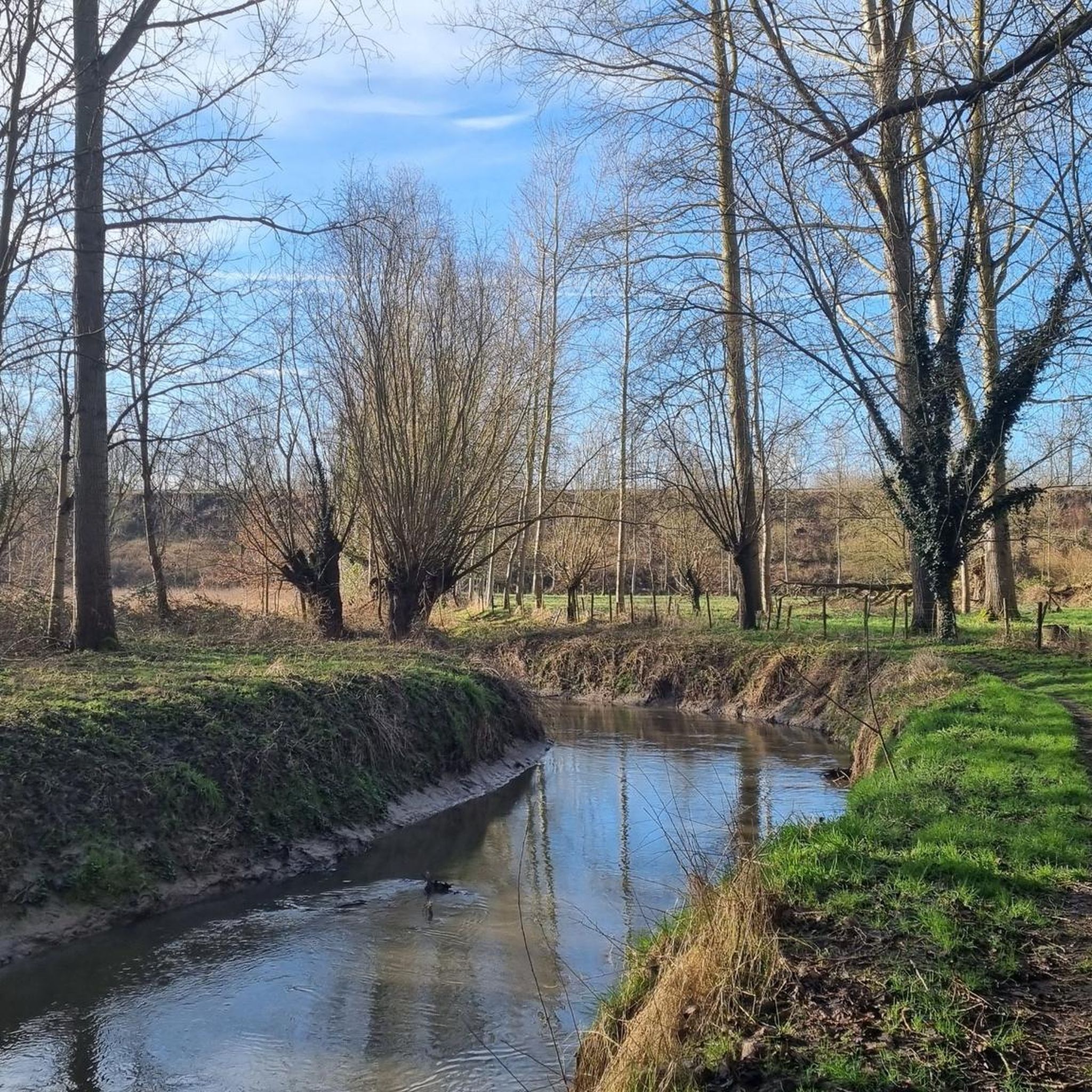
In the midst of the large-scale cultural landscape, this area is one of the last refuges for wild animals and plants in Landen. Small willow groves spontaneously developed between the ponds, where woodpeckers and golden orioles, among others, make their nests. The relatively pure groundwater in the ponds makes a very varied aquatic life possible, ranging from the large yellow-edged water beetle to dragonflies, fish and kingfishers. The pussy willows around the ponds are particularly striking. They grow quickly, but their branches break off easily. Because they do not contain any hard heartwood, birds such as the green and the great spotted woodpecker use them to carve out their nests. The branches that hang close to the water offer ideal resting or viewing places for wild ducks and blue herons. They are especially vital for the kingfisher. Sitting on a lookout post, it hunts for rudd, sticklebacks and other aquatic animals in the water. In early summer, white foam drops sometimes fall from the pussy willows: cuckoo spit. It comes from the larvae of the foam cicada, which produce foam and hide in it. Many other insects live on the pussy willows. They are eagerly eaten by insectivorous birds such as the chiffchaff, the willow warbler and the spotted flycatcher. The bankside vegetation with bulrush, hairy willowherb and marsh sedge offers nesting opportunities for the moorhen and the coot. In summer, many dragonflies and damselflies float above and around the ponds, the most striking of which is the large emperor dragonfly. Swallows hunt for mosquitoes above the ponds. This is therefore the ideal place for a hobby to catch both a swallow and a large dragonfly. In addition to the various types of grass, you will find plants here that feel at home in a dry, calcareous environment. Striking features include the box pod, the cinquefoil and the wild marjoram. Here you can observe numerous species of butterflies in the summer. From the piled-up area you have a good view of the reed field, the breeding area of the reed warbler, the sedge warbler, the reed bunting and many other marsh birds. Wood edges screen the hayfield and the berry or nut-bearing shrubs offer shelter and food to birds such as the garden warbler, chiffchaff and jay. On the darkest parts you can sometimes find glowworms in the evening. Source: https://www.natuurpunt.be/natuurgebieden/beemden-landen
7
0
Frequently Asked Questions
How many running routes are available around Landen?
There are over 180 dedicated running routes around Landen, offering a wide variety of experiences for all skill levels. You'll find everything from easy, flat paths to more challenging trails with notable elevation changes.
Are there easy jogging routes suitable for beginners in Landen?
Yes, Landen offers a good selection of easy jogging routes. Approximately 20 routes are classified as easy, perfect for beginners or those looking for a relaxed run through the characteristic landscape of open fields and gentle inclines.
What kind of terrain can I expect on Landen's running trails?
The running trails in Landen feature a diverse mix of terrain. You'll encounter open agricultural land, small wooded sections, and gentle rolling hills. This variety provides options for steady paces on flatter paths and areas with slight elevation changes to add interest to your workout.
Can I find circular running routes in Landen?
Many of Landen's running paths are designed as loops, allowing you to start and finish in the same location. For example, the popular De Beemden loop from Landen is a 5.4-mile trail that offers varied scenery through open and wooded sections.
Are there any longer or more challenging running trails for experienced runners?
Absolutely. For those seeking a greater challenge, Landen has several longer routes with more significant elevation. The Walsbets Church loop from Landen, for instance, is a 12.8-mile trail with notable elevation, often completed in about 2 hours 8 minutes.
What do other runners say about the trails in Landen?
The running routes in Landen are highly rated by the komoot community, with an average score of 4.3 stars from over 12 reviews. Runners often praise the peaceful setting, varied scenery, and the mix of open and wooded sections that provide an engaging experience.
Are there any interesting natural sights or landmarks to see while running in Landen?
Yes, Landen's routes can lead you past several natural monuments and attractions. You might encounter sights like Lake Het Vinne, the serene Haut-Geer Nature Reserve, or the tranquil Horne Forest. Some routes also pass by unique features like the Sint-Hymelinus Spring.
Can I find routes that pass by viewpoints or observation towers?
Yes, some routes offer opportunities to enjoy scenic views. For example, you might find trails that lead near the De Pallox Observation Tower, providing elevated perspectives of the surrounding landscape.
Are there any running routes that go through villages or past historical points?
Many routes in Landen guide runners through the rural landscape, often alongside fields and past small villages. The Racour Station – Racour Station loop from Landen is a good example, taking you through the local countryside and past points of interest like the old station.
What is a good moderate-difficulty running route in Landen?
A popular moderate-difficulty option is the Landen Station and Water Tower loop from Landen. This 6.9-mile route offers a balanced experience with varied terrain and is a favorite among local runners.
Are there any shorter running options for a quick workout?
For a shorter run, consider routes like the Wepsted Nature Agora – Racour Station loop from Landen. This trail is about 4.6 miles long and offers a moderate challenge, ideal for a brisk jog.
Most popular attractions around Landen

Get inspired with the komoot mobile app


Explore more
Browse the best Running Trails & Routes in other regions.
