Attractions and Places To See around Lugnano In Teverina - Top 20
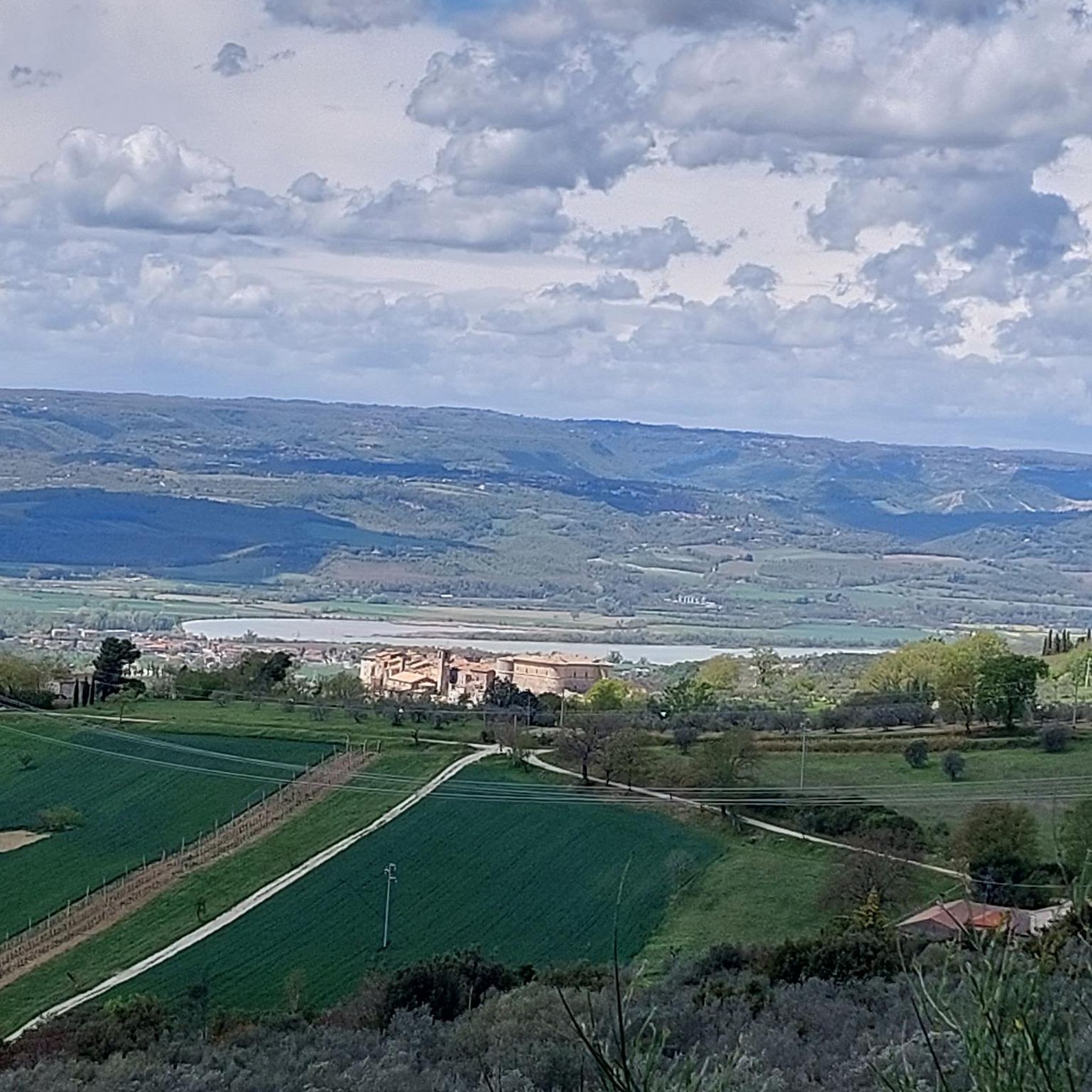
Attractions and places to see around Lugnano In Teverina include a variety of historical landmarks, cultural sites, and natural features. This medieval village, recognized for its well-preserved character, is nestled in the Umbrian region of Italy. Its elevated position offers panoramic views over the Tiber valley and the Amerini mountains. The area is characterized by hills, woods, olive groves, and vineyards, providing a tranquil setting for exploration.
Best attractions and places to see around Lugnano In Teverina
- The most popular attractions is Etruscan Pyramid of Bomarzo, a historical site that features an enigmatic carved rock formation with steps and grooves. Scholars believe this ancient and mysterious pyramid may have served as a sacrificial altar.
- Another must-see spot is Historic Village of Montecchio, a settlement with medieval origins built around the twelfth century. It served as a fortified castle controlling the Tiber valley and is one of the best preserved medieval villages in the area.
- Visitors also love Melezzole Village, a settlement that develops around an ancient medieval castle from the 13th century. Its central square features the bell tower of the church of San Biagio, reachable through narrow stairways.
- Lugnano In Teverina is known for its historical sites, charming settlements, and unique natural monuments. Visitors can explore ancient ruins, medieval villages, and distinctive rock formations.
- The attractions around Lugnano In Teverina are appreciated by the komoot community, with 39 photos shared and 73 upvotes across the highlights.
Last updated: May 26, 2026
Etruscan Pyramid of Bomarzo
Highlight • Historical Site
Translated by Google •
Tip by

Historic Village of Montecchio
Highlight • Settlement
Translated by Google •
Tip by

Sign up now to discover places like this
Get recommendations on the best single tracks, peaks, & plenty of other exciting outdoor places.
Sign up for free
Sacro Bosco (Park of the Monsters), Bomarzo
Highlight • Monument
Translated by Google •
Tip by

Melezzole Village
Highlight • Settlement
Translated by Google •
Tip by
Central Staircase of Santa Restituta
Highlight • Structure
Translated by Google •
Tip by

Sign up for free to discover even more attractions around Lugnano In Teverina.
Sign up for free
Already have an account?
Start today with a free account
Your next adventure awaits.
Login or Signup
Tips from the Community

It is a large boulder of shaped and carved peperino stone, located in a forest between Bomarzo and Chia; It was rediscovered in 2001 by the Archeotuscia association and the archaeological company Pro-Ferento. The structure has 26 steps carved into the volcanic rock, with a height of 8 meters in the upstream part and 16 meters in the downstream part. It is believed to have been an Etruscan rock altar, probably dating back to the 6th-7th century BC, although some hypotheses suggest even older origins.
0
0

Magical place to visit in all seasons
0
0

Delightful medieval hamlet perched on the slopes of Monte Rotondo, surrounded by chestnut woods. The town is divided in two by a characteristic staircase that crosses it from top to bottom.
0
0

The Sacro Bosco known as Monster Park for the grotesque sculptures present is the oldest sculpture park in the modern world. Near Orsini, lord of Bomarzo, he built it starting from the middle of the 16th century. Overcoming the dominant idea of the Italian Renaissance garden, Vicino creates a work that is not easy to decipher, fitting into the new naturalistic architectural vision of the end of the Renaissance. Immersed in lush nature, the park takes the form of a hermeneutical labyrinth populated by symbolic sculptures that escape classical composure giving way to a Mannerist taste for the bizarre and the occult. A visit to the park is, however, a particularly interesting experience as it combines art, magic and literature whose references are not always decipherable.
0
0

Given its shape, it could recall a religious altar, but it is really an ancient and mysterious pyramid discovered only in 1911.
1
1

The Sacro Bosco di Bomarzo is the oldest sculpture park in the modern world. It was conceived in the 16th century by the architect Pirro Ligorio on commission from Prince Pier Francesco Orsini, lord of Bomarzo. The Sacro Bosco is also known as the Monster Park for the presence of sculptures depicting mythological animals, divinities and monsters scattered in a surreal natural landscape.
2
0

🗿🙃🗿 “Mom, there is a monster in our garden!” – “No, honey – there are dozens of them!” This is how one could imagine a dialogue between mother and child among the Orsinis. However, the marriage probably remained childless, so there was never a dialogue and Pier Francesco Orsini, scion of a well-known noble family, had to look for other options to burn money. In 1552 the time had come: over the next 30 years, volcanic peperin rock was transformed into sculptures the height of a man and a house, until the Sacro Bosco (Sacred Forest) was completed. After his death, the complex fell into oblivion and the now weathered sculptures were not rediscovered until the middle of the 20th century. Abandoned for centuries, the forest became popularly known as the Park of Monsters (Italian: Parco dei Mostri). 🏴☠️🤪🏴☠️ What Francesco Orsini intended with the Monster Park and what the characters are supposed to say is still a mystery. Maybe it's all just a game of deception; on the Ertruscan bench he had engraved: "Voi che pel mondo gite errando vaghi di veder meraviglie alte et stupende" - You who wander in the world, greedy for great and glorious wonders, come here... 👀🗿👀 So we look at the huge Proteus-Glauco from afar, get up close to the monumental sculpture of the fighting giants Hercules and Caco, puzzle over the female figure on a turtle and can assign Pegasus. I don't want to list all the sculptures that can be found north of the crooked house (Casa Pendente). I do want to mention one, however: the Orcus. A man's huge head petrified in a scream of terror. Through the gaping jaws of the Orcus, one enters a dark chamber where a table and a stone bench await the visitor. By the way, the sculpture always reminds me of the King Crimson album cover: “In The Court Of The Crimson King. https://images.app.goo.gl/X4bbcSPL42tR6cFf8
0
0

ocated on a hill overlooking the Tiber valley, Montecchio preserves the charm of the Middle Ages intact with its alleys, squares, the light tones of the stone and the mighty walls with defense towers. With a vaguely elliptical shape, the village is one of the best preserved in the valley. Soft hills of olive trees draw its territory. Dense woods make the landscape vivid and lush in the summer, while autumn paints the Mediterranean scrub in orange and red.
0
0
Frequently Asked Questions
What historical and cultural sites can I explore within Lugnano in Teverina itself?
Within the medieval village of Lugnano in Teverina, you can discover several significant historical and cultural sites. The 12th-century Church of Santa Maria Assunta is a Romanesque gem with a colonnaded portico and a crypt. Don't miss the 16th-century Palazzo Farnese-Ridolfi, distinctive for its unique architecture. The Civic Museum, located just outside the village walls, houses artifacts from the Roman villa at Poggio Gramignano and World War I. You can also visit the Convent of San Francesco, built in 1229, which commemorates a miracle performed by Saint Francis.
Are there any ancient Roman ruins to visit near Lugnano in Teverina?
Yes, just outside the village on a small hill, you can explore the ruins of the Roman Villa at Poggio Gramignano. Discovered in 1988, this luxurious villa rustica dates back to the 1st century BC and provides fascinating insight into the Roman presence in the area. Artifacts from this site are displayed in the Civic Museum.
What natural features and panoramic views can I enjoy around Lugnano in Teverina?
Lugnano in Teverina offers stunning natural beauty and panoramic vistas. From its elevated position, you can enjoy beautiful views over the Tiber valley and the green Amerini mountains. The gardens of the Ex Orto Ungari provide exceptional views of the Castle and Lake Alviano, the bend of the Tiber River, and the Cimini mountains extending towards Mount Soratte and Rome. The area is also characterized by hills, woods, olive groves, and vineyards, creating a tranquil atmosphere. You can also find the Ramici Sulphur Springs in the flat area near the Roman villa ruins, known for their therapeutic properties.
Are there family-friendly attractions or activities near Lugnano in Teverina?
For a unique family experience, consider visiting the Sacro Bosco (Park of the Monsters) in Bomarzo. This 16th-century sculpture park features fantastical creatures and mythological figures carved from volcanic rock, offering a surreal and engaging adventure for all ages. The park is known for its whimsical and mysterious atmosphere, making it a memorable outing for families.
What medieval villages are worth visiting in the vicinity of Lugnano in Teverina?
Beyond Lugnano itself, two notable medieval villages nearby are the Historic Village of Montecchio and Melezzole Village. Montecchio, built around the twelfth century, is one of the best-preserved medieval villages in the area, with its alleys, squares, and mighty walls. Melezzole, located at 610 meters high, develops around an ancient 13th-century castle and offers suggestive views of the surrounding forest landscape.
What kind of outdoor activities, like hiking or cycling, can I do near Lugnano in Teverina?
The area around Lugnano in Teverina is excellent for outdoor enthusiasts. You can find various routes for hiking, mountain biking (MTB), and gravel biking. For hiking, consider trails like the 'Oasi del Lago di Alviano – loop tour' or routes around Monte Croce di Serra Summit. Mountain bikers can explore options like the 'Tour dei Borghi Silenti' or a loop from Attigliano-Bomarzo to Vitorchiano. Gravel biking offers routes such as the 'Nera Gorge Cycle Route' or the 'Dunarobba Fossil Forest' loop. You can find more details on these activities and specific routes in the Hiking around Lugnano In Teverina, MTB Trails around Lugnano In Teverina, and Gravel biking around Lugnano In Teverina guides.
Is there a unique historical monument or site that stands out near Lugnano in Teverina?
Yes, the Etruscan Pyramid of Bomarzo is a truly unique and enigmatic site. This ancient, mysterious carved rock formation features steps and grooves, leading scholars to believe it may have served as a sacrificial altar. It's an unattended place of archaeological interest, so visitors are encouraged to show respect and avoid climbing on it to preserve its integrity.
What is the best time of year to visit Lugnano in Teverina?
The best time to visit Lugnano in Teverina is generally during the spring (April to June) and early autumn (September to October). During these months, the weather is pleasant, with comfortable temperatures ideal for exploring the medieval village, historical sites, and enjoying outdoor activities. The surrounding landscape is particularly vibrant in spring with blooming flora and in autumn with rich fall colors.
Are there any less-known or 'hidden gem' attractions in the area?
Beyond the main highlights, consider exploring the Convent of Sant'Antonio or of the Cappuccini, nestled in a beautiful oak grove near the village, offering a serene and picturesque setting. Another interesting spot is the Palazzo Fabbrica, an early 1900s building that once served as a factory and now functions as a cultural center, housing the Municipal Antiquarium. The Torre di Palombara, an ancient tower with a carved dove on its exterior, also offers a glimpse into the village's past.
What do visitors enjoy most about the attractions around Lugnano in Teverina?
Visitors particularly appreciate the well-preserved medieval character of the villages, the historical depth of sites like the Etruscan Pyramid, and the stunning panoramic views. For instance, the Etruscan Pyramid of Bomarzo is noted for its mysterious and ancient presence, while the Historic Village of Montecchio is loved for its intact medieval charm. The overall tranquility and timeless atmosphere amidst hills, woods, and olive groves also contribute to a highly enjoyable experience.
Can I find any unique architectural features or structures in the area?
Yes, the area boasts several unique architectural features. In Lugnano in Teverina, the Palazzo Farnese-Ridolfi is notable for being split in two by a gallery. The Central Staircase of Santa Restituta is a delightful medieval hamlet hinged around a characteristic staircase that divides it from top to bottom, with houses leaning against each other forming a defensive system. The Torre di Palombara, with its distinctive carved dove, also adds to the unique architectural landscape.
Most popular routes around Lugnano In Teverina
Most popular attractions around Lugnano In Teverina

Get inspired with the komoot mobile app


Explore more
Still not found the Highlight you’re looking for? See guides of the top attractions in other regions:
