The best MTB trails around Monteleone Sabino
4.6
(62)
784
riders
62
rides
Mountain biking around Monteleone Sabino offers diverse terrain within the southern foothills of Italy's Monti Sabini. This region is characterized by its mountainous landscape, providing varied experiences from climbs to descents. The area features hills, such as the one Monteleone Sabino is built upon, and is influenced by the Farfa River, contributing to its natural setting. The Monti Sabini range, part of the Apennines, ensures a mix of elevations for mountain bike trails.
Best mountain bike trails around Monteleone Sabino
…Last updated: May 25, 2026
5.0
(3)
14
riders
41.1km
03:55
1,250m
1,250m
Hard mountain bike ride. Very good fitness required. Suitable for all skill levels.
5.0
(1)
13
riders
39.2km
04:08
1,300m
1,310m
Hard mountain bike ride. Very good fitness required. Suitable for all skill levels.

Sign up for free
3.0
(1)
11
riders
Moderate mountain bike ride. Good fitness required. Suitable for all skill levels.
4.0
(2)
12
riders
Hard mountain bike ride. Very good fitness required. Suitable for all skill levels.
5.0
(1)
11
riders
26.1km
02:30
730m
730m
Moderate mountain bike ride. Good fitness required. Suitable for all skill levels.
Get access to more routes and recommendations from other explorers.
Sign up for free
Already have an account?
Our route recommendations are based on thousands of hikes, rides, and runs completed by other people on komoot.
Start today with a free account
Your next adventure awaits.
Login or Signup
Tips from the Community

The Torracci of Osteria Nuova are three large tower-shaped tombs located in the hamlet of Osteria Nuova, in the province of Rieti but also close to Rome. These archaeological structures date back to the 2nd century AD, evidence of the Roman Imperial era.
0
0

landscapes of remarkable beauty
0
0
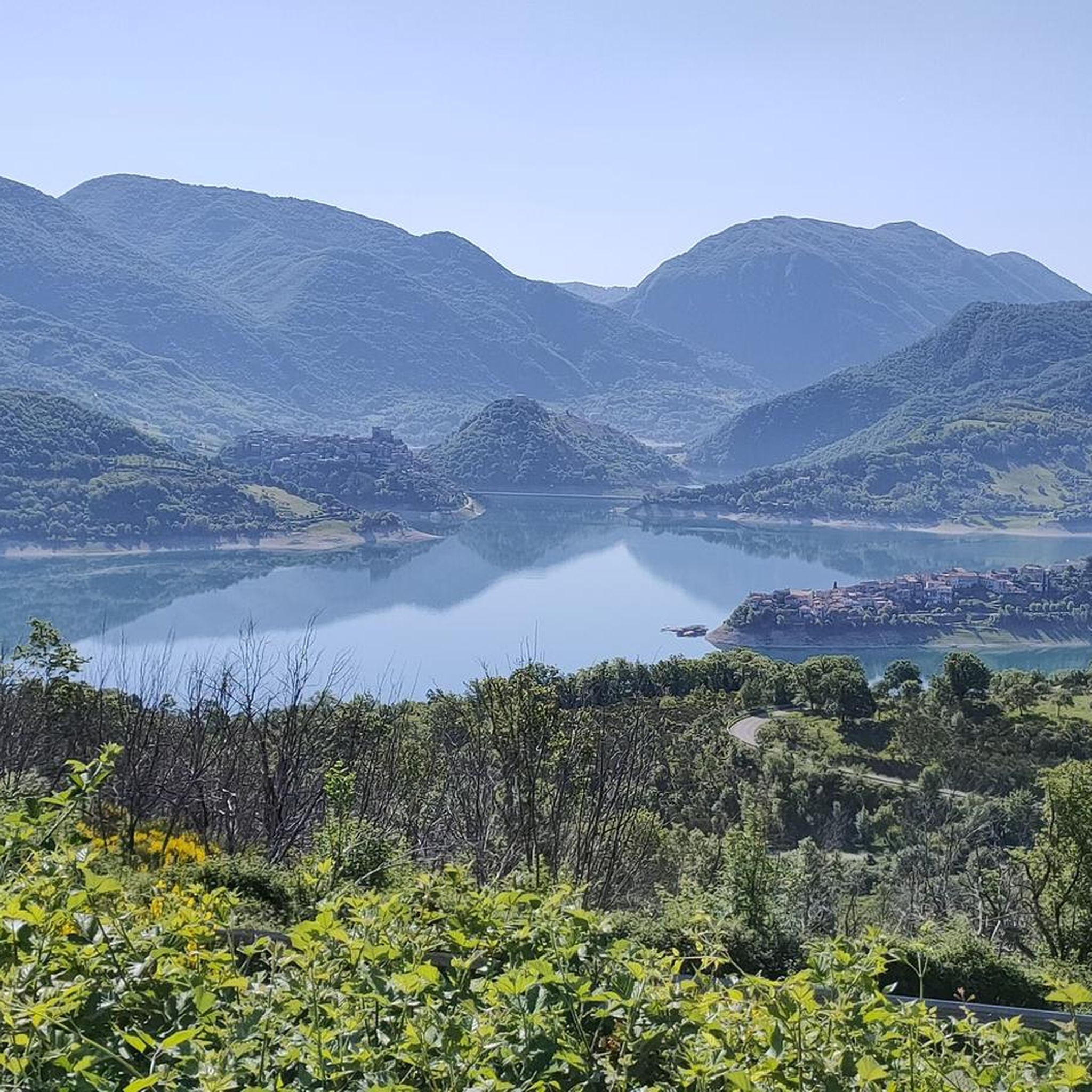
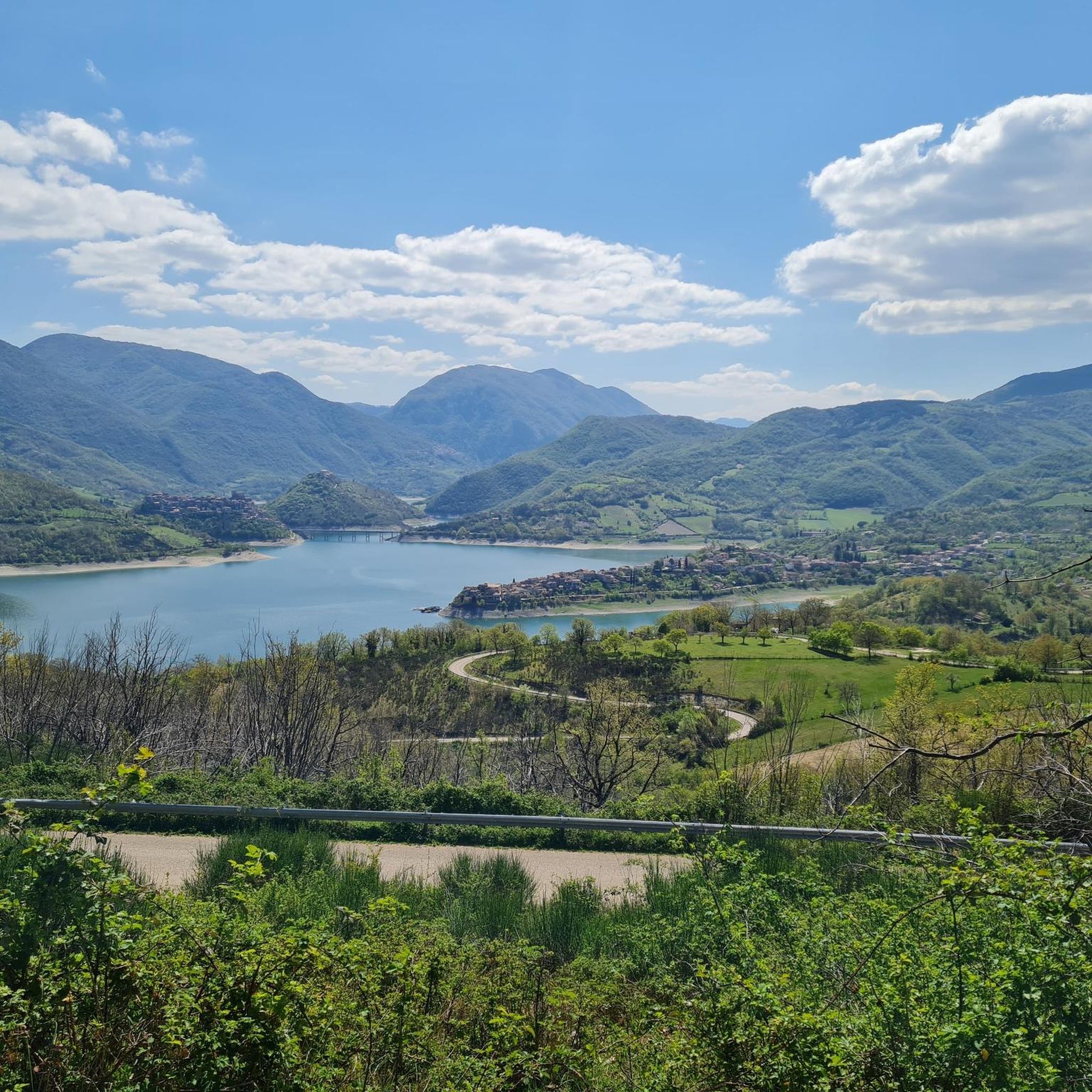
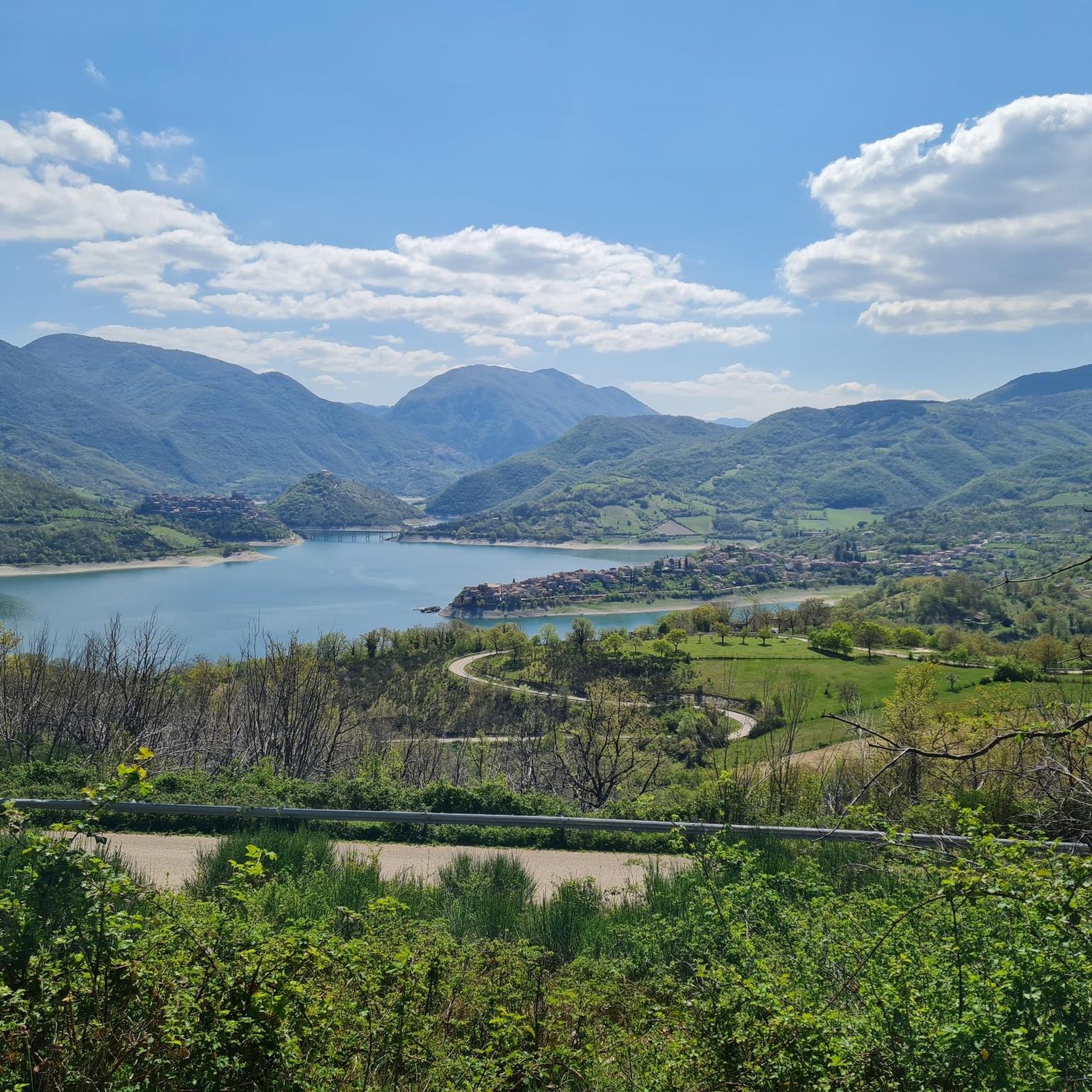
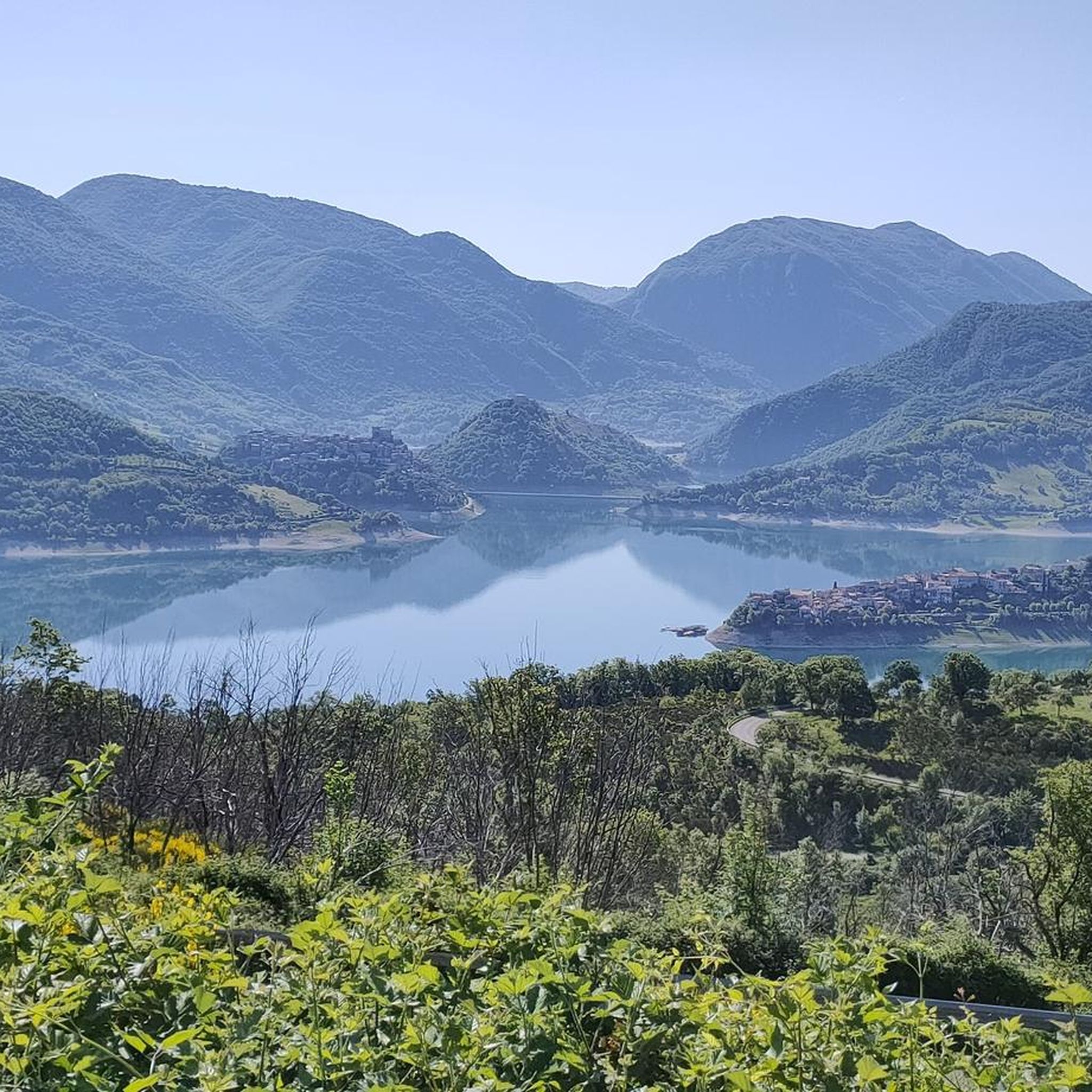
This entire trail offers many views of the lake and is very easy to cycle on without any difficulty.
0
0
Crossroads of various paths, one goes up steeply from which you can enjoy a better view of Lake Turano
0
0
Observation point of the country.
0
0
The path from the fountain is not very clear, follow the direction of the track and you will find it near a tree.
0
0
"This ancient monastery, which stands majestically on the slopes of Monte Pendente, about 4 kilometers from the municipality of Scandriglia, boasts a rich and intriguing history that has its roots in the 10th century. The foundation of the abbey dates back to 971, when San Domenico di Sora, a Benedictine monk known for his ascetic life, began his hermit journey here. His presence attracted the attention of the Marquis Uberto, commendatory of the Abbey of Farfa, who decided to commission the construction of the monastery. San Domenico thus became the first abbot of this new monastic community, starting a spiritual tradition that would last for centuries. The abbey, built according to the canons of Romanesque architecture, presents itself with a well-organized structure. The monastic complex develops around two courtyards, with the workshops located on the lower floors and the monks' lodgings on the upper ones. The church, an integral part of the complex, completes the harmonious layout of the buildings. Over the centuries, the Abbey of San Salvatore Minore has experienced moments of great historical importance. In 1083, it was ceded to the Benedictines of Farfa by Count Todino, marking an important transition in its management. In the 13th century, the abbey was at the center of a jurisdictional dispute that even required the intervention of Pope Gregory IX in 1235. A century later, in 1311, the monk Gregory of Scandriglia became abbot, facing a turbulent period marked by revolts of the Farfa emphyteuti. Despite the challenges, the abbey continued to play a significant role in the religious and cultural life of the region until 1497, when the monastery was closed and Giovanni Buccimazza became its last abbot. Today, the Abbey of San Salvatore Minore is in a state of perfect preservation, testifying to centuries of history and spirituality. Its strategic position also makes it a starting point for an ancient pilgrimage route known as “Ginocchio du bove”, once used for trade between the populations of Scandriglia and Orvinio. This abbey represents not only a precious example of monastic architecture, but also an important piece in the religious and cultural history of Lazio, offering visitors a dive into the past and a tangible testimony of medieval monastic life.".
0
0
To access the trail, use the first detour, the subsequent ones are not cycleable.
0
0
Frequently Asked Questions
How many mountain bike trails are there around Monteleone Sabino?
There are over 50 mountain bike trails available around Monteleone Sabino, offering a diverse range of experiences within the Monti Sabini foothills. These include routes of varying difficulty levels, from easy to difficult.
Are there mountain bike trails suitable for beginners in Monteleone Sabino?
Yes, while many routes are moderate to difficult, there are a few easier options available. The region offers a mix of terrains, so beginners can find suitable paths to enjoy the scenic countryside.
Can I find circular mountain bike routes in the area?
Yes, many of the mountain bike trails around Monteleone Sabino are designed as loops, allowing you to start and finish at the same point. For example, the Lago del Turano viewpoint – Pratarelle Spring loop from il Torraccio a Poggio Moiano is a popular circular option.
What kind of terrain can I expect on mountain bike trails in Monteleone Sabino?
The terrain around Monteleone Sabino is characterized by the southern foothills of the Monti Sabini, part of the Apennines. You can expect mountainous landscapes with varied elevations, from climbs to descents, and scenic countryside influenced by the Farfa River. This provides a mix of challenging and enjoyable paths.
Are there any notable landmarks or viewpoints along the mountain bike trails?
Yes, the trails often pass by significant historical sites and offer panoramic views. You might encounter the majestic Vallocchie Waterfall, or enjoy extensive views towards Lago del Turano, as seen on the Lago del Turano viewpoint – View of Lake Turano loop from Poggio Moiano route. The region also features historical sites like the Sanctuary of Santa Vittoria.
What is the best time of year for mountain biking in Monteleone Sabino?
The Monti Sabini region generally offers pleasant conditions for mountain biking during spring and autumn, when temperatures are milder. Summer can be hot, especially at lower elevations, while winter might bring colder weather and potential snow at higher altitudes.
Are there any trails that pass by historical sites or cultural attractions?
Yes, several routes integrate the rich history of the area. For instance, the Lago del Turano viewpoint – Sanctuary of Santa Vittoria loop from Poggio Moiano passes by the historic Sanctuary of Santa Vittoria. The village of Monteleone Sabino itself stands on the ruins of the ancient Roman city of Trebula Mutuesca, offering archaeological sites like a well-preserved Roman amphitheater.
What do other mountain bikers enjoy most about the trails in Monteleone Sabino?
The mountain bike trails in Monteleone Sabino are highly rated by the komoot community, with an average score of 4.6 stars from over 50 reviews. Reviewers often praise the varied terrain, the breathtaking landscapes, and the panoramic viewpoints, especially those overlooking Lago del Turano and the Lazio countryside.
Are there any trails that offer views of Monte Elci?
Yes, the region offers views of prominent peaks. You can find routes that provide vistas of Monte Elci, which at 709 meters above sea level, offers splendid panoramic views from its summit. The Monte Elci Summit and Book Sculpture is a highlight in the area.
Is public transport available to access mountain bike trails in Monteleone Sabino?
While Monteleone Sabino is a smaller village, it's situated in a region that is generally accessible. For specific trailheads, it's advisable to check local bus schedules or consider driving, as public transport options might be limited directly to all starting points.
Are there any trails that lead to natural monuments or unique geological features?
Yes, the area is rich in natural beauty. You can explore routes that lead to highlights such as the Cave of Saint Michael the Archangel or the Fountain and Stone Ruins in the Monti Lucretili Park, offering a blend of natural and historical interest.
Are there any trails that are particularly challenging for advanced mountain bikers?
Yes, Monteleone Sabino offers several difficult routes for experienced riders. For example, the View of Scandriglia – Pratarelle Spring loop from Osteria Nuova is a challenging 43.9 km trail with significant elevation changes, providing a demanding experience.
Most popular attractions around Monteleone Sabino

Get inspired with the komoot mobile app


Explore more
Browse the best MTB trails in other regions.
