Attractions and Places To See around Fiano Romano - Top 20
Best attractions and places to see around Fiano Romano are found in the Tiber Valley, a region north of Rome. This area offers a combination of historical landmarks, cultural sites, and natural landscapes. Its strategic position near the Tiber River has contributed to its historical significance, reflected in its diverse points of interest. Visitors can explore ancient ruins, medieval structures, and protected natural areas.
Best attractions and places to see around Fiano Romano
- The most popular attractions is Hermitage of Saint Sylvester, a religious building located at the top of Mount Soratte. This hermitage offers panoramic views of the surrounding valleys and stands in a clearing overlooking the Tiber Valley.
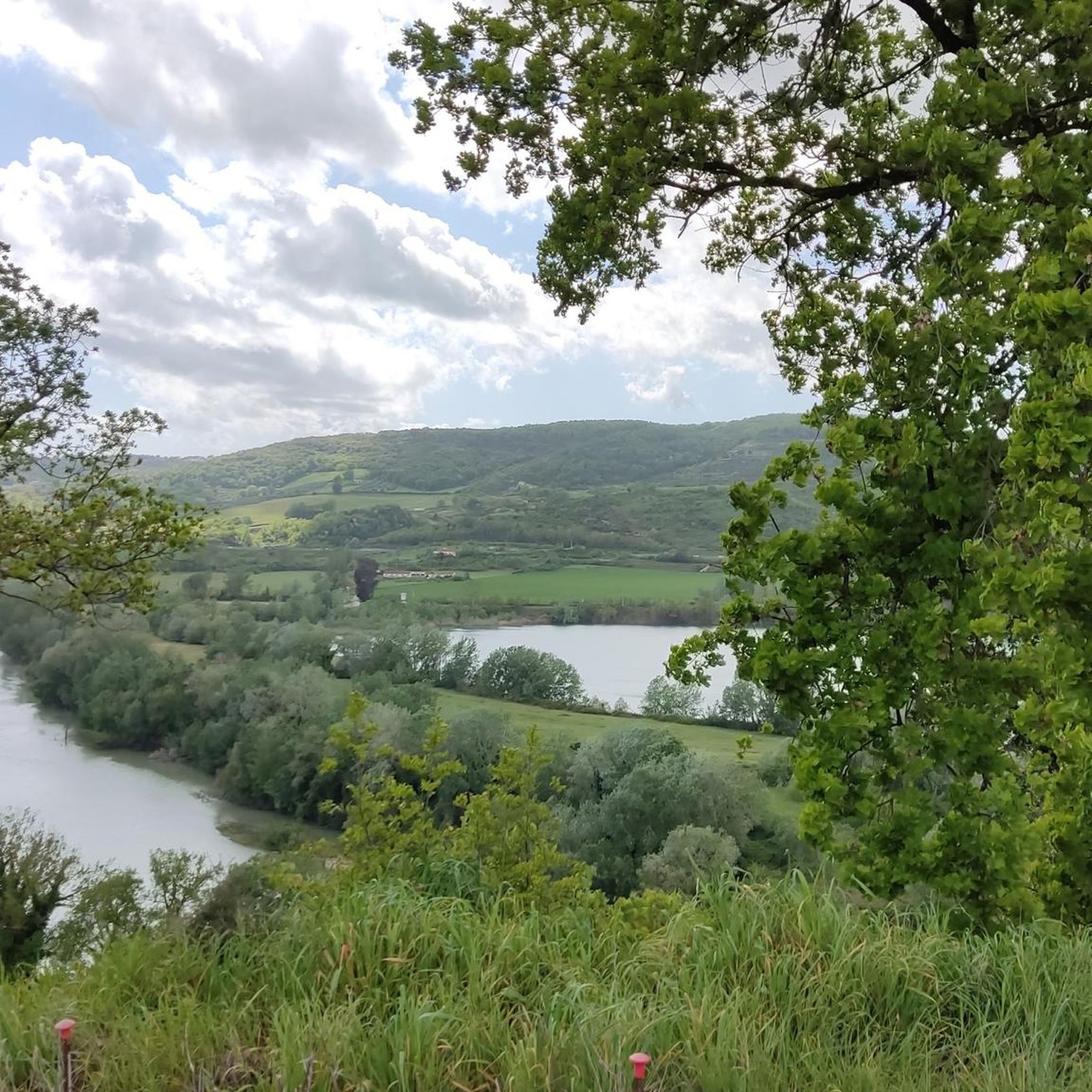
- Another must-see spot is Nazzano Tevere-Farfa Nature Reserve, a protected natural area. This reserve encompasses an extensive wetland area known as "Lake Nazzano" and was the first protected area established by the Lazio Region in 1979.
- Visitors also love Monte Soratte Bunker, a man-made monument consisting of a network of tunnels inside Mount Soratte. This site was originally built as an air-raid shelter and later served as a military headquarters during World War II.
- Fiano Romano is known for its historical sites, natural reserves, and cultural landmarks. The area provides a variety of attractions to see and explore, from ancient Roman remains to medieval castles and protected wetlands.
- The attractions around Fiano Romano are appreciated by the komoot community, with more than 100 upvotes and over 90 photos shared.
Last updated: August 2, 2026
Hermitage of Saint Sylvester
Highlight • Religious Site
Translated by Google •
Tip by

Nazzano Tevere-Farfa Nature Reserve
Highlight • Natural
Translated by Google •
Tip by

Sign up now to discover places like this
Get recommendations on the best single tracks, peaks, & plenty of other exciting outdoor places.
Sign up for free
Monte Soratte Bunker
Highlight • Monument
When, after 8 September 1943, the German supreme command of the South was bombed in Frascati, Field Marshal Albert Kesselring, who was in charge of it, arranged to transfer its headquarters to Soratte. There it would remain almost undisturbed until early June 1944. The bunker also resisted the bombing of 12 May 1944 carried out by two flocks of allied B-17s, which had left specifically from Foggia to destroy it. The operation, which hit many houses in nearby Sant'Oreste, caused about a hundred victims among the 980 German soldiers in the town. To leave, however, the Wehrmacht troops waited for June 5, when British and American tanks entered Rome. Before leaving, they flooded the tunnels with petrol and set them on fire. To enter, the British had to wait for the fire to burn itself out five days later.
After the end of the war, the complex remained abandoned until 1967, when a fallout shelter was built under the aegis of NATO, which however was not completed and abandoned in 1972.
Translated by Google •
Tip by

Mentana Gate
Highlight • Historical Site
Translated by Google •
Tip by

Ponzano Romano
Highlight • Settlement
Translated by Google •
Tip by
Sign up for free to discover even more attractions around Fiano Romano.
Sign up for free
Already have an account?
Start today with a free account
Your next adventure awaits.
Login or Signup

Other adventures around Fiano Romano

Tips from the Community

An open-air museum, recommended
0
0

Short panoramic walk with an exhibition of military vehicles.
0
0

Mentana, 20 km from Rome, is a village in the Roman Sabina area known for its Sabina DOP extra virgin olive oil and the Macchia di Gattaceca Nature Reserve. The meeting between Charlemagne and Pope Leo III and the Battle of Mentana in 1867, led by Garibaldi, took place here. The village preserves historical monuments such as the Baronial Palace and the Capuchin Convent. The MuGa – Garibaldino Museum commemorates the heroes of the Risorgimento. Mentana is also famous for festivals dedicated to culinary specialties such as ciammella a cancellu and maccheroni a centonara, and for traditional celebrations such as that of Sant'Antonio Abate.
1
0

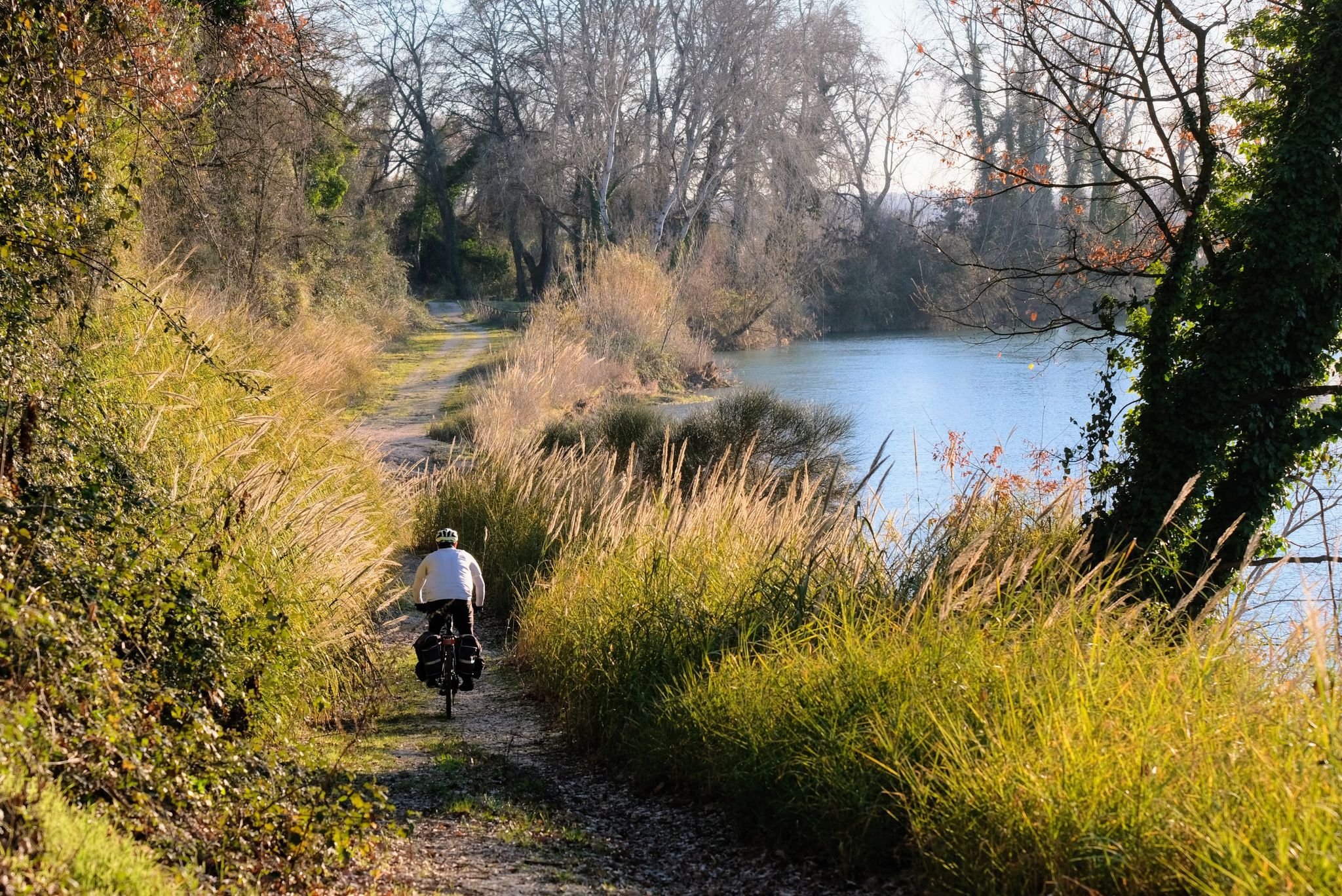
The Nazzano Tevere - Farfa Regional Nature Reserve extends upstream of the Enel hydroelectric power plant in Nazzano, and includes the stretch of the Tiber river that goes from the power plant itself to the Poggio Mirteto mountain and along the course of the Farfa river up to the Granica bridge .
0
0

On the way to the top of Soratte, just before the San Silvestro hermitage, you can take the path on the left that leads to the small San Sebastiano hermitage, of which modest wall traces remain. The latter was home to hermits in the 16th and 17th centuries, after which it began to be abandoned and fell into ruin. In the rock there is a cavity used to collect water. Short trail but to be followed with care.
0
1

This hermitage has a patronal name that is truly on everyone's lips, but only a few will know the person behind it: the feast day of Saint Sylvester (San Silvestro) is December 31st. He lived at the end of the third or beginning of the fourth century and was Bishop of Rome when Emperor Constantine - later generations gave him the nickname "the Great" - recognized Christianity as a religion with the so-called "Edict of Toleration" of Milan, thus ending - at least temporarily - the period of bloody persecution of Christians.
1
2

The Eremo di San Silvestro, located at the top of Mount Soratte, offers a stunning panoramic view of the surrounding valleys. This hermitage, one of the numerous hermitages scattered in the Sabina region, stands in a clearing overlooking the beautiful Tiber Valley. Its isolated location far from the town of Sant'Oreste gives it a suggestive atmosphere.
4
0

A wonderful place still well preserved, it is worth booking a guided tour
3
0
Frequently Asked Questions
What historical sites can I explore in Fiano Romano?
Fiano Romano is rich in history. You can visit the impressive Orsini Ducal Castle, a central feature of the town's historic center with a 30-meter high 'Keep' offering panoramic views. Also, explore the Church of Santo Stefano Nuovo, located opposite the castle, which houses Orsini family tombs and ancient frescoes. For a deeper dive into ancient history, the Archaeological Site of Lucus Feroniae, dedicated to the goddess Feronia, and the remains of the Villa dei Volusii provide insights into the Roman imperial period. Don't miss the Monte Soratte Bunker, a network of tunnels inside Mount Soratte with a significant World War II history.
Are there any natural attractions or reserves near Fiano Romano?
Yes, the most prominent natural attraction is the Nazzano Tevere-Farfa Nature Reserve. This protected area in the Tiber Valley features an extensive wetland known as "Lake Nazzano" and offers walking trails and opportunities to experience local nature. The surrounding rural landscape also provides picturesque views of rolling hills and fields.
What outdoor activities are available around Fiano Romano?
The area around Fiano Romano is excellent for outdoor activities. You can find numerous hiking trails, including easy options like the "Hiking loop from Nazzano" or more moderate routes such as "Tevere-Farfa Nature Reserve – Yellow Iris by the River loop." For cyclists, there are road cycling routes like the "Milvian Bridge – Tiber Cycle Path loop" and touring bicycle options, including the challenging "Orsini Ducal Castle – Monte Soratte loop." You can find more details and routes in the Hiking around Fiano Romano, Road Cycling Routes around Fiano Romano, and Cycling around Fiano Romano guides.
Are there family-friendly attractions in the Fiano Romano area?
Absolutely. The Nazzano Tevere-Farfa Nature Reserve is a great option for families, offering easy trails and a chance to explore nature. Additionally, historical settlements like Ponzano Romano and Mentana Gate are categorized as family-friendly, providing engaging historical contexts for all ages.
What unique historical artifacts or monuments can I see?
Beyond the castle and churches, you can see the Mausoleum of Fiano Romano, a collection of thirteen large Carrara marble blocks from the 1st century BC, decorated with gladiator fight scenes. These impressive reliefs are now exhibited in the antiquarium of Lucus Feroniae. Another unique site is the Mural on Land Occupation and the Struggle for Development, a painting-sculpture from 1972 inspired by Mexican muralism, celebrating local peasant and worker movements.
What do visitors enjoy most about the attractions around Fiano Romano?
Visitors particularly appreciate the blend of history and nature. The Hermitage of Saint Sylvester is loved for its stunning panoramic views of the Tiber Valley. The Nazzano Tevere-Farfa Nature Reserve is praised for its natural and peaceful setting, with flat gravel paths ideal for walking and cycling. The historical depth of sites like the Monte Soratte Bunker also captivates many.
Are there any viewpoints offering scenic vistas?
Yes, the Hermitage of Saint Sylvester, located at the top of Mount Soratte, offers a stunning panoramic view of the surrounding valleys and the beautiful Tiber Valley. The Orsini Ducal Castle also provides excellent views from its terrace.
What is the significance of the Tiber River in Fiano Romano?
The Tiber River plays a crucial role in the region's history and natural beauty. Fiano Romano's strategic location near the Tiber has contributed to its rich past. The Tevere-Farfa Regional Nature Reserve encompasses an extensive wetland area known as "Lake Nazzano," formed by a dam on the Tiber River, highlighting its ecological importance.
Can I find any ancient Roman ruins in the area?
Yes, the area is home to significant Roman ruins. The Archaeological Site of Lucus Feroniae was a bustling crossroads of cultures and was famously plundered by Hannibal. Additionally, the remains of the Villa dei Volusii provide further insight into the agricultural activities of the Roman imperial period in the region.
Are there any notable modern art or architectural pieces?
Yes, Fiano Romano features a couple of interesting modern works. The Mural on Land Occupation and the Struggle for Development, completed in 1972 by Ettore de Conciliis and Rocco Falciano, is a significant painting-sculpture. Additionally, PortaRoma, an arch-sculpture created by Claudio Capotondi for the Great Jubilee, was inaugurated in 2000 near the A1 motorway entrance.
What kind of historical settlements can I visit near Fiano Romano?
Beyond Fiano Romano itself, you can explore nearby historical settlements such as Ponzano Romano, a town whose origin is connected to the Tiber River and features ancient defensive structures. Another notable settlement is Mentana Gate, known for its historical significance, including the Battle of Mentana in 1867.
Most popular routes around Fiano Romano
Most popular attractions around Fiano Romano

Get inspired with the komoot mobile app


Explore more
Still not found the Highlight you’re looking for? See guides of the top attractions in other regions:
