Attractions and Places To See around Trentola-Ducenta - Top 8
Best attractions and places to see around Trentola-Ducenta include a mix of historical sites and natural landscapes. This small city in the Province of Caserta, Campania, Italy, offers a peaceful environment and local Italian culture. It serves as a base for exploring the wider Campania region, which is rich in historical, cultural, and natural sites. The surrounding countryside provides opportunities for walks and experiencing the serene rural landscape.
Best attractions and places to see around Trentola-Ducenta
- The most popular attractions…
Last updated: May 20, 2026
Royal Palace of Carditello
Highlight • Historical Site
Translated by Google •
Tip by

Pirate Dock at Lake Patria
Highlight • Lake
Translated by Google •
Tip by

Sign up now to discover places like this
Get recommendations on the best single tracks, peaks, & plenty of other exciting outdoor places.
Sign up for free
Hermitage of Santa Maria Pietraspaccata
Highlight • Religious Site
Translated by Google •
Tip by

Le Vele di Scampia
Highlight • Monument
Translated by Google •
Tip by

Bosco Faragnano Loop Trail
Highlight (Segment) • Trail
Translated by Google •
Tip by

Sign up for free to discover even more attractions around Trentola-Ducenta.
Sign up for free
Already have an account?
Start today with a free account
Your next adventure awaits.
Login or Signup


Tips from the Community

The semi-rock hermitage of Santa Maria Pietraspaccata is nestled within a centuries-old chestnut grove, the “Bosco della Salandra”, in the dense forest rich in flora and fauna extraordinary treasures are hidden: the “Ciaurriello“, a Roman mausoleum still preserved today, the “Grotta del Brigante“, and countless other archaeological finds yet to be discovered. The hermitage is located in Marano di Napoli and constitutes an archaeological-architectural unicum in Campania, it is partially dug into the side of a deep hydrographic furrow that from the Camaldoli hill flows into the bottom of the Quarto crater, with jumps of over one hundred meters. Its caves develop on multiple levels and probably represent a primitive rock settlement dating back to the Neolithic. It was an obligatory stop for shepherds during the transhumance, in fact, it overlooks an ancient Osco-Samnite sheep track (also cut into the tuff bank) that connected the highest Neapolitan hill with the Phlegraean-Campanian countryside. In Roman times, the caves were incorporated into an overlying villa, with probable function of mithraeum and nymphaeum. The tuff ridge involved is ingeniously sculpted in such a way as to intercept, with studied channels and inclined planes, both rainwater and spring water to be regimented in two large cisterns. Other channels accompanied the excess water to the bottom of the gully, where a suggestive stream flows that transforms into a rushing torrent during the rains. The hermitage-tower was added at the end of the 16th century in order to incorporate the aforementioned caves. The structure is crossed vertically by a fault fracture from which it is not excluded that thermal steam came out in ancient times. Discovered in 1992 by a group of volunteers organized by Prof. Carlo Palermo, who then formed the Archeoclub Maraheis, it was brought to light by them by manually removing hundreds of cubic meters of material that had fallen from the overlying cliff. The work, which lasted several years, has highlighted the strong archaeological value of the site and has recovered numerous finds from the Neolithic, from the 1st-2nd century AD and others from the medieval period. Most of these are located at the Archaeological Museum of Naples. In the early Middle Ages it was perhaps used by Basilian monks, as would be deduced from the very ancient title of SS. Salvatoriello, given to the main cave, later transformed into a tiny chapel. The place then evolved structurally from a primitive cenoby, becoming a true sanctuary to which people flock from all over the surrounding area. Over time, various hermits followed, then the Franciscan friars (the Madonna with Child and two adoring friars are frescoed in the apse, strongly reminiscent of Giotto), then the Jesuits and still other hermits, until 1800. After that date, it fell into a state of abandonment and almost total decay. In the sights of building speculation, the monumental complex suffered attacks of all kinds: the continuous landslides from the overlying ridge, the damage to the load-bearing structure with the removal of blocks and the dumping of waste of all kinds aimed above all to discourage any cultural activity in situ and above all the visits of both local believers and scholars. The praiseworthy initiative of the FAI ignites new hopes.
0
0

The Carditello palace is a Bourbon residence commissioned by Ferdinand IV of Bourbon in the 18th century for hunting, horse breeding and agricultural production. It is a neoclassical complex that can be visited and managed by the Carditello Foundation.
1
0

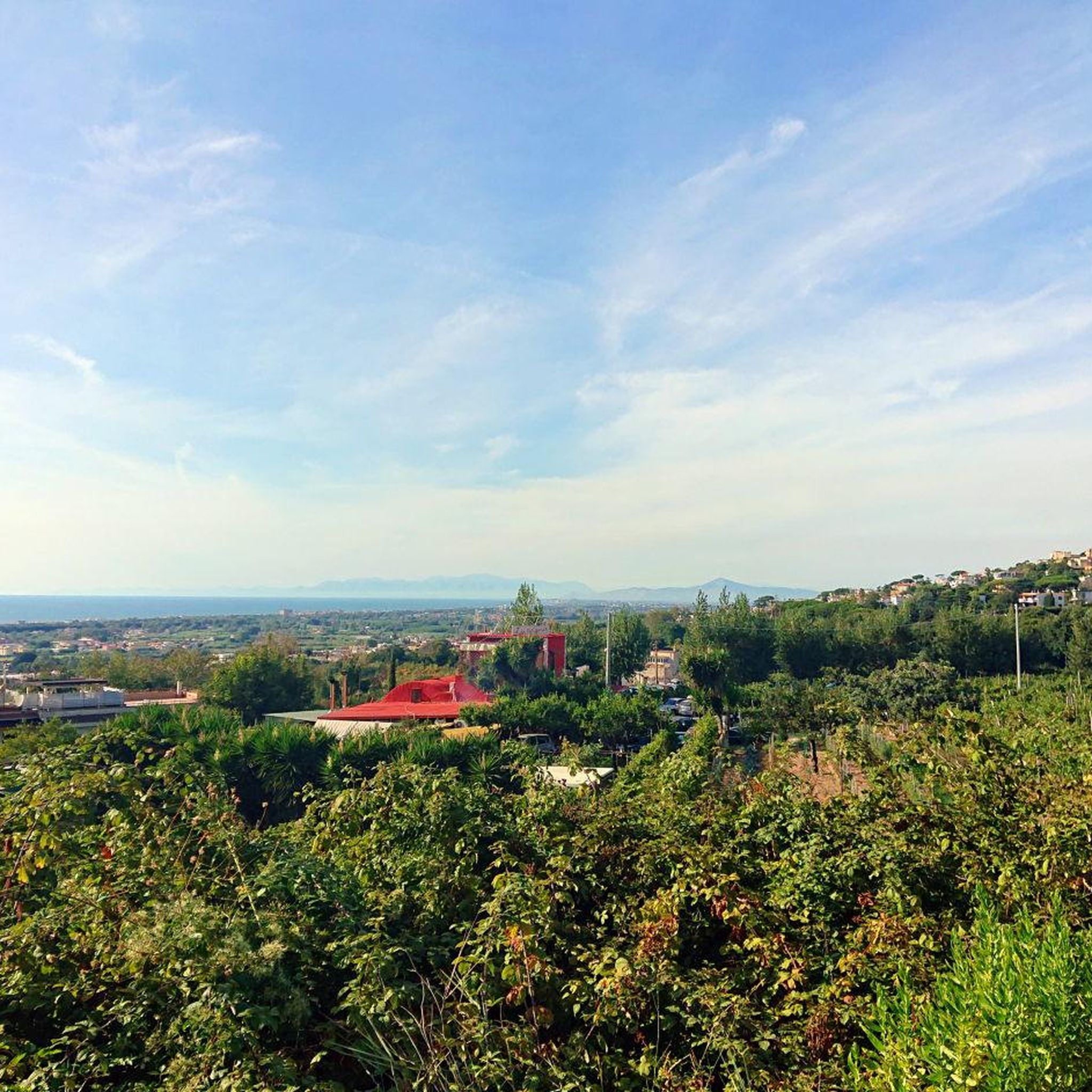
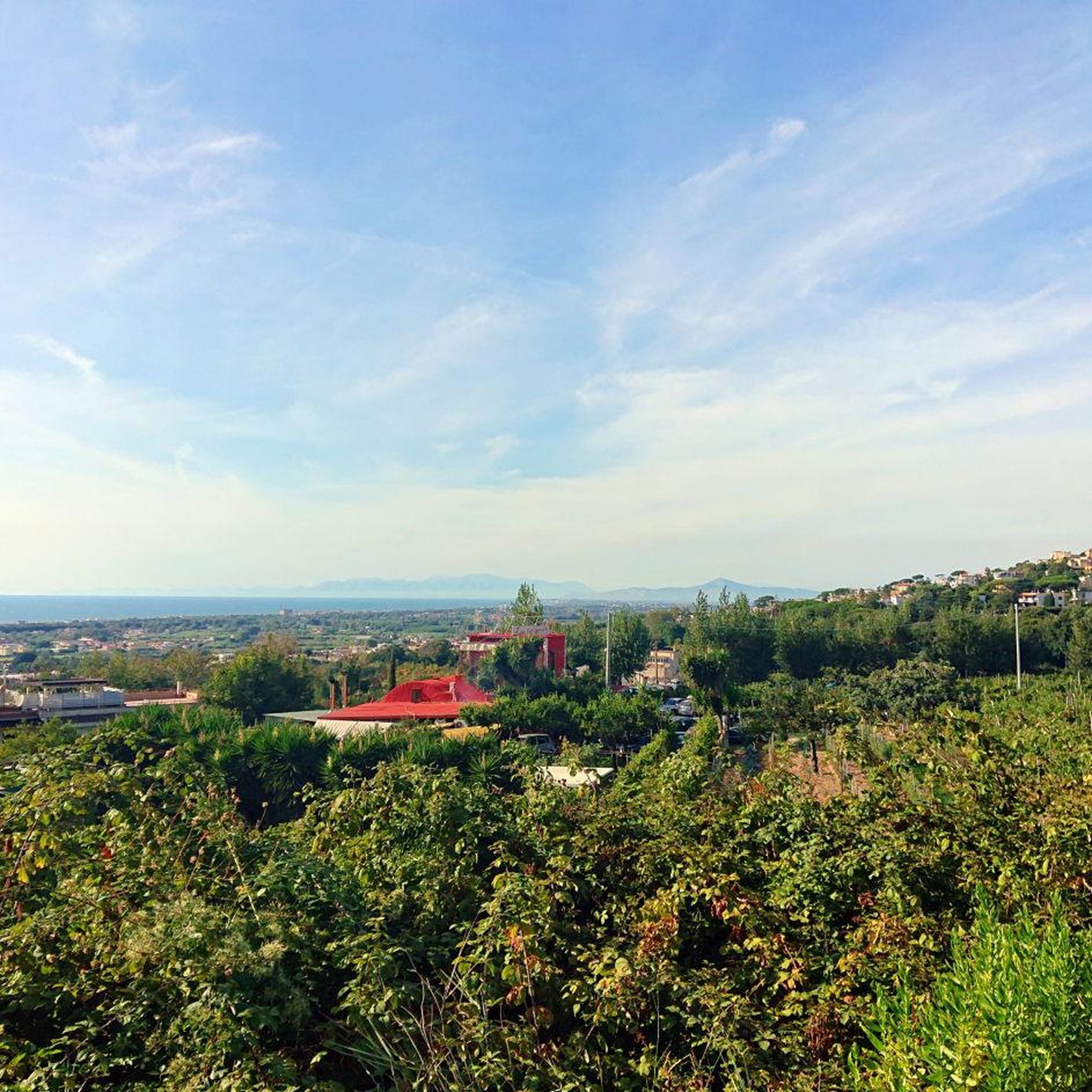
Splendid view of the lake Patria.
1
0

Le Vele di Scampia is a residential complex built in the homonymous district of Naples between 1962 and 1975. [1] They take their name from their triangular shape, reminiscent of a sail: wide at the base, the construction gradually shrinks that goes up to the upper floors. The complex was designed by the architect Francesco Di Salvo and was originally composed of 7 buildings on an area of 115 hectares; four of these buildings were demolished in 1997, 2000, 2003 and 2020; of the three remaining, two will be demolished while the last will be redeveloped. Over time, the neighborhood and the common areas of the complex became infamous places for illegal trafficking and the sails themselves became a symbol of the deterioration of the Naples neighborhood.
0
0
Post-earthquake construction causes serious social ills
0
0

Bosco Faragnano compact and fast track in the first section, uphill in the second after the Motocross track
0
0

Nice loop option around Lago di Patria, with quieter roads along the north shore.
1
0
Frequently Asked Questions
What are some popular attractions to visit around Trentola-Ducenta?
Among the most popular attractions, you'll find the Royal Palace of Carditello, a neoclassical complex commissioned by Ferdinand IV of Bourbon. Another favorite is the Pirate Dock at Lake Patria, offering splendid views and a nice loop option around the lake. For those interested in trails, the Bosco Faragnano Loop Trail is also well-regarded.
Are there any historical sites near Trentola-Ducenta?
Yes, the region is rich in history. The Royal Palace of Carditello is a significant historical site, once a Bourbon residence. Further afield, but easily accessible, are the UNESCO World Heritage sites of the Royal Palace of Caserta and the ancient Capuan Amphitheater in Santa Maria Capua Vetere. The Hermitage of Santa Maria Pietraspaccata also offers a unique blend of religious and historical significance, with origins dating back to the Neolithic period.
What natural features can I explore around Trentola-Ducenta?
You can enjoy the picturesque Italian countryside surrounding Trentola-Ducenta, perfect for serene walks. The Pirate Dock at Lake Patria provides beautiful lake views. For a more unique natural experience, consider visiting the Riserva Naturale Oasi WWF Cratere degli Astroni, a natural reserve within a volcanic crater near Naples, or the iconic Mount Vesuvius.
Are there family-friendly attractions in the area?
Yes, several attractions are suitable for families. The Royal Palace of Carditello is listed as family-friendly, offering a historical outing. The Pirate Dock at Lake Patria is also a great spot for families, with its scenic views and opportunities for leisurely walks around the lake.
What kind of outdoor activities can I do near Trentola-Ducenta?
The area around Trentola-Ducenta offers various outdoor activities, particularly cycling and running. You can find numerous routes for touring bicycles, road cycling, and jogging. For example, there are cycling routes like the 'Lake Lucrino – Old and New Pier of Baia loop' or the 'Capua – Royal Palace of Carditello loop'. Running enthusiasts can explore trails such as the 'Running loop from San Marcellino'. You can find more details and routes on the Cycling around Trentola-Ducenta and Running Trails around Trentola-Ducenta guide pages.
Are there any hiking or walking trails available?
Yes, the Bosco Faragnano Loop Trail is a notable option for walking, featuring a compact and fast track in its initial section, becoming uphill after the Motocross track. The surrounding countryside also provides opportunities for serene rural walks. For more challenging hikes, Monte Tifata offers a relatively easy trail with peaceful views.
What are some cultural highlights in the broader Campania region accessible from Trentola-Ducenta?
Trentola-Ducenta serves as an excellent base for exploring the rich culture of Campania. Beyond the local attractions, you can easily reach Naples, a vibrant city with a UNESCO World Heritage historic center, museums, and renowned street food. The archaeological areas of Pompeii and Herculaneum, also UNESCO sites, offer an immersive look into ancient Roman life preserved by Vesuvius.
What do visitors enjoy most about the attractions around Trentola-Ducenta?
Visitors appreciate the blend of historical sites and natural landscapes. The Royal Palace of Carditello is valued for its historical significance and architectural beauty. The Pirate Dock at Lake Patria is loved for its splendid views and pleasant loop options. The area's peaceful environment and authentic Italian culture also contribute to a positive visitor experience.
Are there any unique or 'hidden gem' attractions to discover?
The Hermitage of Santa Maria Pietraspaccata could be considered a hidden gem. Nestled within a centuries-old chestnut grove, this semi-rock hermitage is an archaeological-architectural unicum in Campania, with caves that probably represent a primitive rock settlement dating back to the Neolithic period. It offers a fascinating glimpse into ancient history and natural beauty.
What is the best time of year to visit Trentola-Ducenta and its surrounding attractions?
The Campania region generally enjoys a Mediterranean climate. Spring (April to June) and early autumn (September to October) are often considered the best times to visit. During these periods, the weather is pleasant for exploring historical sites and engaging in outdoor activities, avoiding the peak heat of summer and the cooler, wetter days of winter.
Can I find viewpoints with scenic vistas near Trentola-Ducenta?
Yes, the Pirate Dock at Lake Patria offers splendid views of Lake Patria. Additionally, the surrounding countryside provides numerous opportunities for scenic vistas, and for those willing to venture slightly further, Monte Tifata offers peaceful views from its summit.
Are there any ancient Greek or Roman sites accessible from Trentola-Ducenta?
Absolutely. The wider Campania region is home to significant ancient sites. Besides Pompeii and Herculaneum, you can visit the Capuan Amphitheater in Santa Maria Capua Vetere, which was once home to the first school for gladiators. The Area archeologica di Cuma, the oldest Greek colony in the West, also features remains of the Via Sacra, temples, and thermal baths.
Most popular routes around Trentola-Ducenta

Get inspired with the komoot mobile app


Explore more
Still not found the Highlight you’re looking for? See guides of the top attractions in other regions:
