The best traffic-free bike rides around Pizarra
4.6
(154)
1,973
riders
34
rides
No traffic touring cycling routes around Pizarra traverse the diverse landscapes of the Guadalhorce Valley in Andalusia, Spain. The region is characterized by the fertile plain of the Guadalhorce river, featuring extensive agricultural fields of almond, olive, and citrus trees. Surrounding the valley, mountain ranges like the Sierra de Gibralmora provide rugged terrain and significant elevation changes. This blend of riverine plains and mountainous backdrops offers varied cycling environments.
Best no traffic touring cycling routes around Pizarra
- The most popular…
Last updated: August 11, 2026
45
riders
52.5km
03:44
1,070m
1,070m
Hard bike ride. Very good fitness required. Mostly paved surfaces. Suitable for all skill levels.
14
riders
45.0km
03:56
1,060m
1,060m
Hard bike ride. Very good fitness required. Mostly paved surfaces. Suitable for all skill levels.

Sign up for free
16
riders
Hard bike ride. Very good fitness required. Mostly paved surfaces. Suitable for all skill levels.
5.0
(1)
12
riders
57.8km
05:23
1,460m
1,460m
Hard bike ride. Very good fitness required. Mostly paved surfaces. Suitable for all skill levels.
9
riders
26.8km
02:36
760m
760m
Hard bike ride. Very good fitness required. Mostly paved surfaces. Suitable for all skill levels.
Get access to more routes and recommendations from other explorers.
Sign up for free
Already have an account?
Our route recommendations are based on thousands of hikes, rides, and runs completed by other people on komoot.
Start today with a free account
Your next adventure awaits.
Login or Signup

Other adventures around Pizarra

Tips from the Community

The church was built on the remains of the former mosque after the Catholic Monarchs conquered the city in 1484. Of the original late Gothic structure, the high altar with its star vault is the most prominent remaining feature. The church is dedicated to Jesús Nazareno de las Torres and the Virgen de las Ánimas, the latter a work by the local sculptor José Navas-Parejo. It is considered historically and culturally significant and is closely linked to the city's religious tradition.
0
0
Arguably the most important church in Álora, this monumental structure dominates the historic city center. Built in the 17th century, it is one of the largest churches in the Diocese of Málaga. The building has a rectangular floor plan with three naves, articulated by sturdy columns and round arches. The wooden roof structure lends the interior a warm atmosphere. Inside, one finds frescoes, sculptures, and religious artworks from the 17th and 18th centuries. While the exterior of the church appears rather simple, it is defined by its striking bell tower. As a religious and cultural center, it is closely intertwined with the history and social life of Álora.
1
0
The monument honors Antonio Rodríguez Franco (1926–1968), known as "El Piyayo," a prominent folk poet and troubadour of the city. It celebrates him as a representative of Andalusian folk culture and oral poetry. The design deliberately portrays him as simple and down-to-earth, reflecting his unpretentious life. The monument expresses the recognition and appreciation of the people of Álora for an artist whose talent lived and was passed down primarily among the people.
0
0
The Álora Town Hall (Casa Consistorial) is the seat of the city's municipal administration. The current building dates from the late 19th century, after the municipality acquired the land in 1898 to establish a permanent administrative center. Architecturally, the Town Hall is simple and functional, typical of smaller Andalusian towns of that era. It is not intended as a monumental structure, but rather as a practical administrative building that blends harmoniously into the historic town center.
1
0
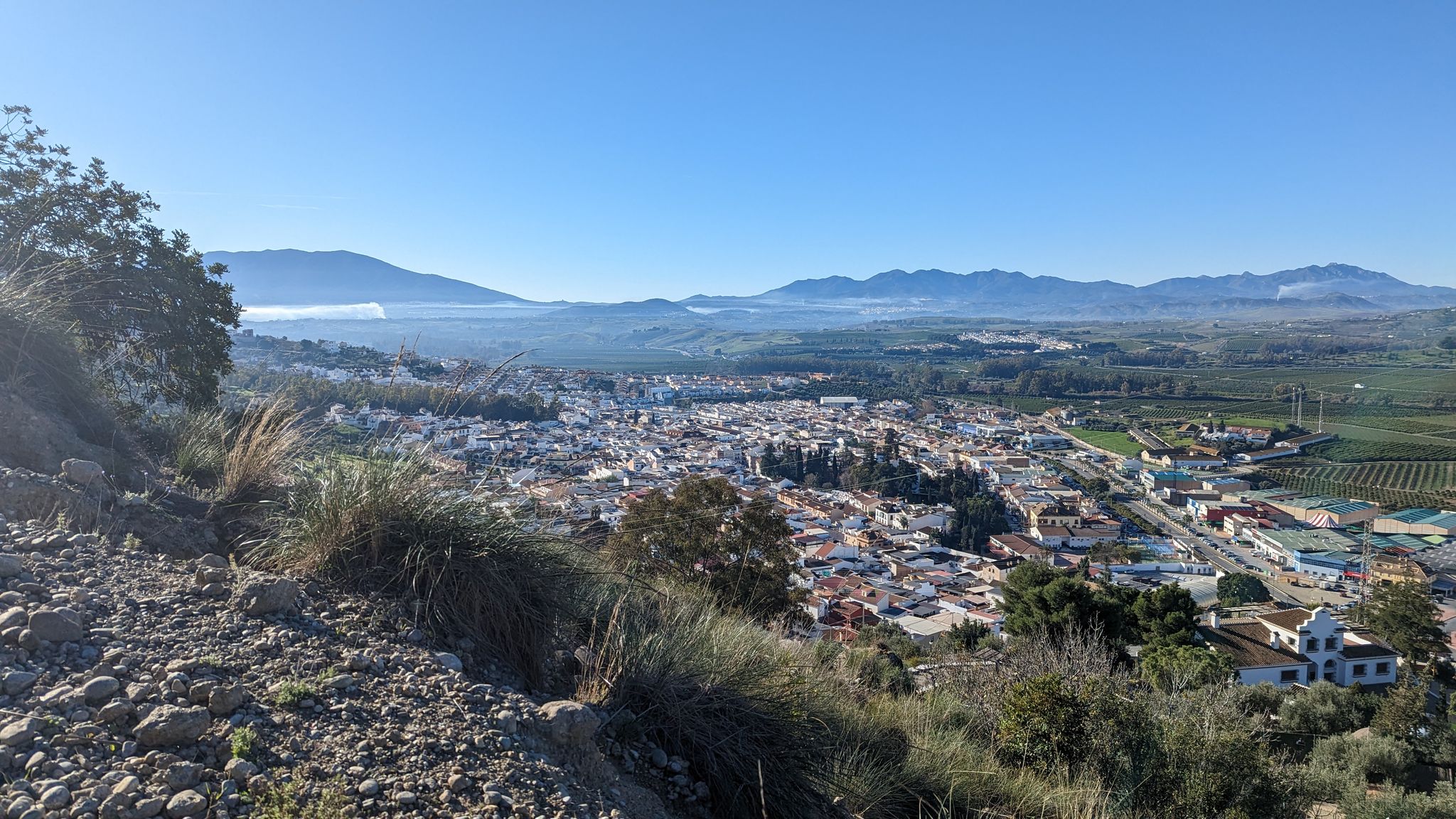
The Mirador de Cervantes is a small, officially designated viewpoint in the historic center of Álora. From here, one can enjoy a beautiful view of the town, the Arroyo Hondo gorge, and the Guadalhorce Valley. The location offers a peaceful moment to admire the town's historic layout and the surrounding landscape. The viewpoint is dedicated to the writer Miguel de Cervantes, who lived in the region for a time. A ceramic mural depicting Don Quixote and Sancho Panza commemorates his literary legacy and subtly connects the viewpoint to the cultural and literary history of Spain.
1
0
The journey by bicycle combines quiet stretches of nature with the first views of the white town center and the hills above the valley – a typical transition from the rural surroundings to the historic urban structure of Álora.
2
0
The Arab castle of Álora, also known as Castillo de Álora, sits atop Cerro de las Torres overlooking the town and is one of the most important historical structures in the region. The fortress, in its present form, dates back to the Moorish rule of the Middle Ages, although the site had been used and fortified in earlier periods. Due to its strategic location, the castle controlled the Guadalhorce Valley and served both military and administrative purposes. It was captured by Christian troops in 1484 during the Reconquista. Remaining are sections of the imposing curtain walls, square towers, and a horseshoe-arched gate, typical of Islamic military architecture. Within the complex are also remnants of later Christian buildings, including a chapel built over a former mosque. The castle has been a listed building (Bien de Interés Cultural) since 1931 and offers a wide view over Álora and the Guadalhorce valley from its elevated position.
1
0
The Mirador Alí Ben Falcún “Al Baezi” viewpoint lies below Álorá Castle on the castle hill and offers a sweeping view of the town, the Guadalhorce Valley, and the surrounding landscape. The path to the top is steep and requires some effort, but the climb is more than worth it. The view compensates for the strenuous ascent with an impressive panorama that vividly illustrates Álorá's unique location between the river valley and the mountains. The viewpoint is named after Alí Ben Falcún, a figure from the Moorish era, thus commemorating the town's long Islamic history. Today, the Mirador is a cherished viewpoint that combines historical significance with scenic beauty, inviting a moment of quiet reflection.
2
0
Frequently Asked Questions
How many no-traffic touring cycling routes are available around Pizarra?
Komoot offers a wide selection of no-traffic touring cycling routes around Pizarra, with over 25 options to explore. These routes range from moderate to difficult, ensuring there's something for every skill level.
Are there any easy no-traffic touring cycling routes suitable for beginners in Pizarra?
While many routes around Pizarra are rated moderate to difficult, there are options that feature minimal elevation gain, making them more accessible. For instance, the Guadalhorce Footbridge – Seabird Observatory loop from Cártama is a moderate route with very little climbing, offering a gentler experience on quiet paths.
What kind of landscapes can I expect on no-traffic touring cycling routes near Pizarra?
The no-traffic routes around Pizarra showcase the diverse beauty of the Guadalhorce Valley. You'll cycle through fertile plains dotted with almond, olive, and citrus groves, often alongside the Guadalhorce river. Some routes also offer views of the rugged Sierra de Gibralmora and distant mountain ranges, providing a mix of agricultural and mountainous scenery.
Are there any circular no-traffic touring cycling routes in the Pizarra area?
Yes, many of the no-traffic touring cycling routes around Pizarra are designed as loops, allowing you to start and finish in the same location. An example is the Agro Campanillas – Old Iron Bridge loop from Cártama, which offers a scenic circular journey.
What attractions or landmarks can I see along the no-traffic touring cycling routes?
Many routes offer glimpses of the region's rich history and natural beauty. You might pass by charming settlements like Álora with its historic Álora Castle, or enjoy panoramic views from various viewpoints. The town of Pizarra itself also offers cultural sites like the Church of San Pedro.
What is the best time of year for no-traffic touring cycling in Pizarra?
Pizarra enjoys a Mediterranean climate, making spring (March to May) and autumn (September to November) ideal for touring cycling. During these seasons, temperatures are pleasant, and the landscapes are vibrant. Summers can be very hot, while winters are generally mild but can have occasional rain.
Is it possible to reach Pizarra and its cycling routes using public transport with a bike?
Pizarra is accessible by train via the Cercanías C2 line from Málaga, which generally allows bikes outside of peak hours, though policies can vary. It's advisable to check the latest bike policy with Renfe Cercanías before planning your trip. Local buses might also serve the area, but bike transport capacity is often limited.
Where can I find long-term parking if I'm bringing my own bike to Pizarra?
Pizarra, being a smaller town, typically offers various public parking areas. For longer stays, it's recommended to check with your accommodation provider for secure parking options. Many trailheads, especially those starting from towns like Álora or Cártama, will have designated parking, but long-term availability can vary.
Are there bike rental services available in Pizarra or nearby towns?
While Pizarra itself might have limited options, bike rental services, including e-bikes, are available in larger nearby towns and cities like Málaga. It's recommended to arrange rentals in advance, especially if you're looking for specific touring bike models.
What do other touring cyclists say about the no-traffic routes around Pizarra?
The no-traffic touring cycling routes around Pizarra are highly regarded by the komoot community, boasting an average rating of 4.6 stars from over 120 reviews. Cyclists frequently praise the peacefulness of the routes, the stunning views of the Guadalhorce Valley, and the opportunity to explore the region's natural beauty away from busy roads.
Are there any challenging no-traffic touring routes for experienced cyclists?
Absolutely. For experienced cyclists seeking a challenge, Pizarra offers several difficult no-traffic routes with significant elevation gains. For example, the Guadalhorce Reservoir – Abfahrt in Richtung Ardales loop from Álora features over 1000 meters of climbing, providing a demanding yet rewarding experience through mountainous terrain.
Most popular attractions around Pizarra

Get inspired with the komoot mobile app


Explore more
Browse the best Cycling routes in other regions.
