The best city hikes and walks around Parco Regionale del Monte Subasio
4.4
(1719)
9,046
hikers
27
hikes
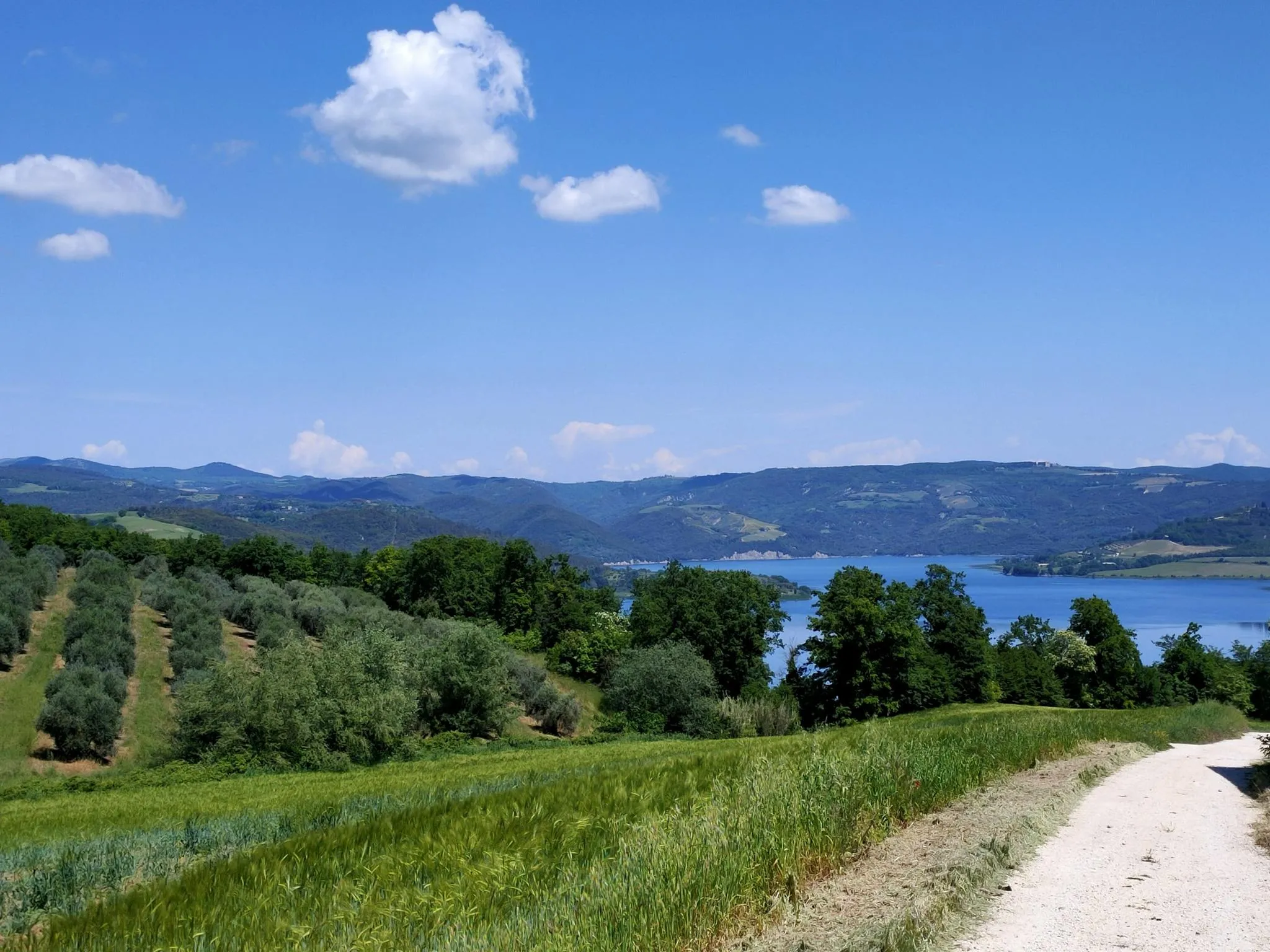
Urban hiking trails around Parco Regionale del Monte Subasio offer a blend of historical towns and natural landscapes. The region features cultivated olive groves on its lower slopes, transitioning to dense oak and holm oak woods. Higher elevations provide expansive open fields and panoramic views of the Umbria, Chiascio, and Tiber valleys. The area is characterized by its distinctive pink stone, used in local architecture, and interesting geological formations like sinkholes.
Best urban hiking trails around Parco Regionale del Monte…
Last updated: May 16, 2026
13
hikers
Easy hike. Great for any fitness level. Easily-accessible paths. Suitable for all skill levels.
8
hikers
3.33km
00:51
10m
10m
Easy hike. Great for any fitness level. Easily-accessible paths. Suitable for all skill levels.

Sign up for free
13
hikers
7.18km
01:50
20m
20m
Easy hike. Great for any fitness level. Easily-accessible paths. Suitable for all skill levels.
5
hikers
Moderate hike. Good fitness required. Easily-accessible paths. Suitable for all skill levels.
6
hikers
5.40km
01:22
20m
20m
Easy hike. Great for any fitness level. Easily-accessible paths. Suitable for all skill levels.
Get access to more routes and recommendations from other explorers.
Sign up for free
Already have an account?
Our route recommendations are based on thousands of hikes, rides, and runs completed by other people on komoot.
Start today with a free account
Your next adventure awaits.
Login or Signup
Popular around Parco Regionale del Monte Subasio
Other adventures around Parco Regionale del Monte Subasio


Tips from the Community

Positive Energy and Peace
0
0

The Monastery of Santa Lucia in Foligno, founded in the 13th century, is one of the city's most important religious complexes. Originally intended for Benedictine nuns, the monastery retains medieval and Renaissance architectural elements, reflecting the alterations made over the centuries. The building includes the church dedicated to Santa Lucia and convent spaces that maintain the intimate and contemplative atmosphere typical of monastic institutions. The compass, a door through which newborns were once left for the nuns' care, is still visible on the façade. The monastery played a significant role in the city's religious and social life, hosting women's communities and cultural activities, and is still active as a community of cloistered nuns. Today, it represents an example of well-preserved historical-religious heritage, integrated into the urban fabric of Foligno.
0
0
The medieval church of Santa Caterina in Foligno stands out for its sober architecture and its devotional function in the historic center. Adjacent to the church are well-preserved medieval houses, whose stone and brick facades contribute to the original atmosphere of the urban fabric. The church and surrounding buildings offer a striking example of medieval Foligno, still visible today.
0
0
The Church of Santa Maria Infraportas is one of Foligno's oldest sacred buildings, founded in the early Middle Ages near the city's ancient eastern gate. The sober and austere exterior reflects the building's Romanesque origins, while the interior retains a simple single-nave structure. Of great significance are the medieval and Renaissance frescoes, which testify to a long continuity of worship and artistic interventions. The church played an important role in the city's religious life, also as a place linked to the confraternities. Today, it represents a significant testimony to medieval Foligno and its historical stratification.
0
0
Piazza Don Minzoni is an open, bright urban space nestled in the heart of Foligno's medieval center. At the center of the square is a modern fountain with simple lines that organizes the space and serves as its visual focal point. The church of Sant'Apollinare overlooks the square, one of the oldest in the city, whose medieval origins reinforce the site's historic character. Named after Don Giovanni Minzoni, the square today combines a civic and commemorative function with the daily life of the historic center.
0
0

The cradle of Franciscanism. The first historical chapter of the Friars Minor, known as the "Chapter of the Mats," met here.
0
0

The essence of Francis and Franciscanism
0
0

Basilica of Santa Maria degli Angeli The small chapel of Santa Maria degli Angeli alla Porziuncola, still completely preserved inside the basilica, was, according to tradition, built by four soldiers returning from the Holy War in the wooded plain below Assisi, known as the Cerretto della Porziuncola. They brought a piece of the Madonna's tombstone with them. There, on certain autumn days, the strong wind that blew every cloud from the sky and through the leaves seemed similar to the song of angels. The chapel was administered by the Benedictine monks of the monastery of Santa Benedetto al Subasio since the 10th century. This place would probably have been completely forgotten if the paths of Francis and Clare had not led there. Thanks to them, we find the Porziuncola intact today, just as it was a good 1,000 years ago. But instead of the noisy thicket, there is now a large basilica, built between the 16th and 17th centuries, which envelops and protects the chapel like a caring mother. This view from within the building makes the chapel seem even smaller, almost impossibly small. The church was given to the poor saint by the aforementioned Benedictine monks to establish the headquarters of the newly founded Franciscan order. When Francis first came here, the church was in disrepair, and according to his saintly legend, he dedicated the third year after his conversion exclusively to the renovation of the small chapel. It was here, while reading the Gospel, that he realized that his mission was not to restore dilapidated religious buildings, but to rebuild and preach the entire Kingdom of God by living in poverty, penance, and simplicity. From here, Francis and his confreres set out to spread his message throughout Italy, and here they returned again and again. One night in 1211, a desperate and frightened Chiara d'Offreduccio, who had fled her home and her aristocratic family, knocked on the doors of Porciuncola. Text / Source: Exploring-Umbria.com https://www.exploring-umbria.com/de/entdecke-assisi/sehenswuerdigkeiten-in-assisi/basilica-santa-maria-degli-angeli-in-porziuncolabasilika-zu-unserer-lieben-frau-von-den-engeln/
13
0
Frequently Asked Questions
How many urban hiking trails are available in Parco Regionale del Monte Subasio?
There are over 20 urban hiking trails in the Parco Regionale del Monte Subasio area, primarily featuring easy routes suitable for a relaxed walk. These trails offer a unique blend of natural beauty and proximity to charming towns.
What kind of terrain can I expect on urban hikes around Parco Regionale del Monte Subasio?
Urban hikes in this region often traverse gentle paths through cultivated olive groves on lower slopes, leading to picturesque town centers and their immediate surroundings. While the broader park features dense woods and open fields, the urban routes tend to be less strenuous, focusing on accessible, scenic paths.
Are there any family-friendly urban walks in the Parco Regionale del Monte Subasio area?
Yes, many of the urban trails are ideal for families due to their easy difficulty. For instance, The Porziuncola loop from Santa Maria degli Angeli is a short, gentle walk perfect for all ages, allowing you to explore the historical surroundings without significant elevation changes.
What are some notable landmarks or attractions I can see on urban hikes?
Urban hikes often lead you through or near significant historical and religious sites. You can explore the Basilica of Saint Francis, the Cathedral of San Rufino, and the bustling Piazza del Comune in Assisi. Many routes also pass by ancient gates like Porta Nuova, offering glimpses into the region's rich past.
Are there any circular urban walks available?
Yes, many urban routes are designed as loops, allowing you to start and end in the same location. Examples include The Rose Garden loop from Assisi and Santa Maria Infraportas Church – Foligno loop from Foligno, which are convenient for exploring without needing to retrace your steps.
What do other hikers enjoy most about urban hiking in Parco Regionale del Monte Subasio?
The urban hiking experience in Parco Regionale del Monte Subasio is highly rated by the komoot community, with an average score of 4.5 stars from over 1000 reviews. Hikers often praise the easy accessibility, the charming historical towns, and the beautiful views of the Umbrian landscape that these trails offer.
Can I find urban trails that connect different towns?
While many urban trails are loops within a single town's vicinity, the region is known for connecting medieval towns. For a longer urban-adjacent experience, consider routes that link places like Assisi and Spello, allowing you to combine nature with cultural exploration.
Is public transport available to access urban hiking trailheads?
Many of the urban hiking trails are easily accessible from town centers, which are typically well-served by local public transport. For specific routes, checking local bus schedules for towns like Assisi, Santa Maria degli Angeli, Foligno, or Bastia Umbra is recommended to plan your access efficiently.
Are there cafes or restaurants near the urban walking paths?
Absolutely. Since these are urban hikes, you'll find plenty of cafes, restaurants, and shops in the towns you pass through or start from. Assisi, Foligno, and Santa Maria degli Angeli offer numerous options for refreshments and meals, making it easy to combine your walk with a culinary experience.
What is the best time of year for urban hiking in Parco Regionale del Monte Subasio?
Spring and autumn are generally ideal for urban hiking in this region. The weather is mild, and the landscapes are particularly beautiful, with blooming flowers in spring and vibrant foliage in autumn. The distinctive pink stone of towns like Assisi also takes on a beautiful amber hue at sunset, enhancing the visual appeal.
Are there any longer urban walking routes for a more extended experience?
Yes, for those looking for a longer urban walk, routes like The Rose Garden loop from Bastia Umbra offer a more extended journey of over 7 kilometers, allowing for a deeper immersion into the local scenery and town surroundings.
Most popular routes around Parco Regionale del Monte Subasio
Most popular attractions around Parco Regionale del Monte Subasio

Get inspired with the komoot mobile app


Explore more
Browse the best Hikes in other regions.
