The best traffic-free bike rides in Galicia
4.5
(4717)
51,977
riders
1,443
rides
Touring cycling in Galicia offers a diverse landscape characterized by rugged coastlines, deep river canyons, and extensive forests. The region features varied topography, including rolling hills and mountains, providing a range of elevations for cyclists. Its Atlantic influence contributes to a mild climate, supporting year-round cycling activities across its natural features. Galicia's terrain includes both gentle coastal paths and challenging inland ascents.
Best no traffic touring cycling routes in Galicia
- The most popular no traffic touring cycling route is Ribadeo…
Last updated: October 1, 2026
4.9
(17)
52
riders
Moderate bike ride. Good fitness required. Mostly paved surfaces. Suitable for all skill levels.
5.0
(2)
17
riders
15.2km
01:00
110m
110m
Easy bike ride. Great for any fitness level. Mostly paved surfaces. Suitable for all skill levels.

5.0
(2)
18
riders
64.3km
04:25
1,070m
1,070m
Hard bike ride. Very good fitness required. Mostly paved surfaces. Suitable for all skill levels.
4
riders
22.3km
01:52
470m
470m
Hard bike ride. Very good fitness required. Mostly paved surfaces. Suitable for all skill levels.
4.8
(4)
9
riders
23.9km
01:29
120m
120m
Easy bike ride. Great for any fitness level. Mostly paved surfaces. Suitable for all skill levels.
Get access to more routes and recommendations from other explorers.
Already have an account?
Our route recommendations are based on thousands of hikes, rides, and runs completed by other people on komoot.
Start today with a free account
Your next adventure awaits.
Popular around Galicia

Traffic-free bike rides in A Coruña
Traffic-free bike rides in Lugo

Traffic-free bike rides in Pontevedra

Traffic-free bike rides in Ourense
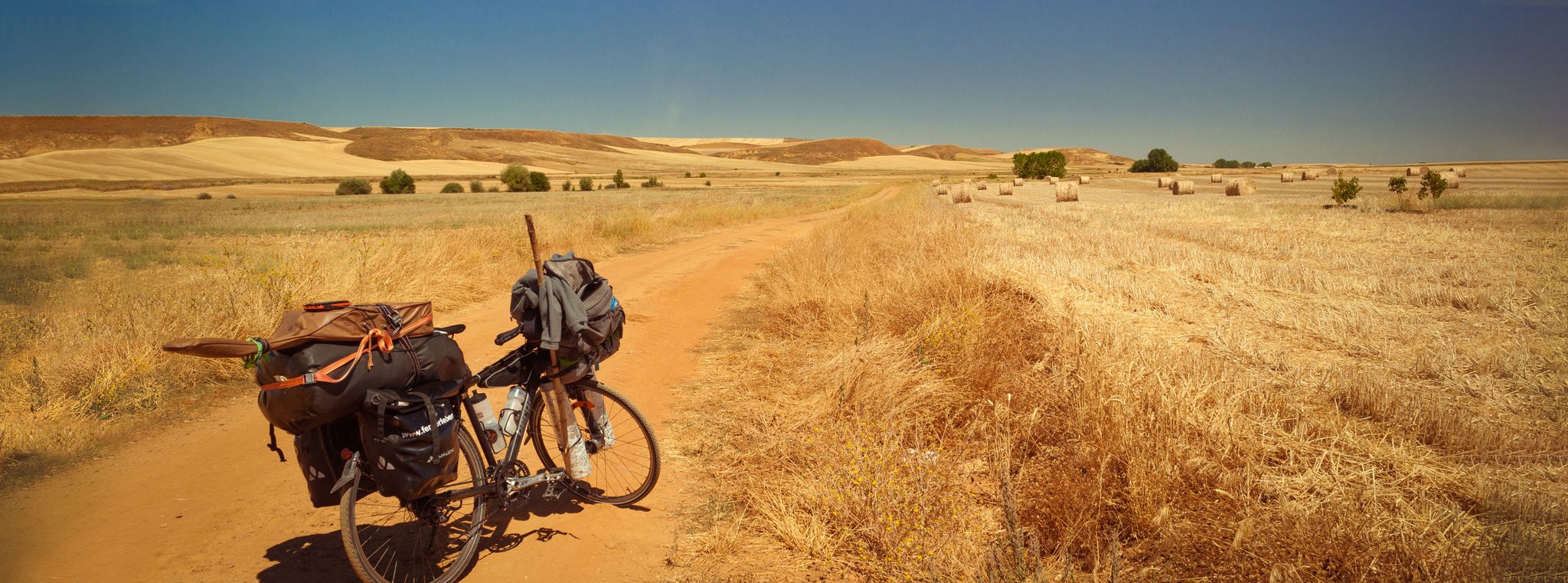
Camino Francés and Camino Finisterre – Cycling pilgrimages in Spain
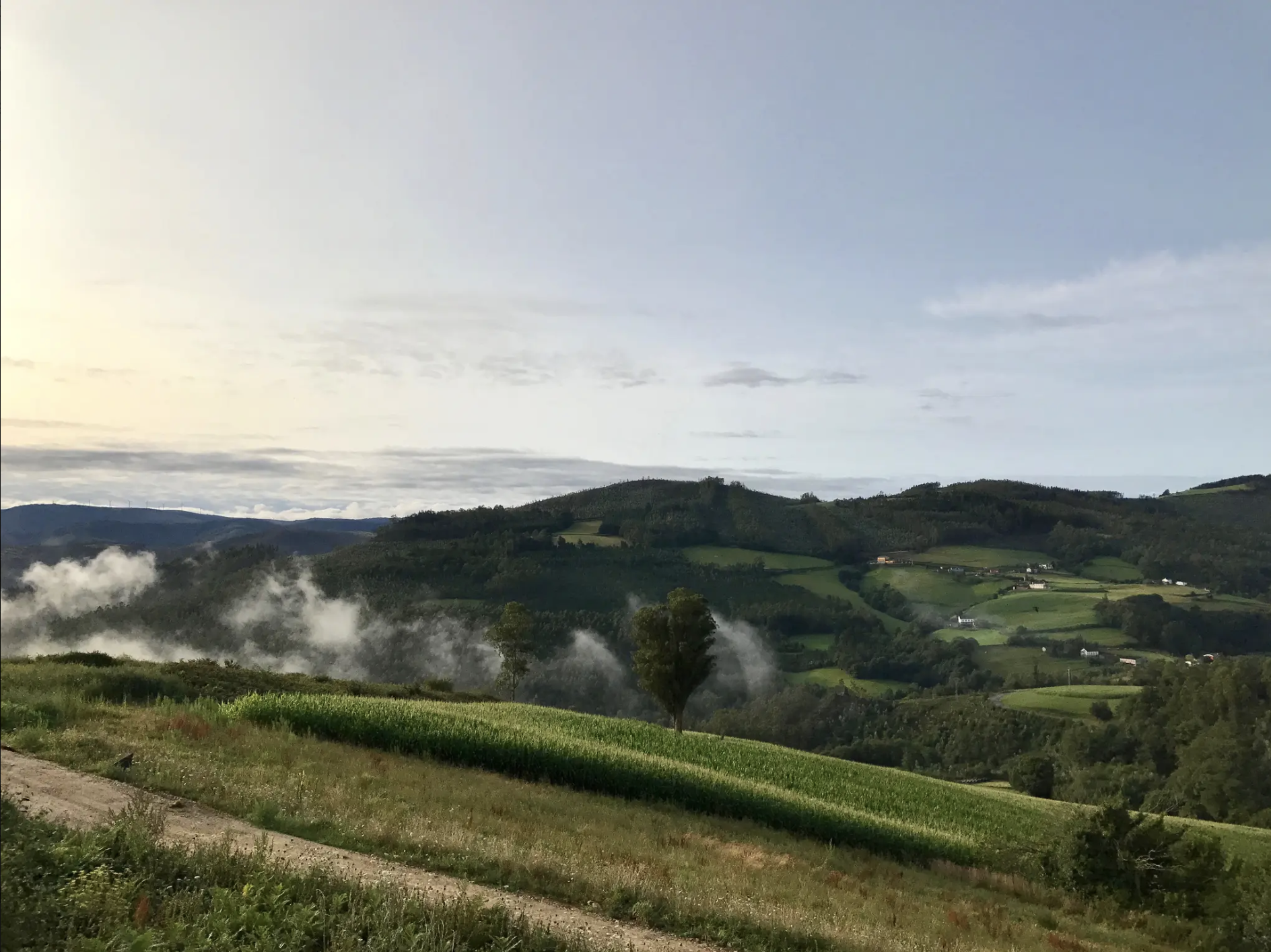
Camino del Norte (in reverse) – Discovering northern Spain's stunning coastline
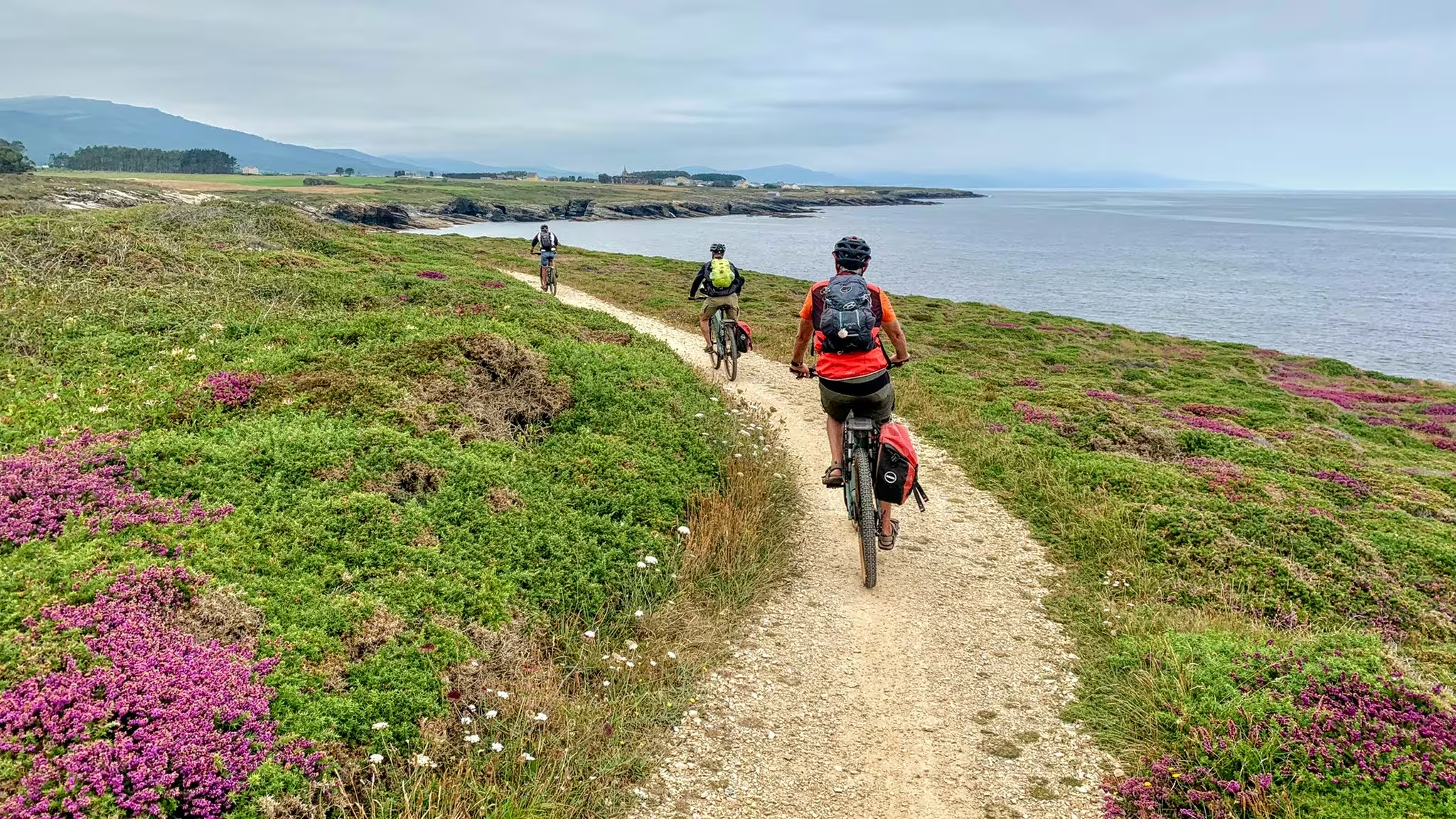
Galician coast by bike – Cantabrian Route nature trail
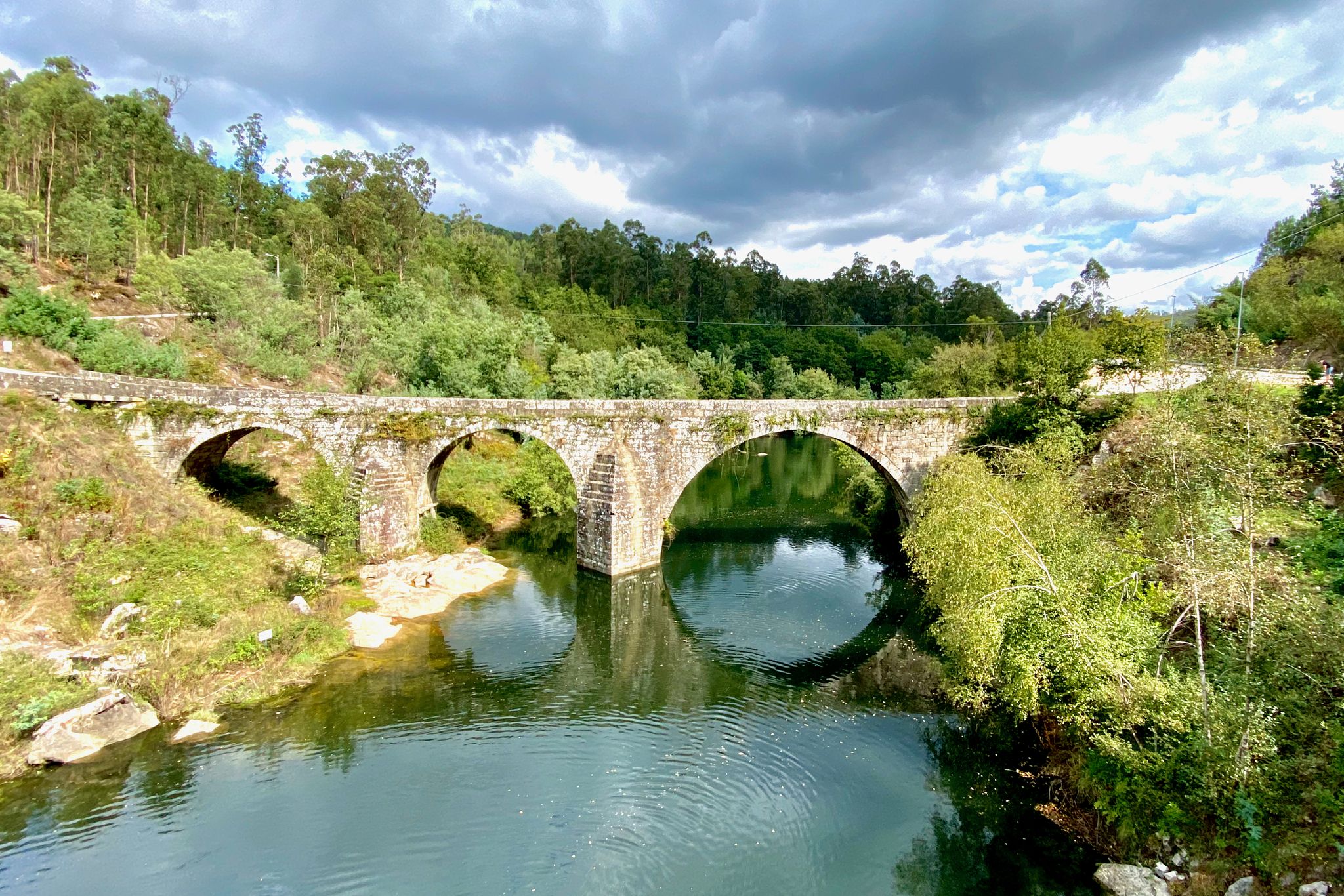
Spain’s Vigo region – bikepack the Sendeiro das Greas (GR 58)
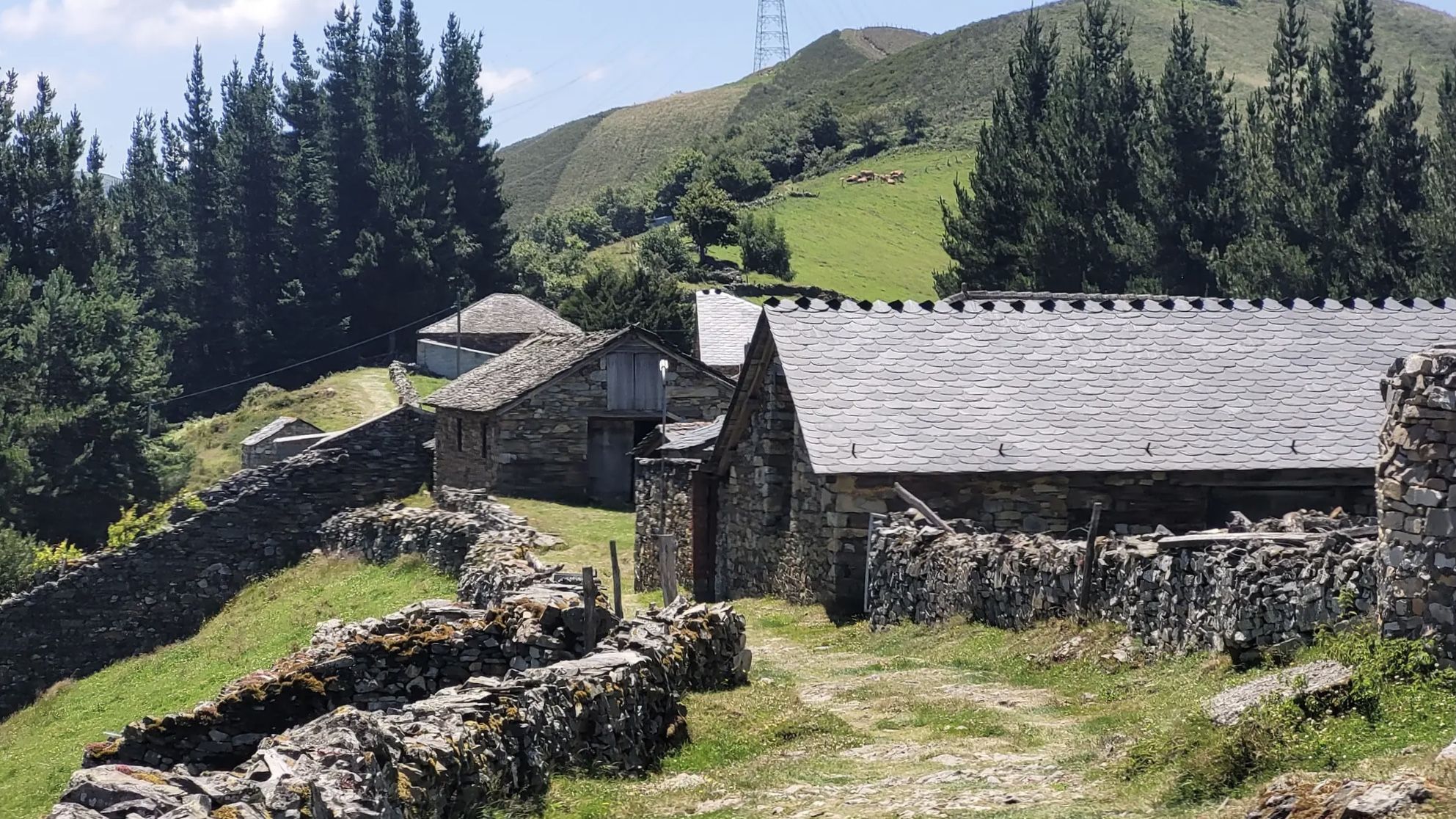
The Camino Primitivo — From Oviedo to Santiago through history
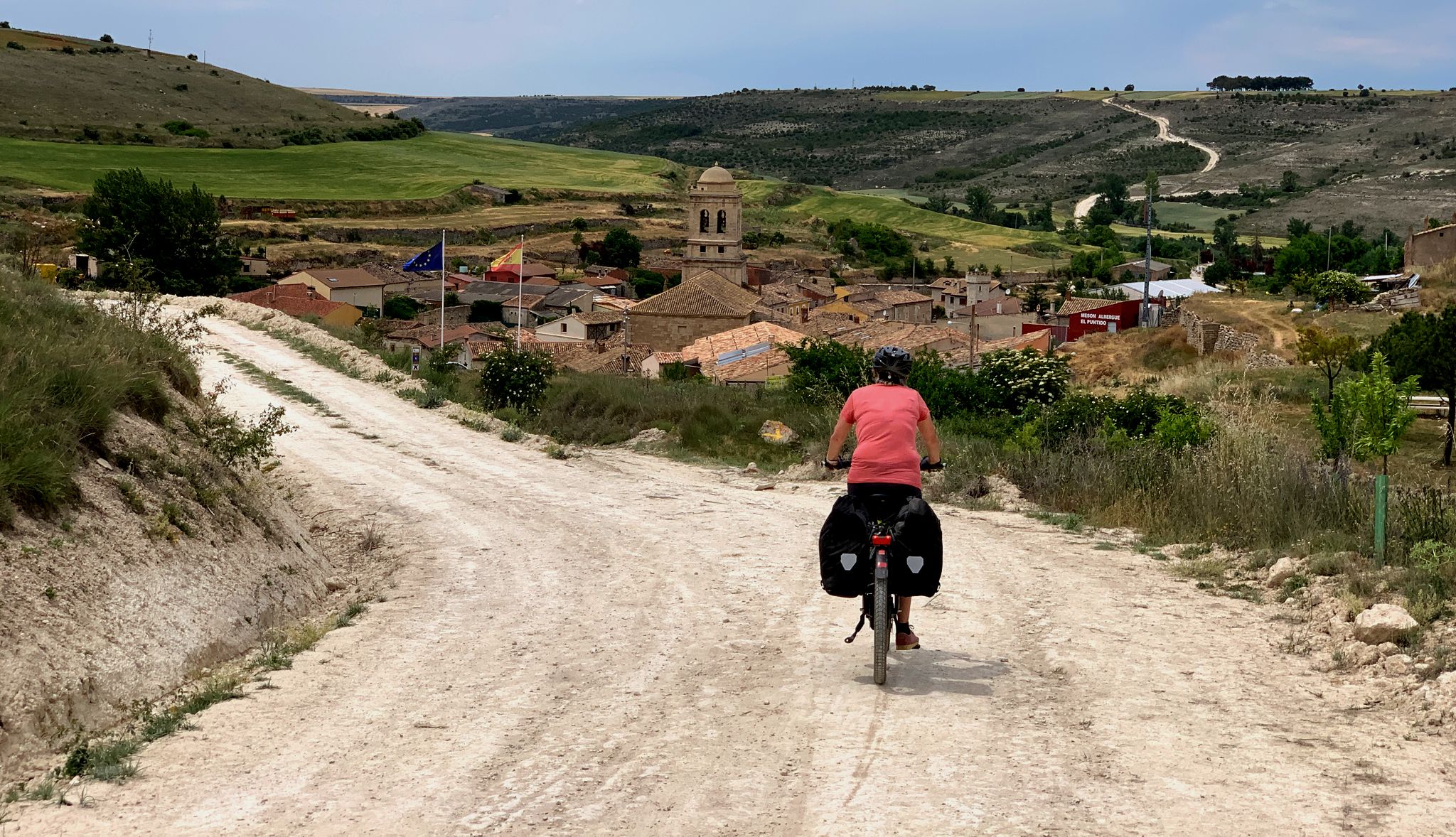
The Pilgrim Route — EuroVelo 3 through Spain
Other adventures in Galicia


Tips from the Community

What would a pilgrimage to Santiago be without this document?
4
1

Hape Kerkeling, a well-known comedian in Germany, set out on the Way of St. James through Spain in 2001 and kept a diary that was later published as a book. In the 'Real Monasterio San Zoilo', he writes: "The enormous crucifix hangs directly above it, and for the first time, I consciously perceive that the crucified Christ is clearly looking in one direction: From our perspective, in most depictions, Jesus Christ is looking to the left. Towards the west. Towards the sunset, the night, and death. But from his perspective, he is looking to the right, to the east. Towards the sunrise and life. What appears to us as a gloomy end is, in truth, for him a radiant beginning. And without a doubt, only his perception can be considered the correct one." (Hans-Peter Kerkeling in "I'm Off Then. My Journey on the Way of St. James") Even though this cross here on the coast—which for many centuries represented the "end of the world"—is without a body, we can certainly adopt Christ's perspective as we gaze upon the endless expanse of the sea.
3
0

We are at the end of a long journey. At the dreamed halfway point. A look at the ocean and a photo.
4
0

The Pilgrims' Welcome Office is an important place for pilgrims who complete the Camino de Santiago. It is where they obtain the Compostela, a certificate that proves that they have completed the Camino de Santiago.
3
0

It is famous for being the place that, according to tradition, houses the tomb of the Apostle Santiago, making it one of the main pilgrimage destinations in Europe through the Camino de Santiago. The building is a mix of architectural styles including Romanesque, Gothic and Baroque. The Obradoiro façade is particularly impressive and is one of the most recognizable symbols of the cathedral. In addition, the cathedral features the famous Botafumeiro, a huge censer used during certain liturgical celebrations.
27
0

Welcome to the Pilgrims Reception Office in Compostella! Whether you have just completed the Camino de Santiago or are planning to start your pilgrimage, we are here to assist you with any information or support you may need. Our knowledgeable staff can provide you with maps, guides, and resources to help you navigate your pilgrimage. We can also help you find accommodation, restaurants, and other amenities along the way. Additionally, we offer a space for pilgrims to relax, reflect, and connect with other travelers on their journey. If you have any questions or concerns, please don't hesitate to reach out to us. We are dedicated to ensuring that your pilgrimage is a meaningful and memorable experience. Thank you for choosing to embark on this spiritual journey, and may your travels be safe and fulfilling.
3
0
The Cathedral of Santiago de Compostela, also known as the Holy Apostolic and Metropolitan Cathedral Church of Santiago de Compostela, is a temple of Catholic worship located in the city of the same name, in the center of the province of La Coruña, in Galicia. This majestic cathedral is a symbol of the pilgrimage to Santiago and has a rich history and meaning.
27
0
The coastal path offers several rest areas and short viewpoints branching off to the sea. From here you can enjoy views of the beaches of Altar, As Pasadas, Arealonga and As Catedrais, which are known for their spectacular rock formations. The path is approximately 6 km long and is suitable for cyclists of all levels.
1
0
Frequently Asked Questions
How many no-traffic touring cycling routes are available in Galicia?
Galicia offers a vast network of over 1200 touring cycling routes, specifically curated to minimize traffic. These routes cater to various skill levels, with approximately 100 easy, 330 moderate, and nearly 800 difficult options for cyclists seeking a challenge.
What is the best time of year to go touring cycling in Galicia?
Thanks to its Atlantic influence, Galicia enjoys a mild climate that supports year-round cycling activities. Spring and autumn offer pleasant temperatures and fewer crowds, while summer is ideal for coastal rides and enjoying the beaches. Even winter can be suitable for cycling, especially in sheltered inland areas, though some higher elevation routes might be more challenging.
Are there any easy, family-friendly no-traffic touring cycling routes in Galicia?
Yes, Galicia has several easy routes perfect for families or beginners. These often follow converted railway lines or quiet coastal paths. An example is the Cecebre - Encoro de Cecebre Return, which offers a gentle ride around the reservoir. Another accessible option is the Monforte de Lemos - Loop along the, providing a relaxed experience in the inland region.
What kind of landscapes can I expect on no-traffic touring cycling routes in Galicia?
Galicia's no-traffic routes traverse incredibly diverse landscapes. You can explore the rugged cliffs and remote lighthouses of the Costa da Morte, the dramatic river canyons and terraced vineyards of the Ribeira Sacra, or the serene estuaries and fine sand beaches of the Rías Baixas. Inland, you'll find rolling hills, ancient forests, and even mountains, ensuring a varied and scenic experience.
Are there any circular no-traffic touring cycling routes in Galicia?
Yes, many no-traffic touring cycling routes in Galicia are designed as loops, allowing you to start and finish in the same location. For instance, the Monte Pedroso and Camino de Fisterra Loop offers a challenging circular ride with significant elevation changes. The Ribadeo – tour around Ría de Foz is another excellent moderate loop, exploring a special conservation area.
What historical or cultural attractions can I see along no-traffic touring cycling routes in Galicia?
Galicia is rich in history and culture. Many routes pass by ancient sites and charming villages. You might encounter impressive castles like the Andrade Tower or the Monterreal Castle. The region is also home to significant religious buildings, including the iconic Santiago de Compostela Cathedral, a major pilgrimage destination. The Ponte Sampaio Bridge is another notable historical landmark.
What do other touring cyclists enjoy most about no-traffic cycling in Galicia?
The komoot community highly rates touring cycling in Galicia, with an average score of 4.5 stars from over 3,400 ratings. Reviewers frequently praise the region's unspoiled natural beauty, the extensive network of quiet roads and dedicated paths, and the dramatic coastal and inland scenery. The mild climate and the opportunity to explore cultural sites like the Camino de Santiago routes are also often highlighted.
Are there any challenging no-traffic touring cycling routes for experienced cyclists in Galicia?
Absolutely. Galicia offers numerous challenging routes for experienced touring cyclists, often featuring significant elevation changes and rugged terrain. The Costa da Morte and Ribeira Sacra regions are particularly known for their demanding climbs and descents. An example of a difficult route is the Muxia - Cabo Finisterre Vuelta, which takes you through dramatic coastal landscapes with substantial ascents.
Can I find cafes or places to stop for refreshments along the no-traffic touring cycling routes?
Yes, even on no-traffic routes, Galicia's charming villages and towns are often strategically located to provide opportunities for refreshments. You'll find traditional cafes, local restaurants, and small shops where you can refuel and experience Galician hospitality. Planning your route with komoot allows you to identify these points of interest beforehand.
Are there any specific regions in Galicia known for their no-traffic touring cycling routes?
While no-traffic routes are spread throughout Galicia, certain regions stand out. The Costa da Morte offers wild coastal rides, often on quiet roads connecting fishing villages. The Ribeira Sacra provides stunning routes through river canyons and terraced vineyards, with many dedicated trails. Additionally, areas around the Rías Baixas feature picturesque, less-trafficked coastal paths and estuaries.
What kind of natural features or viewpoints can I expect to see on these routes?
Galicia's natural beauty is a highlight of its cycling routes. You can expect to see dramatic cliffs and lighthouses along the coast, deep river canyons like the Sil Canyon with its terraced vineyards, and panoramic viewpoints such as Los Balcones de Madrid. The region also boasts ancient forests, serene estuaries, and pristine beaches, offering a diverse range of natural spectacles.
Most popular routes in Galicia
Most popular attractions in Galicia

Get inspired with the komoot mobile app


Didn’t find what you were looking for?
Check out more Cycling routes throughout Galicia below and find the perfect route in your destination.
Explore more
Browse the best Cycling routes in other regions.
