The best traffic-free bike rides around Detern
4.5
(527)
2,116
riders
38
rides
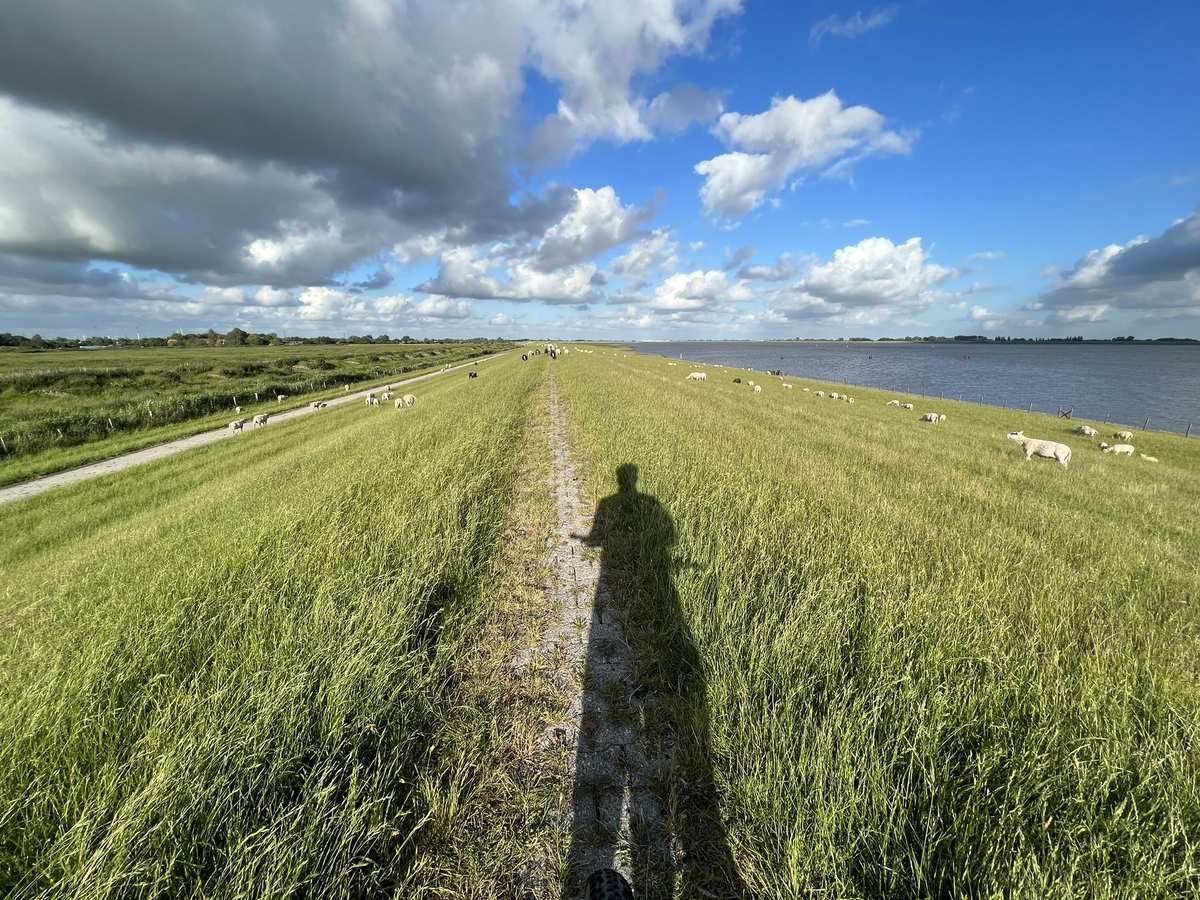
No traffic touring cycling routes around Detern are characterized by a flat, water-rich landscape, situated within the "Zweistromland" between the Leda and Jümme rivers. This region features extensive green pastures, tree-lined dikes, and a distinctive fen landscape. The terrain is predominantly flat with no significant inclines, making it suitable for relaxed touring cycling.
Best no traffic touring cycling routes around Detern
- The most popular no traffic touring cycling route is Evenburgallee – Leer City Harbour loop from Velde, a…
Last updated: May 15, 2026
4.7
(25)
84
riders
36.0km
02:08
40m
40m
Moderate bike ride. Good fitness required. Mostly paved surfaces. Suitable for all skill levels.
4.6
(14)
52
riders
16.3km
00:59
10m
10m
Easy bike ride. Great for any fitness level. Mostly paved surfaces. Suitable for all skill levels.

Sign up for free
4.9
(10)
32
riders
Easy bike ride. Great for any fitness level. Mostly paved surfaces. Suitable for all skill levels.
5.0
(10)
23
riders
33.8km
02:06
40m
40m
Moderate bike ride. Good fitness required. Mostly paved surfaces. Suitable for all skill levels.
4.6
(8)
18
riders
35.0km
02:10
30m
30m
Moderate bike ride. Good fitness required. Mostly paved surfaces. Suitable for all skill levels.
Get access to more routes and recommendations from other explorers.
Sign up for free
Already have an account?
Our route recommendations are based on thousands of hikes, rides, and runs completed by other people on komoot.
Start today with a free account
Your next adventure awaits.
Login or Signup




Tips from the Community

This rest stop is located on the Apener Tief and features dancing figures. It is very quiet here, ideal for relaxing.
1
0
The Sagter Ems originates from the confluence of the Marka and Ohe rivers in Neuscharrel. The confluence point is located just before the southern bank of the Küstenkanal (Coastal Canal), which the Sagter Ems flows under. The Sagter Ems then traverses the Saterland region from south to north, flowing through the villages of Sedelsberg, Scharrel, Ramsloh, Strücklingen, and Bokelesch. Near the hamlet of Roggenberg, the Elisabethfehn Canal flows into the Sagter Ems. From this point until its confluence with the Dreyschloot canal at the border with East Frisia, the Sagter Ems is a federal waterway for 0.56 km,[3] under the jurisdiction of the Ems-Nordsee Waterways and Shipping Authority. The Dreyschloot, artificially constructed between 1848 and 1852, connects to the Barßeler Tief canal and the Jümme river. In East Frisia, the Sagter Ems is known as the Leda. [3] The Leda River, together with the Jümme River, forms the scenic Leda-Jümme region. The Jümme flows into the Leda near Wiltshausen, and shortly thereafter, the Leda flows into the Ems River near Leer (East Frisia). Due to the indirect connection to the North Sea via the Leda and Ems rivers, significant tidal variations can still be observed in the Sagter Ems.
0
0
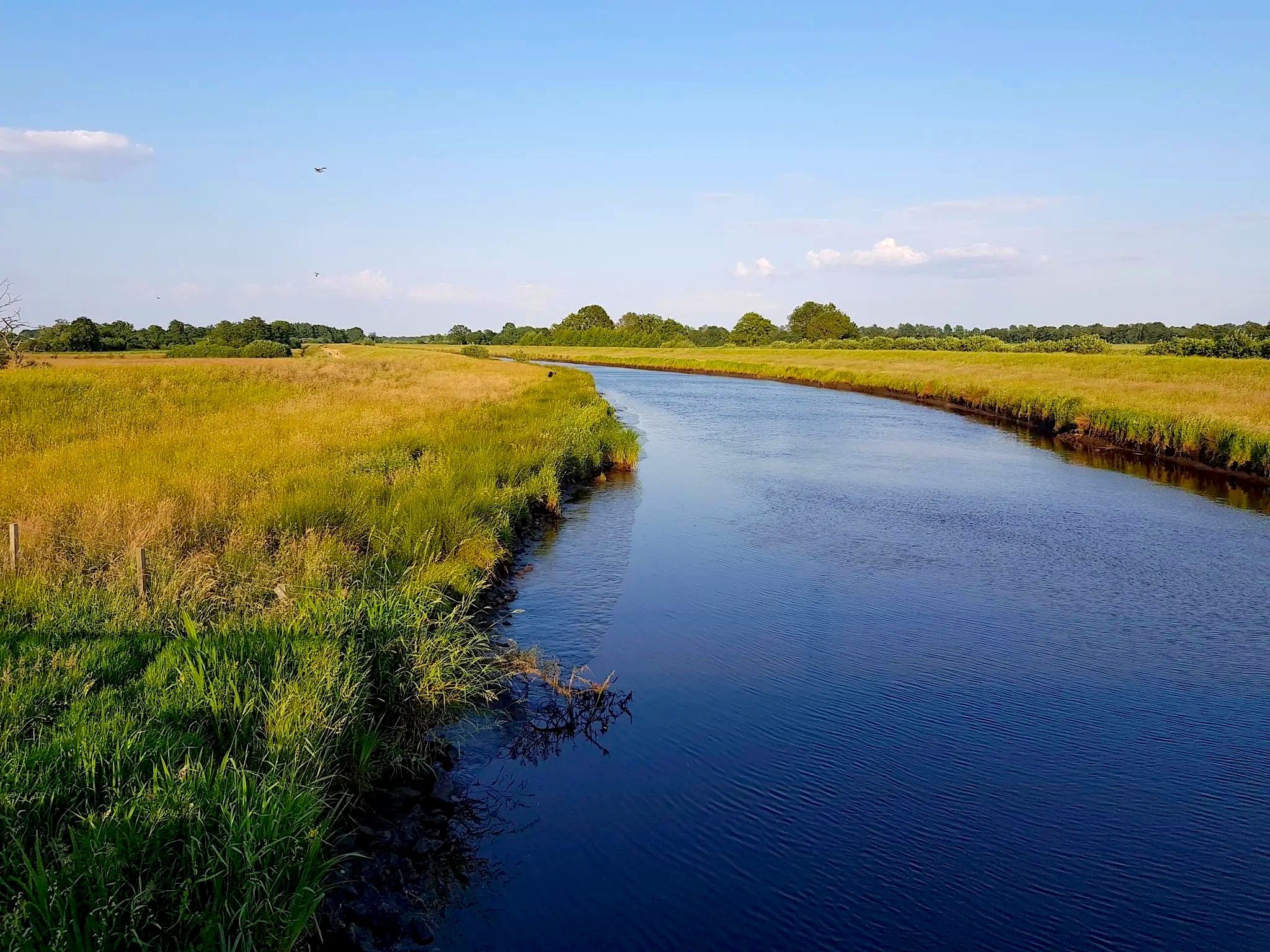
The Jümme, a river in East Frisia, is approximately 18.3 kilometers long as its main channel. Including its entire upper reaches, its length extends to 94.64 kilometers. It is an important tributary of the Leda and meanders through the "two-river region" within the municipality of Jümme.
1
0


The Tangier Window offers a wonderful view of the Jümme and if you're lucky you might even see a boat passing by.
5
0


The Elisabethfehn Canal, a unique section of the Hunte-Ems Canal, was completed in 1893. With a length of 15 km, it connects the Küstenkanal in Kampe with the Leda River in Osterhausen. The canal is 18 m wide, up to 1.50 m deep, and features seven drawbridges and four operable locks. It is not only the last intact fen canal in Germany, but also a listed monument. Today, the canal is primarily used by pleasure boats and offers excellent opportunities for cycling along its banks. Here, you can discover the fascinating traces of the fen culture, which has its origins in the raised bog culture. The drainage of the land led to the construction of canals, along which the typical fen houses were built. For further information about the significance of the canal, the fen culture, and the moors, a visit to the Moor and Fehn Museum in Elisabethfehn, run by the local and beautification association, is worthwhile.
5
1
Frequently Asked Questions
What is the general terrain and difficulty level for no-traffic touring cycling routes around Detern?
The Detern region, part of East Frisia's "Zweistromland" between the Leda and Jümme rivers, is exceptionally flat. This makes the no-traffic touring cycling routes generally easy, with minimal elevation changes. Many of the 35 available routes are suitable for all skill levels, with 25 classified as easy and 10 as moderate. You'll find comfortable rides on predominantly paved paths, ideal for relaxed touring.
Are there any unique natural features or landmarks to see along these traffic-free routes?
Absolutely! The routes often follow the picturesque Jümme River, offering views of green pastures and tree-lined dikes. You can also visit the Normmoor Observation Tower, which provides panoramic views of the flat landscape. The region's fen landscape, with its distinctive canals and drawbridges, is also a prominent feature. For a unique experience, consider routes that pass near the historic hand-operated ferry, the "Pünte," across the Jümme River (check operating times seasonally).
Are the no-traffic cycling routes around Detern suitable for families with children?
Yes, the flat terrain and dedicated traffic-free paths make Detern an excellent destination for family cycling. The easy difficulty of most routes ensures a comfortable ride for all ages. A great option for a shorter, easy family outing is the Jümme Riverside Nature Area – Jümme River in Detern loop from Velde, which is just under 6 km.
Can I bring my dog on the traffic-free cycling routes?
Many of the traffic-free routes in Detern are suitable for cycling with dogs, especially those on leash. The quiet, natural environment along the rivers and through the countryside provides a pleasant experience. Always ensure your dog is comfortable with cycling and that you carry water for them, especially on longer rides like the Jümme River – Sheep on the Dike loop from Velde.
What is the best time of year to enjoy traffic-free touring cycling in Detern?
The best time to visit Detern for touring cycling is generally from spring through early autumn (April to October). During these months, the weather is mild, and the natural landscape is at its most vibrant. The historic hand-operated ferry, the "Pünte," also operates during the summer months, adding a unique charm to riverside routes.
Are there any circular no-traffic cycling routes available?
Yes, many of the no-traffic touring cycling routes around Detern are designed as circular loops, allowing you to start and end at the same point. Examples include the Evenburgallee – Leer City Harbour loop from Velde, a moderate 36 km ride, and the Jümme River – Jümme River loop from Detern, which is also a moderate 35 km.
Where can I find parking access for these traffic-free cycling trails?
Detern is well-prepared for cycling tourists, and parking is generally available in and around the main villages and starting points of popular routes. Look for designated parking areas in Detern itself or in nearby towns like Velde and Neuburg, which serve as common starting points for many tours.
What kind of facilities or attractions can I find along the routes for breaks?
Along the routes, especially near villages or popular points, you may find various facilities. The region offers "Paddel & Pedal" stations for combining cycling with canoeing. For breaks, there are shelters and rest areas such as the Hogeneck Shelter Lindernerfeld or the Drakamp Godensholt Rest Area and Shelter. You'll also find cafes and pubs in the villages for refreshments.
Are there any castles or historic sites accessible by these routes?
Yes, the region around Detern features several historic castles that can be integrated into your cycling tours. Notable examples include Stickhausen Castle and Haneburg Castle (Leer). These offer interesting stops to explore local history and architecture while enjoying your ride.
How do other touring cyclists rate the no-traffic routes in Detern?
The no-traffic touring cycling routes around Detern are highly regarded by the komoot community, with an average rating of 4.45 out of 5 stars from over 600 reviews. Cyclists often praise the peaceful, flat terrain, the scenic beauty of the river landscapes, and the well-maintained, traffic-free paths that make for a relaxing and enjoyable experience.
Most popular attractions around Detern

Get inspired with the komoot mobile app


Explore more
Browse the best Cycling routes in other regions.
