The best city hikes and walks in Krähe
4.6
(697)
3,259
hikers
49
hikes
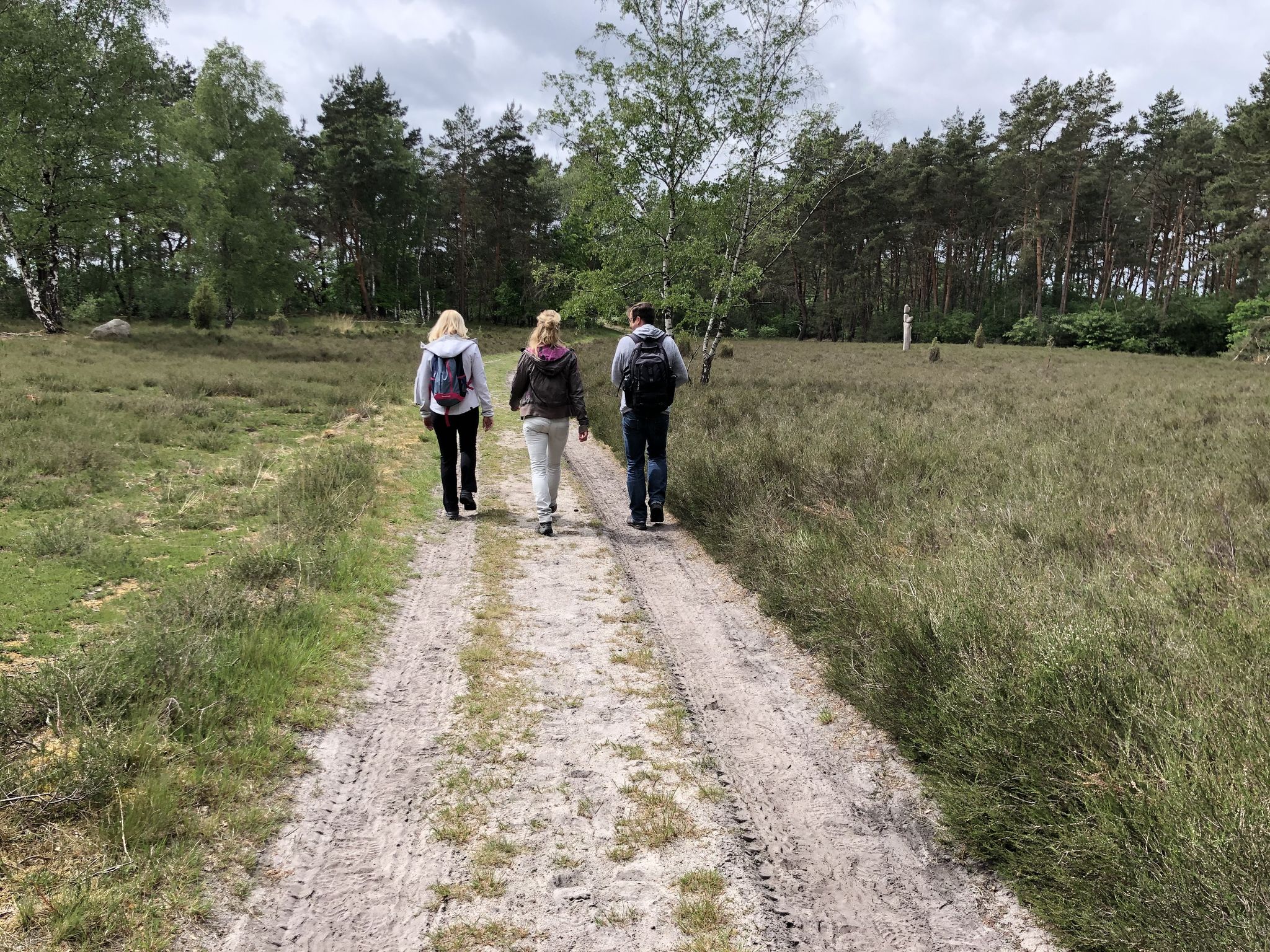
Urban hiking trails in Krähe, Germany, are primarily found in the Nienburg region, characterized by a diverse landscape of forest, moorland, and heathland, often surrounded by agricultural areas. The terrain is generally flat, with minimal elevation changes, making it suitable for accessible walks. This area provides a network of signposted paths for exploring varied ecosystems.
Best urban hiking trails in Krähe
- The most popular urban hiking route is Wesertor Bridge – Asparagus Fountain Nienburg loop from Kreis Nienburg, a…
Last updated: July 20, 2026
4.8
(28)
177
hikers
6.87km
01:45
20m
20m
Easy hike. Great for any fitness level. Easily-accessible paths. Suitable for all skill levels.
5.0
(1)
4
hikers
7.11km
01:48
10m
10m
Easy hike. Great for any fitness level. Easily-accessible paths. Suitable for all skill levels.

Sign up for free
3.0
(1)
11
hikers
6.77km
01:43
20m
20m
Easy hike. Great for any fitness level. Easily-accessible paths. Suitable for all skill levels.
8
hikers
5.38km
01:22
10m
10m
Easy hike. Great for any fitness level. Easily-accessible paths. Suitable for all skill levels.
3.0
(1)
11
hikers
Easy hike. Great for any fitness level. Easily-accessible paths. Suitable for all skill levels.
Get access to more routes and recommendations from other explorers.
Sign up for free
Already have an account?
Our route recommendations are based on thousands of hikes, rides, and runs completed by other people on komoot.
Start today with a free account
Your next adventure awaits.
Login or Signup
Popular around Krähe
Other adventures in Krähe

Tips from the Community

Nienburg an der Weser has many beautiful, well-preserved half-timbered houses in the town.
2
0
The oldest house in Nienburg is located at Kleine Kirchstraße 2, directly next to St. Martin's Church. It was built around 1490-1500 and is part of the original development around the church.
2
0
Alley in Nienburg, many beautiful old half-timbered houses.
2
0

The former manor house served as a royal post station on the Hanover-London route until 1860. It housed, among other things, the Elector's and later the Royal Hanoverian Post Office, including a postmaster's office, post station, and horse-changing station. Since its restoration in 1977, it has housed the city library. The carillon mounted on the side plays the song "The Little Nienburg Girl" several times a day.
1
0
"I am the little girl from Nienburg," also known as "Nienburg girl and Calenberg girl," is a folk song originating in Nienburg/Weser. It has been documented in songbooks since at least 1912. In the folk song, the little girl from Nienburg and the farmer from Calenberg alternately sing about their clothing. Such call-and-response songs often originated along regional borders and have folkloric significance; they are referred to as neighborly banter. The song is divided into eight verses. The song belongs to a group of humorous songs that have been handed down in many regional variations since the beginning of the 19th century. What makes the Nienburg version charming is that the girl from the small town sings in Standard German, while the farmer sings in Low German. A similar version exists in Westphalia as "the little girl from Limburg." Source: https://de.wikipedia.org/wiki/Ich_bin_die_kleine_Nienburgerin
1
0
Nienburg's oldest house stands at Kleine Kirchstraße 2, right next to St. Martin's Church. It was built around 1490-1500 and is part of the original development surrounding the church. Its slightly crooked appearance is not without reason, as naturally grown oak beams had to be used for economic reasons at the time, and so the inhabitants quite naturally lived on a sloping floor. This is still visible from the outside today, as the house's basic structure has been preserved. Also, almost nothing has changed in the surrounding area. The unique location next to the chancel of St. Martin's Church prevented any alterations. In and around the house, one can easily imagine oneself transported back to a time over 500 years ago. At that time, castles were being replaced by urban fortresses, and Nienburg became the strongest fortress in the Middle Weser region. It was the time of Copernicus, Columbus, Riemenschneider, Dürer, and Leonardo da Vinci, who was competing with Michelangelo in Italy and had just completed what is now the world's most famous painting, the Mona Lisa. Humanity still believed it lived on a flat surface and could only feel somewhat safe behind fortress walls. Source: https://www.pension-st-martin.de/Wie-alles-begann
1
0
The Weser port of Nienburg is closely linked to the city's economic and urban development and exemplifies the importance of the Weser River as a transport and trade route. Nienburg recognized its advantageous location on a navigable stretch of the river early on, leveraging its role in transporting goods and conducting trade. The port evolved as a transshipment point between river shipping and the hinterland, contributing significantly to the city's prosperity. The Weser port experienced a period of great importance, particularly in the 19th and early 20th centuries. Agricultural products, building materials, timber, and other goods were loaded and transported here. The port was a major employer and a vibrant hub where ship owners, merchants, and craftsmen converged. Simultaneously, it shaped the city's image as a confident Weser River trading center. With the transformation of transportation structures and the increasing importance of road and rail, the Weser port gradually lost its central economic function during the 20th century. Nevertheless, it has been preserved as an important infrastructural and historical site. Parts of the port area were transformed into areas for leisure, recreation and urban use, while the proximity to the Weser river remained a defining feature.
1
0

Countless planting and design examples are on display here. The garden is open Tuesdays from 3 p.m. to 5:30 p.m. Programs are available for daycare centers and schools.
0
0
Frequently Asked Questions
How many urban hiking trails are available in Krähe?
Krähe offers a wide selection of urban hiking trails, with over 45 routes to explore. These trails are primarily easy, making them accessible for most hikers.
What kind of landscapes can I expect on urban hikes in Krähe?
Urban hikes in Krähe, particularly around Nienburg, offer a diverse mix of landscapes. You can expect to traverse through forests, moorland, and heathland, often surrounded by agricultural areas. The varied ecosystems provide opportunities to observe different flora and fauna.
What is the general difficulty level of urban hikes in Krähe?
The majority of urban hikes in Krähe are considered easy, with 44 out of 46 available routes falling into this category. There are also a couple of moderate trails for those seeking a slightly greater challenge. This makes the area suitable for beginners and casual walkers.
Are there parking facilities for urban hikers in Krähe?
Yes, for the forest area known as Krähe near Nienburg, there is a dedicated hiking and Nordic walking parking lot available, ensuring easy access to the trails.
Can I access urban hiking trails in Krähe using public transport?
Many urban trails in Krähe are designed to be accessible, and routes often start or pass through town centers like Nienburg (Weser), which are typically well-served by public transport. For example, the Nienburg Town Hall – Posthof, Nienburg loop starts directly from Nienburg (Weser).
Are there many circular urban walks in Krähe?
Yes, most of the urban hiking routes in Krähe are circular, offering convenient starting and ending points. Examples include the Wesertor Bridge – Asparagus Fountain Nienburg loop and the Nienburg Harbour – Nienburg Town Hall loop.
Are the urban hiking trails in Krähe suitable for families with children?
Given that most trails are easy and feature diverse natural surroundings like forests and moorland, urban hikes in Krähe are generally very suitable for families with children. The signposted paths make navigation straightforward.
What natural sights can I discover on urban hikes in Krähe?
Along the urban hiking trails in Krähe, you can discover several natural highlights. These include the impressive Giebichenstein Boulder, the serene Stöckser Lake, and the protected Bunkenmoor Nature Reserve and Krähenmoor II Nature Reserve.
Where can I find refreshments or cafes along the urban hiking routes?
While specific cafes directly on every trail might vary, the region's hiking infrastructure includes spots like the "Kultur Café Alte Krähe" in Krälingen, which serves as a refreshment stop for hikers. Many routes also pass through towns like Nienburg, where you'll find various dining options.
What do other hikers enjoy the most about urban hiking in Krähe?
The urban hiking experience in Krähe is highly rated by the komoot community, with an average score of 4.58 stars. Reviewers often praise the well-signposted paths, the peaceful blend of forest and open landscapes, and the accessibility of the trails for all skill levels.
Are urban hikes in Krähe dog-friendly?
Many of the forest and moorland trails in Krähe are suitable for walking with dogs, offering plenty of natural space for exploration. It's always recommended to keep dogs on a leash, especially in nature reserves, and to check local regulations for specific areas.
Most popular routes in Krähe
Most popular attractions in Krähe

Get inspired with the komoot mobile app


Explore more
Browse the best Hikes in other regions.
