Top 11 Natural Monuments around Bloomington
Natural monuments around Bloomington offer diverse natural features. This region features significant waterways, including rivers and waterfalls, alongside cultivated gardens and unique geological formations. The landscape provides opportunities for observing natural phenomena and exploring varied environments.
Best natural monuments around Bloomington
- The most popular natural monuments is Minnehaha Falls, a waterfall that offers sights and sounds, best visited after rainfall. This 53-foot waterfall can become a thundering cataract when waters run high.
- Another must-see spot is Confluence of the…
Last updated: May 30, 2026
Minnehaha Falls
Highlight • Waterfall
Tip by

Confluence of the Mississippi and Minnesota Rivers
Highlight • River
Tip by

Sign up now to discover places like this
Get recommendations on the best single tracks, peaks, & plenty of other exciting outdoor places.
Sign up for free
Minnehaha Creek Flows into the Mississippi Rive
Highlight • River
Tip by
Lyndale Park Rose Garden
Highlight • Natural Monument
Tip by

Sandstone Overhang
Highlight • Natural Monument
Tip by
Sign up for free to discover even more natural monuments around Bloomington.
Sign up for free
Already have an account?
Start today with a free account
Your next adventure awaits.
Login or Signup
Tips from the Community

At ground level where Minnehaha Creek meets the Mississippi River, the layer of rock you see is known as the St. Peter Sandstone. This rock formation is renowned for its "dazzling white" appearance—often likened to sugar because it is nearly 99% pure quartz—yet in the Mississippi River gorge, it often appears in vivid shades of yellow, orange, and rusty red. The vivid coloration you observe is not the inherent color of the sand but rather the effect of iron oxide (limonite) staining, which occurs through two distinct steps: Leaching: Water filters down through the overlying Platteville Limestone and Glenwood Shale, both of which contain iron-rich minerals. Oxidation: This mineral-laden water permeates the porous St. Peter Sandstone. As the dissolved iron is exposed at the cliff face or ground surface, it oxidizes (effectively "rusts"), coating the originally white quartz grains and producing the yellow and orange hues.
0
0

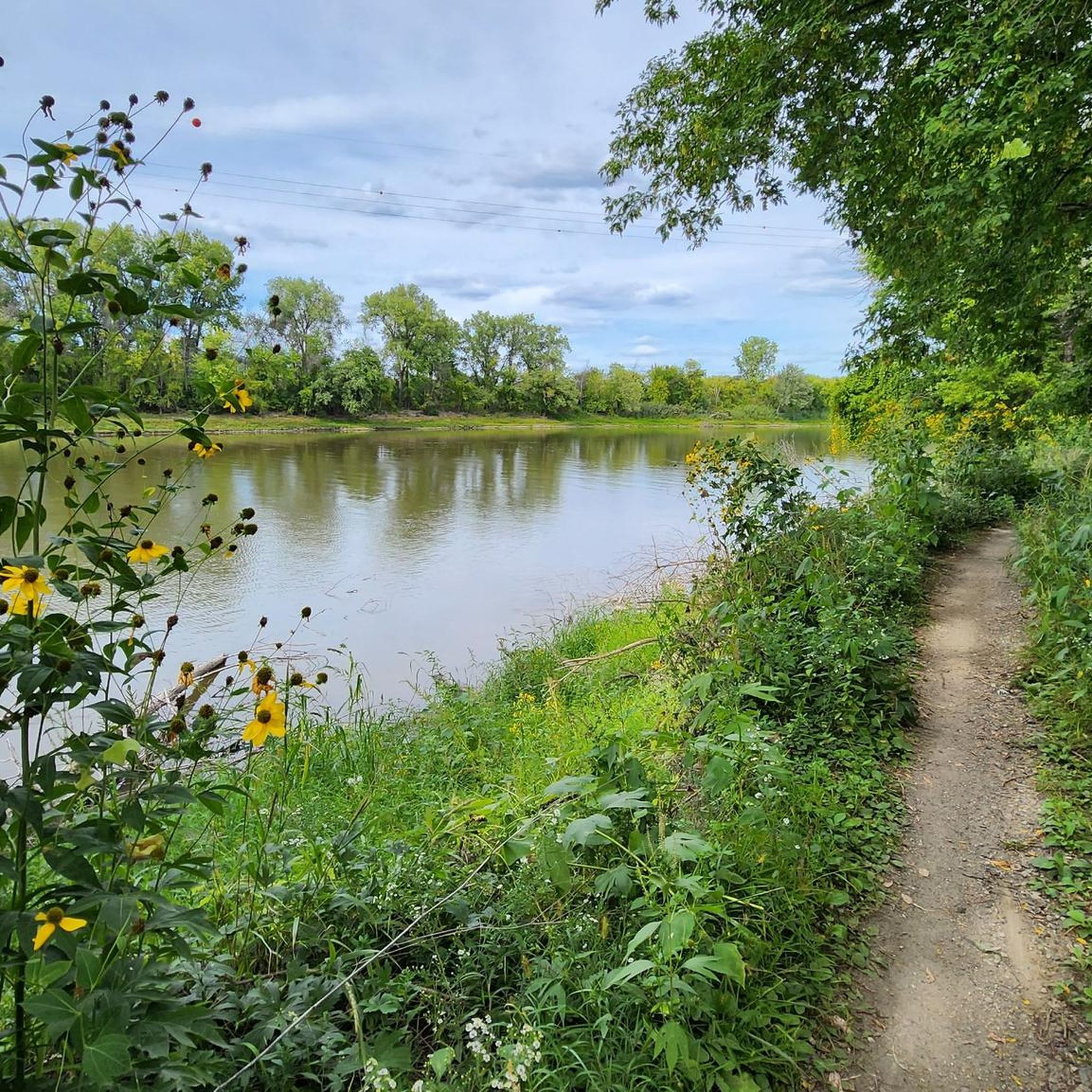
Nice river views from the bike path.
0
0
Here is a link to a Minnesota Department of Natural Resources map of summer trails at Fort Snelling State Park (https://files.dnr.state.mn.us/maps/state_parks/spk00154_summer.pdf). Although bicycles are allowed on many of the park trials, the legend on the map shows, sadly, that the circumferential trail on Pike Island is for hiking only.
0
0

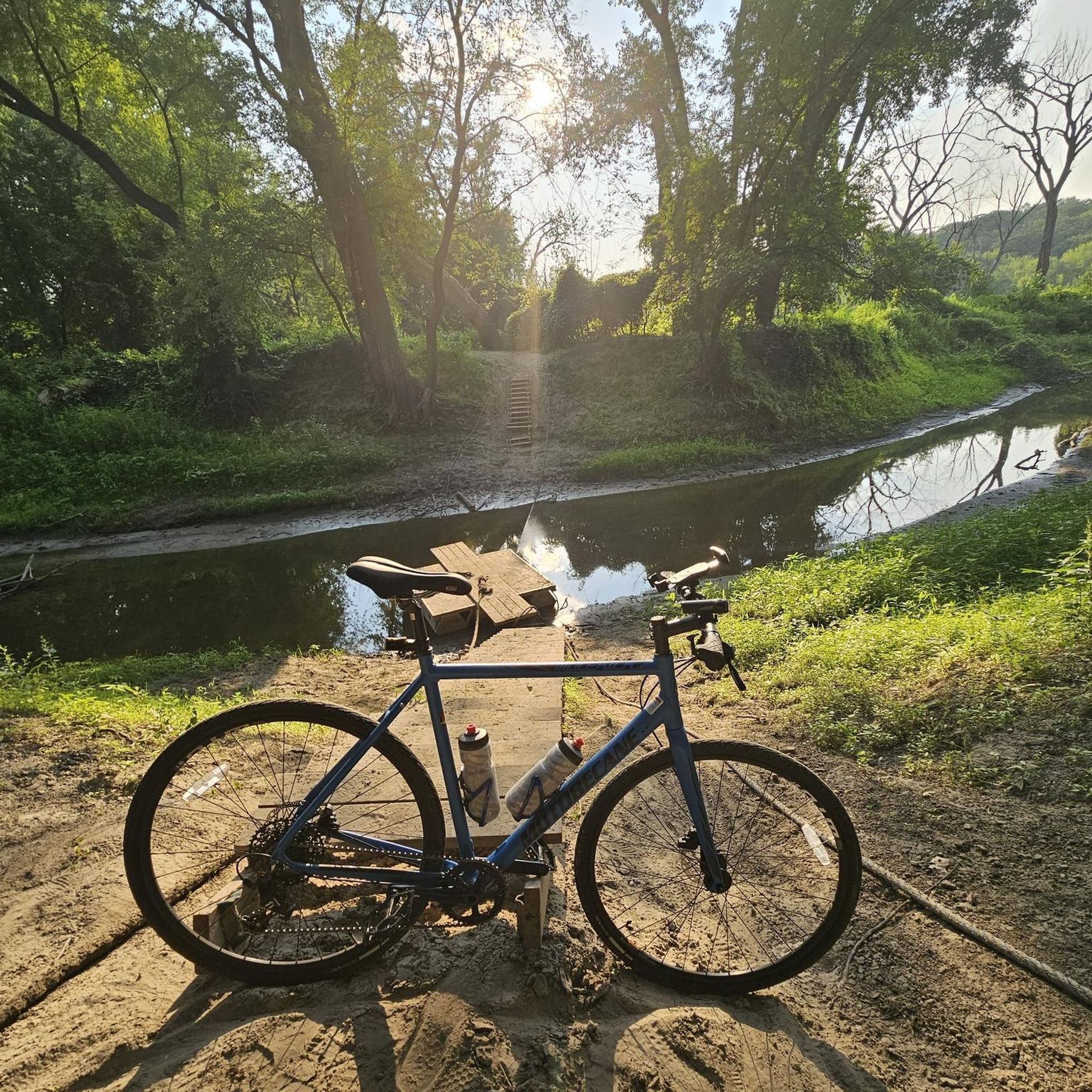
at the tip of Pike Islands a very nice packed Earth bike route around this little Island
0
0

When waters run high, this 53-foot-tall waterfall turns into a thundering cataract. There are picnic tables up top, and a trail that takes you down to nice views of the falls from below. It's well worth parking your bike to spend some time here.
1
0
This is the second-oldest public rose garden in the United States, showcasing a hundred different types of roses and some 3,000 plants in all.
0
0
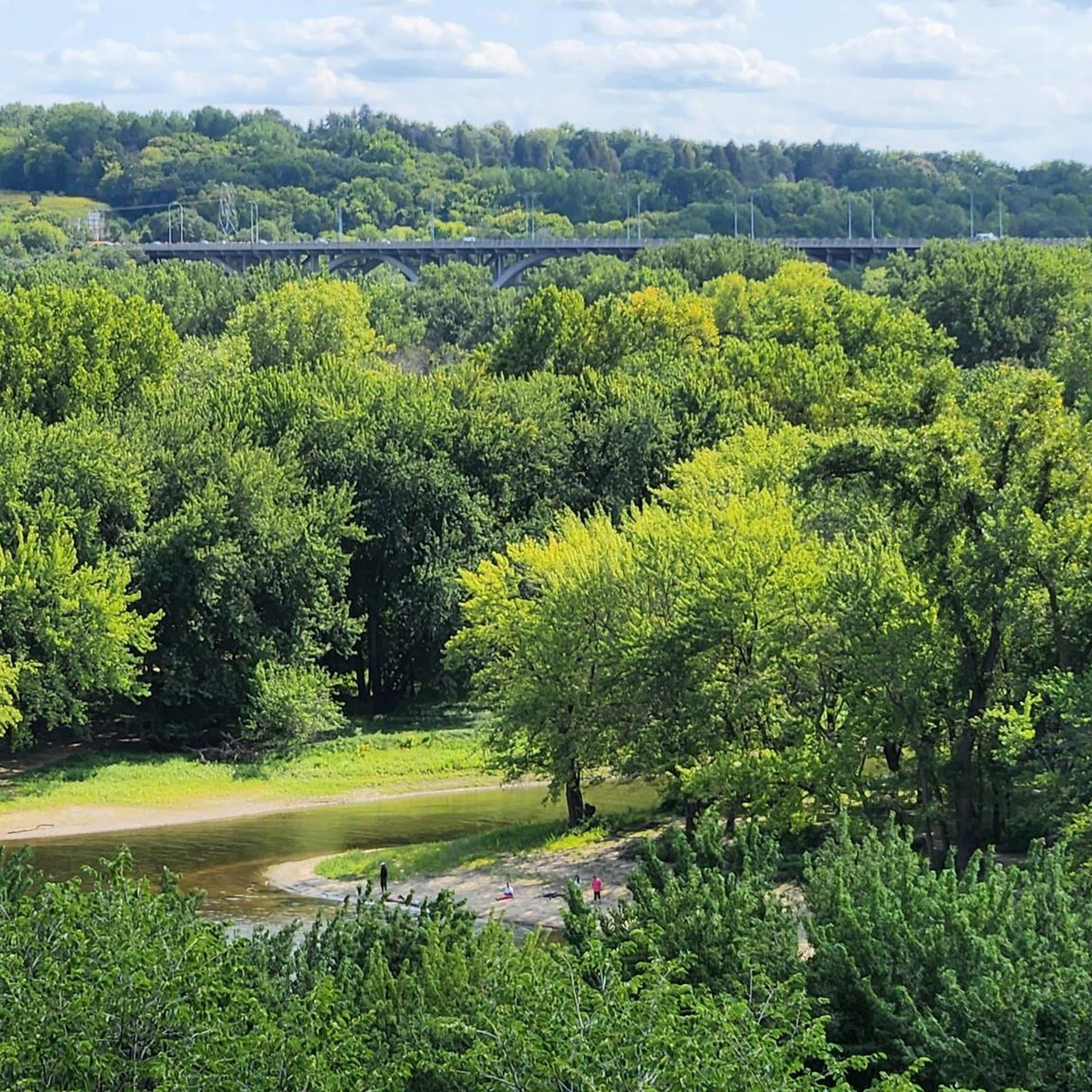
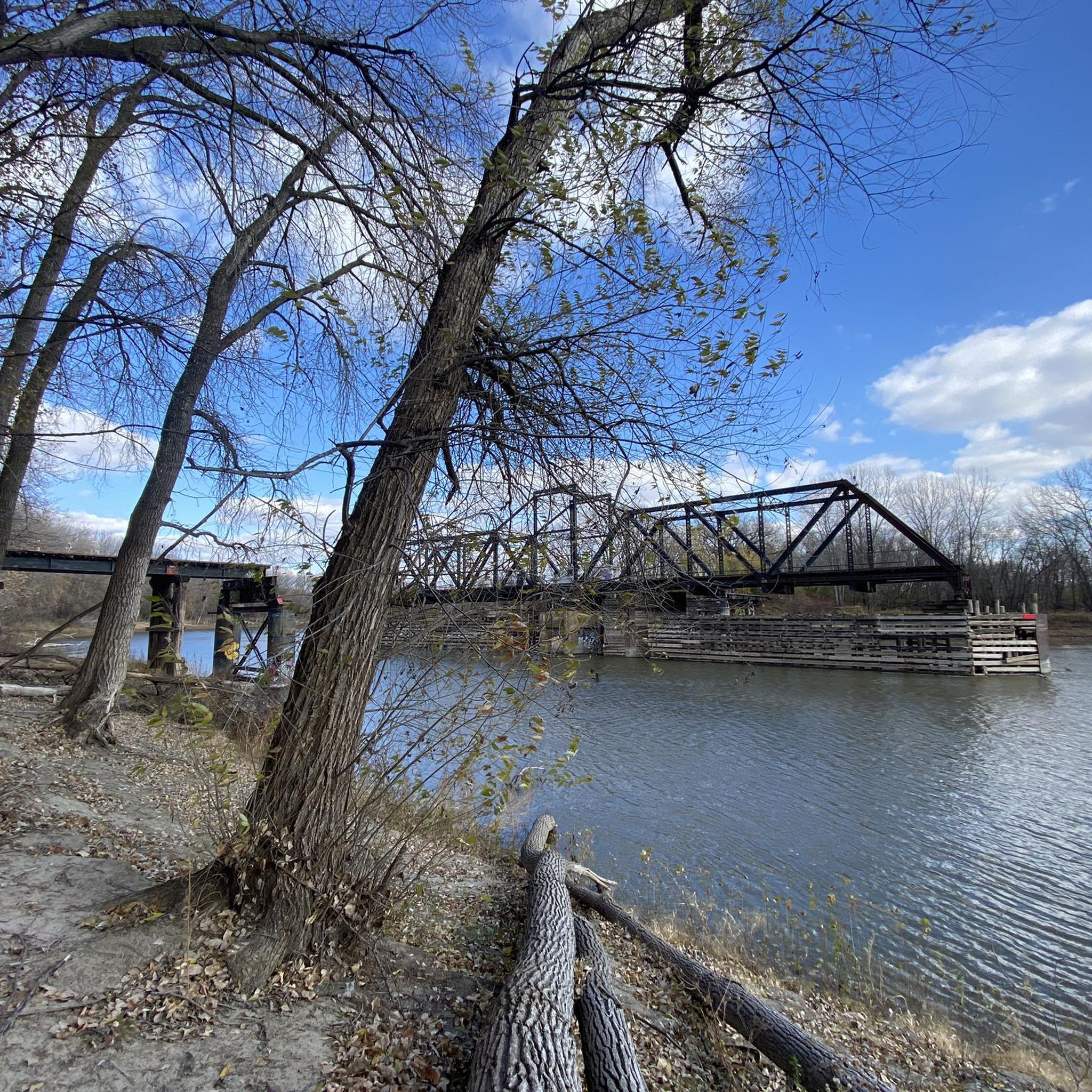
At the tip of Pike Island in St. Paul Minnesota, the Mississippi and Minnesota Rivers join forces on their way to the Gulf of Mexico. If you look carefully, you can notice that the Mississippi River (on the north side of Pike Island) runs relatively clear, and the Minnesota River (on the south side of Pike Island) runs stained brown with runoff from agricultural fields to the west.
0
0

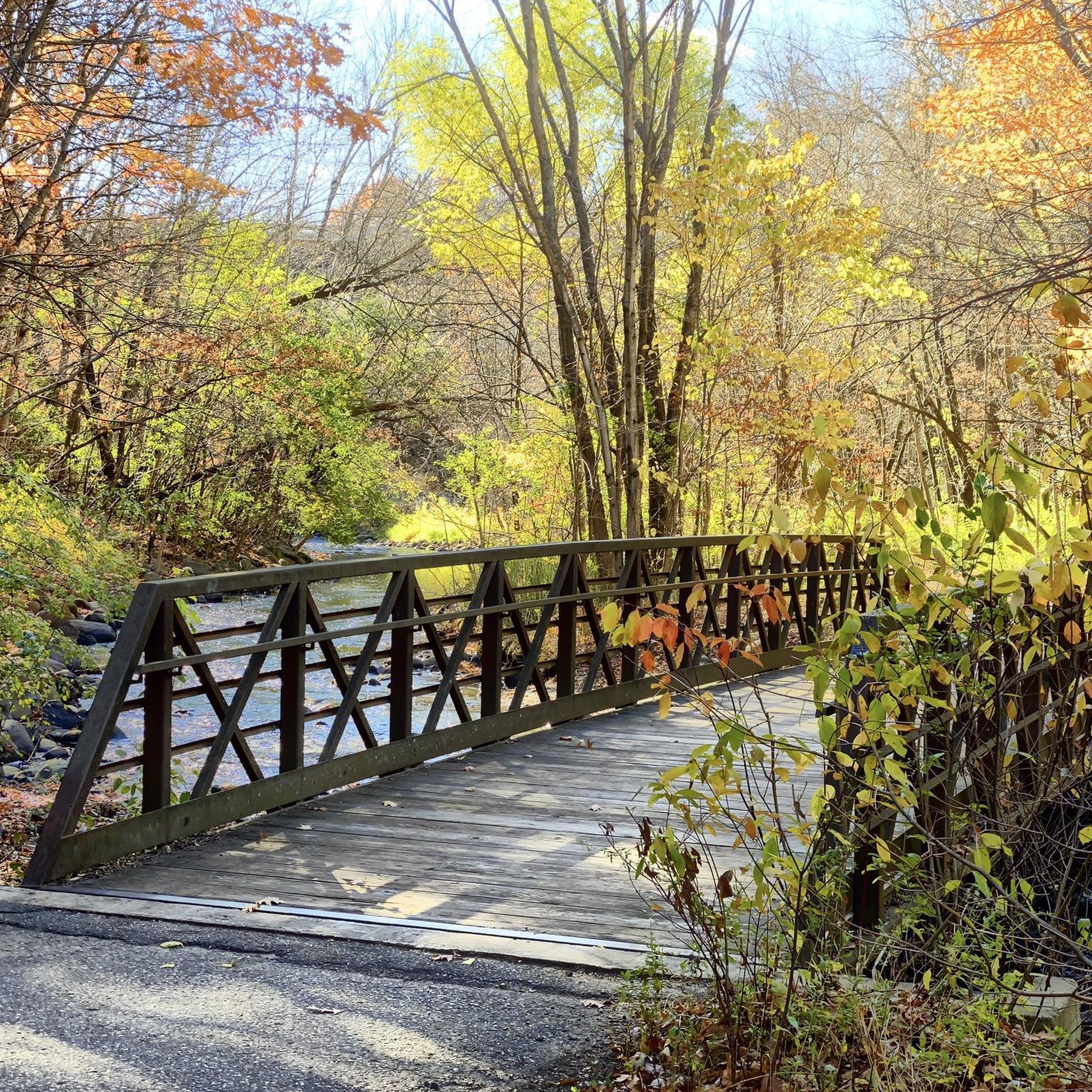
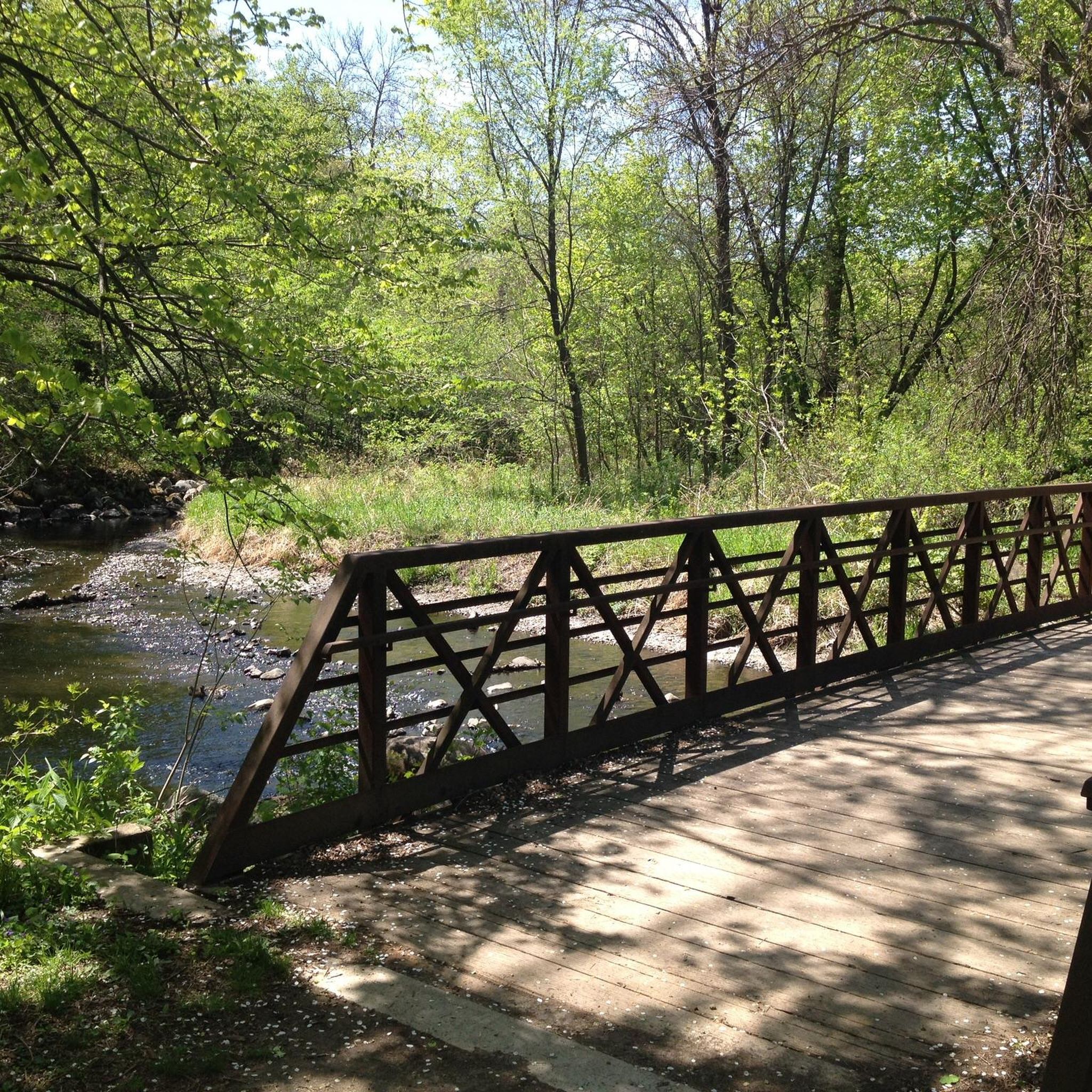
This small wooden bridge crosses the Minnehaha Creek, offering a unique viewing opportunity as it marks the point where the Minnehaha Creek meets the Mississippi River.
0
0
Frequently Asked Questions
What types of natural monuments can I explore around Bloomington, Indiana?
The Bloomington area offers a diverse range of natural monuments, including Indiana's largest inland lake, Lake Monroe, vast forests like the Hoosier National Forest, and unique geological features such as limestone formations and waterfalls at McCormick's Creek State Park. You can also find wetlands, caves, and serene lakes like Griffy Lake Nature Preserve.
Are there family-friendly natural monuments near Bloomington?
Yes, several natural monuments are great for families. Leonard Springs Nature Park offers a rugged yet manageable 1.1-mile trail with views of wetlands and caves, suitable for gentle observation. McCormick's Creek State Park provides a variety of activities, including hiking to waterfalls and exploring Wolf Cave. Griffy Lake Nature Preserve is also excellent for families, offering kayaking, canoeing, and peaceful trails.
Where can I go hiking or trail running near Bloomington's natural monuments?
The Hoosier National Forest boasts over 260 miles of trails for hiking and trail running, including the primitive Charles C. Deam Wilderness. McCormick's Creek State Park has over 10 miles of trails leading to features like Wolf Cave and Twin Bridges. For more options, you can explore various hiking routes and running trails around Bloomington.
What water-based activities are available at natural monuments in the area?
Lake Monroe is a prime spot for water activities, offering fishing, boating (with 11 launch ramps), swimming, and birdwatching. Griffy Lake Nature Preserve is ideal for kayaking, canoeing, stand-up paddleboarding, and fishing for bass, bluegill, and catfish. Yellowwood State Forest also features a lake suitable for fishing.
Can I go mountain biking near Bloomington's natural monuments?
Yes, the Hoosier National Forest provides extensive trails suitable for mountain biking. For specific routes and more details, you can check out the MTB Trails around Bloomington guide.
What unique geological features can I find in Bloomington's natural monuments?
McCormick's Creek State Park is famous for its unique limestone formations, scenic waterfalls, and a magnificent canyon with high cliffs. Leonard Springs Nature Park features wetlands, two caves, and Shirley Springs, all formed from abundant limestone bedrock. The Hoosier National Forest also contains various unique rock formations.
Where can I observe wildlife and birds around Bloomington?
Lake Monroe is a popular spot for birdwatching, with over 300 documented species, including eagles. The Hoosier National Forest offers opportunities for diverse wildlife and plant viewing. Leonard Springs Nature Park is also known for its rich variety of plant and animal life, and Griffy Lake Nature Preserve is excellent for birding expeditions.
Are there any natural monuments with historical significance?
McCormick's Creek State Park holds historical significance as Indiana's first state park, dedicated in 1916. Within the Hoosier National Forest, you can find the historic Hickory Ridge Fire Tower, offering expansive views and a glimpse into the area's past.
What is the Charles C. Deam Wilderness and where is it located?
The Charles C. Deam Wilderness is Indiana's only federally protected wilderness area, designed for solitude and natural forest experiences. It lies on the south shore of Lake Monroe and is also a significant part of the Hoosier National Forest, offering primitive camping and extensive trails.
Can I find rare trees or unique ecosystems in Bloomington's natural monuments?
Yes, Yellowwood State Forest is notable for its unique ecosystem and high conservation value due to the presence of rare yellowwood trees, some of which have been in the area for thousands of years. It offers a unique opportunity to see these special trees and hike through diverse forest environments.
Are there options for camping near Bloomington's natural monuments?
Camping is available at several locations. Lake Monroe offers camping facilities, particularly at recreational areas like Hardin Ridge. The Charles C. Deam Wilderness within the Hoosier National Forest provides designated hike-in/boat-in campsites. Yellowwood State Forest also offers camping opportunities.
What are some notable viewpoints or scenic spots around Bloomington?
The Hickory Ridge Fire Tower in the Hoosier National Forest offers expansive views of the surrounding landscape. Paynetown State Recreation Area at Lake Monroe provides panoramic sunset views. McCormick's Creek State Park features high cliffs overlooking its magnificent canyon, offering stunning vistas.
Most popular routes around Bloomington
Most popular attractions around Bloomington

Get inspired with the komoot mobile app


Explore more
Extend your search for the best caves by checking out these guides of the top ones around Bloomington:
