Top 9 Natural Monuments around Hames-Boucres
Best natural monuments around Hames-Boucres are characterized by their diverse natural landscapes, including impressive coastal cliffs and elevated viewpoints. The region, part of the Pas-de-Calais department in France, features significant geological formations and ecological sites. These natural attractions offer opportunities for exploring the unique geography of the Opal Coast.
Best natural monuments around Hames-Boucres
- The most popular natural monuments is Cape Blanc-Nez, a viewpoint that features an impressive white chalk cliff rising to 134 meters above the sea. This…
Last updated: May 6, 2026
Cape Blanc-Nez
Highlight • Viewpoint
Translated by Google •
Tip by

Cran d'Escalles
Highlight • Beach
Translated by Google •
Tip by
Sign up now to discover places like this
Get recommendations on the best single tracks, peaks, & plenty of other exciting outdoor places.
Sign up for free
Dover Patrol Monument, Cap Blanc-Nez
Highlight • Monument
Translated by Google •
Tip by
View from Mont d'Hubert
Highlight • Viewpoint
Translated by Google •
Tip by
Cap Blanc-Nez Cliffs
Highlight • Natural Monument
Opposite, on a clear day, you can see the white cliffs of Dover.
Translated by Google •
Tip by

Sign up for free to discover even more natural monuments around Hames-Boucres.
Sign up for free
Already have an account?
Start today with a free account
Your next adventure awaits.
Login or Signup

Tips from the Community

The rocks, with their cracks and small caves in the calcareous wall, provide an important nesting site for numerous bird species such as jackdaws, house martins, fulmars, kestrels, gulls, terns and herring gulls. As part of a renaturation project in 2006, a section of the asphalt road leading to the summit and the parking spaces there were completely removed. Instead, a parking lot about 300 meters inland was significantly expanded.
53
0
The obelisk crowns a 133-meter-high ensemble on a pedestal that can be seen from afar. It is THE landmark to reach to enjoy a 360° panorama from the top of the cliffs of Cap Blanc Nez. When the German army took possession of the Opal Coast in May 1940, this monument was immediately destroyed. The current Dover Patrol dates from the early 1960s. The last restoration took place in 2007. Source: https://www.calaisxxl.com/de/offres/a-voir-a-faire/monument-a-la-dover-patrol/
28
0
The Cap Blanc-Nez War Memorial (Dover Patrol Monument) is a major war memorial erected on the cliffs of Cap Blanc-Nez, near Sangatte. It honours the British naval forces and the Dover Patrol, a key unit of the Royal Navy that secured the Straits of Dover during the First and Second World Wars.
52
0
Excavations carried out before the construction of a car park on Mont d'Hubert, near Cap Blanc Nez (Pas-de-Calais), have uncovered the remains of a Middle Neolithic camp (4,200 to 3,800 years before our era). The camp, covering three hectares, surrounded by a ditch and visible from more than thirty kilometers away, has yielded remains of animal and human bones, ceramics and flints. Source: https://www.inrap.fr/un-camp-neolithique-de-hauteur-proche-du-cap-blanc-nez-escalles-1349
51
0
The Petit Blanc-Nez is a cliff in the Pas-de-Calais region and is part of the Deux-Caps (Two Capes) area, which also includes Cap Gris-Nez. Both are part of the protected area classified as a Grand Site de France and offer breathtaking views of the English Channel and, on a clear day, the English coast.
51
0

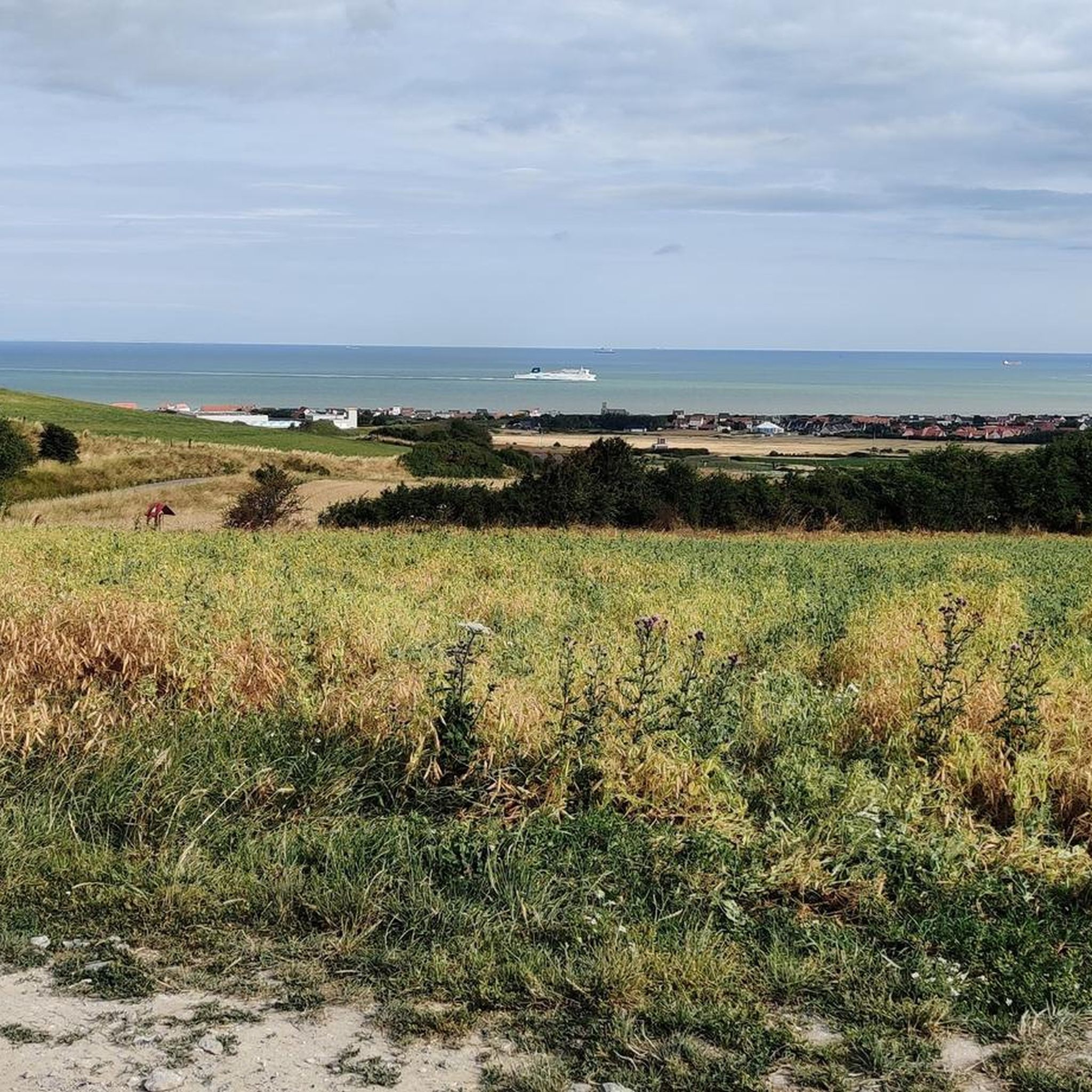
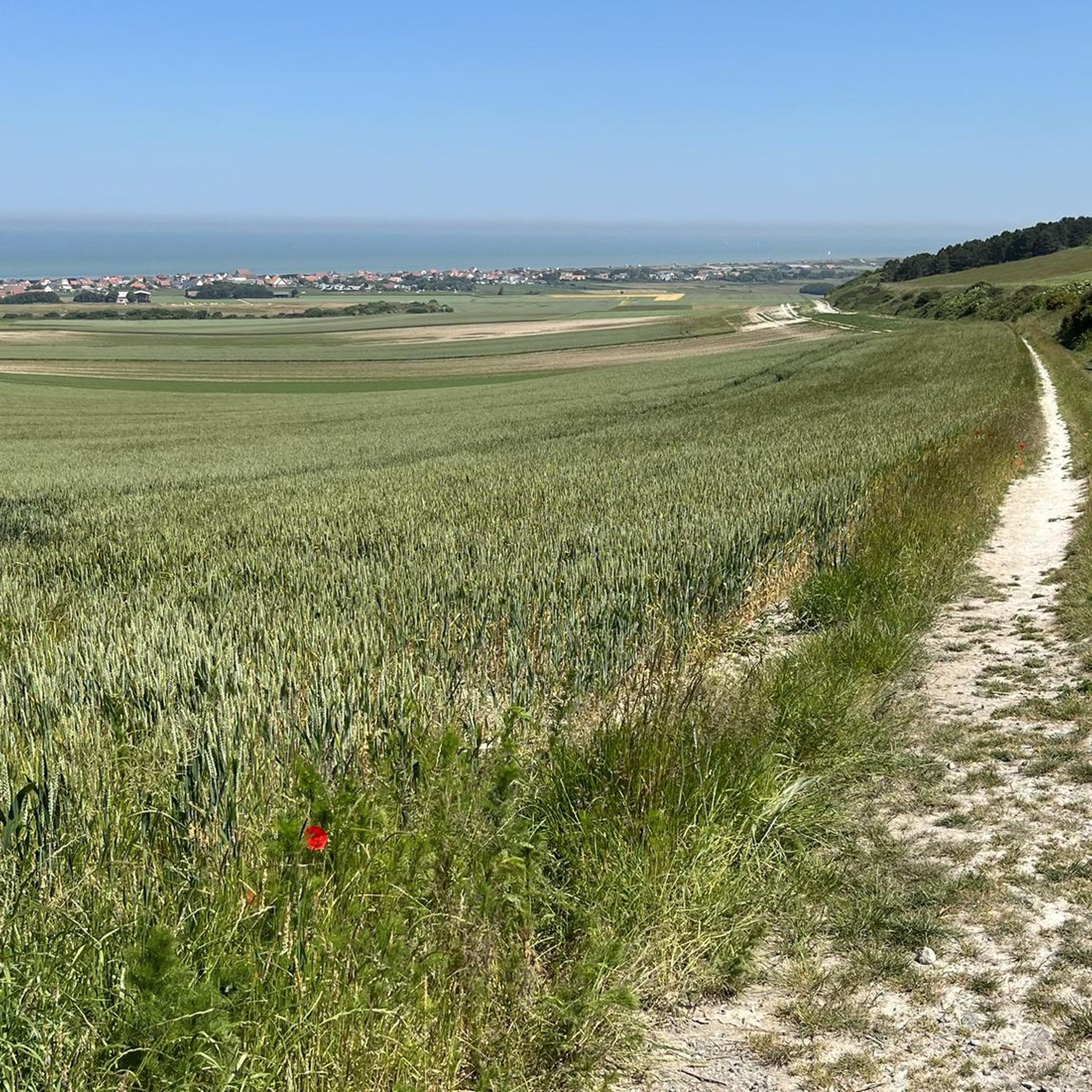
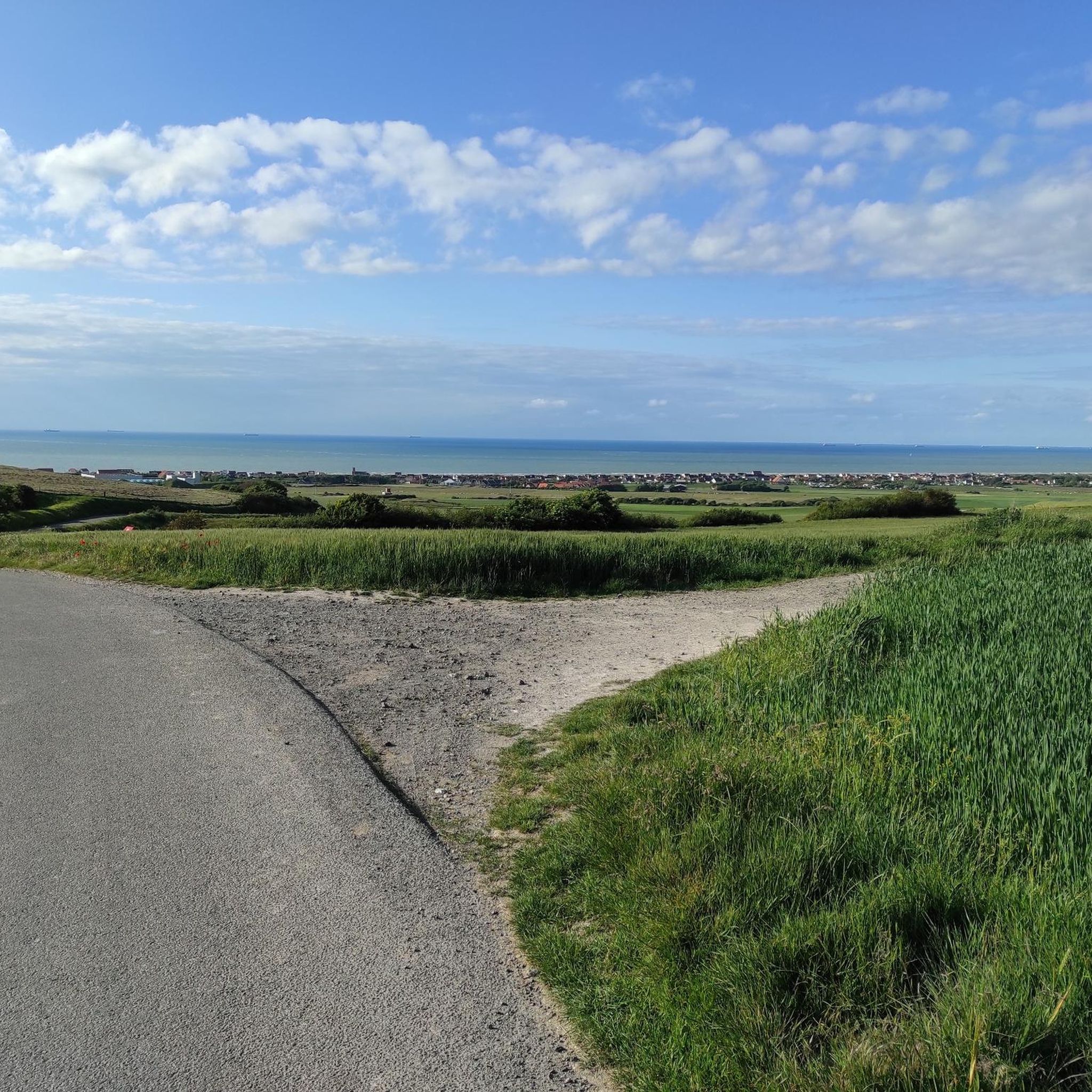
Superb viewpoint between Cap Blanc-Nez and Petit Blanc-Nez. The chalk and marl cliffs overlook the English Channel. Opposite, on a clear day, you can see the white cliffs of Dover.
0
1

The bomb holes in the surrounding pastures still bear witness to the English bombings, particularly around Mont d'Hubert. Wild orchids abound in these vast limestone meadows... perhaps you will meet the Boulogne sheep in charge of maintaining these protected areas? As part of the implementation of the NATURA2000 objectives document, this itinerant sheep grazing is carried out each year from May to October. The EAFRD, by financing the shepherd position, allows 600 sheep to roam all of the lawns to restore natural habitats.
12
0
The Dover Patrol was a Royal Navy command during World War I, whose main task was to prevent German ships, mainly submarines, from crossing the Channel into the Atlantic Ocean. It consisted of several naval ships and aircraft, and performed various tasks, including anti-submarine patrols, escorting ships, laying and clearing naval mines, and bombing German military positions. After the war, memorials were erected in memory of the Dover Patrol in various locations including Dover, Cap Blanc-Nez and New York.
16
0
Frequently Asked Questions
What are some unique natural features to explore around Hames-Boucres?
The region around Hames-Boucres offers diverse natural features. You can explore the impressive white chalk cliffs of Cape Blanc-Nez, which rise to 134 meters above the sea and provide panoramic views of the English Channel. Another notable feature is Cran d'Escalles, a beautiful beach nestled beneath cliffs, offering views towards the English coast on clear days. Further inland, Mont de Couple, the highest point in Boulonnais, provides exceptional panoramic views of the coast and countryside.
Are there any significant historical sites among the natural monuments?
Yes, several natural monuments in the area also hold historical significance. At Cape Blanc-Nez, you'll find the Dover Patrol Monument, a war memorial dedicated to British naval forces. The area also has visible remains from World War II. Additionally, View from Mont d'Hubert has historical significance with remnants of a Middle Neolithic camp discovered during excavations.
What kind of wildlife can I expect to see at these natural monuments?
The cliffs of Cape Blanc-Nez are crucial nesting sites for various bird species, including jackdaws, house martins, fulmars, kestrels, gulls, terns, and herring gulls. The Réserve naturelle du Platier d'Oye, a significant wetland area, is particularly important for birdwatching. Mont de Couple also boasts diverse flora and fauna, and you might even spot Boulogne sheep maintaining the protected limestone meadows.
Are there family-friendly natural monuments around Hames-Boucres?
Many of the natural monuments, including Cape Blanc-Nez and Cran d'Escalles, are considered family-friendly. They offer opportunities for short strolls, beachcombing, and enjoying the views. The open spaces and natural beauty make them suitable for families to explore together.
What is the best time to visit the natural monuments in this region?
The natural monuments around Hames-Boucres can be visited year-round, but the best time often depends on your preferred activities. Spring and summer offer pleasant weather for hiking and enjoying the beaches, with longer daylight hours. Clear days, regardless of the season, are ideal for enjoying the panoramic views from viewpoints like Cape Blanc-Nez, where you can see the English coast.
What outdoor activities can I do near these natural monuments?
The area is excellent for various outdoor activities. You can enjoy coastal walks and longer hikes along the Côte d'Opale, especially around Cape Blanc-Nez and Cap Gris-Nez. Cycling is also popular, with routes like the 'Escalles Mill – View of Cap Blanc-Nez loop' available. For more detailed route information, you can explore the Cycling around Hames-Boucres guide or the Running Trails around Hames-Boucres guide.
Are there specific nature reserves worth visiting near Hames-Boucres?
Yes, beyond the famous Capes, there are significant nature reserves. The Réserve naturelle du Platier d'Oye is a vital wetland area, perfect for birdwatching and experiencing diverse coastal ecosystems. Further afield, the Réserve naturelle nationale des grottes et des pelouses d'Acquin-Westbécourt offers unique geological formations like caves and rich grassland ecosystems.
Is it possible to see the English coast from these natural monuments?
Absolutely. From prominent viewpoints such as Cape Blanc-Nez and Cap Gris-Nez, you can enjoy stunning views across the English Channel. On clear days, the White Cliffs of Dover and the English coast are clearly visible, making for a spectacular panorama.
What is the terrain and difficulty like for trails around Cap Blanc-Nez?
The trails around Cap Blanc-Nez generally range from easy to intermediate. While there are gentle paths suitable for short strolls, some sections involve walking along cliffs or descending to beaches, which can be steeper. The area is known for its dramatic elevation changes, offering rewarding views but requiring appropriate footwear.
Are dogs allowed on the trails and at the natural monuments?
Many natural areas in France, including coastal paths and reserves, are generally dog-friendly, often requiring dogs to be on a leash to protect wildlife and ensure visitor safety. It's always recommended to check specific signage at each location, especially within designated nature reserves like the Réserve naturelle du Platier d'Oye, for any particular restrictions.
Where can I find parking when visiting these natural monuments?
For popular sites like Cape Blanc-Nez, there are designated parking areas. A renaturation project in 2006 expanded an inland parking lot to preserve the natural state of the summit. It is advisable to arrive early during peak season to secure a spot, especially at well-known coastal locations.
What makes Mont de Couple a significant natural monument?
Mont de Couple is significant as the highest point in Boulonnais, reaching an altitude of 163 meters. It offers exceptional panoramic views of the coast, the surrounding countryside, and the town of Wissant. Its combination of natural beauty, diverse flora and fauna, and remnants of German bunkers from World War II makes it a compelling destination for nature and history enthusiasts.
Most popular routes around Hames-Boucres
Most popular attractions around Hames-Boucres

Get inspired with the komoot mobile app


Explore more
Extend your search for the best caves by checking out these guides of the top ones around Hames-Boucres:
