Top 16 Castles around Scharans
Best castles around Scharans are found in the Swiss canton of the Grisons, a region characterized by its historical significance and diverse natural landscapes within the Domleschg valley. The area features historical structures, including former tower houses and castle ruins, reflecting centuries of regional history. Scharans itself is notable for structures like Schloss Scharans, a former tower house with unique architectural and artistic features. The surrounding valley offers a variety of historical sites for exploration.
Best castles around Scharans
- The…
Last updated: August 3, 2026
View of Hohen Rätien Castle Ruins
Highlight • Castle
Translated by Google •
Tip by

Rietberg Castle
Highlight • Castle
Translated by Google •
Tip by

Sign up now to discover places like this
Get recommendations on the best single tracks, peaks, & plenty of other exciting outdoor places.
Sign up for free
Schauenstein Castle
Highlight • Castle
An episcopal Meierhof as the origin of Fürstenau
The episcopal power in Domleschg was probably already developed in the epoch of the Frankish Empire, in …
Translated by Google •
Tip by

Rhäzüns Castle above the Hinterrhein
Highlight • Castle
It is not known when the plant or its predecessors were built. A castle probably existed on the site of today's palace as …
Translated by Google •
Tip by
Alt-Süns Ruins
Highlight • Castle
In 1216, the powerful Barons of Vaz built their first castle in the mild Domleschg outside their ancestral castle Nivaigl …
Translated by Google •
Tip by
Sign up for free to discover even more castles around Scharans.
Sign up for free
Already have an account?
Start today with a free account
Your next adventure awaits.
Login or Signup
Popular around Scharans
From the peaks to the cool waters – Coolcation Lenzerheide
Satisfy your wanderlust in the Lenzerheide region
Viamala – a hiking paradise in the heart of the Grisons in Switzerland
Cycling around Scharans
MTB Trails around Scharans
Road Cycling Routes around Scharans
Gravel biking around Scharans
Running Trails around Scharans
Hiking around Scharans
Mountain Hikes around Scharans
Other adventures around Scharans


Tips from the Community

The history of the castle continued after its purchase by the Swiss expatriate community. In 1958, Hovag Domat/Ems, under Dr. Werner Oswald, bought Rhäzüns Castle. Since 1984, it has been owned by Ems-Chemie AG, with residential rights granted to the family of Silvia and Christoph Blocher. Therefore, it is not possible to visit the castle.
0
0

This castle is located 250m above the Oden valley. It is privately owned and is very well preserved. Inside there is seating and a fireplace. Entrance fee is 5 francs to help maintain this beautiful castle.
0
0

The Höhen Rätien Castle is a hilltop and church castle high on the rock at an altitude of 946 metres above the entrance to the Viamala Gorge. It is located in Sils im Domelschg Hinterrhein Graubünden. It is one of the oldest cultural and settlement sites in Switzerland.
2
0
Rietberg Castle stands above Pratval in Doleschg Graubünden. It was built in 1225 as a hilltop castle at an altitude of 723 metres.
0
0

Ruin of Alt-Süns 1216, the oldest Vaz castle in Domleschg In 1216, the powerful Barons of Vaz built their first castle in the mild Domleschg outside their ancestral castle Nivaigl in Vaz, from there fifty years later they built Ortenstein and even later Neu-Süns, which we usually call Canova. With the heir Ursula von Vaz of the last Baron, the property went to the Counts of Werdenberg-Sargans. In the Schams Feud of 1451, the barely inhabited castles of Alt-Süns and Neu-Süns collapsed when half of the tower was undermined. Since then they have been a picturesque eye-catcher in the Domleschg castle landscape. Text: Pro Castellis https://pro-castellis.ch/ruine-alt-s%C3%BCns-1216
12
0
Fürstenau - town in miniature An episcopal Meierhof as the origin of Fürstenau The episcopal power in Domleschg was probably already developed in the epoch of the Frankish Empire, in the first millennium. The incompletely preserved Reichsurbar (list of goods and taxes of the imperial rule) from 831 shows that a ministry Tumliasca (bishop's administrative apparatus Domleschg) existed. This faced a vicedominus with judicial authority. It is conceivable that the episcopal administration was originally based in Hohenrätien ob Sils i.D. had, but had been moved to one of the three Carolingian royal courts of Scharans, Almens and Tomils early on. Presumably an administrative officer (Meier) of the bishop took up residence in Baumgartenland Maros near Fürstenau. The name Maros goes back to the Latin word ad majoranem, the accusative of maiora (= dairy farm or farmstead). From this, the name Mairaus developed via ad maioranes, which as a name for Fürstenau first appears in documents in the first half of the 12th century. The development of the city In the course of the 14th century, the sovereign large castle acquired a modest urban character as a result of the denser settlement of the outer bailey. A document from 1383 testifies that the main castle was in front of the bridge to a bailey (lat. atrium). Peasant and artisan subjects lived here, who were responsible for the supply of the lords of the castle, and, as the House of Stoffel shows, apparently also knightly servants. Architectural and political developments are interrelated. In the middle of the 14th century, the diocese of Chur not only managed to obtain market privileges, but also a place of jurisdiction for blood justice. King Charles IV had Bishop Ulrich V (1331-1355) present a diploma on May 13, 1354, which gave Fürstenau the right to jail, sticks and gallows, as well as the holding of two annual markets on St. Michael's and St. George's Day . This meant that Fürstenau had also become a city in a legal sense. Its expansion from 1354 coincides with that of the castle mentioned in 1272. The town was not only of great importance as a trading and market place, it had also risen to become the center of princely possessions in the upper part of the Domleschg. So the castle has clearly proven itself as a strong attraction. Around 1300, a territorialization process began in the Graubünden area, which had a significant influence on political events up until after 1450. Noble dominions such as that of the Lords of Rhäzüns supplemented or overlaid the episcopal dominion. Neither party had a closed territory. As early as the first half of the 14th century, Fürstenau was drawn into the maelstrom of the episcopal power struggles. The few surviving documentary mentions of Fürstenau should be seen in this context: In 1333 the bishop promised the lords of Rhäzüns 1000 marks, four hundred of them through Fürstenau Castle, which was then pledged. In 1347 the castle served as security so that the bishop would go back into the captivity of the Count of Tyrol, from which he had been released. Fürstenau was then handed over to Walter von Stadion. In 1351 an arbitral tribunal had to decide the dispute over Fürstenau Castle between the bishop and the Counts of Montfort. Finally, in 1367, Fürstenau was occupied by the cathedral chapter and the bishop's vassals. In 1387 it regained great importance in connection with the expansion of the Septimer Pass by Johann von Castelmur. Text: City of Fürstenau https://www.fuerstenau.ch/Portrait/History/
13
0
Rhäzüns Castle (Chastè da Razén in Rhaeto-Romanic) It is not known when the plant or its predecessors were built. A castle probably existed on the site of today's palace as early as the 10th century; A castellum Beneduces et Rezunnes is mentioned in documents of Emperor Otto I and Otto II in the years 960 and 976. The first proven representative of the barons of Rhäzüns was Arnoldus de Ruzunne, who is mentioned in 1137/39 in the Gamertinger documents. The first documented mention of Rhäzüns Castle itself appears in a sales deed from the Disentis monastery from the year 1282. After the death of the last Rhäzünser Georg in 1459, a long succession dispute arose between the Counts of Hohenzollern-Hechingen von Zollern and the Werdenbergers. In 1461 the castle fell to the Zollern family by arbitral award, who pledged it to Conradin von Marmels in 1437. It came into the possession of Maximilian I in 1497 through an exchange for the Haigerloch estate. After the death of Hans von Marmels in 1553, Rhäzüns changed hands several times until 1695. Bartholomäus von Stampa and in 1558 Johannes von Planta followed as pledge holders. In 1695 Austria took over the rule and had it administered by officials. This prevented the Rhäzün rule from being integrated into the politics of the Three Leagues. On December 29, 1809, the rule of Austria passed to France. After the collapse of the Napoleonic Empire, Rhäzüns was initially returned to Austria in 1814 and was added to the canton of Graubünden in 1815 at the Congress of Vienna. It was bought by the last Habsburg administrator, the doctor and magistrate Georg Anton Vieli. It remained in his family's possession until 1927. In the early 1850s, Father Theodosius Florentini set up a girls' school there, which was moved to Rorschach in 1854. After the lessee of the estate had lived in it, the castle stood empty and began to fall into ruin. On December 11, 1926, it was bought and extensively renovated by the «Non-profit cooperative for Swiss abroad holiday home Rhäzüns». Text/Source: Wikipedia https://de.wikipedia.org/wiki/Schloss_Rh%C3%A4z%C3%BCns
9
0

Frequently Asked Questions
What is the historical significance of Schloss Scharans / Haus Gees?
Schloss Scharans, also known as Haus Gees (Ardüserhaus), is a former tower house in the village. It likely served as a bailiff's tower for the Bishops of Chur. Its most distinguishing feature is the elaborate facade paintings created in 1605 by the renowned Grisons painter Hans Ardüser, showcasing a blend of historical narrative and decorative art. It is recognized as a Swiss cultural asset of national importance.
What can I expect when visiting the View of Hohen Rätien Castle Ruins?
The View of Hohen Rätien Castle Ruins offers a great vantage point from the Via Spluga to observe these historical ruins. The castle sits high above Thusis and is known for its significant past.
Tell me more about Rietberg Castle's history.
Rietberg Castle, located above Pratval in the Domleschg, has a documented history dating back to the 13th century. It was the seat of the Lords of Rietberg and later saw numerous changes of ownership, including the Bishopric of Chur and the Salis family. It is famously known as the site where Pompejus Planta was murdered by Jörg Jenatsch in 1621, an event later immortalized in literature.
What makes Sins Castle unique?
Sins Castle in Paspels, built around 1695, is notable for its changing face due to several reconstructions. It features remarkable sgraffito decoration, a carved roof in Swiss wood style, and a unique staircase. The castle also boasts stucco over-portals and portraits from the 18th century, and a generous garden with a baroque part.
Can I visit Rhäzüns Castle?
While Rhäzüns Castle has a rich history dating back to the 10th century and offers spectacular views above the Hinterrhein, it is currently owned by Ems-Chemie AG, with residential rights granted to a private family. Therefore, it is not possible to visit the castle.
What is the history behind Schauenstein Castle?
Schauenstein Castle in Fürstenau has its origins as an episcopal Meierhof (bailiff's farm) in the first millennium. It developed into a significant sovereign large castle, and by the 14th century, Fürstenau gained market privileges and jurisdiction, becoming a city in a legal sense. The castle played a central role in the region's political events and power struggles, serving as security and a point of contention for various noble families and the Bishopric of Chur.
Are there hiking trails near the castles around Scharans?
Yes, the Domleschg valley offers numerous hiking opportunities. You can find various running trails around Scharans, including moderate to difficult loops. Explore options like the Vitaparcours Zurich loops or other running routes starting from nearby towns. For more details, refer to the Running Trails around Scharans guide.
What cycling opportunities are there near Scharans' castles?
The region around Scharans is excellent for cycling. You can find road cycling routes, including loops from Thusis that pass by historical sites and natural attractions like the Via Mala Gorge. There are also mountain biking trails, such as those in the Thusis Trail Center. For detailed routes, check the Road Cycling Routes around Scharans guide and the MTB Trails around Scharans guide.
What natural features can I see in the Domleschg valley near the castles?
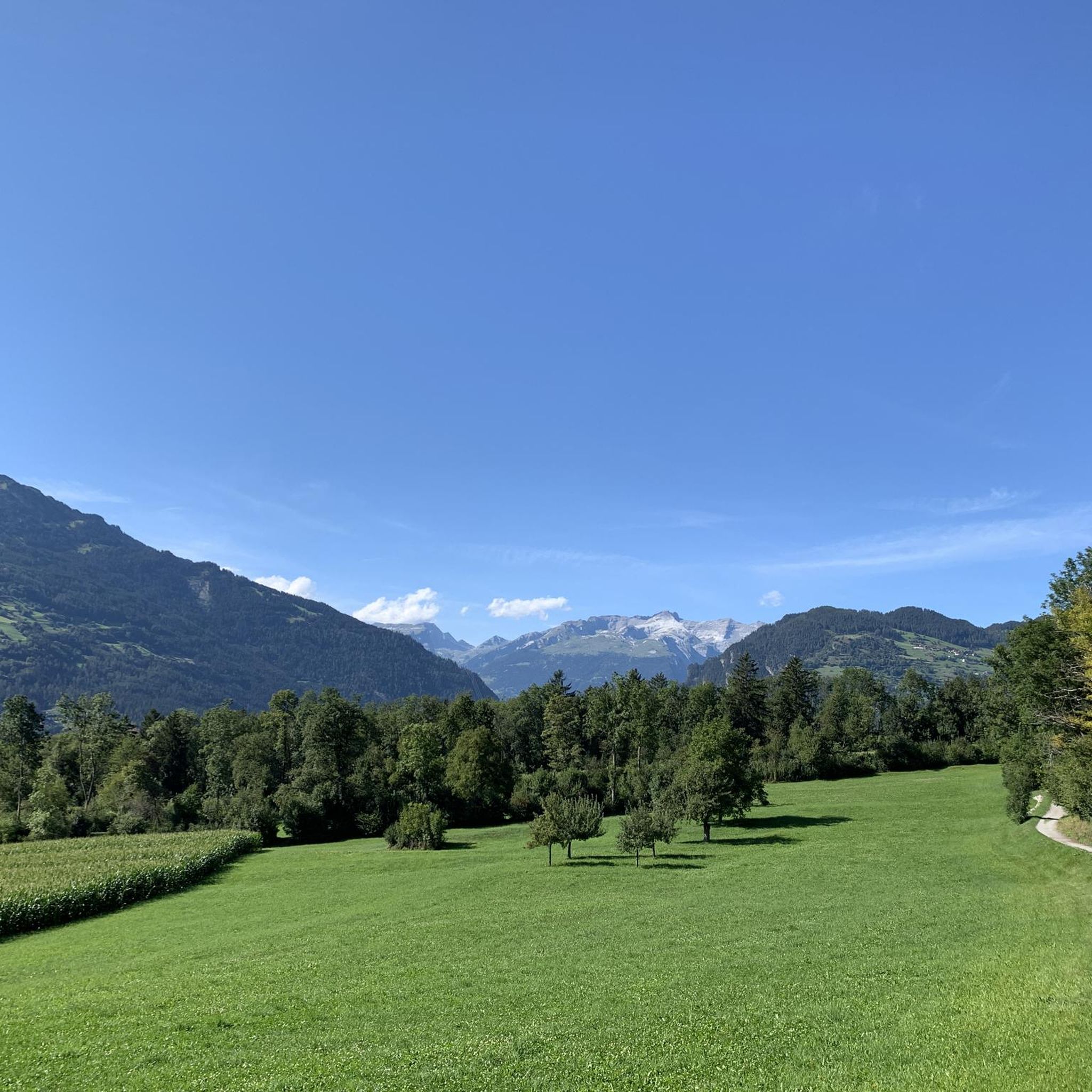
The Domleschg valley, where Scharans is located, is characterized by diverse natural landscapes. Besides the historical structures, you can enjoy views of the Hinterrhein river, the Rietbach-Tobel, and the general scenic beauty of the Grisons canton. Many castle highlights, like the View of Hohen Rätien Castle Ruins, also serve as excellent viewpoints.
What is the best time of year to visit the castles around Scharans?
The best time to visit the castles and enjoy outdoor activities in the Domleschg valley is generally during the spring, summer, and early autumn months (May to October). During these periods, the weather is milder, making it ideal for hiking, cycling, and exploring the historical sites and natural landscapes.
Are the castles around Scharans family-friendly?
Many of the historical sites and their surrounding areas offer family-friendly experiences. While some castles are ruins, providing open spaces for exploration, others might have more structured visits. The region's numerous hiking and cycling trails also cater to various difficulty levels, making it possible to find routes suitable for families.
Are there dog-friendly walks around the castles?
The Domleschg valley generally welcomes dogs on its outdoor trails. Many hiking and walking paths around the castles are suitable for dog owners. However, it's always advisable to keep dogs on a leash, especially near historical sites or in populated areas, and to check specific regulations for individual castle grounds or nature reserves.
How long do castle visits near Scharans typically take?
The duration of a castle visit varies. For ruins like the View of Hohen Rätien Castle Ruins, you might spend 30 minutes to an hour exploring the site and enjoying the views. For more preserved structures like Rietberg Castle or Sins Castle, especially if they have accessible interiors or gardens, a visit could take 1-2 hours. Consider additional time if you combine a castle visit with a hike or bike ride.
Most popular routes around Scharans
Most popular attractions around Scharans

Get inspired with the komoot mobile app


Explore more
Looking for the best castles somewhere else? Discover other guides around Scharans:
