Top 6 Mountain Passes around Òrrius
Mountain passes around Òrrius provide access to a natural environment situated between the Vallès and Maresme regions in Catalonia, Spain. This area is characterized by forests and mountains, offering scenic routes for various outdoor activities. The passes serve as connections within the local landscape, providing both gentle and challenging ascents. The region features several colls, or passes, popular for cycling and hiking.
Best mountain passes around Òrrius
- The most popular mountain pass is Òrrius Pass, a mountain pass and…
Last updated: October 4, 2026
Parpers Pass
Highlight • Mountain Pass
Translated by Google •
Tip by

Orrius Pass - Sant Bartomeu Pass
Highlight (Segment) • Mountain Pass
Translated by Google •
Tip by

Sign up now to discover places like this
Get recommendations on the best single tracks, peaks, & plenty of other exciting outdoor places.
Conreria Pass
Highlight • Mountain Pass
If you feel like exploring, then take …
Tip by

Can Boquet Cross
Highlight • Mountain Pass
It …
Translated by Google •
Tip by
Can Bordoi Pass
Highlight (Segment) • Mountain Pass
Translated by Google •
Tip by

Sign up for free to discover even more mountain passes around Òrrius.
Already have an account?
Start today with a free account
Your next adventure awaits.

Tips from the Community


Coll de Orrius is also known as Coll de Sant Bertomeu.
1
0
It is one of the many climbs that cross the coastal mountain range of the province of Barcelona, connecting in this case the towns of Argentona with Roca del Vallés. It is a port parallel to Coll de Papers, although this is much harder. The Argentona side is longer and with less slope than the Roca del Vallés. The Argentona side is 6.5 km with an average gradient of 4.5%. There is a rest with a descent in the middle area of the port, the second section being harder than the first. The Roca del Vallés side is barely 4 km with a very constant average gradient of 7%. The views of the valleys, the coast and Montseny from the top of the port are very cool and well worth it.
1
0
Mountain pass in the coastal mountain range that connects Tiara with San Fost de Campsentelles.
1
0
Beautiful climb highly recommended for any winter outing along the Maresme coast. Constant slopes and continuously panoramic views of the Mediterranean Sea and the coast.
1
0

In my experience, it gets harder if you start from La Roca del Vallés. It does not have particularly complicated slopes, but the ascent can become somewhat tedious. I advise going slowly and taking a steady pace to the top, where you can pull over to the side of the road and enjoy the beautiful views. The descent from the top of Coll to Òrrius (I recommend extending it to Mataró / Vilassar de Mar) translates into a few minutes of adrenaline and speed. Of course, be careful with some curves, which are somewhat closed and force you to slow down. If you finally continue descending, via Argentona, you will end up on the Costa del Maresme, very close to the train tracks and the CostaMar apartment complex. In short, a good challenge for cyclists of any level, with the reward of a dizzying descent and a varied and attractive landscape. Recommended.
1
0


This road has history, the Primitive Path of Parpers, es formed hundreds of years ago, to communicate the inland area with the coast, and maybe it is this is where they passed Iberians and Romans, farmers, soldiers and now us with E-bikes.
4
0
Frequently Asked Questions
What kind of views can I expect from the mountain passes around Òrrius?
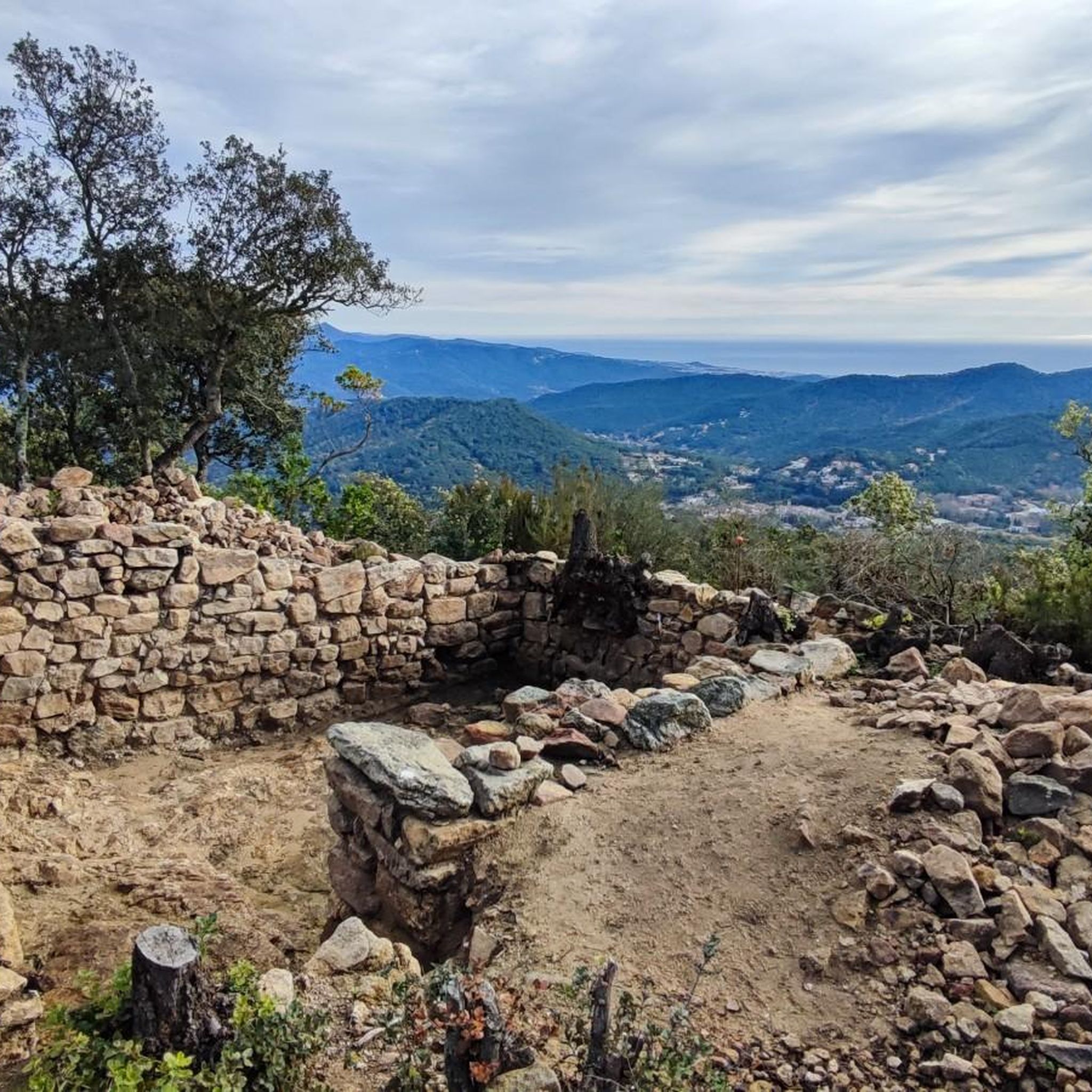
The mountain passes around Òrrius offer diverse and scenic views. For instance, Òrrius Pass provides panoramic views of the entire Vallès plain. Similarly, Coll de Sant Bartomeu (also known as Coll d'Òrrius) offers magnificent vistas extending to iconic landmarks like Montserrat, Sant Llorenç del Munt, and the Montseny massif. Many passes are surrounded by pine and holm oak forests, adding to the natural beauty.
Are there any historical or cultural points of interest near the mountain passes?
Yes, near Coll de Sant Bartomeu, you can find the Romanesque church of Sant Bartomeu de Cabanyes, located less than 200 meters south of the pass. This adds a historical and cultural dimension to your visit. Additionally, near Can Boquet Cross, you can find the Roca d'en Toni dolmen, an ancient megalithic monument.
What are the typical gradients and difficulties of the mountain passes in the Òrrius area?
The passes around Òrrius offer a range of difficulties. Parpers Pass is considered a gentle climb, with an average gradient of 3.2% over 5.3 kilometers from La Roca del Vallès. In contrast, Coll de Sant Bartomeu is shorter but steeper, with an average gradient of 7.3% and maximums reaching 12% over 3.8 kilometers. Can Bordoi Pass also features a section with up to a 9% gradient.
What outdoor activities can I do near these mountain passes?
The area around Òrrius is excellent for various outdoor activities. You can find numerous routes for mountain biking, gravel cycling, road cycling, and hiking. For example, there are many MTB trails around Òrrius, including challenging loops like the 'Dolmen of the Roca d'en Toni – Green Meridian loop'. Cyclists can explore routes like the 'Òrrius – Òrrius loop from Montornès del Vallès'. Hikers and runners can enjoy trails such as the 'Òrrius – Pedra Foradada (Natural Arch) loop'.
Are there family-friendly options for exploring the mountain passes around Òrrius?
While specific 'family-friendly' categories aren't always explicitly tagged for passes, the gentle nature of Parpers Pass makes it suitable for families looking for a less strenuous cycling or walking experience. Its quiet road, due to the tunnel bypass, enhances its appeal for a peaceful journey through nature. Always consider the specific gradient and length of a route when planning with family.
What is the best time of year to visit the mountain passes around Òrrius?
The region's Mediterranean climate makes it enjoyable for outdoor activities for much of the year. The pine forests around passes like Coll de Sant Bartomeu provide ample shade, which is particularly appealing during warmer months. Spring and autumn generally offer pleasant temperatures for cycling and hiking, while winter can also be suitable, though some curves might be wet. Summer mornings or late afternoons are ideal to avoid the midday heat.
Are there specific routes for cyclists near the mountain passes?
Yes, the mountain passes around Òrrius are very popular with cyclists. Òrrius Pass is a well-known crossing point for mountain bikers, gravel cyclists, and road cyclists. Parpers Pass is a favorite for its quiet road after the tunnel's construction, offering a pleasant ride. You can find various cycling routes around Òrrius, catering to different difficulty levels.
What kind of natural environment surrounds the mountain passes?
The mountain passes around Òrrius are nestled within a privileged natural environment, characterized by extensive forests of pine and holm oak. This verdant backdrop provides a peaceful setting for outdoor activities. The area is part of the Coastal Range, offering typical Catalan landscapes and a connection to the local ecosystem.
How accessible are the mountain passes by public transport or car, and is parking available?
The passes are generally accessible by car, with roads like the C-1415c traversing Parpers Pass and the BV-5106 crossing Coll de Sant Bartomeu. While specific parking information for each pass isn't detailed, the presence of these roads suggests roadside parking or small esplanades, such as the one near the summit of Coll de Sant Bartomeu, which can serve as viewpoints and parking spots. Public transport options directly to the passes might be limited, so checking local bus routes to nearby towns like La Roca del Vallès or Argentona is advisable.
What makes <a href="https://www.komoot.com/highlight/6410138" target="_blank" rel="noopener">Coll de Font de Cera</a> unique?
Coll de Font de Cera serves as a ridge and the highest point of the BP5002 road, connecting El Masnou to Granollers or Alella. It's notable as a crossroads where, if you're on gravel, you can follow the Camí de la Cornisa to enter and cross the Parque de la Serralada de Marina, offering further exploration opportunities within the natural park.
Are there hiking trails near the mountain passes around Òrrius?
Yes, the region offers a variety of hiking and running trails. For example, you can find several running trails around Òrrius, which are also suitable for hiking. These include routes like the 'Òrrius – Pedra Foradada (Natural Arch) loop' and the 'Dolmen of the Roca d'en Toni – Stone Labyrinth of Cabrils loop'. Many passes themselves are part of longer trail networks, connecting different parts of the coastal mountain range.
Most popular attractions around Òrrius

Get inspired with the komoot mobile app


Explore more
See even more epic mountain passes by checking out these guides around Òrrius:
