Top 20 Natural Monuments around Vigo Di Cadore
Best natural monuments around Vigo Di Cadore are found within the Dolomites, a UNESCO World Heritage site in Italy's Veneto region. This area is characterized by dramatic peaks, deep valleys, and diverse ecosystems, offering a wealth of natural beauty. Visitors can explore rugged terrain, alpine forests, and high-altitude pastures that define the region's landscape. The surroundings of Vigo Di Cadore provide opportunities for outdoor activities amidst significant natural features.
Best natural monuments around Vigo Di Cadore
- The most popular natural monuments is Giuliano Perugini Bivouac and the Campanile of Val Montanaia, a hut that rises at an altitude of 2,060 m in the upper Val Montanaia. This classic barrel bivouac is located on a grassy hillock not far from the iconic Campanile of Val Montanaia, a symbolic peak of the Friulian Dolomites Park.
- Another must-see spot is Tose Lake, a small body of water known for its thermal characteristics and beneficial waters since Roman times. Located in Lagole, this area features streams and waterfalls culminating in a natural pool, with some spots exhibiting a ferruginous color and sulfur smell.
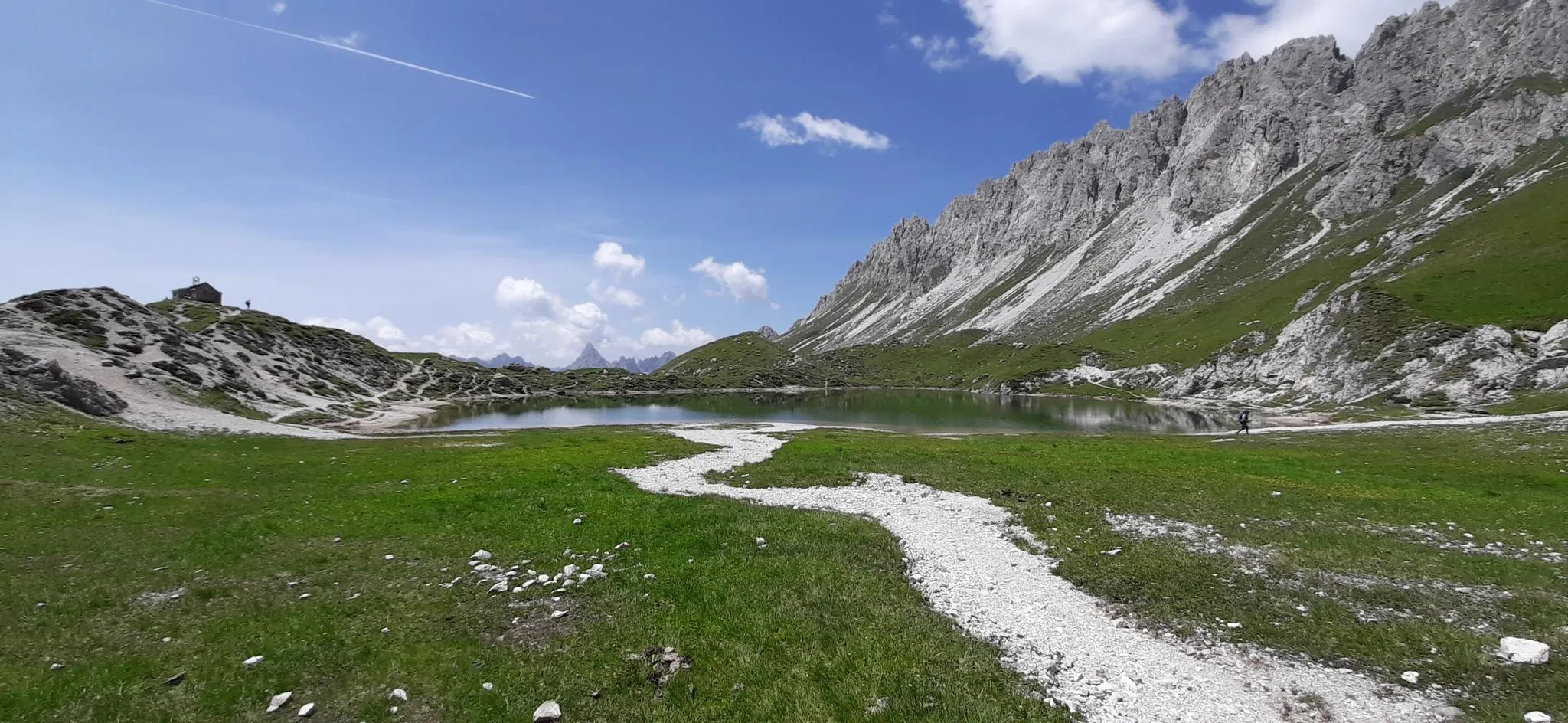
- Visitors also love Olbe Lakes, an enchanting alpine scenery with emerald waters and grassy basins. These three lakes of glacial origin are set against the backdrop of the Iron Ridge, offering an extraordinary environment.
- Vigo Di Cadore is known for its diverse natural monuments, including alpine lakes, mountain passes, and distinctive rock formations. The region offers a variety of natural sights to explore, from tranquil waters to challenging mountain terrain.
- The natural monuments around Vigo Di Cadore are appreciated by the komoot community, with 60 upvotes and 52 photos shared across the highlights.
Last updated: June 1, 2026
Giuliano Perugini Bivouac and the Campanile of Val Montanaia
Highlight • Mountain Hut
Translated by Google •
Tip by

Tose Lake
Highlight • Lake
Translated by Google •
Tip by

Sign up now to discover places like this
Get recommendations on the best single tracks, peaks, & plenty of other exciting outdoor places.
Sign up for free
Olbe Lakes
Highlight • Lake
I recommend climbing Mount Lastroni, a mountain rich in history, marked by the continuous presence of war evidence. The path leading to the mountain is a paradise for trail running, both uphill and downhill.
The whole area was the Italian defensive line during the First World War. It is said that, after the defeat at Caporetto, to prevent a howitzer installed in the area from ending up in Austrian hands, it was thrown to the bottom of the largest lake. Dives in the 1970s brought various materials to the surface, but to date there is no trace of the howitzer.
Translated by Google •
Tip by

Campanile of Val Montanaia
Highlight • Natural Monument
Translated by Google •
Tip by
Forcella Scodavacca
Highlight • Mountain Pass
To reach it, from both sides, requires a long but rewarding climb up a narrow path that turns to gravel towards the top. You can run to the base of the Cridola peak, but to reach the summit the route becomes very technical.
Translated by Google •
Tip by
Sign up for free to discover even more natural monuments around Vigo Di Cadore.
Sign up for free
Already have an account?
Start today with a free account
Your next adventure awaits.
Login or Signup
Popular around Vigo Di Cadore


Other adventures around Vigo Di Cadore

Tips from the Community

The bivouac and adjacent meadow are often crowded. Useful as a base for early climbing excursions.
1
0

Small church dedicated to the owners of the old refuge of the Laghi d'Olbe now completely destroyed. Open 24 hours a day, it offers an excellent shelter on days with the coldest temperatures and some interesting photographic perspectives for the most passionate.
0
0

Lago delle Tose is a small body of water known since Roman times for the thermal characteristics and benefits of its waters. It is located in Lagole, an area of considerable archaeological and naturalistic interest near Lago di Centro Cadore. The water that flows between the rocks of the clearing forms streams and waterfalls that culminate in a natural pool. This entire area was part of a religious complex linked to the cult of mineral waters, already frequented in Roman times to perform the abduction of the body. In some places, in addition to the ferruginous color, it is also possible to smell the typical smell of sulfur. A little further south are the Lagole springs, small pools from which water with beneficial properties flows. In the Venetian dialect "tose" means "girls". But the legend from which this small and precious lake takes its name is anything but happy. It is said that a long time ago the girls of the place immersed themselves in its waters to preserve eternal youth. Their beauty aroused the envy of the Anguane, creatures similar to a nymph. One day the Anguane witches attacked the girls while their men were hunting. They beat them to death, including the beautiful Bianca, daughter of the village chief. When the men realized what had happened, they decided in desperation to carry the bodies to the mountain. The God of the lake, as a sign of compassion for the "tose", transformed every drop of blood that fell to the ground into small pink and fragrant flowers, then turned the men into stone so that no one could disturb Bianca's sleep. The Anguane took refuge in the caves but could not escape the vengeance of the God, who poisoned the water, killing them. The valley fell into an unreal silence and an instant later the water regained its beneficial powers.
1
0

Forcella Scodavacca, 2050 meters above sea level, its width and length make it peculiar compared to many other forks. It is the typical Dolomite fork.
0
1

The Scodavacca fork is the archetype of the forks and the symbol of the Forni Dolomites. Large and panoramic, it is located at an altitude of 2,043 meters and connects Carnia to Cadore. On its sides, the pass is dominated by the boldest spiers, including the Berti tower and the famous Spinotti tower, as well as Mount Cridola, the highest peak in the area. To reach it, from both sides, requires a long but rewarding climb up a narrow path that turns to gravel towards the top. You can run to the base of the Cridola peak, but to reach the summit the route becomes very technical.
2
0
The Olbe lakes are located in an enchanting Alpine setting, surrounded by emerald waters and grassy basins. The backdrop provided by the long Ferro ridge adds a superlative touch to this already extraordinary environment. Thin tracks on open ground connect the three lakes of glacial origin. I recommend climbing Mount Lastroni, a mountain rich in history, marked by the continuous presence of war evidence. The path leading to the mountain is a paradise for trail running, both uphill and downhill. The whole area was the Italian defensive line during the First World War. It is said that, after the defeat at Caporetto, to prevent a howitzer installed in the area from ending up in Austrian hands, it was thrown to the bottom of the largest lake. Dives in the 1970s brought various materials to the surface, but to date there is no trace of the howitzer.
1
0

From this col you can climb to the Cridola summit, but this is already an easy climb with a lot of loose rock.
1
0

The Bivouac Giuliano Perugini is a classic barrel bivouac. It rises at an altitude of 2,060 m, in the upper Val Montanaia, on a grassy hillock not far from the bell tower.
2
0
Frequently Asked Questions
What types of natural features can I explore around Vigo di Cadore?
The area around Vigo di Cadore, part of the Dolomites UNESCO World Heritage site, offers a rich variety of natural features. You can discover dramatic peaks, lush valleys, and diverse ecosystems. Specific natural monuments include alpine lakes like Tose Lake and Olbe Lakes, distinctive rock formations such as the Campanile of Val Montanaia, and mountain passes like Forcella Scodavacca. The region also features extensive pasturelands, alpine forests, and areas known for stargazing like Casera Razzo.
Are there family-friendly natural monuments or trails near Vigo di Cadore?
Yes, Tose Lake is considered family-friendly. This small body of water in Lagole is known for its beneficial waters and features streams and waterfalls culminating in a natural pool. It's an area of considerable naturalistic interest that can be enjoyed by families.
What outdoor activities can I do near the natural monuments around Vigo di Cadore?
The natural surroundings of Vigo di Cadore are ideal for various outdoor activities. You can enjoy hiking, mountain biking, and mountaineering amidst the dramatic geological formations and alpine landscapes. For specific routes, you can explore options like the Dolomites High Route No. 6 for hiking, or various cycling tours such as Pedaling Among Larches and Firs.
What is the best time to visit Vigo di Cadore for exploring its natural monuments?
The best time to visit Vigo di Cadore for exploring its natural monuments and engaging in outdoor activities is generally from late spring through early autumn (May to October). During these months, the weather is more favorable for hiking, cycling, and enjoying the alpine scenery. Winter offers opportunities for snow-based activities, but access to some higher-altitude natural monuments might be limited due to snow and ice.
Are there any natural monuments with historical significance near Vigo di Cadore?
Yes, several natural areas around Vigo di Cadore also hold historical significance. Tose Lake in Lagole was part of a religious complex linked to the cult of mineral waters, frequented since Roman times. Additionally, mountains like Monte Tudaio and Col Ciampon feature old military positions from the Great War, offering both panoramic views and a glimpse into the past.
Where can I find stunning panoramic views of the Dolomites near Vigo di Cadore?
For stunning panoramic views, consider visiting Forcella Scodavacca, a large and panoramic mountain pass at 2,043 meters that connects Carnia to Cadore. The area around Giaf Hut also offers a quintessential Dolomite landscape with jagged peaks and bold towers. Monte Tudaio and Col Ciampon are other excellent spots for breathtaking vistas.
What is the Giuliano Perugini Bivouac and the Campanile of Val Montanaia?
The Giuliano Perugini Bivouac is a classic barrel bivouac located at an altitude of 2,060 m in the upper Val Montanaia. It sits on a grassy hillock not far from the iconic Campanile of Val Montanaia, which is a symbolic peak of the Friulian Dolomites Park. The bivouac offers basic shelter for mountaineers and provides access to challenging climbs and stunning views.
What makes the Olbe Lakes a unique natural monument?
The Olbe Lakes offer an enchanting alpine scenery with emerald waters and grassy basins. These three lakes are of glacial origin and are set against the backdrop of the long Iron Ridge, creating an extraordinary environment. The area also has historical significance, having been part of the Italian defense line during the First World War.
Are there any national parks or protected areas near Vigo di Cadore?
Yes, Vigo di Cadore is located in the Belluno province, which is home to the Belluno Dolomites National Park. This park is characterized by rugged terrain, deep valleys, and a rich diversity of flora and fauna, including chamois, deer, roe deer, and occasionally bears and wolves. Additionally, the Friulian Dolomites Natural Park is accessible from areas near Vigo di Cadore, offering a wild and unspoiled part of the Dolomites.
Can I find places for stargazing near Vigo di Cadore's natural monuments?
Yes, Casera Razzo is particularly favored by stargazers due to its unspoiled environment and lack of light pollution. This upland area offers exceptional views of the night sky, making it an ideal spot for astronomical observation.
What are some challenging natural monuments or trails for experienced hikers?
For experienced hikers, the ascent to Forcella Scodavacca involves a long but rewarding climb on a narrow path that turns to gravel. The route to the Campanile of Val Montanaia is also considered challenging, often taking several hours from the nearest refuge. These areas offer technical terrain and significant elevation changes.
What is the significance of the Dolomites as a UNESCO World Heritage site?
The Dolomites, including the area around Vigo di Cadore, are recognized as a UNESCO World Heritage site for their unique geological and geomorphological features, as well as their exceptional natural beauty. The dramatic vertical walls, sheer cliffs, and deep valleys create a landscape of extraordinary aesthetic value, showcasing a range of landforms created by glacial erosion and tectonic forces.
Most popular routes around Vigo Di Cadore
Most popular attractions around Vigo Di Cadore

Get inspired with the komoot mobile app


Explore more
Extend your search for the best caves by checking out these guides of the top ones around Vigo Di Cadore:
