Top 20 Mountain Passes around Hospental
Best mountain passes around Hospental are located in the Swiss Alps, offering access to significant alpine routes. This region serves as a starting point for exploring passes known for their historical importance and diverse recreational opportunities. The area features a blend of natural beauty and cultural heritage.
Best mountain passes around Hospental
- The most popular mountain pass is Oberalp Pass, a mountain pass at 2,044 meters. It features the only lighthouse in the Alps and a popular pass sign…
Last updated: September 29, 2026
Oberalp Pass
Highlight • Mountain Pass
Translated by Google •
Tip by

Guex Monument at Gotthard Pass
Highlight • Monument
Translated by Google •
Tip by
Sign up now to discover places like this
Get recommendations on the best single tracks, peaks, & plenty of other exciting outdoor places.
Hairpin Turns on the Oberalp Pass
Highlight (Segment) • Mountain Pass
Translated by Google •
Tip by

Gotthard Pass
Highlight • Mountain Pass
Translated by Google •
Tip by

Furka Pass
Highlight • Mountain Pass
Translated by Google •
Tip by

Sign up for free to discover even more mountain passes around Hospental.
Already have an account?
Start today with a free account
Your next adventure awaits.

Other adventures around Hospental

Tips from the Community

The Gotthard Pass is one of Switzerland's most famous and historic Alpine passes. Located at an altitude of 2,106 meters above sea level in the Lepontine Alps, it connects Central Europe to Southern Europe. Specifically, it serves as a direct road link between the Canton of Ticino (Airolo) and the Canton of Uri (Hospental). The summit and the massif can be crossed in various ways depending on travel needs: The New Pass Road: This is the modern, paved road variant, scenic and smooth during the summer months. La Tremola: The famous historic southern slope, characterized by 24 hairpin bends paved with porphyry, much loved by cyclists, motorcyclists, and nostalgics. The Road Tunnel (A2): The 16.9 km long motorway tunnel, open all year round, fast but often subject to traffic and queues. The Railway Tunnels: Including the pioneering tunnel from 1882 and the modern Gotthard Base Tunnel, at very high speed.
2
0

The Furka Pass is a 2,429 m high Swiss road pass in the Alps. It connects the Urseren Valley (the upper valley of the Reuss River) in the canton of Uri with the Goms district in the canton of Valais. It straddles the European watershed between the Mediterranean Sea and the North Sea. Source: Furka Pass – Wikipedia https://share.google/zJGI3KsPRtARfpYje
6
0

St. Gotthard Pass The Gotthard Pass divides waterways and connects various cultural and linguistic areas. Its significance as an "Alpine transversal" began at the beginning of the 13th century with the construction of the legendary Devil's Bridge in the Schöllenen Gorge. For many centuries, trade caravans (trading cattle and cheese for grain, wine, rice, and salt), mercenaries, messengers, and even entire armies crossed the pass. Between 1818 and 1836, the canton of Uri, with the help of other cantons, expanded the pass road, thus achieving its predominance among Swiss Alpine passes. The Gotthard Pass has significantly shaped the economy and culture of Central Switzerland for centuries. Until the opening of the Gotthard Railway in 1882, the Gotthard Pass was also used in winter. Dozens of roadmen and shovel workers were employed for this purpose. In 1922, the post bus replaced the stagecoach, and with the introduction of gasoline duties in 1923, the expansion of the pass roads began, continuing to this day. The old pass road on the south side, the Tremola between the top of the pass and Airolo, is still preserved and passable. This stretch of road recalls more tranquil journeys over the Gotthard that occurred not so long ago. In the 19th and 20th centuries, the Gotthard Pass was "condensed" into a myth, a symbol of Switzerland's independence, unity, and identity. Text / Source: Interest Group for Alpine Passes IAP, PO Box 11, 6491 Realp https://alpen-paesse.ch/de/alpenpaesse/gotthardpass
15
1

In summer, arrival by post bus from Andermatt or Airolo is possible.
2
0

The Furka Pass, at 2,429 metres high, connects the Urseren Valley in the canton of Uri with the Valais. On the ridge, you not only cross the cantonal border, but also the North Sea-Mediterranean watershed.
4
1
At the Oberalp Pass at 2,044 meters, not only is the obligatory "passport photo" waiting at the Oberalp Pass sign, but also the only lighthouse in the Alps. It comes from Rotterdam, where the original lighthouse can be found in the Maritime Museum, which once stood in Hoek van Holland, at the mouth of the Rhine into the North Sea - thus completing the circle from the source to the mouth.
5
0

A must-see for every road cyclist! Featuring arguably the most famous cobblestone road in the Alps...
2
0

The Oberalp pass connects the cantons of Uri and Grisons. The pass, which is located at 2,046 meters above sea level, has been open to vehicles since the mid-19th century.
1
0
Frequently Asked Questions
What historical sites can I explore around the mountain passes near Hospental?
The region is rich in history. The Guex Monument at Gotthard Pass marks a historically significant alpine route, connecting different cultural and linguistic areas. The pass itself has been crucial since the 13th century for pilgrims and trade. You can also visit the Old Hospice of St. Gotthard, which dates back to 1237 and has hosted travelers for centuries.
Are there family-friendly activities or passes suitable for children near Hospental?
Yes, several passes offer family-friendly experiences. The Oberalp Pass is noted as family-friendly and features the unique alpine lighthouse, which can be an interesting sight for kids. The Gotthard Pass also has areas suitable for families to explore its historical significance and natural beauty.
What unique natural features or viewpoints can I find on these mountain passes?
The mountain passes around Hospental offer stunning natural features. The Oberalp Pass is home to the only lighthouse in the Alps, a replica of one that stood at the mouth of the Rhine. The Gotthard Pass features the Piazza lake and is a famous weather divide between north and south. The Furka Pass, while historically known for views of the Rhône Glacier, still offers dramatic scenery and crosses the North Sea-Mediterranean watershed.
What outdoor activities, besides driving, can I do near the mountain passes?
The region around Hospental is excellent for various outdoor activities. You can find numerous routes for gravel biking, such as the 'Gotthard, Furka and Nufenen Passes' tour, or MTB trails like the 'Heuplangge Valley Trail'. For road cycling, popular routes include 'The Starter Triple: Furka – Nufenen – Gotthard'. Explore more options on the Gravel biking around Hospental, MTB Trails around Hospental, and Road Cycling Routes around Hospental guide pages.
Are there specific hiking trails recommended on or near the mountain passes?
Yes, there are many hiking opportunities. A popular trail leads from Gotthard Pass to Hospental, offering views of snowy summits and alpine meadows. The Urschner Höhenweg, a magnificent scenic route, starts from Tiefenbach on the Furka Pass road. You can also find routes like the 'View of the Lucendro Dam – Lake Lucendro loop from Passo del San Gottardo' for hiking. For more details, check the Gravel biking around Hospental guide, which includes some hiking-suitable routes.
What is the best time of year to visit the mountain passes around Hospental?
The mountain passes are generally best visited from late spring to early autumn (typically June to October) when they are clear of snow and fully accessible. This period offers the most favorable weather conditions for driving, cycling, and hiking, allowing you to fully enjoy the breathtaking views and outdoor activities.
What makes the Furka Pass a popular destination?
The Furka Pass is renowned for its dramatic scenery and exhilarating drives, famously featured in the James Bond film 'Goldfinger'. It connects the Urseren Valley in Uri with Valais and is a popular destination for hikers, cyclists, and drivers alike, offering winding roads and stunning views from its 2,429-meter height.
Where can I experience challenging hairpin turns on a mountain pass near Hospental?
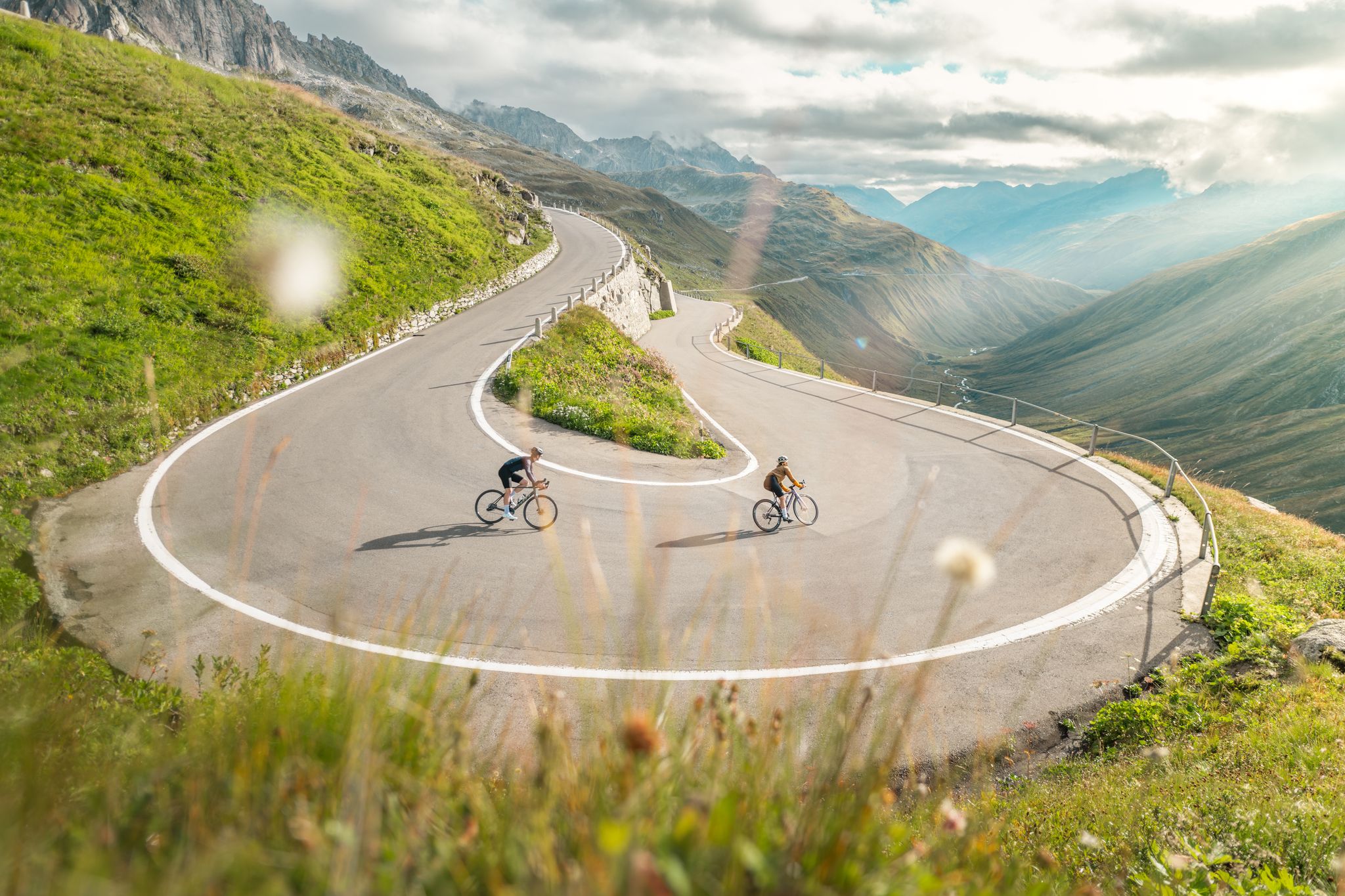
For an exciting driving or cycling experience with challenging turns, the Hairpin Turns on the Oberalp Pass are highly recommended. The descent from Oberalp Pass offers exhilarating hairpin bends, especially just before Andermatt, combined with breathtaking views.
What do visitors particularly enjoy about the Gotthard Pass?
Visitors to the Gotthard Pass often highlight its unique atmosphere and the joy of the climb, especially the infamous Tremola. The pass offers beautiful landscapes, great views, and a sense of historical significance. Many enjoy the experience of reaching the summit and taking photos amidst the stunning surroundings, often finding it quite addictive for cyclists.
Are there any facilities or accommodation options directly on the mountain passes?
Yes, on the Gotthard Pass, you can find the Old Hospice of St. Gotthard, which provides comfortable accommodation in single, double, and multi-bed rooms, along with a fantastic view. It also includes facilities like a restaurant. The Furka Pass also has the Hotel Furkablick nearby, though it's noted for its charming, slowly decaying state.
How can I access the mountain passes using public transport?
Hospental serves as an excellent starting point, and many passes are accessible by public transport during the open season. For instance, there is a bus stop near the Hotel Furkablick on the Furka Pass. Swiss public transport (PostBus) typically serves these high mountain passes, making them accessible even without a private vehicle.
Most popular routes around Hospental
Most popular attractions around Hospental

Get inspired with the komoot mobile app


Explore more
See even more epic mountain passes by checking out these guides around Hospental:
