Top 5 Caves around Arnschwang
Best caves around Arnschwang include unique subterranean structures known as Schrazellöcher or Erdställe. These ancient, man-made passages and chambers are considered archaeological ground monuments, characterized by narrow entrance shafts leading to larger chambers. Historically, they served as places of refuge and storage during conflicts, with some theories suggesting earlier uses as burial sites. The region's geological features also include natural rock formations and historical rock cellars.
Best caves around Arnschwang
- The most popular caves is Ascent to the Räuber-Heigl Cave…
Last updated: November 12, 2026
Ascent to the Räuber-Heigl Cave
Highlight (Segment) • Climb
Translated by Google •
Tip by

Rock Cellars of Furth im Wald
Highlight • Cave
Translated by Google •
Tip by

Sign up now to discover places like this
Get recommendations on the best single tracks, peaks, & plenty of other exciting outdoor places.
Darstein Chapel
Highlight • Religious Site
Translated by Google •
Tip by

Entrance to the Furth Felsengänge (rock passages)
Highlight • Cave
Translated by Google •
Tip by

Steinernes Häusl Cave
Highlight • Cave
Translated by Google •
Tip by

Start today with a free account
Your next adventure awaits.
Other adventures around Arnschwang

Tips from the Community

The Further Felsengänge (Further Rock Passages) are truly something special. The entrance is somewhat inconspicuous, but what lies behind, or rather beneath, is truly amazing! Adult admission: €5
1
0
The Further Felsengänge (Further Rock Passages) are truly something special! The entrance is somewhat inconspicuous, but what lies behind it is absolutely stunning! So be sure to check it out. Adult admission: €5
1
0

Exciting tour lasting around an hour with lots of impressions and stories about the Further rock passages. The 10km long tunnel system was dug from the Middle Ages onwards and gradually expanded. You get information about the air raid shelters, knights, the earthman Karl-Heinz and the different uses. Interesting for young and old!
1
0

Highly recommended, keep your head down or you can also put on a helmet hanging at the entrance, especially the air raid shelter...
1
0

A labyrinth several kilometers long stretches beneath the dragon-biting town of Furth im Wald. The rock passages have been carved into the gneiss since the late Middle Ages and served, among other things, as beer cellars, hiding places, air raid shelters, winter quarters for bats and, of course, as a habitat for all kinds of spirits and ghosts. [bayerischer-wald.de/attraction]
2
0

Nice path along mossy rocks
3
0

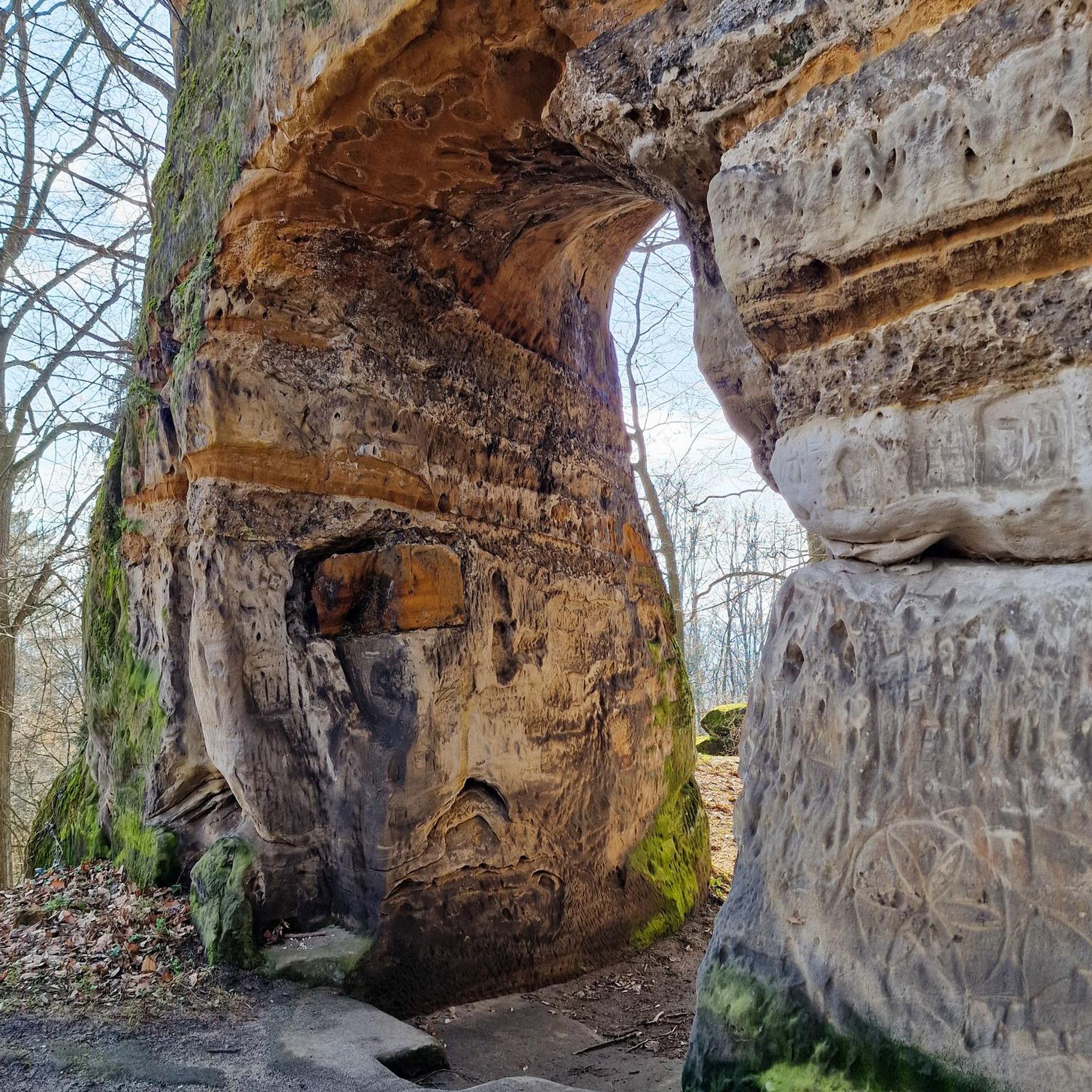
The Steinernen Häusl is a small cave at the southern foot of the Kreuzfelsens on the Kleinen Roßberg
2
0

Sturdy shoes, warm clothes. 8 degrees all year round in the corridors. But definitely worth a trip! €4.50 per person, guided tour possible
1
0
Frequently Asked Questions
What are the unique 'caves' found around Arnschwang?
Arnschwang is primarily known for its unique 'Schrazellöcher' or Erdställe. These are ancient, man-made underground passages and chambers, considered archaeological ground monuments. They feature narrow entrance shafts leading to larger main chambers and interconnected side passages, believed to have served as refuges and storage during historical conflicts.
What is the historical significance of the Schrazellöcher in Arnschwang?
The Schrazellöcher are deeply rooted in the region's history, believed to have been used as places of refuge and storage during conflicts like the Hussite Wars and the Thirty Years' War. Some theories also suggest they might have originated as burial sites or cultic places in prehistoric times. The mystery surrounding these structures, along with local legends, adds to their allure.
Are there any natural caves near Arnschwang?
While Arnschwang is distinctive for its man-made Schrazellöcher, the broader East Bavaria region does feature various natural caves, including dripstone caves. One natural monument in the immediate vicinity is the Steinernes Häusl Cave, a small natural cave at the southern foot of the Kreuzfelsens.
What can visitors expect when exploring the Rock Cellars of Furth im Wald?
The Rock Cellars of Furth im Wald offer a labyrinth several kilometers long, carved into gneiss since the late Middle Ages. Visitors should expect cool temperatures of around 8 degrees Celsius year-round, so warm clothes are recommended. Sturdy shoes are also essential for navigating the passages. These cellars served various purposes, including beer storage, hiding places, and air-raid shelters.
Is the Ascent to the Räuber-Heigl Cave suitable for everyone?
The Ascent to the Räuber-Heigl Cave involves a rocky path. While it's generally manageable, good, sturdy shoes are highly recommended for the climb to ensure a safe and comfortable experience.
Are there family-friendly options for exploring caves in the area?
Yes, the Entrance to the Furth Felsengänge (rock passages) offers an exciting, family-friendly tour lasting about an hour. It provides insights into the 10km long tunnel system, its historical uses, and local legends, making it interesting for both children and adults.
What should I wear when visiting the Rock Cellars of Furth im Wald?
When visiting the Rock Cellars of Furth im Wald, it is advisable to wear sturdy shoes and warm clothes. The temperatures inside the passages remain around 8 degrees Celsius throughout the year, regardless of the season outside.
Are there hiking opportunities near the caves around Arnschwang?
Yes, the area around Arnschwang offers various hiking opportunities. For instance, you can find mountain hikes that include the Ascent to the Räuber-Heigl Cave. You can explore routes like the 'Cross rocks – Ascent to the Räuber-Heigl Cave loop from Reitenberg' on the Mountain Hikes around Arnschwang guide.
What other outdoor activities can I do near Arnschwang's caves?
Beyond exploring caves, Arnschwang offers excellent cycling opportunities. You can find various routes for touring bicycles and road cycling. For example, the Cycling around Arnschwang guide features routes like the 'Dragon Lake – Furth im Wald Town Hall loop'. For road cycling, check the Road Cycling Routes around Arnschwang guide.
What are the general accessibility considerations for the caves in Arnschwang?
Accessibility varies by site. For the Ascent to the Räuber-Heigl Cave, a rocky path requires good shoes. The Rock Cellars of Furth im Wald and Furth Felsengänge involve underground passages, some of which may require visitors to keep their heads down due to lower ceilings. The Schrazellöcher, being ancient and often narrow, might have limited public access.
Can I visit the Schrazellöcher in Arnschwang?
While the Schrazellöcher are a significant historical feature of Arnschwang, many are archaeological ground monuments and may not be publicly accessible for general exploration. Some, like those beneath the former horse changing station (now a bicycle museum), might offer specific viewing opportunities or guided tours. It's best to check with local tourism information for current access details.
What geological features are present in the caves around Arnschwang?
The region's 'caves' showcase diverse geological features. The man-made Rock Cellars of Furth im Wald are carved into gneiss. The Steinernes Häusl Cave is a natural monument, offering a glimpse into the area's natural rock formations. While Arnschwang itself is known for its unique Erdställe, the broader East Bavaria region also features natural dripstone caves.
Most popular routes around Arnschwang
Most popular attractions around Arnschwang

Get inspired with the komoot mobile app


Explore more
Extend your search for the best caves by checking out these guides of the top ones around Arnschwang:
