Top 9 Castles around Quart
Best castles around Quart, a comune in the Aosta Valley region of Italy, offers a rich collection of medieval castles. The area is known for its historical sites, including the prominent Quart Castle. Visitors can explore various fortifications that showcase the region's architectural and historical evolution. The surrounding Aosta Valley provides a diverse landscape for historical exploration.
Best castles around Quart
- The most popular castles is Sant Miquel Castle, a castle that offers privileged views of the city of…
Last updated: November 18, 2026
Sant Miquel Castle
Highlight • Castle
Translated by Google •
Tip by

Vulpellac Historic Centre
Highlight • Historical Site
Translated by Google •
Tip by

Sign up now to discover places like this
Get recommendations on the best single tracks, peaks, & plenty of other exciting outdoor places.
Castell de Palagret
Highlight • Castle
Translated by Google •
Tip by

Juià Castle
Highlight • Castle
The castle, of which only a few walls remain, was part of a series of fortresses …
Translated by Google •
Tip by
Vilobí d'Onyar
Highlight • Settlement
Translated by Google •
Tip by

Sign up for free to discover even more castles around Quart.
Already have an account?
Start today with a free account
Your next adventure awaits.

Tips from the Community

History of Sant Miquel Castle Currently, Sant Miquel Castle belongs to the municipality of Girona, but until 1974 it belonged to the municipality of Celrà. The architectural complex is located on the top of Puig del Castellar, at 394 meters above sea level. From its strategic location you can see the Valley of Sant Daniel, the town of Celrà, the plain of Empordà and the city of Girona. The complex, made up of a section of wall, a watchtower and a hermitage, dates back to medieval times.
0
1

The castle of Palagret or Mabarrera is in the middle of the Palagret valley, at the top of a small hill, 178 m high, in the northernmost foothills of the Gavarres massif to the south-east of the Celrà center and to the south- west of Juià. Strategically located to control the Roman-era road that allowed access to Girona from the Baix Empordà through the Gavarres. Important medieval vestiges of the licorella walls of a rectangular construction as well as pre-Romanesque elements are preserved from the castle. The preserved remains could be dated to the 10th and 11th centuries,[1] and its last occupants left the premises between the end of the 15th century and the beginning of the 16th.[2] It is a building in Celrà (Gironès) declared a cultural asset of national interest.
0
0

Vilobí d'Onyar is a Spanish municipality in the Selva region, in the province of Gerona, Catalonia, located in the east of the region and on the border with Gironés. In addition to the municipal capital, it includes the cores of Salitja and Sant Dalmai. https://es.m.wikipedia.org/wiki/Vilov%C3%AD_de_O%C3%B1ar
17
0

It is possibly the best known and practiced route in Girona. I recommend it to everyone. Doing this route at night is also spectacular.
2
2

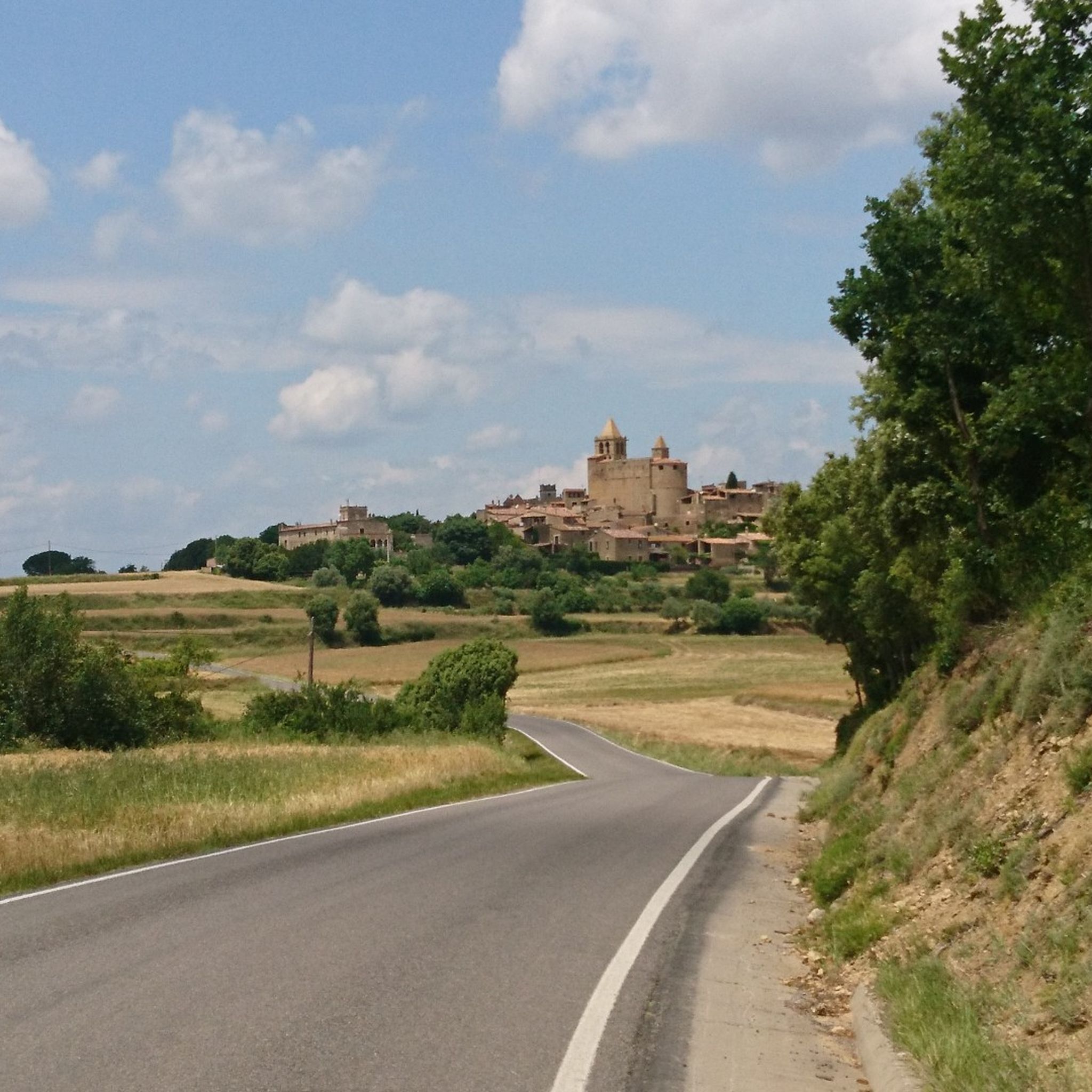
The name of Vulpellac appears for the first time in the records in the year 894, although its importance would be given centuries later (13th and 14th centuries), thanks to the importance of the lord of Vulpellac, Guillem Sarriera. It is during this period that the castle is reformed, turning it into a luxurious palace. The castle and the church of Sant Julià i Santa Basilissa constitute the original nucleus of the town, and houses were added around it, surrounded by a fortified wall. The streets outside the walls were built in the 17th and 18th centuries, and have a good number of unique buildings in the late Gothic and Renaissance styles.
0
0

Ascent with steep gradients, especially when passing the Girona variant until connecting with the path that goes up to Sant Miquel through the Vall de Sant Daniel.
3
0

The architectural complex is made up of the old hermitage dedicated to Santa Maria and Sant Miquel, built on top of the previous medieval fortification, from which the bases of a circular tower through the apse are used. It seems that the hermitage was occupied by hermits between the s. XVI and XVIII, although the documentation records the start of construction in the s. XV The location took on military importance during the French war (1808-1814), especially due to the sieges of Girona (1808-1809), where the domain of the castle alternated several times between the Napoleonic army and the Miquelets. After the war, the hermitage was already demolished. The other architectural element is the telegraph tower, erected during the second Carline war (1846-1849) to house the civil optical telegraph line, while the military line was located in the hermitage tower.
2
1

Architectural complex formed by a hermitage practically in ruins and an optical telegraphy tower. It is located at the top of Mount Sant Miquel at the foot of the municipalities of Girona and Celrà (the Gironès). Its 395 meters above sea level allows control over large areas of the territory.
1
1
Frequently Asked Questions
What is Quart Castle and why should I visit it?
Quart Castle is a historic fortress near the village of Quart, approximately 9 kilometers northeast of Aosta. Originally built in 1185, it features large defensive walls, towers, and a well-preserved keep. It offers commanding and panoramic views of the surrounding Aosta Valley and the majestic Alps. While the interior is generally not open for regular visits, its peaceful setting and historical atmosphere make it a fascinating experience for those interested in history and architecture.
What other notable castles are near Quart in the Aosta Valley?
The Aosta Valley is rich with impressive castles. Beyond Quart Castle, you can explore Fénis Castle, known for its distinctive architecture and well-preserved interiors; Issogne Castle, a beautifully restored Renaissance manor with rich frescoes; Sarre Castle, the hunting residence of the House of Savoy; Verrès Castle, an impressive single-block defensive structure; and Aymavilles Castle, recognizable by its elegant structure with four cylindrical corner towers.
Are there family-friendly castles to visit in the Aosta Valley near Quart?
Many castles in the Aosta Valley offer engaging experiences for families. Fénis Castle, for example, provides guided tours that allow exploration of various rooms, giving a comprehensive look into medieval court life that can be educational and interesting for all ages. Issogne Castle, with its unique frescoes depicting daily life, can also captivate younger visitors.
What is the best time to visit the castles around Quart?
The best time to visit the castles around Quart and in the Aosta Valley is generally during the spring (April-June) and autumn (September-October) months. The weather is pleasant for exploring, and the natural scenery is particularly beautiful. Summer (July-August) is also popular, though it can be warmer and more crowded. Some castles may have reduced hours or be closed during the winter, so it's advisable to check specific opening times.
Can I find cafes or pubs near the castles in the Aosta Valley?
Yes, many of the more popular castles in the Aosta Valley, especially those that are major tourist attractions like Fénis Castle and Issogne Castle, often have cafes, gift shops, or restaurants nearby. In the villages and towns surrounding these castles, you'll also find local cafes, pubs, and trattorias where you can enjoy regional cuisine and refreshments.
Are there scenic viewpoints near the castles in the Aosta Valley?
Absolutely. Many castles, including Quart Castle itself, are strategically located on hills or cliffs, offering spectacular panoramic views of the Aosta Valley and the Alps. Aymavilles Castle, built on a moraine hill, also provides a magnificent vista of the entire valley. These locations are perfect for photography and enjoying the natural beauty of the region.
What kind of history can I explore at these castles?
The castles in the Aosta Valley offer a journey through centuries of history, from medieval fortifications to Renaissance residences. You can explore the defensive architecture of strongholds like Quart Castle and Verrès Castle, delve into medieval court life at Fénis Castle, admire the artistic evolution at Issogne Castle, and discover the royal history of the House of Savoy at Sarre Castle. Each castle tells a unique story of the region's past.
How far are the other notable castles from Quart?
The Aosta Valley is relatively compact, and many of its impressive castles are within a short driving distance of Quart. For instance, Fénis Castle and Issogne Castle are both easily accessible, typically within a 20-30 minute drive from Quart, making it convenient to visit multiple sites in a day. Sarre Castle and Aymavilles Castle are also close to Aosta, which is just a short drive from Quart.
Are there any castles that showcase unique architectural features?
Yes, several castles stand out for their unique architecture. Fénis Castle is renowned for its distinctive double circuit of crenellated walls and numerous watchtowers. Aymavilles Castle is easily recognizable by its original and elegant structure with four powerful cylindrical corner towers. Issogne Castle, while a former defensive structure, is celebrated for its transformation into a richly decorated Renaissance manor with Court Gothic wall paintings.
What makes Fénis Castle a must-visit attraction?
Fénis Castle is considered one of the most famous medieval castles in the Aosta Valley due to its exceptional preservation and distinctive architecture, including a double circuit of crenellated walls and numerous watchtowers. Its internal courtyard is particularly picturesque, and guided tours offer a comprehensive look into medieval court life, exploring areas like the armory, soldiers' refectory, kitchens, and noble rooms.
Can I visit these castles during winter?
Visiting castles in the Aosta Valley during winter can offer a unique, often snow-covered, picturesque experience. However, some castles may have reduced opening hours or be closed for the season, especially those that are less accessible or have outdoor-focused attractions. It's highly recommended to check the official websites or contact the castles directly for their specific winter operating schedules before planning your visit.
Are there options for public transport to reach the castles from Quart?
While a car offers the most flexibility for exploring the various castles scattered across the Aosta Valley, some castles are accessible via public transport, primarily buses, from larger towns like Aosta. From Quart, you would typically need to travel to Aosta first and then take a regional bus to the vicinity of the specific castle. Checking local bus schedules and routes for each castle is advisable, as direct connections might be limited.
Most popular attractions around Quart

Get inspired with the komoot mobile app


Explore more
Looking for the best castles somewhere else? Discover other guides around Quart:
