Top 2 Castles around Montesquiu
Best castles around Montesquiu are situated in the Osona region of Catalonia, Spain, offering a glimpse into a rich historical past. The area is characterized by its natural landscape, including the Ter River and Montesquiu Castle Park, providing a blend of cultural significance and outdoor exploration. These historical sites showcase architectural evolution from defensive watchtowers to fortified residences. Visitors can explore a variety of historical structures set within scenic surroundings.
Best castles around Montesquiu
- The most popular castles is Montesquiu Castle, a castle that evolved from a defensive watchtower to a grand manor. It showcases a blend of architectural styles and is the centerpiece of a natural park with extensive gardens.
- Another must-see spot is Besora Castle, a historical site with ruins and a Romanesque church. Visitors can explore its fragments of walls and enjoy 360º panoramic views from its elevated position.
- Visitors also love Castle of Torelló, a historical site known for its massive circular tower. It offers excellent defensive conditions and is clearly visible from the surrounding valleys.
- Montesquiu is known for medieval fortifications, ruined historical sites, and prominent towers. The region offers a variety of castles to see and explore, each with its own unique history and architectural features.
- The castles around Montesquiu are appreciated by the komoot community, with over 60 upvotes and 40 photos shared.
Last updated: June 6, 2026
Montesquiu Castle
Highlight • Castle
Translated by Google •
Tip by

Besora Castle
Highlight • Castle
Translated by Google •
Tip by

Sign up now to discover places like this
Get recommendations on the best single tracks, peaks, & plenty of other exciting outdoor places.
Sign up for free
Castle of Torelló
Highlight • Castle
It is clearly visible from the whole Torelló valley and also from the Ter valley, which runs along its western side, as its hill, 781 meters high, is the highest point of the small ridge that separates the lower course of the Ges valley, from the Ter valley. Seen from the side of Torelló, the hill seems lower because it is the backdrop of the Bellmunt mountain range, but if you approach it, you will notice the excellent conditions of defense that it had, and that they were being the main reason why, in very distant times, this place was chosen to build a castle.
It is a building declared a cultural asset of national interest.
Translated by Google •
Tip by

Castillo de Milany
Highlight • Castle
Translated by Google •
Tip by

Sant Salvador de Bellver Hermitage
Highlight • Religious Site
Sant Salvador de Bellver is a Romanesque church located at the north-eastern end of the municipality of Sant Boi de Lluçanès at the tip of a ridge that dominates the northern part of the Plana de Vic.
It is a church of large proportions, divided by two lateral arches and covered with a slightly pointed vault, which ends with a semicircular apse, covered with a quarter-sphere vault. The sobriety of the architectural lines and the volume of the construction, resolved with large blocks, in a homogeneous structure and without interruptions of any kind, lacking additions from later periods, make the beauty of the style stand out even more, which is shown in the exterior ornamentation of the apse, under the line of the cornice and in its windows. A sawtooth frieze is preserved in the apse and presents three series of nine blind arches separated by Lombard bands. Two windows also open, one in the east sector and the other in the south sector, both formed by arches in degradation. These windows form slits on the inside and folds outwards.
turisme.llucanes.cat/visiteu/esglesia-de-sant-salvador-de-bellver
ca.wikipedia.org/wiki/Sant_Salvador_de_Bellver
Translated by Google •
Tip by

Start today with a free account
Your next adventure awaits.
Login or Signup

Other adventures around Montesquiu

Tips from the Community

The ruins of the Besora castle and the Romanesque church of Santa María are located on a hill at more than 1000 meters above sea level. It is worth calmly exploring each of its corners and enjoying the beautiful views.
2
0


A few months ago I covered the route from the R 3 train station, from Farga de Bebié to Montesquiu Castle and back to Sant Quirze de Besora Pueblo de la Ratafía: It is approximately 5 km. It is worth it, it is a very beautiful route.
2
0

The Montesquiu castle, in the Osona region, is a beautiful example of a recently restored medieval fortification. Built, surely, during the 13th century, it formed a defensive triangle together with the castles of Besora and Saderra.
3
0

Fantastic castle that is worth visiting
2
0

It appears for the first time in documents from 1285, appearing as a fortified house that would later be called a castle. At first it was known as Colobrer castle and later, Montesquiu. Its origin is probably in the enclave where there was a guard tower that Count Guifré (el Pilós) ordered to be built in the 11th century. In the 14th century it was converted into a fortified residence and in the 16th century the castle was enlarged and fortified. However, it was not until the beginning of the 20th century that it was reformed to give it the appearance it has today.
0
0

Milany Castle is a castle on top of Milany. This is the Catalan castle built at a higher height, specifically at 1,529 meters.
2
0

All that remains of the castle are badly damaged fragments of walls. The only clearly visible remains are those of the castle's church, dedicated to Santa Maria, and which allow us to see that it was a construction of a nave topped to the east by a semicircular apse. The nave and the apse, preceded by a presbytery section, were covered by barrel vaults. As for the remains of the castle itself, you can see the remains of the closing wall in the northern area of the hill, around the area of access and entrance to the castle. In this same northern area, remains of several rooms of the castle appear. A possible cistern is also located in this sector. In the central part, there would be a pool, documented during the excavation work of the 2006-2010 campaigns. In the southern area, close to the precipice, there are also very eroded fragments of the closing wall. We enjoy a fantastic 360º panorama.
2
0
Frequently Asked Questions
What are the main castles to explore in the Montesquiu area?
The primary historical site is Montesquiu Castle, a beautifully restored medieval fortification with a history spanning over a thousand years. You can also explore the ruins of Besora Castle, which offers fantastic 360º panoramas, and the Castle of Torelló, known for its massive circular tower and excellent defensive position overlooking the Ter valley.
What is the history behind Montesquiu Castle?
Montesquiu Castle has a rich history, evolving from a 9th-century defensive watchtower commissioned by Count Wilfred the Hairy to a fortified residence in the 14th century. Significant modifications in the 17th century added a chapel, and its current grand appearance largely dates from extensive work between 1917 and 1920. Today, it's integrated into a natural park, with its upper floor serving as a resource center.
Are there other historical castle ruins worth visiting near Montesquiu?
Yes, beyond Montesquiu Castle, you can visit the ruins of Besora Castle, located on a hill at over 1000 meters above sea level, offering stunning views. Another notable ruin is the Castle of Torelló, a cultural asset of national interest, visible from the entire Torelló valley. For those seeking a more challenging adventure, Castillo de Milany is the highest-built castle in Catalonia, at 1,529 meters.
Can I combine a castle visit with outdoor activities or hiking in Montesquiu?
Absolutely. Montesquiu Castle is the centerpiece of the Montesquiu Castle Park, which features extensive gardens and forest areas perfect for walking. The surrounding region offers numerous routes for various outdoor sports. You can find many options for running, race biking, and touring bicycle rides around Montesquiu, including routes that pass by the castle or other historical sites. Explore these routes in the Running Trails around Montesquiu or Traffic-free bike rides around Montesquiu guides.
Are there easy walking routes to castles around Montesquiu?
Yes, there are options for easier walks. The Montesquiu Castle Park itself offers pleasant strolls around Montesquiu Castle. For a moderate walk that includes a castle, consider routes that incorporate the castle and the surrounding natural park. While some castle ruins like Besora Castle are at higher elevations, there are often varied paths available, so checking individual route descriptions on komoot is recommended for difficulty levels.
What kind of views can I expect from the castles in the Montesquiu region?
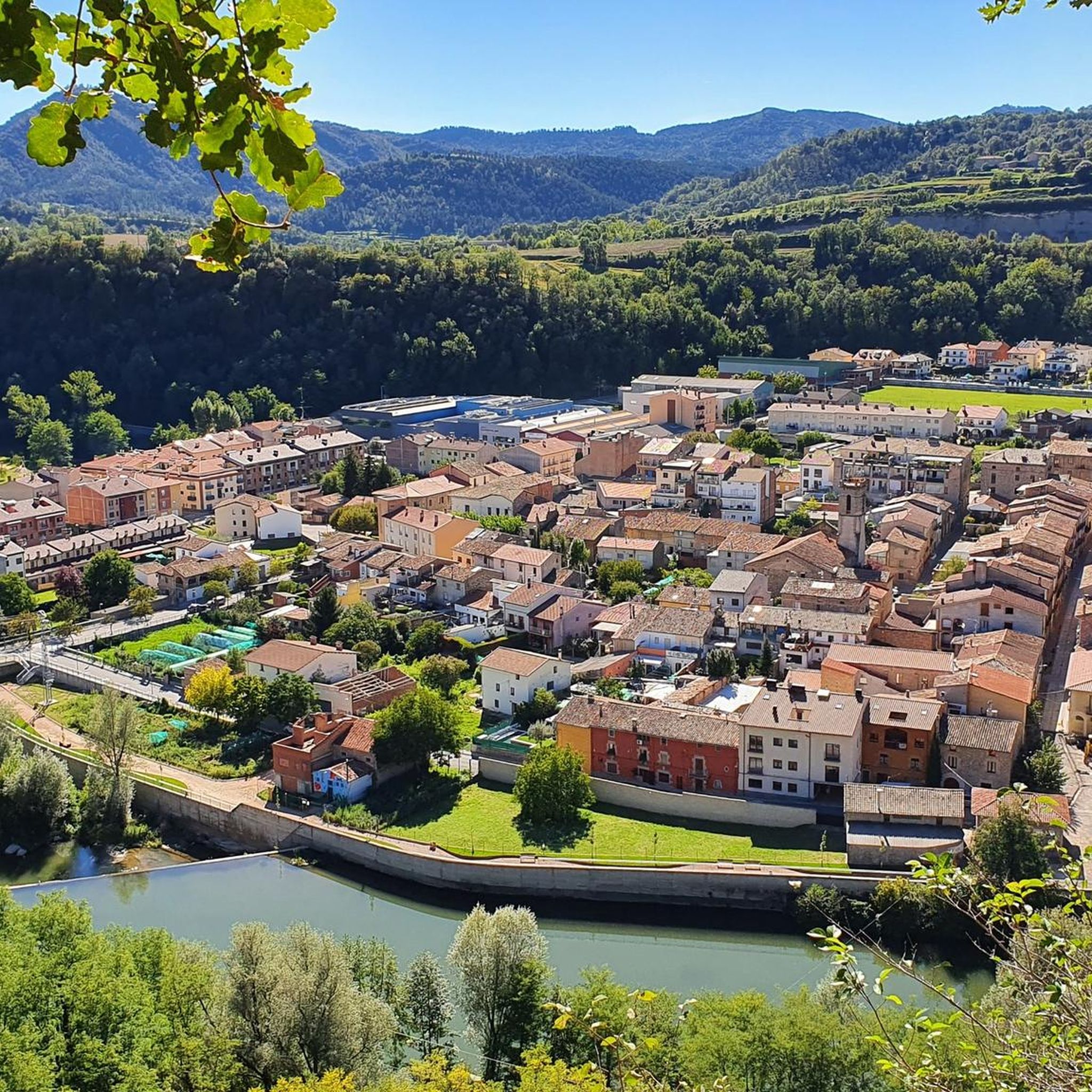
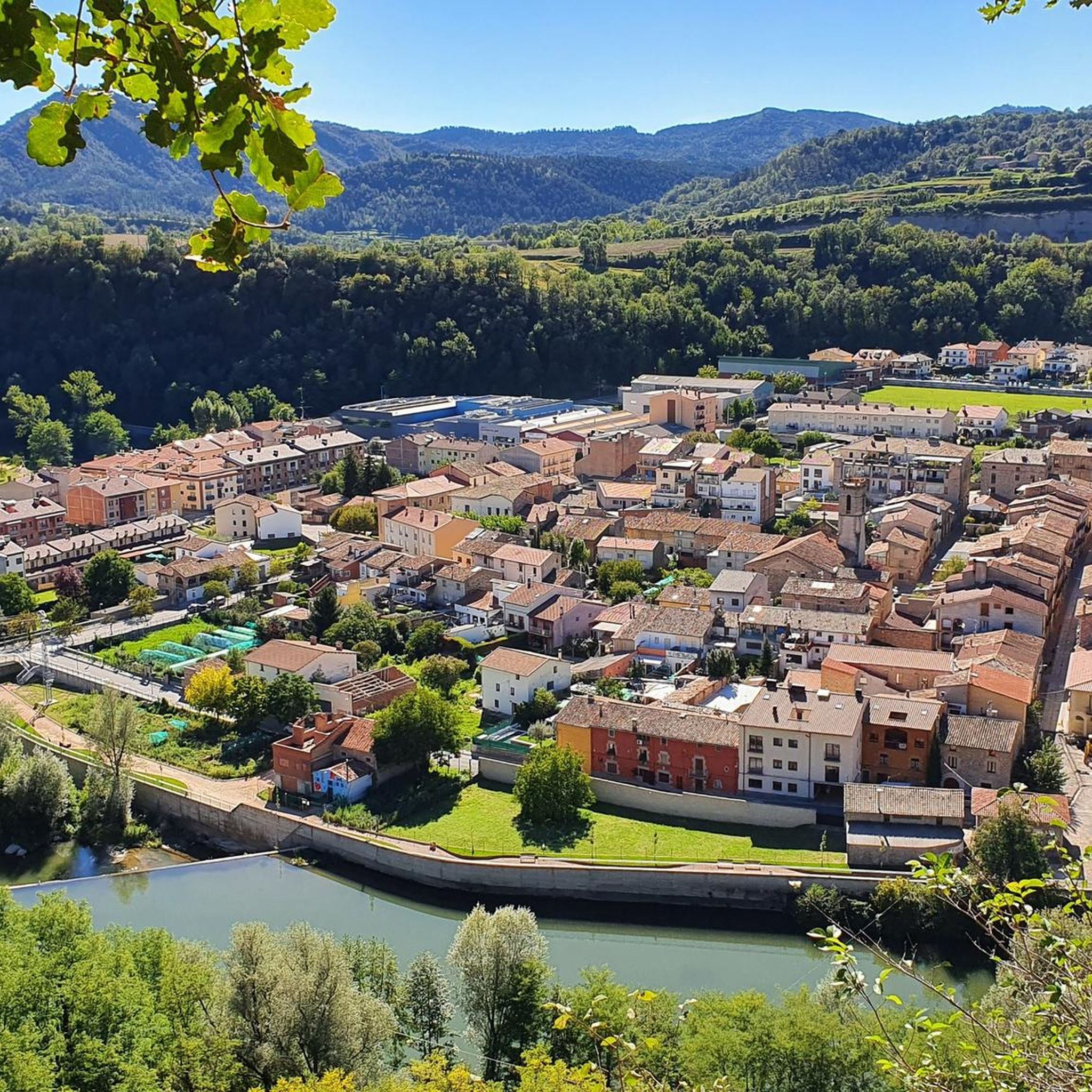
The castles in the Montesquiu region offer picturesque views of the surrounding landscape. From Montesquiu Castle, you can enjoy views of the village of Montesquiu and the Ter River. Besora Castle ruins provide a fantastic 360º panorama from its elevated position. Similarly, the Castle of Torelló offers clear views of the Torelló valley and the Ter valley, making them excellent spots for photography.
What is the best time of year to visit the castles around Montesquiu?
The Montesquiu region, being in Catalonia, generally enjoys pleasant weather for castle visits. Spring (April-June) and autumn (September-October) are often ideal, with mild temperatures and beautiful natural scenery. These seasons are also great for combining castle visits with hiking in the Montesquiu Castle Park. Summer can be warm, but the park's shaded areas offer respite, and cultural events are often held during this time.
How can I get to Montesquiu Castle by public transport or car?
Montesquiu Castle is accessible. By car, it's located in the village of Montesquiu, and parking options are generally available nearby. For public transport, some visitors have used the R3 train line, for example, getting off at Farga de Bebié or Sant Quirze de Besora and then walking to the castle. It's advisable to check local bus schedules or train connections for the most up-to-date public transport information.
Are the castles around Montesquiu suitable for families with children?
Yes, Montesquiu Castle is considered family-friendly. Its integration into the Montesquiu Castle Park means there are gardens and natural spaces for children to explore. Guided tours of the castle can also be engaging for older children interested in history. The park also hosts various cultural events throughout the year that can be enjoyable for families.
Are there specific opening hours or ticket information for Montesquiu Castle?
Montesquiu Castle offers guided tours to explore its different areas. For the most current information on opening hours, ticket prices, and tour availability, it is recommended to check the official website for the Montesquiu Castle Park or contact the local tourism office. The castle's upper floor also serves as a resource center for courses and meetings.
What do visitors enjoy the most about Montesquiu Castle?
Visitors frequently praise Montesquiu Castle for its beautiful restoration and rich medieval history. Many appreciate the opportunity to explore its architectural evolution and the insights it provides into rural life in the Bisaura region. The surrounding Montesquiu Castle Park, with its extensive gardens and natural beauty, is also a significant draw, offering opportunities for walks and enjoying the serene landscape.
Most popular routes around Montesquiu
Most popular attractions around Montesquiu

Get inspired with the komoot mobile app


Explore more
Looking for the best castles somewhere else? Discover other guides around Montesquiu:
