Top 20 Caves around Vallarsa
Best caves around Vallarsa are found in a verdant valley in Trentino, Italy, known for its abundant karstic phenomena. The region features numerous caves and karstic hollows, particularly in the Camposilvano area. This landscape offers a variety of natural and historical sites for exploration. The area's geological formations include deep caves and rock shelters, some with historical significance.
Best caves around Vallarsa
- The most popular caves is Papalini Waterfall, a waterfall that offers the opportunity to walk behind its…
Last updated: November 13, 2026
Street of Heroes
Highlight (Segment) • Trail
Translated by Google •
Tip by

Papalini Waterfall
Highlight • Waterfall
Translated by Google •
Tip by

Sign up now to discover places like this
Get recommendations on the best single tracks, peaks, & plenty of other exciting outdoor places.
Corno Battisti
Highlight • Summit
Showing Translation
Tip by

Command Saddle
Highlight • Historical Site
Translated by Google •
Tip by

Buso delle Anguane Cave
Highlight • Cave
Translated by Google •
Tip by
Sign up for free to discover even more caves around Vallarsa.
Already have an account?
Start today with a free account
Your next adventure awaits.
Popular around Vallarsa
The Path of Peace – journey into Trentino's history
Mountain Biking in Trentino — from the Dolomites to Lake Garda
Hiking around Vallarsa
Road Cycling Routes around Vallarsa
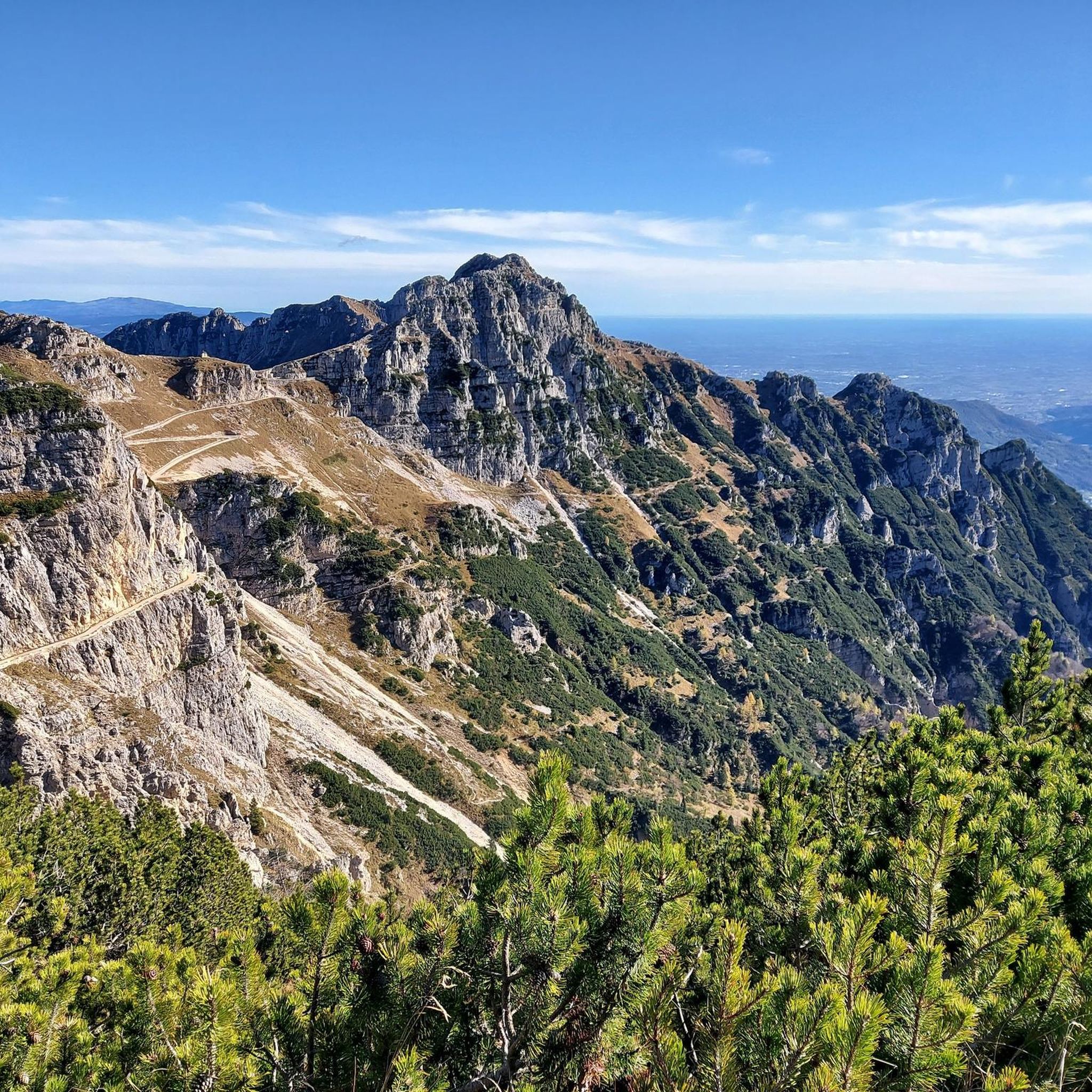
Running Trails around Vallarsa
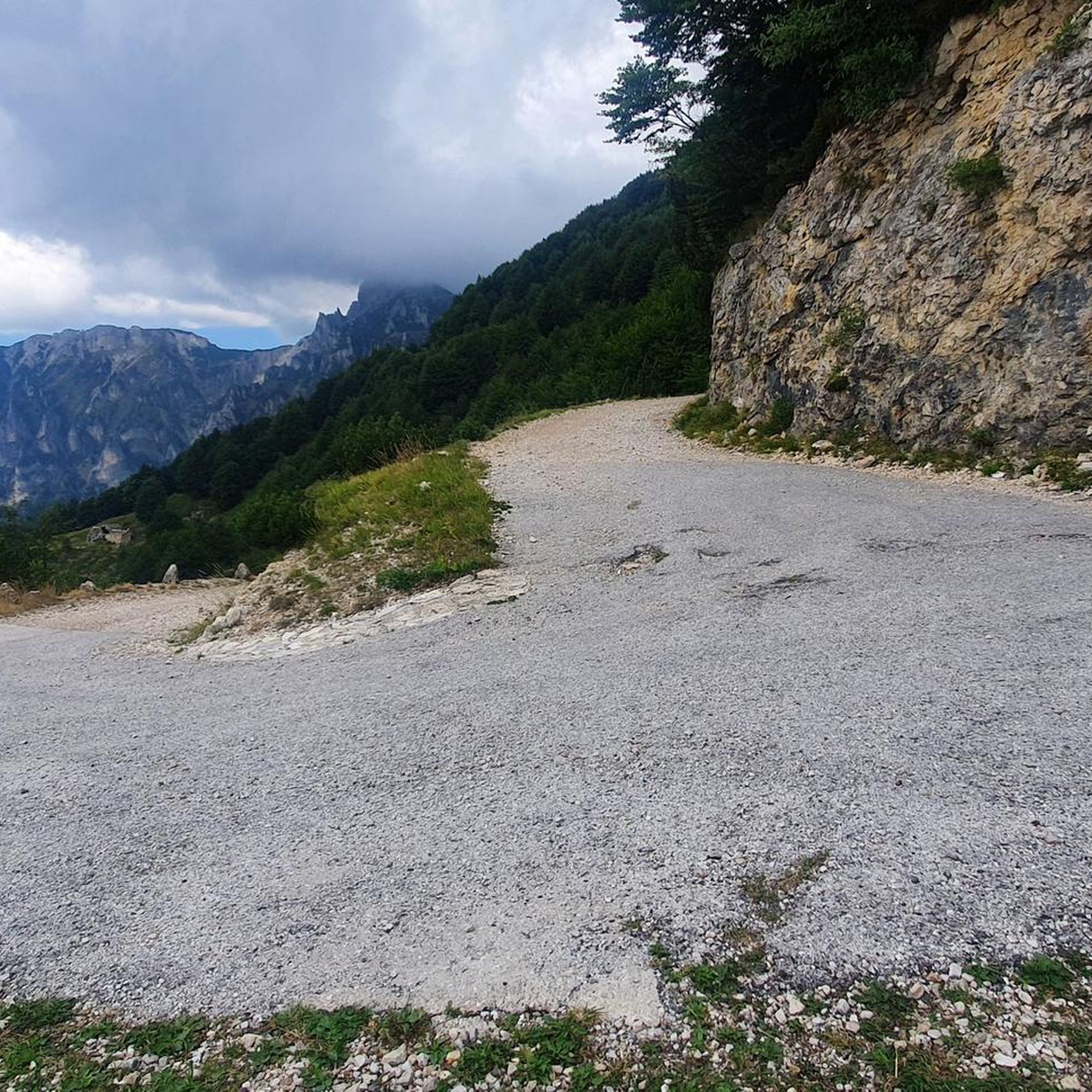
Cycling around Vallarsa
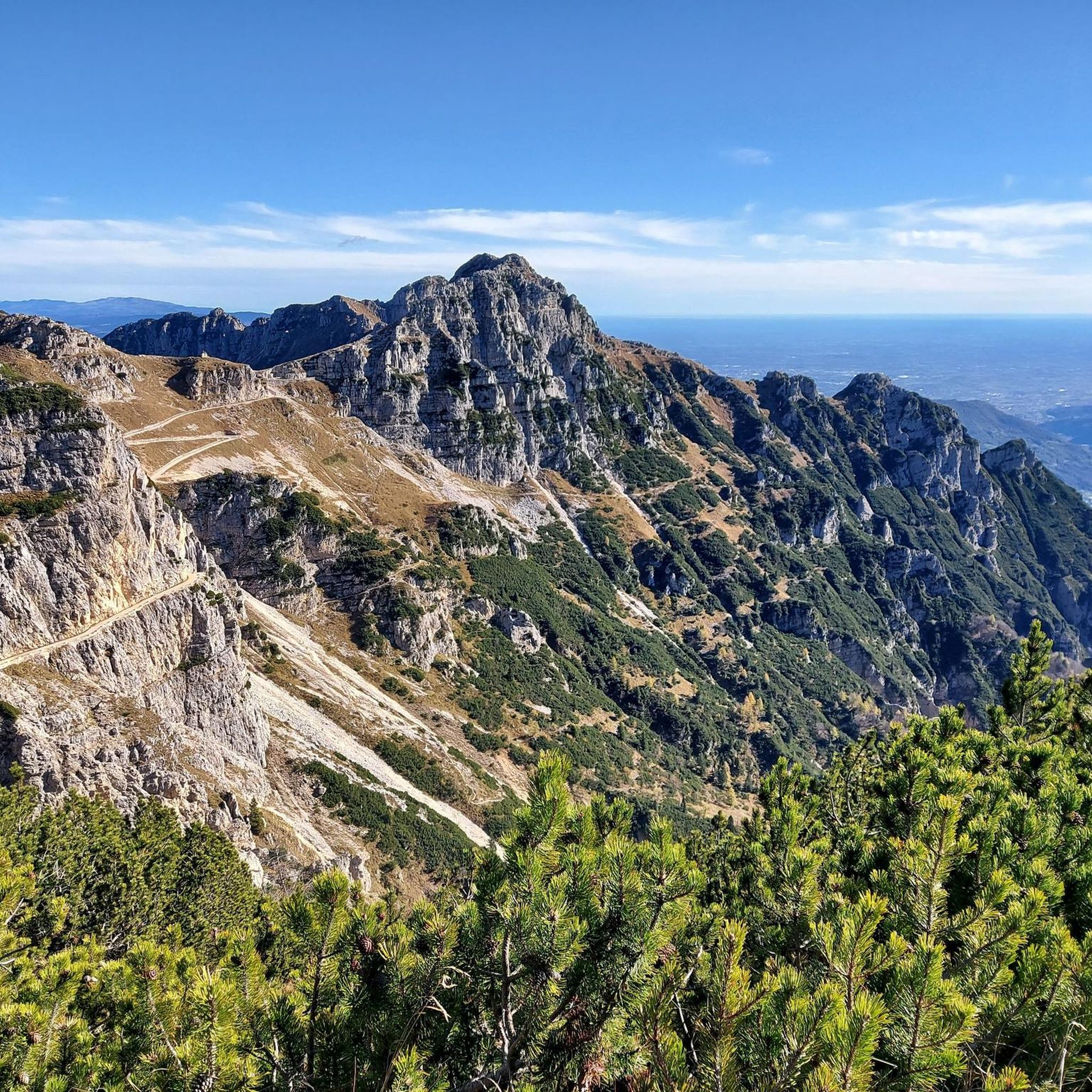
MTB Trails around Vallarsa
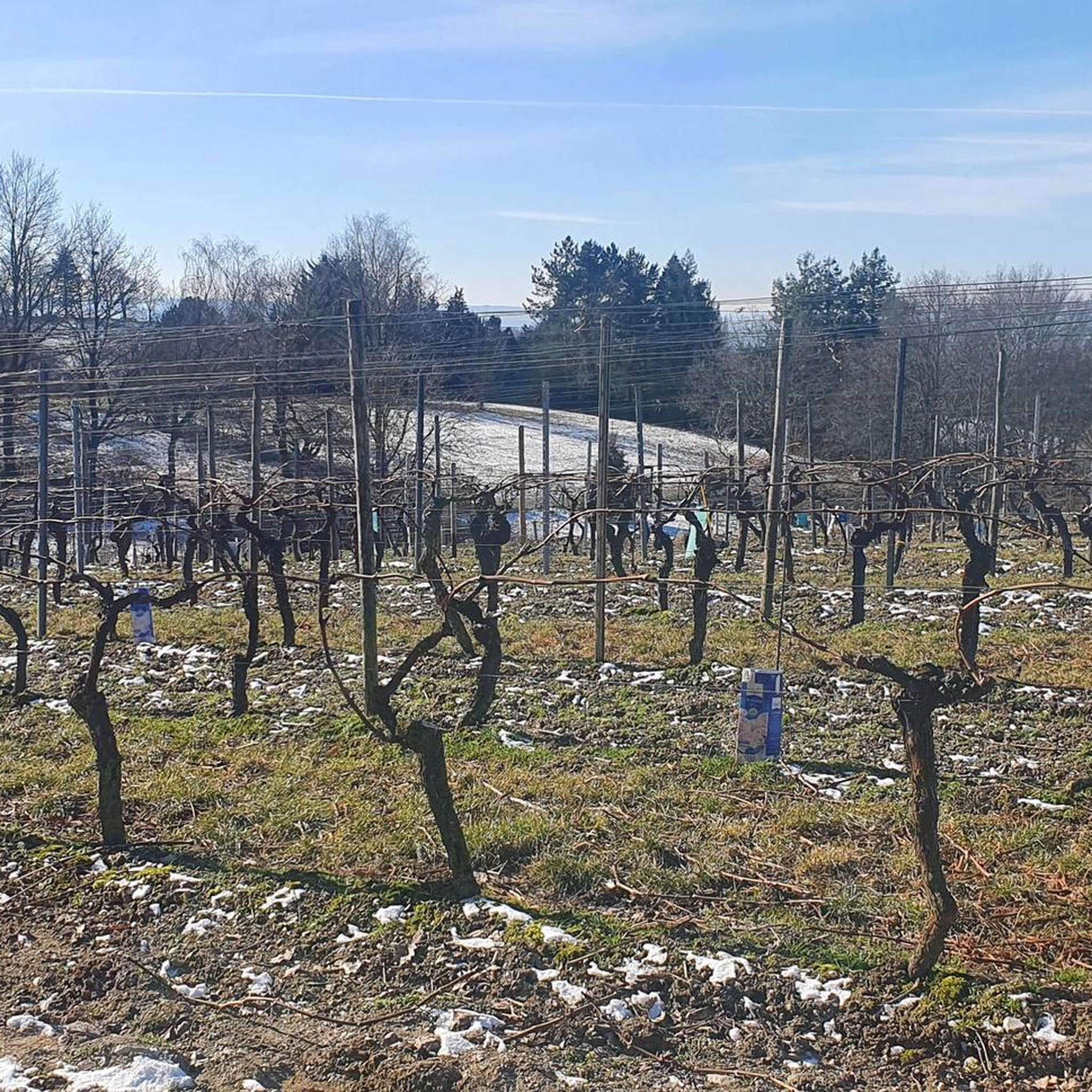
Gravel biking around Vallarsa
Mountain Hikes around Vallarsa

Tips from the Community

During the First World War, the Selletta Comando was a particularly critical and delicate point of the Italian defense line: its collapse could have allowed the Austro-Hungarian army to break through the Italian defenses. The area was subjected to incessant bombardments by imperial artillery, to the point that it was impossible to keep it stably occupied by troops: the soldiers took shelter in the numerous caves or in the masonry barracks built in more sheltered positions. On the Italian side, just behind the Selletta, was the Sector Command, housed in a large cave reinforced with reinforced concrete. A long trench came from Cima Palon and continued along the ridge towards Corno del Pasubio and Nodo d’Aquila, forming a frontline barrier. The position was also effectively defended by the crossfire of light artillery and machine guns positioned on both the Palon and the Corno.
0
0

The strategic position of Corno Battisti was the source of bloody battles for its possession during the Great War. To this end, it was equipped with numerous tunnels dug into the rock, with three separate entrances and numerous firing positions. The tunnels can be accessed with great caution, with a torch and preferably a via ferrata kit. Currently (2025), the upper entrance is closed.
0
0

The Buso delle Anguane is a fascinating cave in the rock with a natural balcony overlooking the Chiampo Valley: a place of mystery and legends, in ancient folk tales it was the home of the anguane, evil creatures that attracted men with their comely appearance. https://it.wikipedia.org/wiki/Anguana The path to reach the cave is quite impervious and challenging, not very visible and not signposted along the asphalt road.
0
0
The Cascata dei Papalini suddenly appears in a small clearing in the heart of the forest, along the path: over time the falling water has formed a columnar deposit of gray limestone that descends like a drape and that partly acts as a springboard for the jet. But the peculiarity and spectacular nature of this waterfall is the possibility of seeing it even from behind the scenes: in fact, by climbing to the left on a short but steep path, you reach a natural roof of the rock from which you can observe the forest below through the curtain of water, without getting wet! The passage is not protected and is wet, so you need to pay particular attention. Like all torrential waterfalls, it is not always full and active: you need to look for the right period, perhaps after heavy rains, to visit it in all its thunderous splendor.
1
0

Point quite easy to reach unless it has rained recently, in which case I would advise caution. Very suggestive view from inside the "Buso"
0
0
Il Corno Battisti, an isolated rocky spur of the Pasubio Group, sheer above Vallarsa, offers a spectacular panorama of the long valley and the surrounding mountains: Pasubio, Sengio Alto, Carega, Monte Zugna. Precisely because of its strategic position, it was fiercely contested during the First World War: the possibility of controlling all troop and supply movements in the valley from above made the Corno a crucial point to occupy and defend at all costs... it was indeed nicknamed 'the eye of the Pasubio' or 'the spy of Vallarsa'. At the beginning of the conflict, it was a garrison of the Italian army, but with the Strafexpedition in 1916, it was occupied by the Austro-Hungarians. The Italians, unable to recapture it, dug a mine gallery from below to pierce the Corno and blow up the summit; the imperialists in turn dug a counter-mine gallery from above. Everything was ready for detonation, but a daring raid by a few commandos allowed the summit to be recaptured by the Royal Army, which held it until the end of the war. In 1916, near the summit, the Austro-Hungarians captured the irredentists Cesare Battisti and Fabio Filzi, who were immediately taken to Trento and hanged at the Castello del Buonconsiglio as traitors: for this reason, the summit, known at the time as 'Corno della Vallarsa', was renamed 'Corno Battisti' after the war. The Austro-Hungarian observatory survives on the summit. The bowels of the Corno, on the other hand, are excavated by a surprising labyrinth of dark and damp tunnels with steep steps: they are passable, but to reach them from the summit, one must go around the spur following a narrow, steep path; furthermore, to complete the loop of the tunnels, one must face a short, equipped and exposed section, and descend a metal ladder of about fifteen meters which is by no means trivial (EE). https://it.wikipedia.org/wiki/Monte_Corno_Battisti https://www.esercito.difesa.it/storia/pagine/monte-corno.aspx
3
0

Beautiful waterfall, it looks like a face with one eye, a big nose and teeth😊
1
0
Frequently Asked Questions
What makes the caves in Vallarsa unique?
Vallarsa is known for its abundant karstic phenomena, featuring numerous natural caves, historical cave shelters, and cave-like rock formations. Many of these sites, like the Corno Battisti, have significant historical importance, often related to the First World War, alongside their natural beauty.
Can I visit the Covolo of Camposilvano, and what makes it special?
Yes, the Covolo of Camposilvano is accessible through the Camposilvano Museum. This impressive karst cave is over 80 meters deep and has a rich history, serving as a shelter for prehistoric humans and inspiring literary works like Dante's *Divine Comedy*. It also features a unique microclimate, maintaining consistently cold temperatures year-round. You can find more information on visitverona.it or visitlessinia.eu.
Are there any historically significant cave sites in Vallarsa?
Absolutely. Vallarsa is rich in historical cave sites. The Campiglia Gun Emplacement is a military structure built into a cave during WWI, offering panoramic views. Similarly, Corno Battisti, a summit with cave-like tunnels, was fiercely contested during the war. The Sentinello Trail (WWI) also features numerous military artifacts dug into the rock, including cave shelters.
What kind of natural features can I expect to see in Vallarsa's caves?
You can explore a variety of natural features, from deep karstic hollows to impressive rock formations. The Papalini Waterfall offers the unique experience of walking behind a veil of water within a forest setting. The Buso delle Anguane Cave is a small, impressive cave open on both sides, providing suggestive views of the surrounding valleys.
Are there family-friendly options for exploring caves in Vallarsa?
While some cave experiences can be challenging, the accessibility of the Covolo of Camposilvano via a stepped path from the museum makes it a good option for families. Always check specific trail difficulties and conditions for other cave-like sites.
What should I wear when exploring caves in Vallarsa?
Given the consistently cold temperatures in some caves, like the Covolo of Camposilvano, and the damp conditions in others, it's advisable to wear layers of warm clothing. Sturdy, waterproof hiking boots are essential for navigating uneven and potentially slippery terrain. A flashlight or headlamp is also highly recommended for exploring darker sections, especially in sites like the tunnels of Corno Battisti.
Are there hiking or cycling routes near the caves in Vallarsa?
Yes, Vallarsa offers various outdoor activities. You can find numerous running trails and cycling routes in the area. For example, there are challenging cycling routes like the 'Generale D'Havet Tunnel – General Achille Papa Refuge loop' and running trails such as the 'View of Sisilla loop from Pian delle Fugazze'.
What do visitors enjoy the most about the caves in Vallarsa?
Visitors appreciate the unique combination of natural beauty and historical significance. Many highlight the opportunity to walk behind the Papalini Waterfall and the impressive views from sites like the Buso delle Anguane Cave. The historical tunnels and fortifications, such as those at Corno Battisti and the Campiglia Gun Emplacement, are also highly valued for their testimony to the First World War.
What is the best time of year to visit the caves in Vallarsa?
Vallarsa's caves can be visited throughout the year, but spring and autumn generally offer pleasant weather for exploring the surrounding trails and accessing the cave entrances. During winter, some areas might be more challenging due to snow or ice, though the consistent cold microclimate inside caves like the Covolo of Camposilvano remains a feature regardless of the season.
Do I need a permit to visit the caves in Vallarsa?
Generally, permits are not required for casual visits to the publicly accessible cave sites in Vallarsa. However, for specific guided tours or more adventurous caving expeditions into undeveloped areas, it's always best to check with local tourism offices or specialized caving associations for any necessary permissions or safety guidelines.
Are there any cafes or accommodation options near the caves in Vallarsa?
Vallarsa, being a verdant valley, offers amenities for visitors. While specific cafes directly at every cave entrance might be limited, you can find cafes, pubs, and accommodation options within the valley's villages. For instance, the Covolo of Camposilvano is near the Camposilvano Museum, which often has facilities. It's advisable to check local listings for options closest to your chosen cave destination.
What is the difficulty level for exploring caves in Vallarsa?
The difficulty varies significantly. Some sites, like the path to the Covolo of Camposilvano, are accessible via stepped paths. Others, such as the tunnels within Corno Battisti or the approach to the Buso delle Anguane Cave, can be challenging, involving steep steps, damp conditions, and darkness, often rated as 'EE' (Expert Excursionist) for their difficulty. Always check the specific highlight details for difficulty ratings.
Most popular routes around Vallarsa
Most popular attractions around Vallarsa

Get inspired with the komoot mobile app


Explore more
Extend your search for the best caves by checking out these guides of the top ones around Vallarsa:
