Top 10 Caves around Hausen am Tann
Best caves around Hausen am Tann are found within a region known for its diverse natural features and proximity to the Swabian Alb, a significant karst landscape. While Hausen am Tann itself features impressive rock formations like the Gespaltene Fels, the wider area is rich in geological highlights. This region offers opportunities to explore natural crevices, historical sites, and various cave types. The landscape provides a setting for outdoor activities centered around these unique geological formations.
Best caves around Hausen am Tann
- The most popular caves is Wenzelstein and the Wenzelstein Cave, a cave that is also an intermediate viewpoint and historical site. Visitors are advised to bring a flashlight for exploring the cave, which narrows after the initial entrance.
- Another must-see spot is Karstloch Cave, a walk-in cave and natural monument. This location is described as an experience for both adults and children, offering a chance to discover its interior.
- Visitors also love Hollow Oven, a cave and natural monument. This cave allows passage through its interior, providing a discovery experience for those exploring the area.
- Hausen am Tann is known for natural rock crevices, historical cave sites, and walk-in caves. The region offers a variety of geological formations to see and explore, from small discovery caves to more extensive natural monuments.
- The caves around Hausen am Tann are appreciated by the komoot community. With over 200 upvotes and more than 100 photos, these locations are well-documented by visitors.
Last updated: May 15, 2026
Karstloch Cave
Highlight • Cave
An experience for young and old
Showing Translation
Tip by

Wenzelstein and the Wenzelstein Cave
Highlight • Cave
The first 3 m are still possible. But after the left turn, the cavern narrows and you can only crawl to the end.
Translated by Google •
Tip by

Sign up now to discover places like this
Get recommendations on the best single tracks, peaks, & plenty of other exciting outdoor places.
Sign up for free
Hollow Oven
Highlight • Cave
Translated by Google •
Tip by

Maiden hole
Highlight • Cave
Translated by Google •
Tip by

Smugglers' Cave Meßstetten
Highlight • Cave
Size: 27 m long, entrance height 1.50 m, entrance width 1.30 m
The cave is quite narrow and low.
Until 1835, goods for traders were smuggled across the customs borders guarded by country hunters between the Duchy of Württemberg (Meßstetten) and the Free Imperial Knighthood (Lautlingen). The cave is said to have been the starting point and warehouse for this.
Source: cojote-outdoor.de/schwaebische-alb-2/hoehlen-schwaebische-alb/schmugglerhoehle-messstetten
Cave - smuggler's cave - beautiful rock formations - Meßstetten - Zollernalbkreis
Translated by Google •
Tip by

Sign up for free to discover even more caves around Hausen am Tann.
Sign up for free
Already have an account?
Start today with a free account
Your next adventure awaits.
Login or Signup
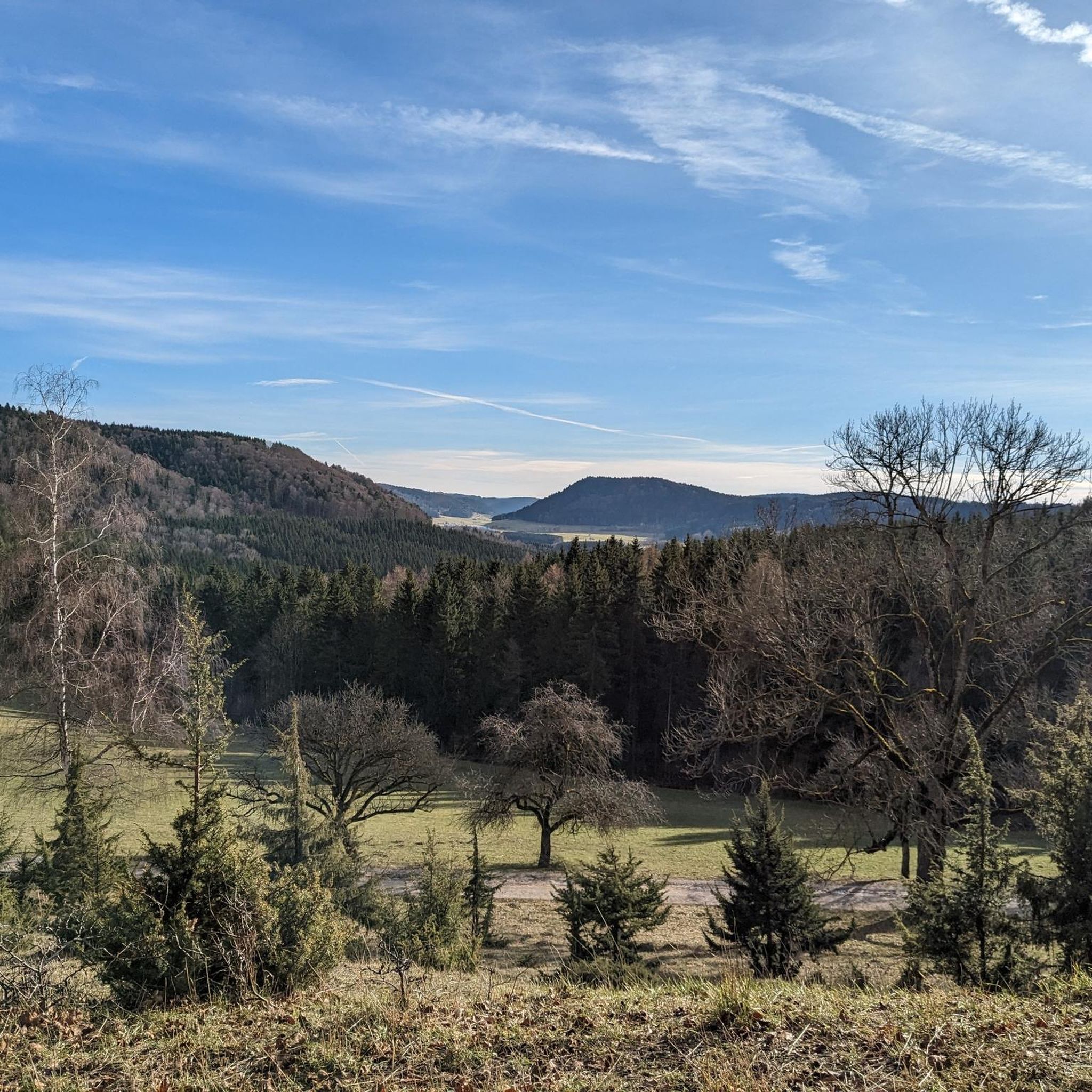
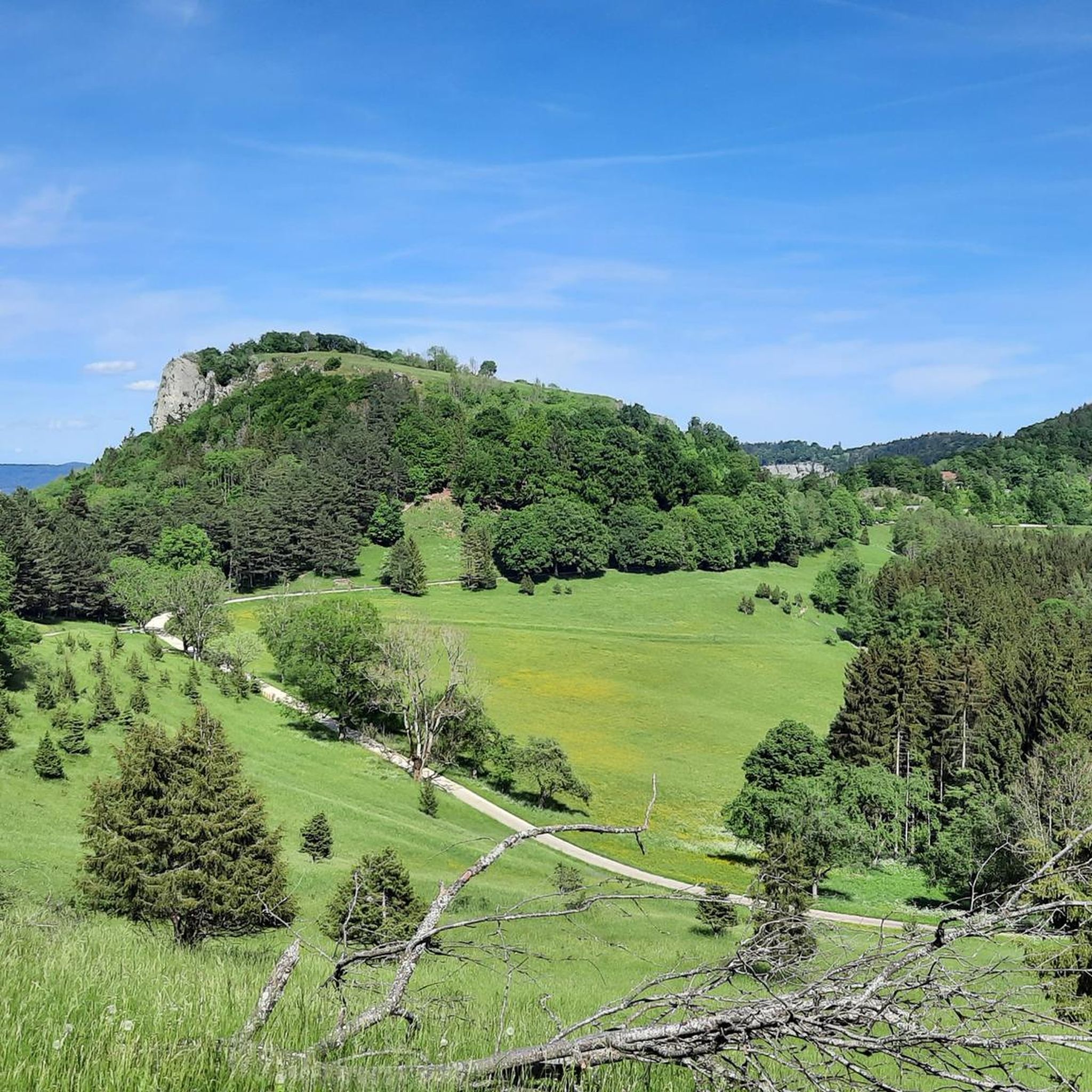
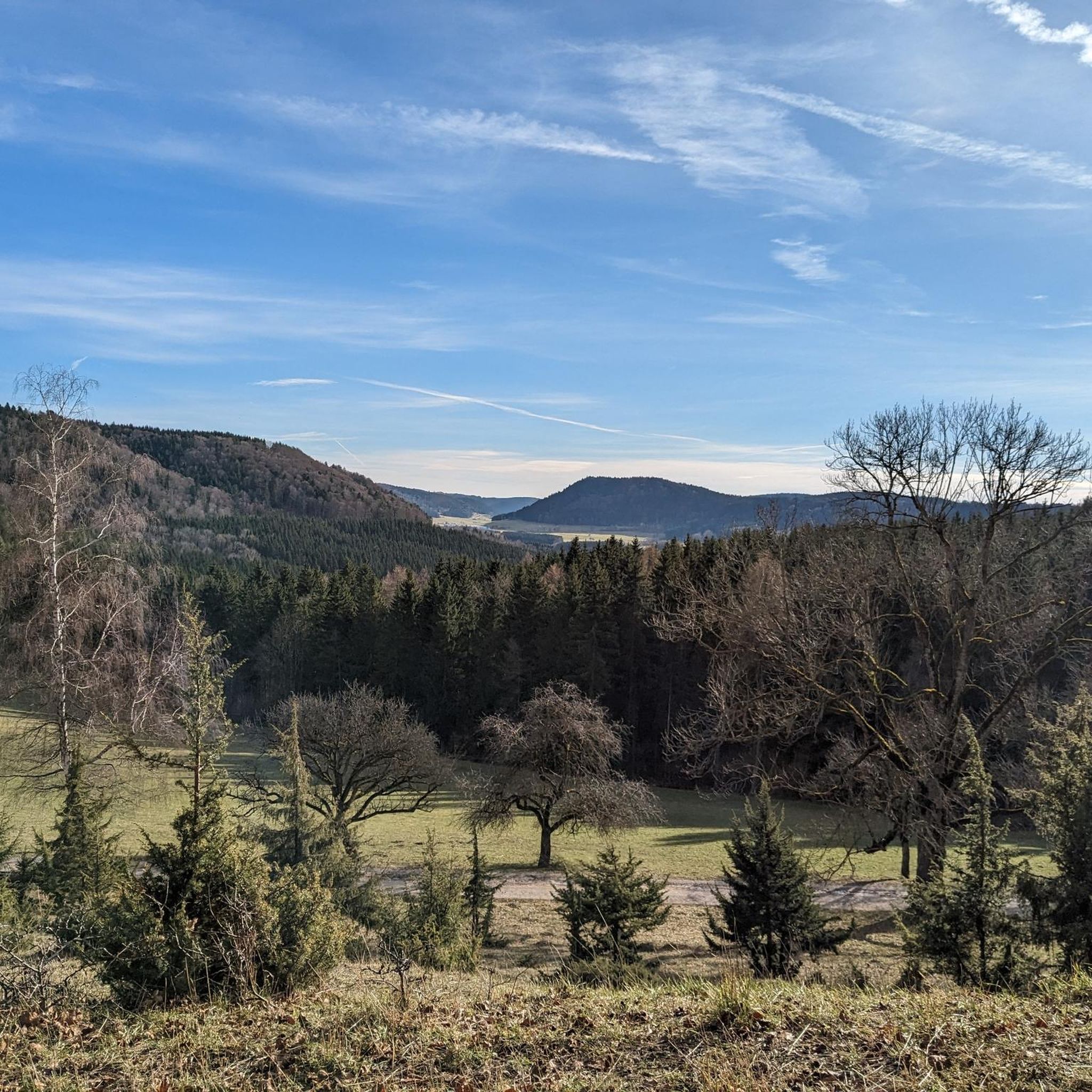
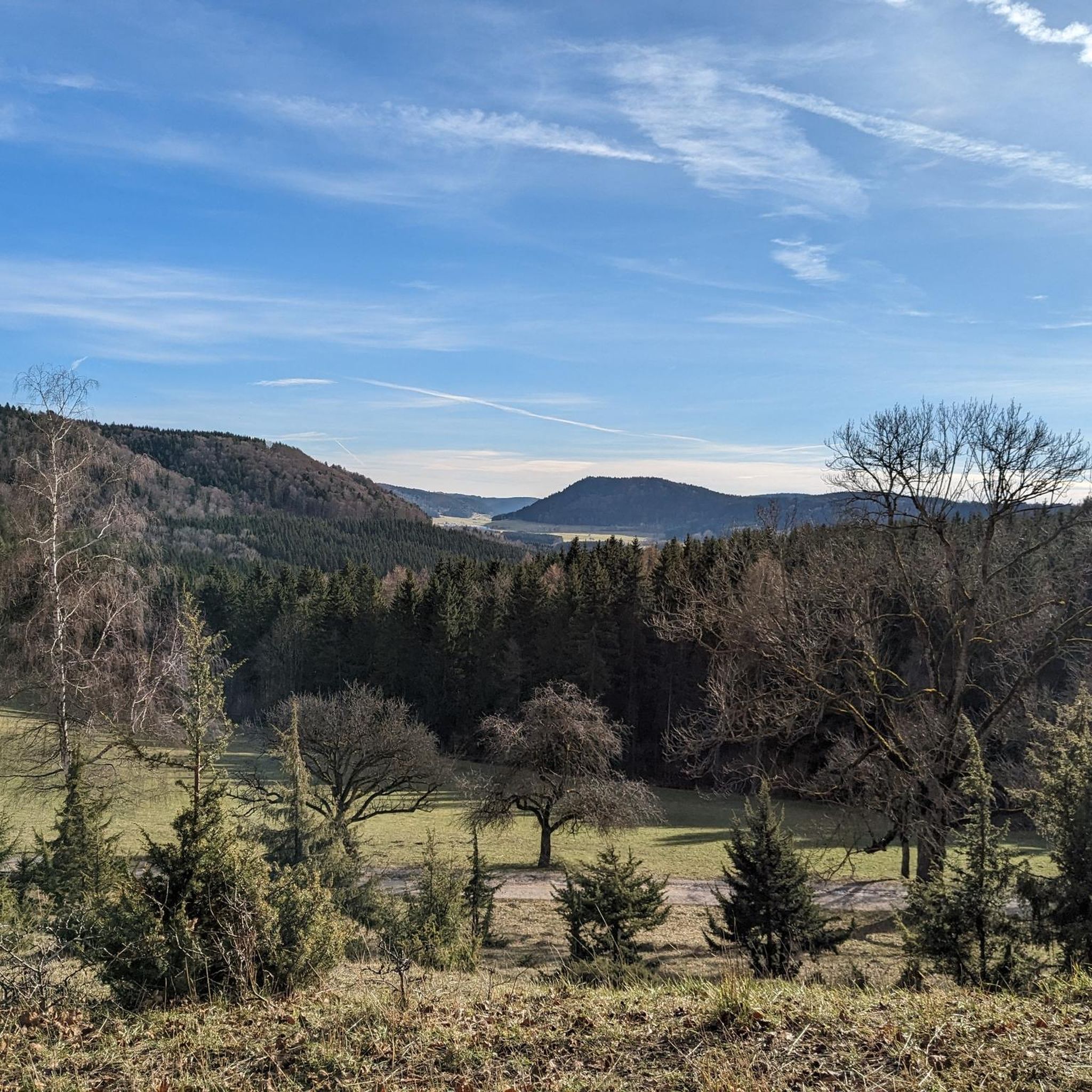


Tips from the Community

Smugglers' paths It is documented that goods were smuggled for traders across the customs borders guarded by the police until 1835 in the area. Caves are said to have been the starting point and warehouse for the nightly smuggling and theft. In 1698, almost a ton of steel ingots were smuggled. In 1750, the donkey miller from the Winterlinger Bannmühle bought 130 bushels of spelt from Meßstetten and Hossingen and had it smuggled across the border into Switzerland. As 1000 bushels were also bought and smuggled from Hechingen, there was a grain shortage. Coffee smuggler Haux was hit by a bullet from the Meßstetten police on July 21, 1831 in the Pfaffental and died. The author Gerd Stiefel[28] also describes the smuggling business in his novel Via Bologna. The starting point of the historical crime story is an actual murder in the winter of 1843. The perpetrator, Jakob Egle, used a path that leads from the Lautlingen area to the Meßstetten smugglers' cave (♁48° 11′ 18.68″ N, 8° 57′ 46.23″ E) to escape and fled across Europe. Smugglers also supplied underground Protestant believers with Bibles and Protestant writings. To minimize the risk of discovery, the title pages were removed. Source: https://de.wikipedia.org/wiki/Lautlingen
3
0
Location: about 100 m northwest of the northwest end of the Meßstetten residential area of Bueloch, accessible on foot via a narrow path from Freithofstrasse via Kirchlesfels and Schreifels; 901 m above sea level Size: 27 m long, entrance height 1.50 m, entrance width 1.30 m The cave is quite narrow and low. Until 1835, goods for traders were smuggled across the customs borders guarded by country hunters between the Duchy of Württemberg (Meßstetten) and the Free Imperial Knighthood (Lautlingen). The cave is said to have been the starting point and warehouse for this. Source: https://cojote-outdoor.de/schwaebische-alb-2/hoehlen-schwaebische-alb/schmugglerhoehle-messstetten/ Cave - smuggler's cave - beautiful rock formations - Meßstetten - Zollernalbkreis
4
0

Lemberg Tower, mega view of the Swiss snow-capped Alps.
1
0

small cave, if you look inside you can see light at the end, the exit. do bats live there?
1
0
Maidenhole At around 1000 m above sea level. NHN on the northeast slope of Lemberg lies the cave or crevice known as Jungfrauenloch in the White Jurassic rock. The name can be traced back to a local legend. Around the year 1170, the county of Hohenberg, to which the district of Gosheim belonged at the time, and its lord Burkhard I of Habsburg were mentioned for the first time. Around 1230, the future Roman-German King Rudolf I of Habsburg married the daughter of Count Burkhard III of Hohenberg, Gertrudis of Hohenberg. Her loyal Gaus, also known as “Gotso” in Middle High German, carried out the planning tasks and the organization of finances for her. The name of the community of Gosheim is said to have come from Gaus. After marrying Rudolf von Habsburg, Gaus stayed with the countess' niece, Gertrudis von Oberhohenberg, for whom he also managed the business excellently. But the young woman's brother was so angry and jealous about the popularity of Gertrudis and Gotso that he set the castle on fire at night in the absence of Gotso, who was hunting. Only Gertrudis is said to have escaped the terrible fire with all her jewelry and money and is still hidden today in the “Jungfrauenloch”, a deep crevice in the rock on the Lemberg. Only a key word can free her from her captivity to the dark forces. The story of Gertrudis von Oberhohenberg and her loyal friend Gaus is performed every five years as a village play at Fasnet. There are also legends surrounding the so-called “Giant Forest” on the Lembergsattel. Source: https://de.wikipedia.org/wiki/Lemberg_(Schw%C3%A4bische_Alb)
1
0

A small cave. You can search through them. However, very low. But it's definitely worth it.
1
0

Small, approx. 25 m long cave that you can crawl through. From the entrance you can see the daylight at the end. However, the height of the cave is very low.
0
0

Small highlight on the Hochalb path - cave to walk through
1
0
Frequently Asked Questions
What types of caves can I explore around Hausen am Tann?
The region around Hausen am Tann, part of the geologically rich Swabian Alb, offers a variety of cave experiences. You can find impressive natural rock crevices like the Gespaltene Fels, walk-in caves such as Karstloch Cave, and historical cave sites like Wenzelstein and the Wenzelstein Cave. Some caves, like Hollow Oven, even allow passage through their interior.
Are there any family-friendly caves in the area?
Yes, several caves are suitable for families. Karstloch Cave is described as an experience for both adults and children. The Hollow Oven is also considered a great discovery cave for little ones, though caution is advised due to a drop at the back.
What is the Gespaltene Fels (Split Rock) and how can I visit it?
The Gespaltene Fels (Split Rock) is an impressive rock crevice and geological highlight accessible via hiking trails from Hausen am Tann. It's not a typical cave system but a significant natural split in the rock, offering fascinating formations. It's part of a panoramic hiking loop that provides scenic views of the surrounding landscape.
What should I bring when exploring caves like Wenzelstein Cave?
For caves like Wenzelstein Cave, it is highly recommended to bring a flashlight. While the initial entrance might be manageable, the cavern narrows significantly further inside, requiring light and potentially crawling to explore fully.
Are there any caves with historical significance?
Yes, the region features caves with historical context. Wenzelstein and the Wenzelstein Cave is noted as a historical site. Additionally, the Smugglers' Cave Meßstetten has a rich history, having served as a starting point and warehouse for goods smuggled across customs borders until 1835.
What is the difficulty level for exploring these caves?
The difficulty varies. Caves like Karstloch Cave and Hollow Oven are generally accessible for exploration. However, some, like Maiden hole and Smugglers' Cave Meßstetten, are described as challenging due to narrow passages or small entrances.
Can I find viewpoints or other natural features near the caves?
Many cave locations are integrated into scenic landscapes. For instance, Wenzelstein and the Wenzelstein Cave is also an intermediate viewpoint. The Gespaltene Fels is part of a panoramic hiking loop offering impressive views of the Schafberg, Wenzelstein, and Lochen.
What outdoor activities can I do near the caves around Hausen am Tann?
The area around Hausen am Tann is excellent for various outdoor activities. You can find numerous cycling routes, including touring bicycle routes like the 'Ecumenical chapel – St. Afra Church, Obernheim loop' or more challenging road cycling routes such as 'View of Beuron Abbey – Schmeiental Valley loop'. There are also MTB trails, including loops around Lochen Pass. For more details, explore the cycling guide, road cycling guide, and MTB trails guide for Hausen am Tann.
Are there any local legends associated with the caves?
Yes, the Maiden hole is associated with a local legend. It's said that Gertrudis von Oberhohenberg, a countess' niece, is hidden there with her jewelry and money, trapped by dark forces after her castle was set on fire. The story is even performed as a village play every five years.
What makes the Swabian Alb region, where Hausen am Tann is located, significant for caves?
The Swabian Alb is renowned as one of Europe's most cave-rich areas, boasting approximately 2,800 described caves. This is due to its unique karst landscape and soluble limestone. While many are small, some, like the Hohle Fels Cave and Bear Cave, are globally significant UNESCO World Heritage Sites known for their archaeological importance, including Ice Age art and evidence of early human presence.
What do visitors enjoy most about the caves around Hausen am Tann?
Visitors particularly enjoy the unique geological structures and the sense of discovery. Many appreciate the opportunity to explore walk-in caves and natural monuments, often finding them to be an engaging experience for both adults and children. The integration of these natural wonders into scenic hiking routes also adds to the overall appeal.
Most popular routes around Hausen am Tann
Most popular attractions around Hausen am Tann

Get inspired with the komoot mobile app


Explore more
Extend your search for the best caves by checking out these guides of the top ones around Hausen am Tann:
