Top 4 Caves around Pantenburg
Best caves around Pantenburg are found within a region characterized by its volcanic landscape and historical mining activities. The area offers a mix of natural cave formations and historical tunnels, providing insights into both geology and past industries. These underground sites are often integrated into hiking trails, allowing visitors to explore the natural features and landmarks of the Vulkaneifel region. The diverse terrain includes forests and valleys, making it a destination for outdoor exploration.
Best caves around Pantenburg
- The most…
Last updated: May 15, 2026
Goldglück Former Lead Mine
Highlight • Historical Site
Niederstadtfeld, Niederstadtfeld municipality
description
[...] The mine that was operated in the previous century should not go unmentioned. The field names "Am Bleiofen" and "An der Bleireinigung" …
Translated by Google •
Tip by

Mauseloch Cave
Highlight • Cave
Translated by Google •
Tip by

Sign up now to discover places like this
Get recommendations on the best single tracks, peaks, & plenty of other exciting outdoor places.
Sign up for free
Iron Ore Prospecting Tunnel Grundwies
Highlight • Cave
When the last ironworks in Eisenschmitter closed in 1868, the ore search continued. Around 1890, a 35m long walk-in tunnel …
Translated by Google •
Tip by

Gillenfeld Mariengrotte
Highlight • Religious Site
Translated by Google •
Tip by

Start today with a free account
Your next adventure awaits.
Login or Signup

Tips from the Community

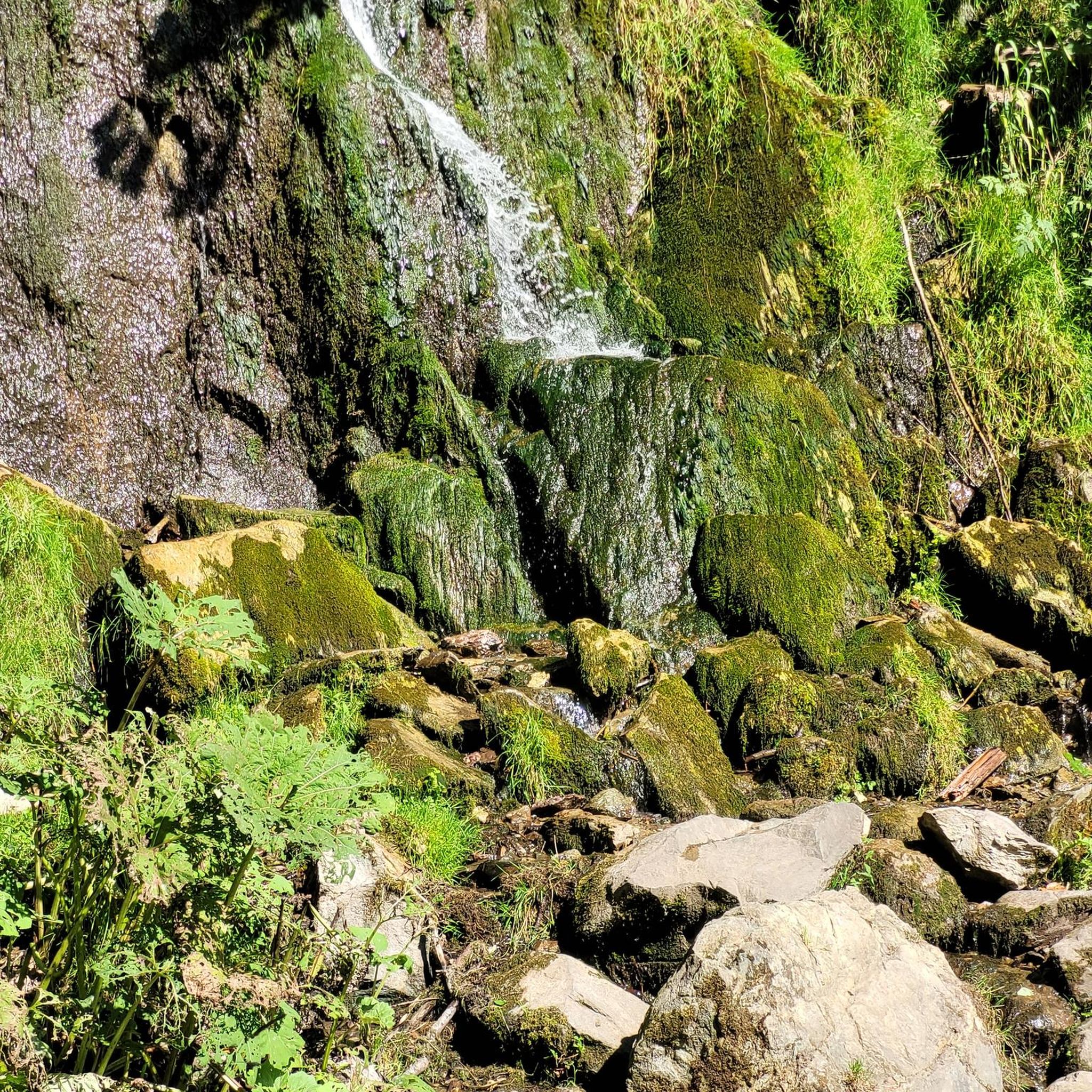
Unfortunately, the path there is completely overgrown and impassable. As of June 25, the descent isn't worth it.
0
0

A grotto in honor of the Holy Mother of God has been built from lava at the church entrance, with an altar table in the largest grotto.
6
0

Iron ore search tunnel in the Grundwies district of Niederscheidweiler. When the last ironworks in Eisenschmitter closed in 1868, the ore search continued. Around 1890, a 35m long walk-in tunnel was driven horizontally into the mountain here in the Alfbachtal near Grundwies. Also in the valley of the Sammetbach, in front of the confluence with the Alf, an ore exploration tunnel about 10 meters deep from this period has been preserved and other tunnels that have been forgotten are located on the south side of the Manderscheider saddle and the north side of the Moselle basin. According to Section 39 of the Federal Nature Conservation Act, the bat protection period begins on October 1st and ends on March 31st. During this period, bats are legally prohibited from entering caves, grottos, bunkers, tunnels and other potential hibernation dwellings. Source: Kulturdb.de
0
0

Former mine Goldglück Niederstadtfeld, Niederstadtfeld municipality description [...] The mine that was operated in the previous century should not go unmentioned. The field names "Am Bleiofen" and "An der Bleireinigung" are still reminiscent of this former mine. In 1858 it employed 12 to 15 miners who came from Niederstadtfeld and Üdersdorf. The mine, which was located on a mountain east of the valley of the Kleine Kyll in the direction of Schutz, was probably of Roman origin, because there was already a tunnel when the work in the mine began. A tunnel still exists today, but the three shafts on the top of the Bleiberg were filled in for safety reasons after the Second World War. In the mine, which was called "Goldglück", silver, lead and copper were extracted. The ore, which was melted into blocks, was transported to the large works in Mechernich and Bleialf with the help of ox carts. There is still a registered water right to discharge the waste water from the mine into the "Kerlsbach", which flows into the Kleine Kyll. Work in the mine was temporarily suspended, for example in the years 1858 to 1907, for reasons that were not known. After a long interruption, production in the mine was resumed in 1907 and again it was Niederstadtfelder and Üdersdorfer who found work there. However, in order to get to the ore in the deeper regions, a transverse shaft had to be built from the deep "guy". In 1915 the work in the mine "Goldglück" was finally stopped due to the strong effects of the war. During the war, some families from Niederstadtfeld still used these tunnels as bunkers. (Source: https://kulturdb.de/einobjekt.php?id=17487)
2
0

A little out of the way and therefore a nice quiet place to stay ... The whole story is here: https://kulturdb.de/ein Objekt.php?id=17487
1
0

At the information board to the left behind across the meadow. The mouse hole is an approx. 10 m long cave.
1
0
Frequently Asked Questions
What types of caves and underground sites can I explore around Pantenburg?
The Pantenburg region offers a mix of natural cave formations and historical mining tunnels. You can find natural caves like the Mauseloch Cave, which is a natural monument, alongside historical sites such as the Goldglück Former Lead Mine and the Iron Ore Prospecting Tunnel Grundwies, which provide insights into the area's geological and industrial past.
Are there any family-friendly caves or grottoes in the Pantenburg area?
Yes, the Gillenfeld Mariengrotte is a family-friendly grotto built from lava, honoring the Holy Mother of God. Additionally, the Kobesloch Hut – View over the Lieser Valley, which features a cave, is also considered family-friendly and offers a great spot for a break or picnic.
What historical insights can I gain from visiting the caves near Pantenburg?
The region's historical sites, like the Goldglück Former Lead Mine, offer a glimpse into centuries of mining. This mine, possibly of Roman origin, was used for extracting silver, lead, and copper, and its tunnels even served as bunkers during wartime. The Iron Ore Prospecting Tunnel Grundwies also tells a story of the area's industrial heritage from around 1890.
What natural features can I expect to see when exploring caves around Pantenburg?
Beyond the caves themselves, the Pantenburg region is characterized by its volcanic landscape. You'll find natural cave formations, and many sites are integrated into hiking trails that traverse forests and valleys. The Mauseloch Cave is a natural monument, showcasing the geological formations of the area.
Are there hiking trails that incorporate these caves?
Yes, many of the underground sites around Pantenburg are integrated into hiking trails, allowing visitors to explore both the natural features and historical landmarks of the Vulkaneifel region. For more hiking opportunities, you can explore the various Hiking routes around Pantenburg.
What other outdoor activities can I do near the caves in Pantenburg?
The Pantenburg area, with its diverse terrain, is excellent for various outdoor activities. Besides hiking, you can find numerous Road Cycling routes and MTB Trails around Pantenburg, allowing you to explore the volcanic landscape and its natural beauty.
What do visitors particularly enjoy about the caves and related sites in Pantenburg?
Visitors appreciate the blend of natural beauty and historical significance. The Kobesloch Hut – View over the Lieser Valley is frequently praised for its great views and as an ideal spot for a longer break or picnic. The historical mining sites offer a unique educational experience, while the natural caves provide a glimpse into the region's geology.
Are there any specific considerations for visiting the historical mining tunnels?
When visiting historical mining tunnels like the Iron Ore Prospecting Tunnel Grundwies, it's important to be aware of bat protection periods. According to Section 39 of the Federal Nature Conservation Act, bats are legally protected from October 1st to March 31st, during which entering potential hibernation dwellings like caves and tunnels is prohibited.
Are there any notable caves outside of Pantenburg but still within a reasonable distance in Germany or the Netherlands?
While Pantenburg itself focuses on local formations and historical tunnels, several impressive cave systems exist in other regions. In the nearby Netherlands, Valkenburg offers extensive marlstone caves like the historic Velvet Cave and the Municipal Cave, known for art and underground markets. In Germany, you can find spectacular stalactite caves such as the Atta Cave in Sauerland or the Devil's Cave near Pottenstein, and even the unique underwater Wimsen Cave in the Swabian Alb.
What should I know about accessibility or difficulty for the caves around Pantenburg?
The caves and related sites around Pantenburg vary in difficulty. Some, like the Kobesloch Hut and Gillenfeld Mariengrotte, are considered family-friendly or intermediate. Others, such as the Mauseloch Cave, are rated as challenging, and their paths might be overgrown, making access difficult. It's advisable to check specific highlight details for current conditions and difficulty ratings.
Can I find places to rest or have a picnic near the caves?
Yes, the Kobesloch Hut – View over the Lieser Valley is specifically highlighted as a nice place for a longer break or picnic, offering benches and a table inside, along with a wonderful view of the Liesertal.
Most popular routes around Pantenburg
Most popular attractions around Pantenburg

Get inspired with the komoot mobile app


Explore more
Extend your search for the best caves by checking out these guides of the top ones around Pantenburg:
