Top 17 Caves around Daxweiler
Caves around Daxweiler are primarily found within the Rhein-Hunsrück-Kreis district, an area characterized by its deep valleys, slate deposits, and historical mining activities. The landscape features a mix of natural formations and man-made tunnels, often remnants of former slate or ore quarries. These sites offer insights into the region's geology and industrial past. Many of these cave-like features now serve as important habitats for local wildlife.
Best caves around Daxweiler
- The most popular caves is Old Slate Mine, an…
Last updated: September 30, 2026
Enchanted Cave
Highlight • Cave
Translated by Google •
Tip by

Steeg Slate Mine
Highlight • Cave
To the right …
Translated by Google •
Tip by

Sign up now to discover places like this
Get recommendations on the best single tracks, peaks, & plenty of other exciting outdoor places.
Old slate cave in the Upper Middle Rhine Valley
Highlight • Cave
Translated by Google •
Tip by

Slate cave on the Serpentine Path Kaub
Highlight • Cave
Translated by Google •
Tip by
Grube Viktoria exploration tunnel
Highlight • Cave
Explore at your own risk
Translated by Google •
Tip by

Sign up for free to discover even more caves around Daxweiler.
Already have an account?
Start today with a free account
Your next adventure awaits.
Tips from the Community

This is how food was stored in the past.
1
0

Former mine tunnel (slate mining), now inhabited by bats. They're happy if you don't disturb them. ;)
1
0


On the serpentine path (World Heritage Trail) to the Traumschleifchen there is a small shelter
1
0

Spectacular insight into slate mining
0
0

Short VIDEOs about my hikes in this area could be found at my YouTUBE Channel under the following link:https://www.youtube.com/@konstantinschilin5685/playlists (please, select PLAYLIST - RHEINSTEIG_RHEINBURGENWEG
0
3

There are several slate mines around Steeg where mining continued until the 20th century. The mines are closed with steel bars for safety reasons.
1
0

I just saw it by chance and didn't investigate it further. It could be a useful weather protection during a thunderstorm.
1
0
Frequently Asked Questions
What kind of caves can I expect to find around Daxweiler?
The caves around Daxweiler are primarily former slate or ore mine tunnels and natural rock formations within the Rhein-Hunsrück-Kreis district. These sites offer a glimpse into the region's geological past and historical mining activities, often serving as important habitats for local wildlife. You won't find extensive stalactite formations or large chambers typical of major show caves elsewhere in Germany.
Are there any historical mining sites to explore?
Yes, the region is rich in historical mining sites. For example, the Old Slate Mine is a notable old slate tunnel that highlights the historical slate mining operations in the Hunsrück. Another significant site is the Steeg Slate Mine, where you can walk through a tunnel and observe machining marks from past mining activities.
Are there family-friendly caves to visit around Daxweiler?
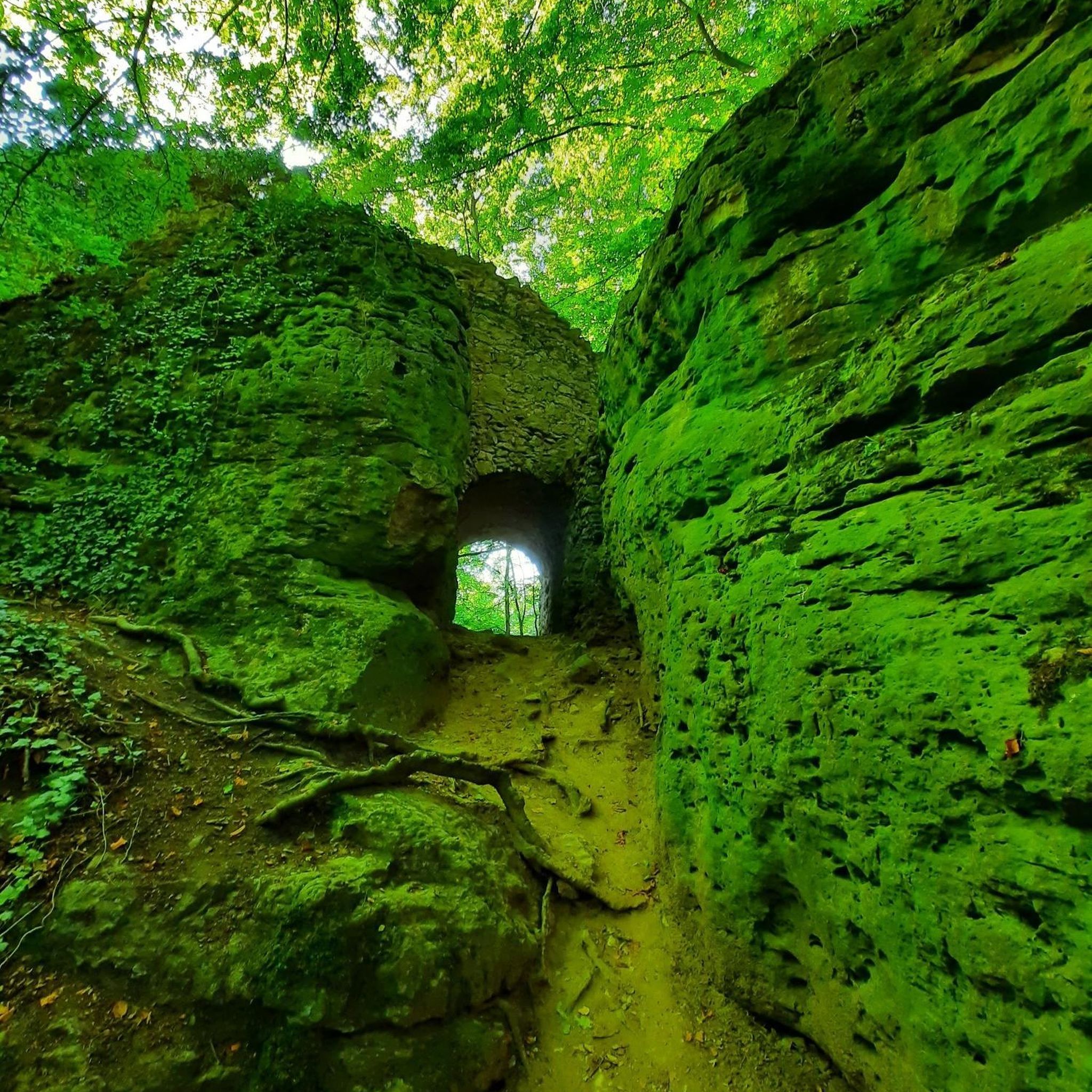
Yes, the Enchanted Cave is noted for its family-friendly appeal and is described as a natural monument with historical significance. Visitors have mentioned it as a fun experience for all ages. However, note that it may be closed during winter months or due to other circumstances, so it's advisable to check current access before visiting.
What are some unique natural features of the caves in this region?
Many of the 'caves' are actually former mine tunnels, showcasing mighty slate slabs in earth outcrops, such as the Baybachtal Bat Cave (a former roof slate mine tunnel). Other natural formations, like the 'Swing near the Dwarf Cave', are impressive natural monuments, though they may require navigating steep paths. These sites often highlight the unique geology of the Hunsrück region.
What is the difficulty level for exploring caves around Daxweiler?
The difficulty varies. Some sites like the Steeg Slate Mine are categorized as 'intermediate' to 'challenging', especially if tunnels are wet. Paths to natural cave-like features, such as the Dwarf Cave, can be steep and challenging, particularly in autumn or winter due to leaf cover. Always be prepared for uneven terrain and potentially dark, damp conditions.
When is the best time of year to visit the caves around Daxweiler?
Spring and summer are generally good times to visit. Some natural cave locations can be challenging to access in autumn or winter due to steep, leaf-covered paths. Additionally, some caves, like the Enchanted Cave, may be closed during the winter months for protection or other reasons. It's always best to check local conditions and access information before planning your trip.
Do I need any special equipment or clothing for cave exploration?
While most sites are accessible, it's advisable to wear sturdy, waterproof footwear, especially if you plan to enter tunnels where your feet might get wet, as noted by visitors to the Steeg Slate Mine. A flashlight or headlamp is also recommended for exploring darker sections of tunnels or natural formations.
Are permits required to explore caves around Daxweiler?
Generally, permits are not required for visiting the publicly accessible former mine tunnels and natural cave-like features around Daxweiler. However, some tunnels are now closed off with bars to protect bat habitats. Always respect signage and designated access points.
What other outdoor activities can I do near the caves around Daxweiler?
The area around Daxweiler offers a variety of outdoor activities. You can find numerous cycling routes, including moderate to difficult loops like the 'Steckeschlääfer Gorge – Wald-Ernisch Farmstead loop'. There are also many running trails, from easy to moderate, and extensive hiking opportunities, such as the 'Hochsteinchen lookout tower – Hochsteinchen rock formation loop'. For more details, explore the Cycling around Daxweiler, Running Trails around Daxweiler, and Hiking around Daxweiler guides.
Are there hiking trails that include cave features?
Yes, some hiking routes in the region will lead you past or directly to these cave features. For instance, the Old slate cave in the Upper Middle Rhine Valley is located along a trail. Similarly, the Slate cave on the Serpentine Path Kaub serves as a small shelter along the serpentine path, which is part of the World Heritage Trail. These offer opportunities to combine hiking with exploring the region's unique geology.
What do visitors enjoy most about the caves around Daxweiler?
Visitors appreciate the unique blend of natural beauty and historical significance. Many enjoy the opportunity to explore old mining tunnels and see the remnants of the region's slate industry. The Enchanted Cave is particularly popular for its family-friendly appeal, while the Steeg Slate Mine offers a chance to see historical machining marks up close. The overall experience provides insight into the Hunsrück's past and its distinctive landscape.
Most popular routes around Daxweiler
Most popular attractions around Daxweiler

Get inspired with the komoot mobile app


Explore more
Extend your search for the best caves by checking out these guides of the top ones around Daxweiler:
