The best gravel rides around Maiorga
3.3
(3)
14
riders
6
rides
Gravel biking around Maiorga offers a diverse landscape for riders. The region features a mix of coastal paths along the Atlantic, historical routes connecting monasteries and castles, and inland trails through varied terrain. Elevation changes are present, with some routes including climbs over 500 meters. The area provides a range of gravel bike routes suitable for different skill levels.
Best gravel bike trails around Maiorga
- The most popular gravel bike trail is Nazaré road to the top – Atlantic Coast…
Last updated: November 3, 2026
4.0
(1)
5
riders
46.7km
03:03
450m
450m
Moderate gravel ride. Good fitness required. Mostly paved surfaces.
2
riders
28.2km
01:58
250m
250m
Moderate gravel ride. Good fitness required. Mostly paved surfaces.

2
riders
43.2km
02:44
500m
500m
Hard gravel ride. Very good fitness required. Mostly paved surfaces.
1.0
(1)
3
riders
54.7km
03:29
590m
590m
Hard gravel ride. Very good fitness required. Mostly paved surfaces.
1
riders
27.5km
01:53
410m
410m
Moderate gravel ride. Good fitness required. Mostly paved surfaces.
Our route recommendations are based on thousands of hikes, rides, and runs completed by other people on komoot.
Start today with a free account
Your next adventure awaits.
Tips from the Community


Opening Hours: The sanctuary is open every day, generally from 9 am to 6 pm. It is a place of worship, therefore masses are also held regularly. Price: Entry to the sanctuary is free. Accessibility: It has wheelchair accessible parking. How to Get There: Access to the site can be made by car or by the Nazaré Elevator (funicular), which connects the beach to the upper part of the city and provides a scenic route.
2
0
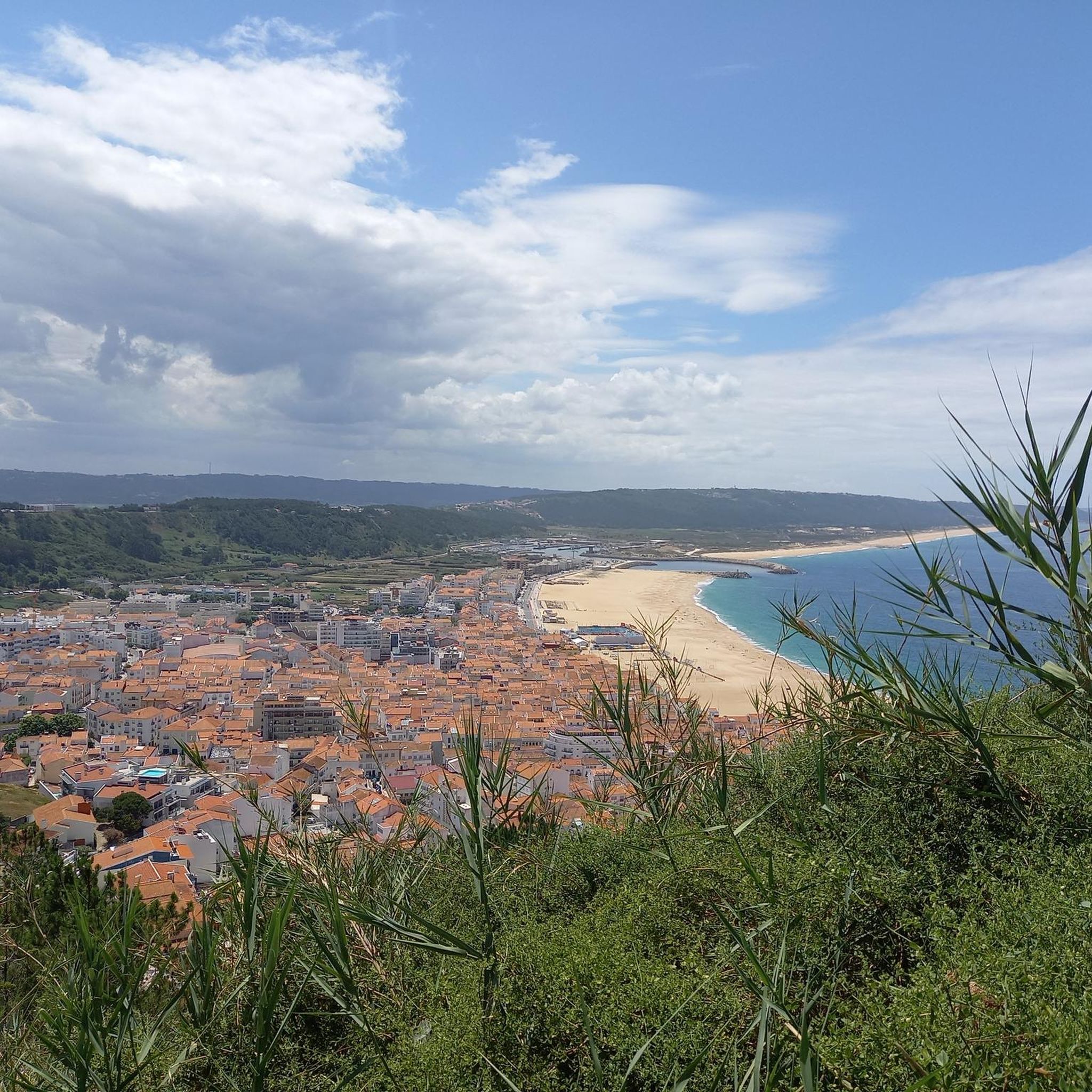
The Legend: The story of the image is told through the paintings in the church and sacristy, which allude to the miracle that occurred near the cliff. Location: The sanctuary is next to the famous Miradouro do Sítio da Nazaré (or Suberco), which offers a fantastic view of the beach and the village of Nazaré.
2
0
Architecture and History: The church was built on the site where, according to legend, the Virgin Mary saved the knight D. Fuas Roupinho from falling off the cliff. The facade has inscriptions in Latin, including "Deiparae Virgini a Nazareth" ("Virgin of Nazareth, Mother of God"). The interior houses the Sacred Image of the Black Virgin, carved in wood and which, according to tradition, was brought to the site in the year 711.
2
0
The Sanctuary of Our Lady of Nazaré is located in Sítio da Nazaré, the upper part of the town of Nazaré, in Portugal. It is a place of great religious and historical importance, intimately linked to the legend that gave rise to the devotion to Our Lady of Nazaré.
2
0

Gorgeous views! The climb to Alqueidão da Serra is tough for beginners.
1
0

From the chapter house on the ground floor, a staircase leads up to the dormitory. This staircase was rediscovered during renovations beginning in 1930. Located on the first floor, the dormitory extends 66.5 meters in length and 21.5 to 17.5 meters in width along the entire east side of the medieval part of the abbey, thus covering an area of almost 1,300 square meters. In its current form, restored through renovation, it presents itself in its original medieval state. At the southern end, the dormitory opens with a large round-arched doorway to the northern transept of the church. A staircase formerly led down from there, as the Cistercian rule required two separate entrances to the communal sleeping quarters. At the northern end of the dormitory were the latrines, which—again according to a general rule of the order—had to be separated from the sleeping quarters by a separate room. The wastewater flowed into the abbey's garden on the north side. The monks slept together in the dormitory, fully clothed, separated from their neighbors only by a movable partition. The abbot alone had his own cell, located on the south side facing the church. This arrangement is typical of most Cistercian monasteries of this period. A narrow door in the center of the western side leads to a narrow spiral staircase, which today provides access to the kitchen, but in the Middle Ages led to the calefactory (warming room, see below). This staircase also provided access to the upper cloister. https://de.wikipedia.org/wiki/Kloster_Alcoba%C3%A7a
3
0
The entrance to the chapter house features a particularly striking facade with staggered columns. The chapter house served as the meeting place for the monks and was, after the church, the most important room in the monastery. It bears this name because the chapters of the Rule of St. Benedict were read aloud there daily. Elections and similar communal ceremonies of the monks also took place there. In the entrance area to the chapter house is the gravestone of an abbot whose identity is no longer known. The floor of the chapter house was formerly completely covered with such gravestones, as a Cistercian rule from 1180 stipulated that abbots had to be buried in the chapter house, meaning that the monks made their decisions on the graves of their deceased abbots. This type of burial was a significant exception to the general Cistercian rule, which forbade the burial of monks within the monastery. That's why you'll find a door leading south in the southern transept called the Porta da Morte (Door of Death), because deceased monks were carried out through it for burial. https://de.wikipedia.org/wiki/Kloster_Alcoba%C3%A7a
2
0
Frequently Asked Questions
What types of gravel bike trails can I expect around Maiorga?
Maiorga offers a diverse range of gravel biking experiences, including coastal paths along the Atlantic, historical routes connecting monasteries and castles, and inland trails through varied terrain. You'll find a mix of moderate and more challenging routes.
Are there any beginner-friendly gravel bike trails in Maiorga?
While there are no trails explicitly rated 'easy', Maiorga features several moderate routes that could suit beginners looking for a bit of a challenge. The Fonte de Fanhais loop from Pataias is a good option, covering 28.2 km with an elevation gain of around 245 meters.
What are some longer or more challenging gravel bike routes in the Maiorga area?
For experienced riders seeking a challenge, routes like the Batalha Monastery – Porto de Mós Castle loop from Pataias offer a significant ride. This difficult route spans 55 km with nearly 600 meters of elevation gain, taking you through historical sites.
Are there any circular gravel bike routes available around Maiorga?
Yes, many of the gravel bike routes in Maiorga are designed as loops, allowing you to start and end at the same point. Examples include the Nazaré road to the top – Atlantic Coast Cycle Path loop from Centro and the Alcobaça Monastery – Alcobaça Castle loop from Alcobaça.
What historical landmarks or attractions can I see along the gravel bike trails?
Maiorga's gravel routes often pass by significant historical sites. For instance, the Alcobaça Monastery – Alcobaça Castle loop from Alcobaça takes you past the impressive Alcobaça Monastery. Other routes might bring you close to the Sanctuary of Our Lady of Nazaré or the Nazaré Lighthouse.
Are there scenic viewpoints on the gravel bike trails near Maiorga?
Absolutely. Given the coastal and varied inland terrain, many routes offer stunning vistas. The Nazaré road to the top – Atlantic Coast Cycle Path loop from Centro includes coastal sections with panoramic views. You might also encounter viewpoints like Mount Saint Bartholomew, offering great perspectives of the landscape.
What is the best time of year for gravel biking in Maiorga?
The region's climate makes it suitable for gravel biking for much of the year. Spring and autumn generally offer pleasant temperatures and less crowded trails. Summer can be warm, especially inland, while winter might bring cooler, wetter conditions, particularly along the coast.
How many gravel bike routes are available in the Maiorga region?
There are a handful of curated gravel bike routes around Maiorga, with komoot currently featuring 7 distinct tours. These range from moderate to difficult, ensuring options for various skill levels.
What do other gravel bikers say about the trails in Maiorga?
The gravel biking routes in Maiorga are highly rated by the komoot community, with an average score of 4.7 stars. Reviewers often praise the diverse landscapes, from coastal paths to historical sites, and the challenging yet rewarding elevation changes.
Are there any routes that pass by natural monuments or unique natural features?
Yes, some routes will bring you close to natural highlights. For example, you might find yourself near Fonte Pena da Colvina or experience the dramatic coastal scenery around Nazaré — Giant Waves, which is also known as the Gateway to the world’s biggest waves.
What kind of elevation changes should I expect on Maiorga's gravel trails?
The trails around Maiorga feature significant elevation changes. Many routes include climbs over 400 meters, with some difficult tours like the Batalha Monastery – Porto de Mós Castle loop from Pataias reaching nearly 600 meters of ascent. Be prepared for varied terrain and some challenging climbs.
Most popular attractions around Maiorga

Get inspired with the komoot mobile app


Explore more
Browse the best Gravel rides in other regions.
