The best gravel rides around Vouzon
3.5
(6)
35
riders
17
rides
Gravel biking around Vouzon, France, offers routes through the Sologne region, characterized by extensive woodlands, ponds, and moorland. The terrain features a blend of clay-sandy and stony paths with minimal elevation changes, providing a varied surface suitable for gravel bikes. Riders can expect a succession of farm tracks, forest trails, and small secondary roads. This landscape provides a mix of forest trails and open sections, ideal for varied gravel biking experiences.
Best gravel bike trails around Vouzon
- The most popular…
Last updated: October 6, 2026
4.0
(1)
7
riders
Moderate gravel ride. Good fitness required. Mostly paved surfaces. Suitable for all skill levels.
3.5
(2)
6
riders
Moderate gravel ride. Good fitness required. Mostly paved surfaces. Suitable for all skill levels.

3.5
(2)
6
riders
46.9km
02:54
140m
140m
Moderate gravel ride. Good fitness required. Mostly paved surfaces. Suitable for all skill levels.
3
riders
47.4km
03:26
160m
160m
Moderate gravel ride. Good fitness required. Mostly paved surfaces. Suitable for all skill levels.
7
riders
80.1km
04:49
250m
250m
Moderate gravel ride. Good fitness required. Mostly paved surfaces. Suitable for all skill levels.
Get access to more routes and recommendations from other explorers.
Already have an account?
Our route recommendations are based on thousands of hikes, rides, and runs completed by other people on komoot.
Start today with a free account
Your next adventure awaits.
Tips from the Community

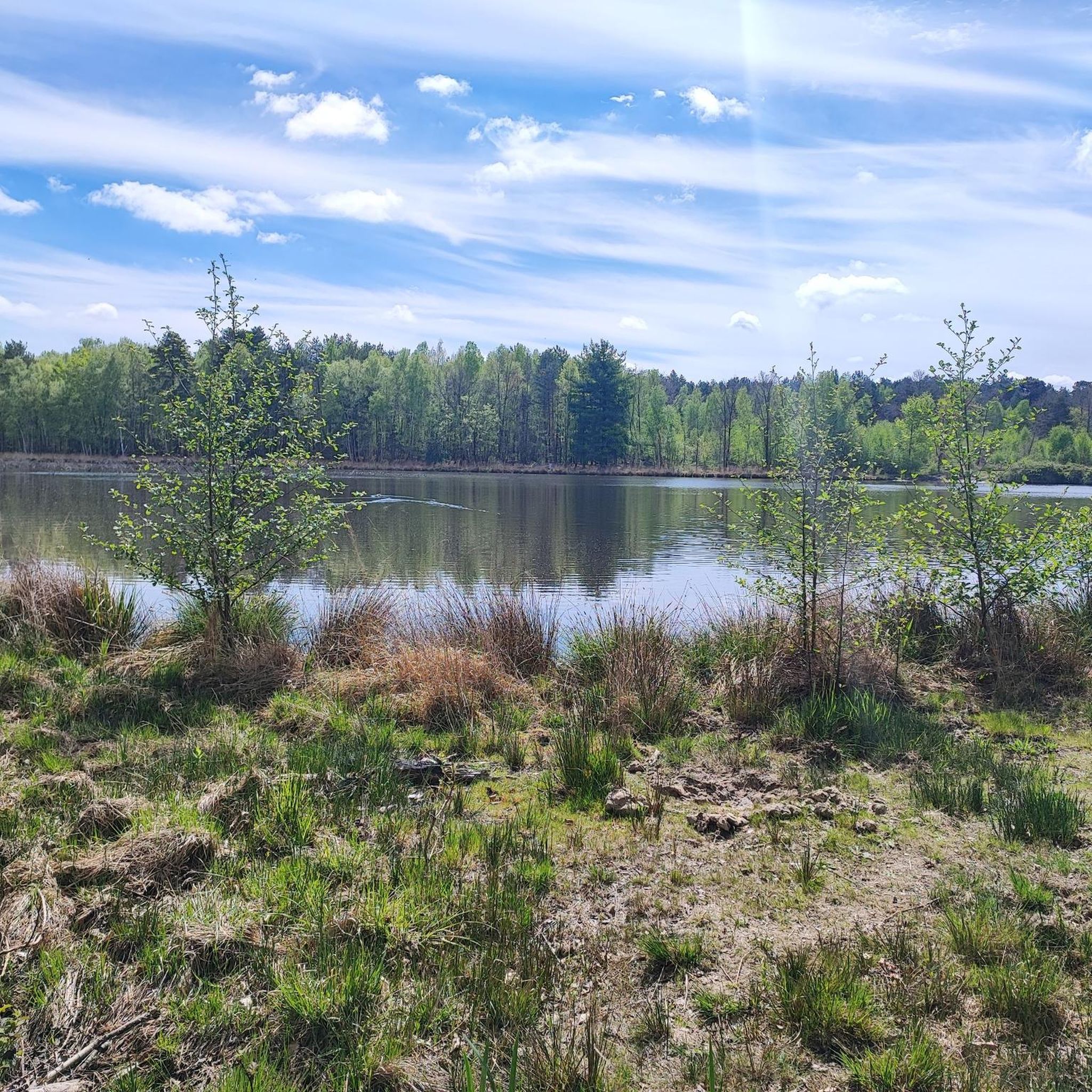
Loop in the footsteps of Napoleon III who, in the 19th century, bought back the Château de La Grillère, formerly owned by the Beauharnais family, in homage to his grandmother Joséphine. This route follows rural paths and low-traffic roads. Outside the summer period, some sections may require appropriate equipment. The use of mountain bikes and all-terrain bikes is recommended. Starting point for Hikes: Town Hall or Church parking lot
0
0
On 12/05/2026, the trail along the Cosson, starting from Boucles 02 and 16, near the castle, is impassable. Works?
0
0

The parish church, dedicated to Saint Stephen, belonged in the 13th century to the Abbey of Micy near Orléans. It was rebuilt at the end of the 15th and beginning of the 16th centuries. It consists of a long nave, 35 meters in length and over 9 meters wide, ending in a three-sided apse. Its walls, built of rubble and rendered brick, are reinforced by dressed stone buttresses. The cornice at the base of the roof and the window and door surrounds are also made of molded dressed stone. The double-lancet windows with trefoil topped by a figure-eight shaped bilobe are identical, except for those on the west facade and the central window, which are more elaborate, featuring three lancets while retaining the same molding. An addition was made at the beginning of the 16th century. On the north side stands an imposing seigneurial chapel and a massive bell tower with eight flat buttresses, two on each face, all built of brick. Ashlar is reserved for the buttresses of the bell tower and alternates with brick in the buttresses of the chapel; it is used for framing the openings, the windows, and the sloping sides of the chapel's gable. A lozenge-shaped decoration of black bricks on a background of pink bricks has been preserved on the lower level and on part of the gable of this chapel. The chapel was the only vaulted part of the church, undoubtedly financed by Jean or Claude d'Estampes, lord of La Ferté-Nabert. The rest of the building was covered by a panelled vault, the replacement of which with a false ribbed vault of plaster resulted in the disappearance of the tie beams and king posts and ruined the structural integrity of the roof frame. This artificial, cold, and superficial decoration of the upper sections deprives the interior of the interplay of tie beams and king posts. These, in their rhythm, corresponded to the lateral openings and reflected the robust structure of the timber frame that protected the building. A comprehensive restoration is planned. Initially, for the north chapel—masonry, roofing, and timber frame—the French Heritage Society (Sauvegarde de l’Art français) provided €30,490 in 2001.
0
0
"A very old church; two buttresses would allow us to date it to the 11th century," we learn. "Rebuilt in the 13th century, damaged during the Hundred Years' War, it was rebuilt again in the 16th century before being burned down during the Wars of Religion and then looted during the Revolution. Its last restoration dates back to 2014."
0
0
Built from 1900 to 1903 by Clavier, an entrepreneur in Vienne-en-Val, based on plans by Henri Rapine, an architect in Paris, this Saint Martin church is the second in Vienne-en-Val. The first church, dating from the 14th century, was destroyed. Inside, the base of the church's lectern depicts various scenes from the life of Saint Martin. The base bears the date 1613, while the eagle, which is said to have come from Férolles, is probably from the 19th century.
0
0

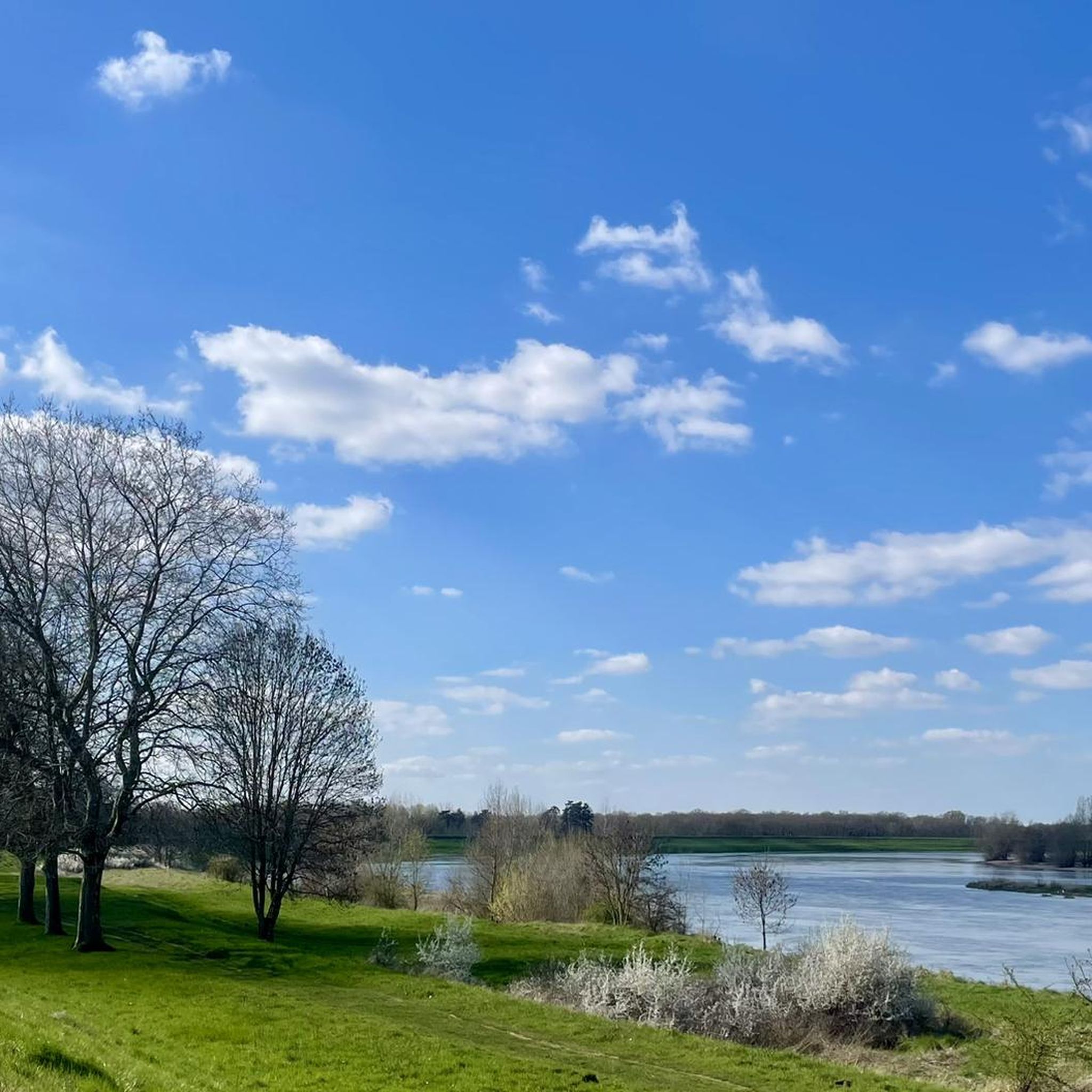
Indeed a nice cool route, a little sheltered from the wind.
0
0

At this location, during sanitation work in 1968, a certain number of ancient and medieval remains were unearthed, witnesses to the occupation of this site since Antiquity. Vienne-en-Val is also located on the Roman road from Orléans to Sancerre. The presence of two churches, one Merovingian and one dating from the 10th century, was revealed by surveys. The remains found, in particular sculpted blocks reused in these later constructions, attest that a sanctuary from the Early Roman Empire existed in the area but its location has not yet been discovered. You can discover these ancient blocks nearby, in a community hall which serves as a lapidary museum.
0
0
Built in the 16th century then reworked in the 19th century, this castle surrounded by a moat belonged to Napoleon III after passing into the hands of his ancestor, François de Beauharnais and then the French ambassador to Constantinople, the Count of Choiseul-Gouffier. It is now private property.
0
0
Frequently Asked Questions
What is the overall difficulty level of gravel biking trails around Vouzon?
The gravel biking trails around Vouzon offer a range of difficulties. You'll find 4 easy routes and 10 moderate routes, making the area accessible for most riders. For those seeking a greater challenge, there are also 2 difficult routes available, such as the Chambord Castle loop from Chaumont-sur-Tharonne, which covers nearly 100 km.
Are there any long-distance gravel routes in the Vouzon area?
Yes, Vouzon offers several long-distance gravel routes. The region's extensive network of forest paths is ideal for longer rides. For example, the challenging Chambord Castle loop from Chaumont-sur-Tharonne is 97.2 km long, taking you through the Sologne Forest and past the iconic Chambord Castle.
What kind of terrain can I expect on gravel bike trails near Vouzon?
Gravel bike trails near Vouzon primarily traverse the Sologne Forest, characterized by extensive woodlands and gently undulating terrain. You'll encounter a mix of forest tracks and open sections, with modest elevation gains, making for a varied and enjoyable gravel biking experience.
Are there any family-friendly gravel biking options around Vouzon?
While specific 'family-friendly' designations aren't always explicit, the region's generally modest elevation gains and numerous easy to moderate routes make many trails suitable for families. Look for shorter, less technical routes, particularly those within the Sologne Forest, which offer a peaceful environment away from traffic.
What are some scenic viewpoints or interesting landmarks along the gravel routes?
Many routes offer scenic views of the Sologne Forest. You can also encounter historical landmarks. For instance, the Château de la Grillère – La Ferté-Saint-Aubin Castle loop passes by the historical La Ferté-Saint-Aubin Castle. The Chambord Castle loop also takes you past the magnificent Chambord Castle.
Are there any loop gravel bike trails available in Vouzon?
Yes, the majority of gravel bike trails around Vouzon are designed as loops, offering convenient starting and ending points. Examples include the popular Jolie – Sologne Forest Trail loop from Il Giardino and the Superb views over the plain – Sologne Forest Trail loop from Chaumont-sur-Tharonne.
What is the best season for gravel biking around Vouzon?
The Sologne Forest is beautiful year-round, but spring and autumn generally offer the most pleasant conditions for gravel biking with mild temperatures and vibrant foliage. Summer can be warm, but the shaded forest trails provide respite. Winter riding is possible, though some paths might be muddy after rain.
Where can I find parking for gravel biking trails near Vouzon?
Parking is typically available in the villages and towns that serve as starting points for the routes, such as La Ferté Saint-Aubin or Chaumont-sur-Tharonne. Many trailheads are located near public parking areas, especially those associated with popular attractions or village centers.
Are there cafes or places to eat near the gravel bike trails in Vouzon?
While the Sologne Forest itself is largely undeveloped, you'll find cafes and restaurants in the surrounding villages and towns like Vouzon, La Ferté Saint-Aubin, and Chaumont-sur-Tharonne. It's advisable to plan your route to pass through these areas for refreshment stops or carry sufficient supplies, especially on longer rides.
What do other gravel bikers enjoy most about the trails in Vouzon?
The gravel biking experience in Vouzon is highly regarded by the komoot community, with an average rating of 3.0 stars. Riders often praise the extensive, quiet forest trails, the gently rolling terrain, and the opportunity to explore historical châteaux and natural areas away from busy roads.
Are there any specific beginner-friendly gravel bike trails in Vouzon?
For beginners, look for the routes classified as 'easy' or 'moderate' with shorter distances. The Sologne Forest's generally flat and well-maintained tracks are very welcoming. Consider routes that stick to wider forest roads rather than singletrack for a smoother introduction to gravel biking.
Most popular attractions around Vouzon

Get inspired with the komoot mobile app


Explore more
Browse the best Gravel rides in other regions.
