The best road cycling routes around Vouzon
4.5
(32)
599
riders
64
rides
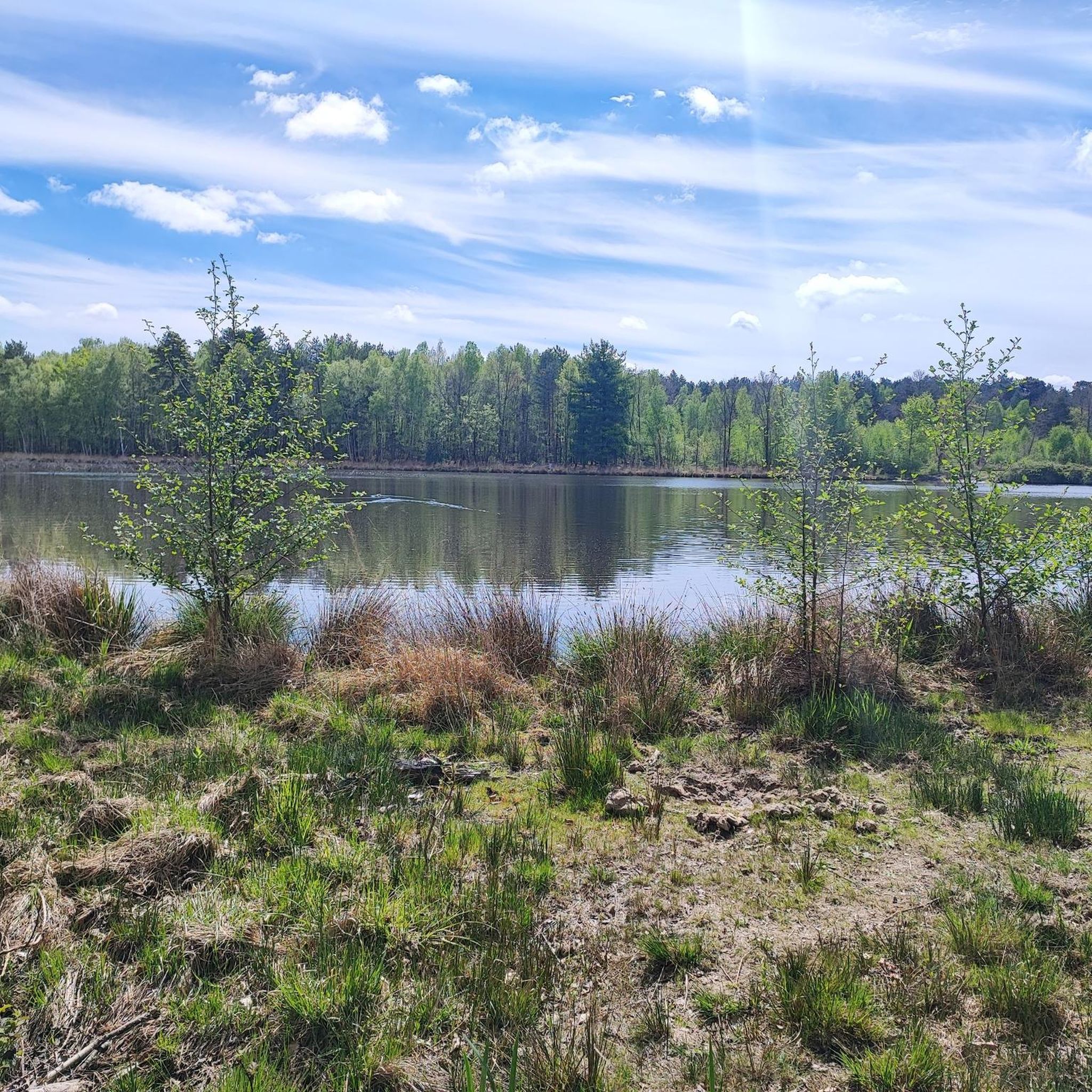
Road cycling routes around Vouzon traverse the tranquil Loir-et-Cher department in France's Centre-Loire Valley region. The terrain, characteristic of the Sologne region, features expansive forests, numerous ponds, and heathlands. This landscape offers a mix of flat and gently rolling sections, suitable for road cycling. A dedicated paved bike path alongside the Sauldre Canal also provides a scenic route.
Best road cycling routes in Vouzon
- The most popular road cycling route is West of Vouzon - circuit through FORESTS, a 49.1 miles (79.1 km) moderate trail that takes 3 hours 5 minutes to complete, winding through the region's extensive woodlands.
- Another top favourite among local road cyclists is Federal Equestrian Park – Federal Equestrian Park loop from Lamotte-Beuvron, an easy 21.9 miles (35.3 km) path. This route offers a gentle ride through the Sologne landscape, passing by the Federal Equestrian Park.
- Local road cyclists also love the Saint-Étienne Church – Maison Tatin 🍰 loop from Lamotte-Beuvron, a 32.6 miles (52.4 km) trail leading through varied Sologne scenery, often completed in about 2 hours 1 minute.
- Road cycling around Vouzon is defined by vast forests, clear ponds, and open moorland. The network offers options for easy, moderate, and difficult routes, catering to different ability levels.
- The routes in Vouzon are highly rated by the komoot community with an average score of 4.6 stars from around 30 reviews. More than 500 road cyclists have used komoot to explore Vouzon's varied terrain.
Last updated: September 30, 2026
5
riders
79.1km
03:05
280m
280m
Moderate road ride. Good fitness required. Mostly well-paved surfaces and easy to ride.
4.5
(4)
20
riders
Easy road ride. Great for any fitness level. Mostly well-paved surfaces and easy to ride.

3.0
(1)
13
riders
52.5km
02:01
130m
130m
Moderate road ride. Good fitness required. Mostly well-paved surfaces and easy to ride.
3.0
(1)
9
riders
39.1km
01:31
100m
100m
Easy road ride. Great for any fitness level. Mostly well-paved surfaces and easy to ride.
5.0
(2)
7
riders
55.7km
02:14
170m
170m
Moderate road ride. Good fitness required. Mostly well-paved surfaces and easy to ride.
Get access to more routes and recommendations from other explorers.
Already have an account?
Our route recommendations are based on thousands of hikes, rides, and runs completed by other people on komoot.
Start today with a free account
Your next adventure awaits.

Tips from the Community

On 23/09/2026: the castle is undergoing major renovations. See photos.
0
0
Loop in the footsteps of Napoleon III who, in the 19th century, bought back the Château de La Grillère, formerly owned by the Beauharnais family, in homage to his grandmother Joséphine. This route follows rural paths and low-traffic roads. Outside the summer period, some sections may require appropriate equipment. The use of mountain bikes and all-terrain bikes is recommended. Starting point for Hikes: Town Hall or Church parking lot
0
0
On 12/05/2026, the trail along the Cosson, starting from Boucles 02 and 16, near the castle, is impassable. Works?
0
0
It's a beautiful castle, that's true, but in a state of disrepair...
0
0

The two periods of construction of the chapel are clearly distinguishable: the timber-framed walls date from 1600, while the brick façade and walls date from 1863. The Chapel of Our Lady of Sorrows, which had been falling into ruin for many years, holds a special place in the heritage of Pierrefitte. Historians have pondered this legend, which is also found in other villages. Louis de la Saussaye (a 19th-century historian) offers a rational explanation for the chapel's location: Everyone knows that Pierrefitte owes its name to "Pierre fichée," meaning a planted stone. This stone marked the boundary between two Gallic tribes and also served as a religious monument. The Catholic religion was emerging and developing, but this stone remained an object of veneration until quite late in the Middle Ages (1100-1200). The presence of the legendary oxen licking the stone is explained by the fact that the local people secretly worshipped the last remaining monument of the ancient cult and, as tradition dictated, sprinkled milk and honey upon it. The chapel would therefore have been built on the site of this Gallic stone. All of this, of course, is only legend or hypothesis, but written documents dating back to 1600 (during the reign of Henry IV) allow us to glimpse the history of our chapel. In the 16th and 17th centuries, travelers taking the Orléans-Bourges road, whether on horseback or on foot, such as the stonemasons from La Marche who were returning in search of work, were accustomed to spending the night in one of the five inns or "hostelleries" in our village. The quality of these inns was indeed highly regarded at the time, and in the evening, people didn't hesitate to travel a few extra kilometers to stop at "La Croix Blanche," "Le Lion d'Or," "Le Sermon," "Le Trois Rois," or "Le Sauvage" (according to Henri Deletang). This was an opportunity to stop at the Chapel of the Leper Colony, and to care for their souls, Lord or peasant, merchant or beggar, didn't hesitate to throw a few offerings into it. There was a collection box placed within easy reach, but people preferred to toss coins through the bars onto the chapel floor.
0
0
The original church certainly predates the year 1000, not in its current form, but already in its design as a fortified church. The chancel was built in 1667. The church includes a large, square, keep-like tower, indicating a 12th-century origin. In 1881 and 1887, two chapels forming a transept were added at the end of the nave and in front of the chancel. The north chapel, dedicated to the Virgin Mary, was built in 1884/1885. The south chapel, dedicated to the Sacred Heart of Jesus, was financed in 1887/1888. Modern stained-glass windows, the one in the apse from the Dideron workshop and the others from the Lobin workshop in Tours, adorn several of the windows. All of these stained-glass windows were donated by prominent families of Nouan. Upon entering the nave, the first stained-glass windows are the work of Auguste Labouret, a renowned Parisian glassmaker and mosaicist. In the tower, above the entrance portal, is a 1930 stained-glass window depicting Our Lady of Mount Carmel (this is a listed work, included in the supplementary inventory of works of art). Then come the first two stained-glass windows, one on each side of the nave, one representing St. Anthony of Padua preaching to the fish, the other St. Thérèse of the Child Jesus entering the Garden of Carmel.
0
0

Opposite Lamotte-Beuvron train station, La Maison Tatin welcomes you to a 19th-century house, the birthplace of the famous tarte Tatin. This charming hotel offers 16 comfortable rooms, a restaurant, a bar, a tea room, and a spa. Here, you'll discover traditional and refined cuisine, local and seasonal, served in a warm and authentic atmosphere. Ideally located in Sologne, La Maison Tatin is the perfect starting point for exploring the Loire Valley châteaux, the surrounding forests, and Beauval Zoo. A place where heritage, relaxation, and gourmet delights combine for an unforgettable stay.
0
0
The parish church of Saint-Étienne was at the disposal of the Abbot of Jargeau. Of Romanesque origin, the building has a single nave on which are grafted a chapel to the north and south, a straight bay under the bell tower, supported by a sacristy to the north and a polygonal choir. The latter belongs to the 16th century. It includes a three-sided apse preceded by a straight bay. The whole, vaulted with ribs, is lit by five bays with flamboyant tracery similar to the two windows of the bay of the bell tower, contemporary with the choir. This has a square plan. Four pillars projecting strongly from the interior of the nave, receiving the four arches which carry all the masonry of the bell tower, accentuate the tripartite division of the interior volume of the building. The open door, in the north gutter wall, on the sacristy rebuilt in the 20th century, is surmounted by two pinnacles resting on sculpted bases framing an accolade. The lintel was once decorated with a coat of arms. The nave, Romanesque in its external volumes, was necessarily reworked from the 16th to the 19th century. It was probably originally a simple framed vessel whose gutter walls were supported on the outside by flat buttresses with slight projections. In the 16th century, the paneled barrel vault, still preserved in the attic, was hidden by ribbed vaults; the engaged columns which receive the ribs, as well as the corner buttresses visible on the facade belong to this campaign of works. Subsequently, a rectangular chapel was attached to the north wall; the south chapel, built in brick and cut stone, dates from the 19th century, as do the six windows with trefoil lintels illuminating the nave, the rose window pierced in the facade and the gallery installed at its back. A brick vault replaced the 16th century vault on the nave. The semicircular portal, extensively reworked, was formerly protected by a timber-framed porch. The three parts of the building are clearly differentiated in the exterior elevation of the building. The nave, not very high, as well as the choir, with its more slender roof, are dominated by the silhouette of the bell tower. Square in plan, it has four levels punctuated by dripstones; the upper level is pierced with two twin bays per face. The bell tower is crowned by a timber spire. The Sauvegarde de l’Art Français granted aid of 50,000 F in 1993 for the repair of the exterior masonry.
0
0
Frequently Asked Questions
How many road cycling routes are available around Vouzon?
There are over 65 road cycling routes around Vouzon, offering a wide variety of options for different preferences and skill levels.
What is the typical terrain like for road cycling in Vouzon?
The terrain around Vouzon, characteristic of the Sologne region, features expansive forests, numerous ponds, and heathlands. You can expect a mix of flat and gently rolling sections, making it suitable for road cycling. A dedicated paved bike path alongside the Sauldre Canal also provides a scenic and smooth route.
What is the best time of year for road cycling in Vouzon?
The Loir-et-Cher department generally offers pleasant cycling conditions from spring through autumn. The tranquil village atmosphere and natural surroundings are particularly enjoyable when the weather is mild, allowing for comfortable rides through the forests and past the ponds.
Are there routes suitable for different skill levels?
Yes, the routes around Vouzon cater to various abilities. You'll find 20 easy routes, 46 moderate routes, and 3 more challenging options, ensuring there's something for everyone, from beginners to experienced cyclists.
What natural features can I expect to see along the road cycling routes?
Road cycling routes in Vouzon immerse you in the Sologne landscape, renowned for its vast forests, clear ponds, and open moorland. You'll also encounter the peaceful Communal Pond of Vouzon within the village itself, offering a serene spot to pause.
Are there any historical landmarks or attractions accessible by bike near Vouzon?
Yes, within a reasonable cycling distance, you can find several notable attractions. These include the impressive La Ferté-Saint-Aubin Castle with its gardens, and the historic Saint-Étienne Church of Chaumont-sur-Tharonne. The region also boasts traditional Sologne houses and the emblematic Saint-Pierre church in Vouzon.
Are there circular road cycling routes available in Vouzon?
Many of the routes around Vouzon are designed as loops, allowing you to start and end your ride in the same location. For example, the Saint Jean Baptiste Church – Saint Martin's Church loop from Lamotte-Beuvron offers a pleasant circular ride through the local scenery.
Where can I find parking for road cycling routes in Vouzon?
While specific parking areas for each route are not detailed, Vouzon is a tranquil village, and you can typically find parking within or on the outskirts of the village, especially near the Communal Pond or local amenities, which serve as good starting points for many routes.
What do other road cyclists enjoy about the routes in Vouzon?
The road cycling routes in Vouzon are highly rated by the komoot community, with an average score of 4.6 stars from around 30 reviews. Cyclists often praise the tranquil atmosphere, the picturesque Sologne landscape with its forests and ponds, and the variety of routes available for different skill levels.
Are there family-friendly road cycling options around Vouzon?
Yes, with 20 easy routes available, there are several options suitable for families. The gently rolling terrain and the dedicated paved bike path alongside the Sauldre Canal provide safe and enjoyable environments for cyclists of all ages.
What kind of facilities or amenities are available for cyclists in the Vouzon area?
Vouzon is a small, authentic village. While specific cycling-focused amenities like dedicated bike shops might be limited, you'll find local cafes and accommodation options. The peaceful village environment and the presence of the Communal Pond make it a pleasant place to rest and refuel.
Can I find scenic viewpoints on the road cycling routes?
The routes through the Sologne region offer continuous scenic beauty, characterized by vast forests, clear ponds, and open moorland. While there might not be designated 'viewpoints' in the traditional sense, the entire journey provides picturesque vistas of the natural landscape, especially along routes like the Saint-Étienne Church – Église Saint Martin loop from Lamotte-Beuvron.
Most popular attractions around Vouzon

Get inspired with the komoot mobile app


Explore more
Browse the best Road cycling routes in other regions.
