The best walks and hikes in Kootenay National Park
4.7
(511)
5,193
hikers
21
hikes
Hiking in Kootenay National Park offers diverse landscapes within the Canadian Rockies, ranging from dry grasslands to glacier-clad peaks. The park features rugged mountains, deep valleys, and alpine meadows, shaped by geological forces and natural wildfires. Hikers can explore areas of post-wildfire regrowth, rivers, waterfalls, and significant glaciers.
Best hiking trails in Kootenay National Park
- The most popular hiking route is Numa Creek Trail to Numa Creek Campground — Kootenay National Park, an 8.2 miles (13.3 km) trail that takes 3 hours 40 minutes to complete. This route leads through forested areas to a backcountry campground.
- Another top favourite among local hikers is Redstreak Creek Trail, an easy 2.8 miles (4.5 km) path. This trail offers a gentle walk along Redstreak Creek, suitable for a shorter outing.
- Local hikers also love the Creek – Cascade loop from Stanley Glacier Trailhead, a 6.9 miles (11.0 km) trail leading through a hanging valley with glacier views, often completed in about 4 hours 47 minutes.
- Hiking in Kootenay National Park is defined by rugged mountains, deep valleys, and glacial features. The extensive trail network offers options for various ability levels, from easy interpretive walks to challenging multi-day backpacking trips.
- The routes in Kootenay National Park are highly rated by the komoot community with an average score of 4.5 stars from around 200 reviews. More than 1,700 hikers have used komoot to explore Kootenay National Park's varied terrain.
Last updated: August 24, 2026
38
hikers
11.7km
04:03
680m
540m
Moderate hike. Good fitness required. Easily-accessible paths. Suitable for all skill levels.
13
hikers
13.3km
03:39
220m
220m
Moderate hike. Good fitness required. Easily-accessible paths. Suitable for all skill levels.

Sign up for free
5.0
(1)
12
hikers
1.09km
00:19
20m
20m
Easy hike. Great for any fitness level. Easily-accessible paths. Suitable for all skill levels.
5.0
(1)
11
hikers
4.79km
01:29
180m
180m
Easy hike. Great for any fitness level. Easily-accessible paths. Suitable for all skill levels.
3.3
(4)
8
hikers
4.48km
01:21
150m
150m
Easy hike. Great for any fitness level. Easily-accessible paths. Suitable for all skill levels.
Get access to more routes and recommendations from other explorers.
Sign up for free
Already have an account?
Our route recommendations are based on thousands of hikes, rides, and runs completed by other people on komoot.
Start today with a free account
Your next adventure awaits.
Login or Signup
Popular around Kootenay National Park
Tips from the Community

Tumbling Creek Campground is a beautiful backcountry base along the Rockwall trail, with shady tent pads, outhouses, and food lockers; plus you can fetch some water from the nearby creek. The site opens into meadows with mountain views, and there are two eating areas: for the best reward, keep walking to the benches with the big scenery.
0
0
Rockwall Pass feels immense, with glacier views, a larch-lined trail, and limestone peaks rising like a natural fortress around you. The path can be rocky, but it is well built and easy to follow. Watch for marmots along the way, and imagine these cliffs beginning as seabed nearly 500 million years ago.
0
0
This unnamed pass along the Rockwall Trail opens into a huge alpine world of limestone cliffs, glaciers, larch-filled meadows, and wildflowers. The trail rolls gently toward a lake below the moraine, with the cliffs rising a kilometre above you. Insect repellent helps here: the views are spectacular, but the bugs know it too.
0
0

The Redstreak Campground Trail begins here at the north end of the campground. The trail zigzags past viewpoints until descending onto Banff-Windermere Highway, where hikers can either turn around or carefully cross the highway to Sinclair Creek and other trails and viewpoints. If you are not a camper at Redstreak Campground, the closest parking in the camping area is at the other end of the campground at Redstreak Restoration Interpretation Trail, so parking at the Radium Hot Springs welcome sign is another closer alternative. But if you are camping at Redstreak Campground, this is the perfect way to access the Sinclair Creek area.
0
0
The observation deck over Sinclair Canyon Waterfall is an extended concrete viewpoint. There is an informational trifold here to read up on. There is no immediate parking here, nor road pulloffs, so you must walk from the nearest parking area, about 100 metres to the west down the highway to the Radium Hot Springs welcome sign.
0
0
This view of Sinclair Canyon is an elevated viewpoint on a rocky outcrop. There are views over Banff-Windermere Highway below and Redstreak Mountain in this background.
0
0
Emerge from the lush forest to the picturesque overlook of Sinclair Canyon, where you can enjoy the tumbling waterfall from a stone viewing platform. The viewing area is quite open, but do not cross over the short stone pillars.
0
0
Juniper Trail is a quick hike that brings visitors to an overlook of Sinclair Falls and Sinclair Canyon. The trail is well maintained and easy to follow with an incline on the way to the falls. Stay on the trail at all times.
0
0
Frequently Asked Questions
What types of landscapes will I encounter while hiking in Kootenay National Park?
Kootenay National Park offers a diverse range of landscapes, from dry grasslands at lower elevations to glacier-clad peaks. You'll find rugged mountains, deep valleys, and alpine meadows, alongside rivers like the Kootenay and Vermilion, and numerous waterfalls such as Numa Falls. The park also features areas of post-wildfire regrowth, showcasing forest regeneration.
Are there any easy, family-friendly hiking trails in Kootenay National Park?
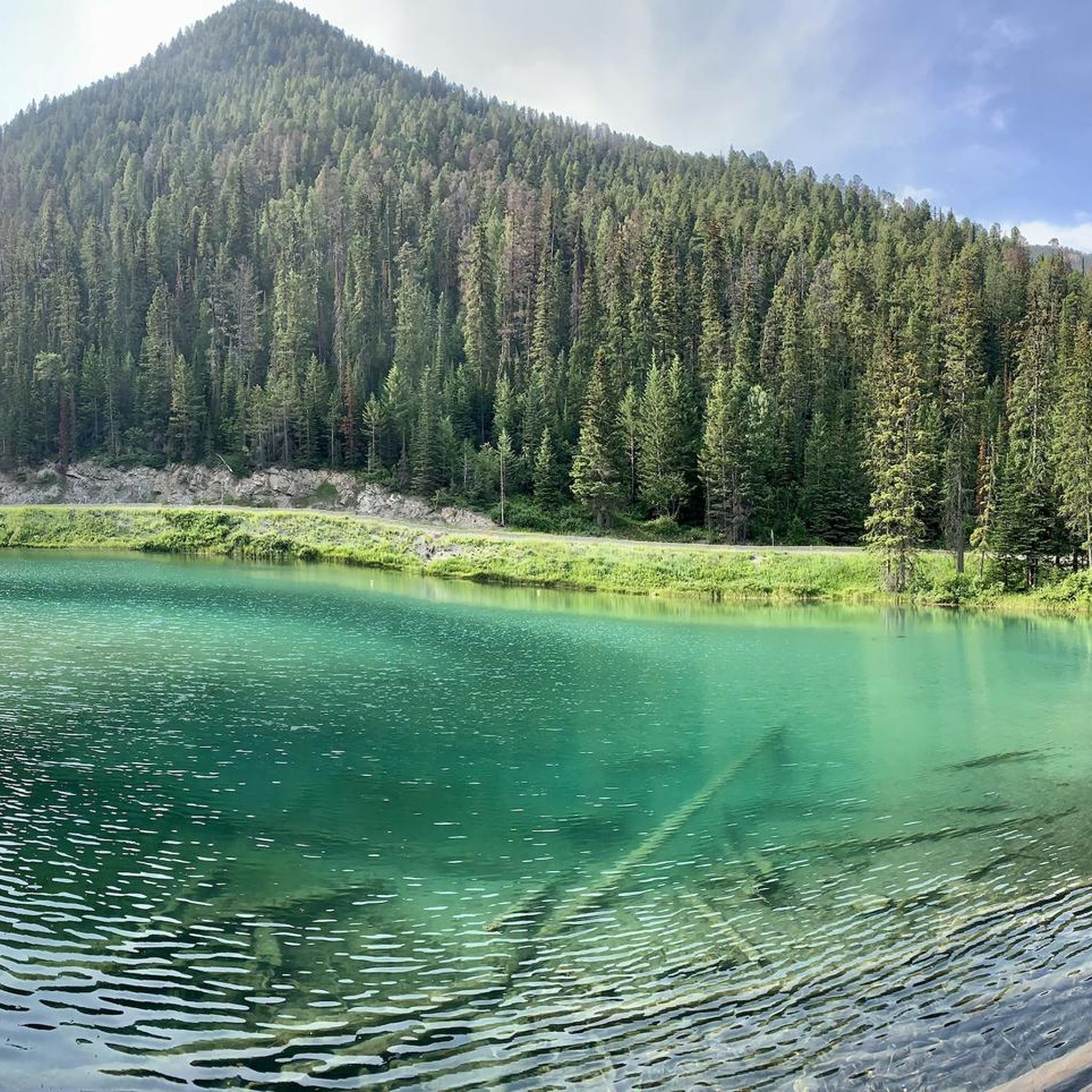
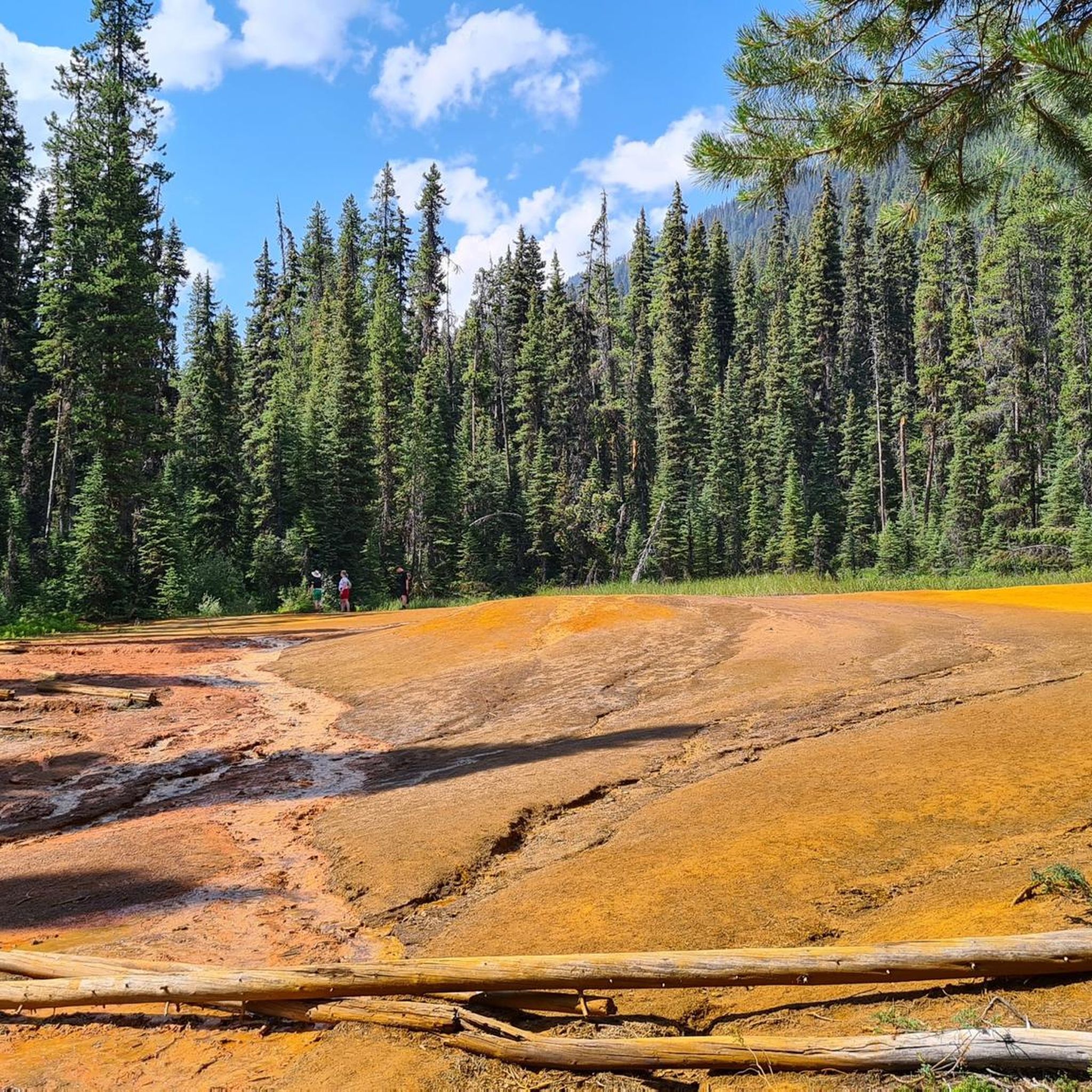
Yes, Kootenay National Park has several easy trails suitable for families. For instance, the Redstreak Creek Trail offers a gentle 2.8-mile (4.5 km) walk. Another accessible option is the interpretive trail to the Olive Lake, perfect for a leisurely stop or picnic. The Paint Pots Trailhead – Paint Pots loop is also an easy walk to a unique geological site.
Can I bring my dog on the hiking trails in Kootenay National Park?
Dogs are generally permitted on most trails in Kootenay National Park, but they must be kept on a leash at all times. Always check specific trail regulations before heading out, as some areas, particularly those with sensitive wildlife or high visitor traffic, may have restrictions.
What are some notable natural attractions or landmarks to see along the trails?
Kootenay National Park is rich in natural attractions. You can explore the dramatic Marble Canyon with its rushing Tokumm Creek, or visit the unique Paint Pots, mineral springs with vibrant ochre deposits. Numa Falls offers a stunning waterfall view, and Olive Lake provides a tranquil setting. The Stanley Glacier Trail leads to a hanging valley with impressive glacier vistas.
Are there any challenging multi-day hiking opportunities in the park?
Yes, Kootenay National Park is home to the renowned Rockwall Trail, an epic 55 km backpacking route considered one of the best multi-day hikes in the Canadian Rockies. It features glaciers, waterfalls, wildflower meadows, and pristine lakes. While the full Rockwall is a multi-day commitment, sections like the path to Floe Lake can be enjoyed as day hikes.
What is the best time of year to go hiking in Kootenay National Park?
The best time for hiking in Kootenay National Park is typically from late spring to early fall (June to September). During these months, trails are generally clear of snow, wildflowers are in bloom, and the weather is most favorable. Early summer can still see snow at higher elevations, while fall brings cooler temperatures and vibrant autumn colors.
Are there any circular hiking routes available?
Yes, Kootenay National Park offers several loop trails. A popular option is the Creek – Cascade loop from Stanley Glacier Trailhead, which is a 6.9-mile (11.0 km) trail. Another is the Marble Canyon – Paint Pots loop from Marble Canyon Trailhead Parking, covering 7.7 km.
What are the parking facilities like at Kootenay National Park trailheads?
Most major trailheads in Kootenay National Park have designated parking areas. These can fill up quickly during peak season, especially for popular trails like Marble Canyon or Stanley Glacier. It's advisable to arrive early, particularly on weekends or holidays, to secure a spot.
Is public transport available to access hiking trails in Kootenay National Park?
Public transport options directly into Kootenay National Park and to specific trailheads are limited. Most visitors access the park and its trails by private vehicle. Some shuttle services may operate from nearby towns like Banff or Lake Louise to certain areas, but it's best to check with local tourism providers for current availability.
What do other hikers say about their experience in Kootenay National Park?
The hiking experiences in Kootenay National Park are highly rated by the komoot community, with an average score of 4.5 stars from nearly 200 reviews. Hikers often praise the park's stunning scenery, diverse trails, and the opportunity to witness unique natural features like glaciers, canyons, and the vibrant Paint Pots.
What kind of wildlife might I see while hiking in Kootenay National Park?
Kootenay National Park is home to a variety of wildlife. Hikers might spot animals such as elk, bighorn sheep, and moose. The park also provides habitat for larger predators like grizzly bears, black bears, wolves, and cougars, so it's important to be bear-aware and carry bear spray.
Are there any permits required for hiking in Kootenay National Park?
A valid Parks Canada Discovery Pass or a daily park pass is required for entry into Kootenay National Park. For multi-day backcountry trips, such as sections of the Rockwall Trail, a backcountry permit is also necessary and should be reserved in advance through Parks Canada.
Most popular routes in Kootenay National Park
Most popular attractions in Kootenay National Park

Get inspired with the komoot mobile app


Explore more
Browse the best Hikes in other regions.
