Top 20 Castles around Straufhain
Castles around Straufhain are often found in strategic locations, many on volcanic mountains offering panoramic views. The region, particularly around the 449-meter-high Straufhain mountain, has a rich medieval history, with strongholds like Burgruine Straufhain serving as significant power centers. Visitors can explore these historical sites via marked hiking trails, enjoying the natural surroundings of Southern Thuringia and the Coburg region. The area offers a blend of historical exploration and outdoor activity.
Best castles around Straufhain
- The most popular castles is…
Last updated: November 20, 2026
Heldburg Fortress
Highlight • Castle
Translated by Google •
Tip by

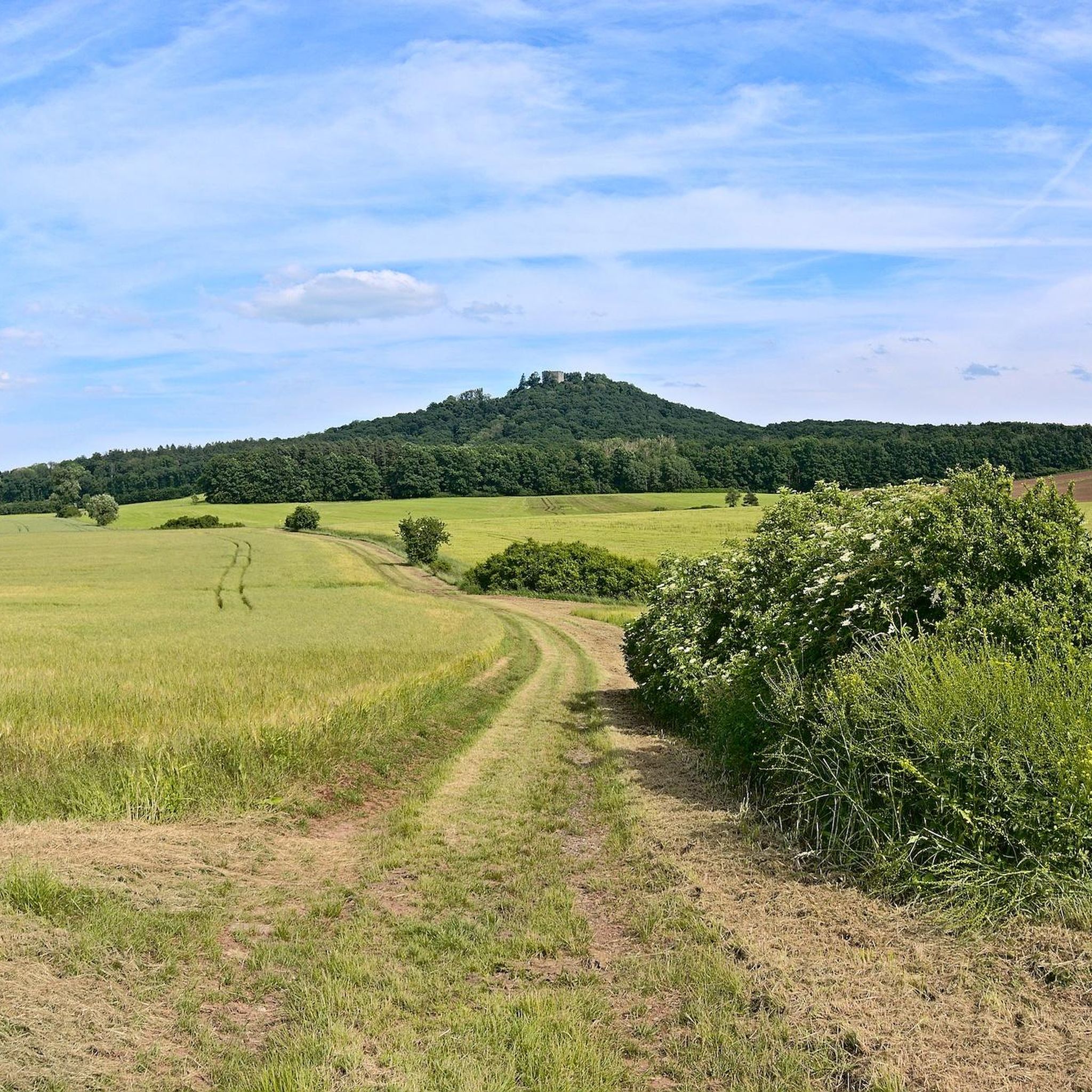
Straufhain Castle Ruins
Highlight • Castle
Translated by Google •
Tip by
Sign up now to discover places like this
Get recommendations on the best single tracks, peaks, & plenty of other exciting outdoor places.
Sternberg Castle
Highlight • Castle
Translated by Google •
Tip by
Ruins of the Ottilien Chapel
Highlight • Historical Site
Translated by Google •
Tip by

Bockstadt Castle
Highlight • Castle
First, the stud farm was …
Translated by Google •
Tip by
Sign up for free to discover even more castles around Straufhain.
Already have an account?
Start today with a free account
Your next adventure awaits.

Tips from the Community

The renovation looks very strange. There are holes in some of the floor 😳
3
0
The castle near Eisfeld, near Coburg, has stood empty for 30 years. A model of sustainable use could save it from decay. It was built by Baron Hermann von Münchhausen, the founder of a stud farm for thoroughbred horses, whose achievements included winning the German Derby in Hamburg in 1894. The castle, constructed until 1904 in the Scottish country house style, was the benchmark work of the later star architect Karl Behlert, master builder at the court of Duke George II of Saxe-Meiningen. Architectural details can be found in Cecilienhof Palace in Potsdam, built in 1917. The burial site of the von Münchhausen family is also a listed building. The association seeks to find partners to preserve this cultural asset. The property is well suited for the establishment of a non-profit shared living community for senior citizens, possibly as a foundation jointly with the current owners and/or under a social services organization. For the time being, the club is collecting equity capital for a (partial) buyback.
5
0

This panel vividly explains the formation of the Straufhain. The geological outcrop is located right next to it and is unfortunately somewhat overgrown. Otherwise, it's really very interesting. There are several other basalt cones of this type in the area, including the Heldburg Fortress and the Gleichberge Mountains, which bear witness to past volcanic activity.
8
2
This beautifully designed seating area, created by wood sculptor Max Müller, is located on Burgstrasse, right next to the Victoria Rondell at the beginning of the footpath to the fortress, and is part of the children's play area. Beautifully designed and decorated with carvings, the space is not only an eye-catcher but also invites you to linger for a while.
12
0
In keeping with the artistically minded sovereign's philosophy, the theatrical element was not neglected in the design of this outdoor retreat. A small arbor was created on the Commandant's Building beneath a monumental scene depicting Saint George fighting his archenemy – the dragon. Since the 19th century, the Commandant's Building has been adorned with a monumental mural depicting Saint George with the dragon. It was commissioned by Duke George II, a likely coincidence in their names. Source: https://blog.thueringerschloesser.de/veranda-fuer-den-herzog/
12
0
In 1888, Baron Hermann-August von Münchhausen, a last descendant of the famous Münchhausen dynasty from Bodenwerder, settled as the new owner of the Bockstadt manor. First, the stud farm was established. In addition to the 38 hectares of pastureland, which provided the horses with plenty of space to roam freely, there was also a stud farm's own galloping track and a 30 x 60 meter riding arena for riders. Baron von Münchhausen bred the most successful thoroughbred horses of his time. Around 1900, Baron von Münchhausen commissioned the architect Behlert to build the new palace. After four years of construction, a spacious building in the Scottish country house style was built, surrounded by magnificent parkland, avenues, and ponds. The palace, on approximately 60,000 m2 of land, is privately owned, not accessible, and is for sale. Source: http://wbs.werra-burgen-steig.de/index.php/schloss-bockstadt.html
13
0
The "Tiefkeller Veste Heldburg (Heidenbaukeller)" (DE 5730-305) FFH area was proposed as a FFH area by the Thuringian Ministry of the Environment in June 2004 and reported to the EU Commission via the Federal Ministry for the Environment. Its inclusion in the list of sites of Community importance in the Continental Biogeographical Region was confirmed by the EU Commission in November 2007 (Official Journal of the European Union - EC No. L 12/383 of November 13, 2007). Source: (Official Journal of the European Union - EC No. L 12/383 of November 13, 2007).
16
0
Heldburg Fortress was a high medieval hilltop castle that was rebuilt in the 16th century as a Renaissance-style palace. It rises 113 meters above the town of Heldburg in the Heldburg region, the southernmost tip of the Hildburghausen district in Thuringia, on a 405-meter-high volcanic cone belonging to the former Heldburger Gangschar volcanic region. Founded in the 12th or 13th century, it has been called the "Franconian Light" since the 14th century due to its prominent location, a counterpart to the "Franconian Crown," the nearby Coburg Fortress. Heldburg Fortress is the only Thuringian fortress listed as a sight on the Castle Road. The French-style building of the fortress houses the German Castle Museum, which opened in September 2016. Source: https://de.m.wikipedia.org/wiki/Veste_Heldburg
12
0
Frequently Asked Questions
What kind of castles can I expect to find around Straufhain?
The Straufhain region features a diverse range of castles, from well-preserved fortresses to impressive ruins. Many are strategically located on volcanic mountains, offering panoramic views. You'll find medieval strongholds like Straufhain Castle Ruins and more modern complexes such as Heldburg Fortress, which houses the German Castle Museum.
Are there family-friendly castles to visit in the Straufhain area?
Yes, Heldburg Fortress is considered family-friendly. It offers an engaging experience with the German Castle Museum, making history accessible for all ages. The panoramic views from its tower are also a highlight for families.
What natural features can I see when visiting castles in this region?
Many castles, like Straufhain Castle Ruins, are situated on volcanic mountains, providing a unique geological backdrop. From these elevated positions, you can enjoy extensive views across Southern Thuringia and the Coburg region. You'll also find natural elements like giant sequoias at Sternberg Castle and forested areas surrounding many of the sites.
What historical insights can I gain from visiting the castles around Straufhain?
The castles offer a deep dive into the region's medieval history. Straufhain Castle Ruins, for instance, was a significant power center dating back to around 800 AD, flourishing under the Counts of Henneberg. Heldburg Fortress houses the German Castle Museum, providing a comprehensive look at castle history and culture in Europe. Even ruins like the Ruins of the Ottilien Chapel hint at ancient Germanic worship sites and early Christianization.
Are there hiking opportunities around the castles?
Yes, the castle ruins are often accessible via marked hiking trails, providing a pleasant outdoor experience. For example, Straufhain Castle Ruins has two main routes connecting it to the surrounding forest and various viewpoints. You can find more hiking routes in the region by exploring the nearby guides.
What outdoor activities can I do near these castles besides hiking?
The Straufhain region is excellent for various cycling activities. You can find numerous routes for road cycling, touring bicycle, and gravel biking, many of which pass by or offer views of the castles and the scenic landscape.
What do visitors enjoy most about the castles around Straufhain?
Visitors frequently highlight the extensive panoramic views from the castle sites, especially from Straufhain Castle Ruins and Heldburg Fortress. The immersive historical experience, the well-preserved nature of some complexes, and the opportunity for outdoor activities like hiking and biking are also highly appreciated.
Is there a castle that is not publicly accessible?
Yes, Bockstadt Castle is privately owned and currently not accessible to the public. It's a notable example of Scottish country house style architecture in the region, but can only be viewed from a distance.
Which castle offers the best panoramic views?
Both Heldburg Fortress and Straufhain Castle Ruins are renowned for their panoramic views. From Heldburg's tower, you can see the Thuringian Forest, Rhön, Hassbergen, and Frankenwald. Straufhain offers extensive views across Southern Thuringia and the Coburg region, with the ruins visible from afar year-round.
Are there any unique natural sights associated with the castles?
Yes, Sternberg Castle is notable for the giant sequoias growing in its grounds. Additionally, Straufhain Castle Ruins stands on a geologically interesting volcanic mountain, adding a unique natural dimension to its historical significance.
What is the best season to visit the castles around Straufhain?
A visit to Straufhain Castle Ruins is worthwhile at any time of the year, including winter, according to visitors. The panoramic views are impressive year-round, and the hiking trails offer different experiences depending on the season. Autumn can be particularly scenic with changing foliage.
Most popular routes around Straufhain
Most popular attractions around Straufhain

Get inspired with the komoot mobile app


Explore more
Looking for the best castles somewhere else? Discover other guides around Straufhain:
