The best MTB trails around Bischofsheim
4.5
(1872)
6,710
riders
493
rides
Mountain biking around Bischofsheim offers diverse terrain within the Rhön Mountains, a UNESCO Biosphere Reserve. The region is characterized by picturesque hill ranges, forests, and unwooded mountain peaks that provide expansive views. Dedicated trail networks, including flowtrails, cater specifically to mountain bikers, traversing varied landscapes of forests, fields, and vineyards.
Best mountain bike trails around Bischofsheim
- The most popular mountain bike trail is Platte Hunting Lodge – Mainspitze, Mainz-Kastel loop from Mainz-Bischofsheim, a 36.8 miles (59.2 km) trail that…
Last updated: October 4, 2026
4.8
(9)
34
riders
Hard mountain bike ride. Good fitness required. Advanced riding skills necessary. Some portions of the route may require you to push your bike.
4.8
(9)
30
riders
Moderate mountain bike ride. Good fitness required. Suitable for all skill levels.

4.3
(3)
16
riders
32.2km
01:48
190m
190m
Easy mountain bike ride. Great for any fitness level. Suitable for all skill levels.
4.0
(2)
16
riders
16.9km
01:00
50m
50m
Easy mountain bike ride. Great for any fitness level. Suitable for all skill levels.
4.8
(4)
14
riders
39.3km
02:38
440m
440m
Moderate mountain bike ride. Good fitness required. Advanced riding skills necessary.
Get access to more routes and recommendations from other explorers.
Already have an account?
Our route recommendations are based on thousands of hikes, rides, and runs completed by other people on komoot.
Start today with a free account
Your next adventure awaits.
Popular around Bischofsheim


Tips from the Community

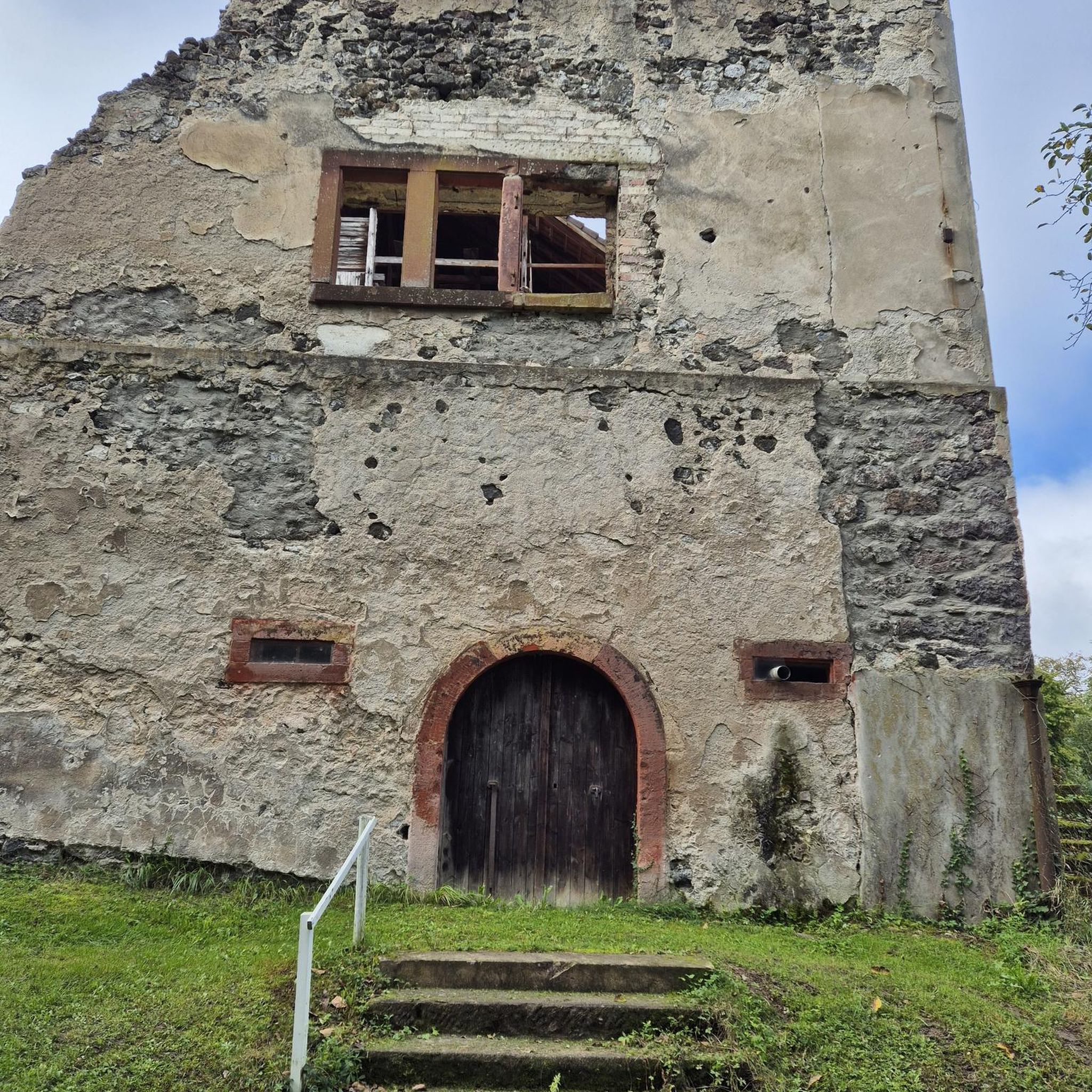
The Flörsheimer Warte, a former watchtower, was part of the Kasteler Landwehr in the 15th century, which the Archbishopric of Mainz had established to protect its possessions on the right bank of the Rhine. After secularization (1803), the Landwehr lost its importance, as there was nothing left to defend due to lack of substance. The Flörsheimer Warte gradually fell into ruin. In 1996, a reconstruction based on historical models was built next to the relics of the medieval defensive tower. From here, there are magnificent panoramic views in all four cardinal directions over the Rheingau and the Taunus to the Frankfurt skyline. The popular excursion restaurant "Flörsheimer Warte" with a wine garden and weekend winter lounge invites you to enjoy Spundekäs, Handkäs, and Bauernsalat, accompanied by the best drops from the vineyards in Wicker and Hochheim. More information: https://www.rheingau.com/infosystem/floersheimer-warte/poi.html.
1
0

The Iron Tree near Flörsheim am Main is a widely visible, artificial landmark of the RheinMain Regional Park. The striking, 18-meter-high steel structure stands on a hill in the middle of a scenically attractive nature reserve between Flörsheim and Hochheim – in the immediate vicinity of the local Jewish cemetery. It functions simultaneously as an accessible observation tower and a modern work of art intended to address humanity's laborious replication of nature. A spiral staircase leads visitors to a nine-meter-high viewing platform, which offers a spectacular panoramic view over the entire Rhine-Main area, the Taunus ridge, the Odenwald forest, and as far as Rüsselsheim. The special feature of the sculpture is its solar-powered sound system: The Iron Tree has leaves with integrated solar cells in its upper section. As soon as the sun shines during the day and someone steps onto the platform, an audio system is activated. The tree then begins to speak and provides visitors with information about its own construction, the surrounding landscape, and societal issues such as genetic engineering. The steel sculpture is constructed from a thick trunk and ten large, artificial main branches. Each of these branches is composed of 29 precisely bolted individual parts and carries a total of 92 steel leaves. Following an extensive renovation phase, during which all aged and rusty metal leaves were completely renewed in three stages, the talking observation tower has been shining in new splendor again since summer 2024 and is a popular destination for hikes and bike tours.
13
0

The Hochheim vineyards are world-famous and beautiful. When Riesling from Germany was the most sought-after and expensive wine in the world during the Victorian era (mid to late 19th century) (even more so than Burgundy and Bordeaux), it was also the latest "craze" in England. Due to the German roots of the English royal family and the connections to Hochheim, "Hochheimer" became synonymous with German Riesling. Since the English pronounced "ch" more like "k", "Hochheimer" quickly became "Hockheimer" and ultimately a shortened form "the Hock". Hock is still a fixed term in English traditional wine bars today.
0
0

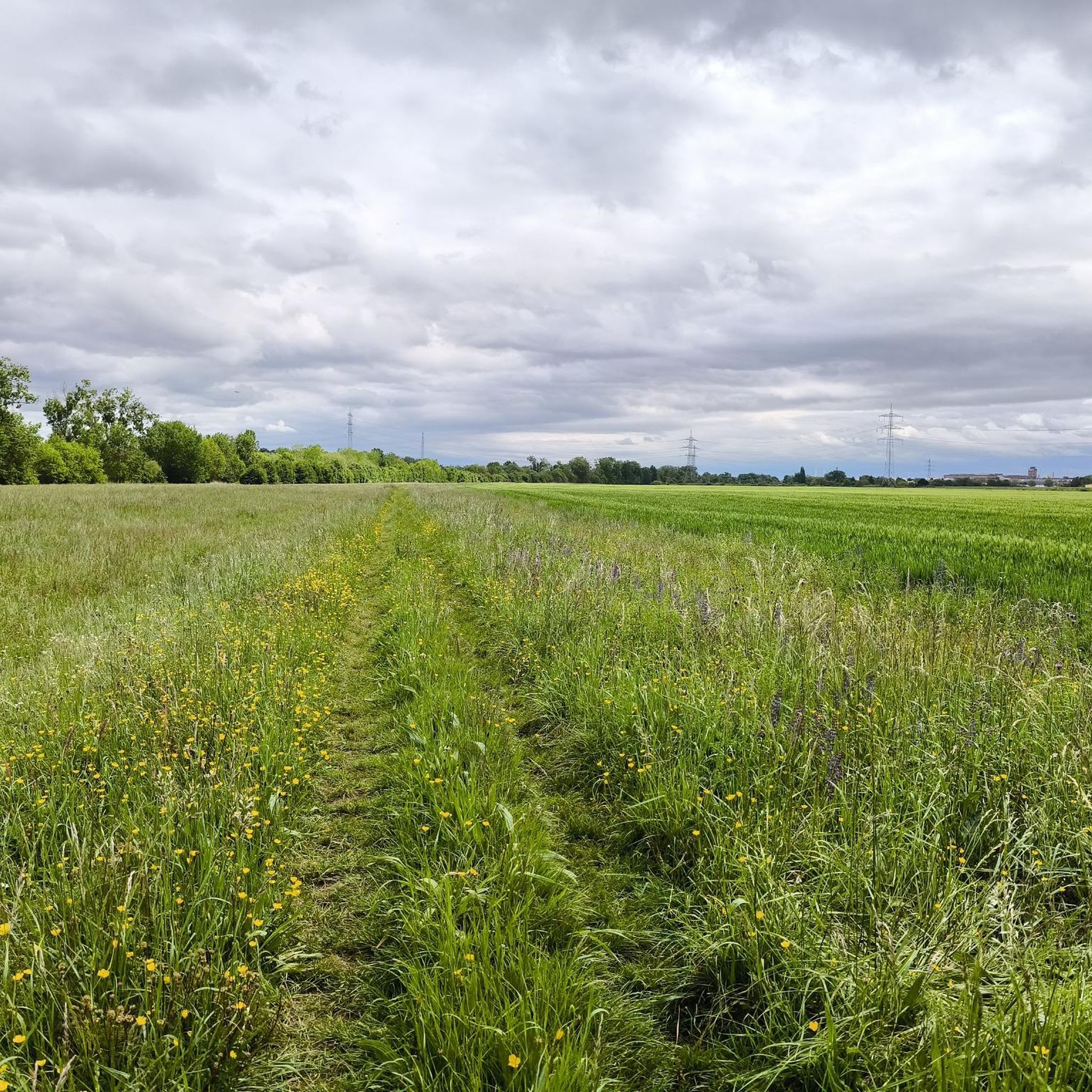
Beautiful view into the distance
1
0

A bit narrow. Overtaking difficult. Gets tight with oncoming traffic.
0
0

A beautiful view, but unfortunately too loud, as it is a highway bridge 😒
0
0
With a total length of around 1,233 kilometers, the Rhine is one of Europe's longest, most historically significant, and economically most important rivers. The river originates in the Swiss Alps, where it is formed from the two headwaters, the Vorder- and Hinterrhein. After flowing through Lake Constance, it plunges down at the Rhine Falls near Schaffhausen and subsequently forms the border between Switzerland and Germany as the High Rhine. Further on, as the Upper Rhine, it flows through the Upper Rhine Plain past major cities such as Karlsruhe and Ludwigshafen, as well as directly past the region of Mainz and Wiesbaden. In this area, the river bends sharply west at the so-called "Rheinknie" (Rhine bend) before reaching the spectacular Middle Rhine. This section between Bingen and Koblenz – known as the Upper Middle Rhine Valley – has been protected as a UNESCO World Heritage site since 2002 due to its density of castles, historic vineyards, and the legend of the Lorelei rock. Via the Lower Rhine and the metropolitan regions of Cologne and Düsseldorf, the Rhine finally continues into the Netherlands. There it splits into a vast delta and finally flows into the North Sea near Rotterdam. As an international waterway, the Rhine is the logistical backbone of Western Europe. It connects the major industrial centers and seaports directly with the hinterland, and is used annually by tens of thousands of cargo ships for the transport of coal, ores, containers, and chemical goods. In addition to its industrial function, the Rhine Valley serves as a lifeline for tourism, a productive energy source through hydropower plants, and a valuable natural and recreational area for millions of people.
8
0
A beautiful place and - new tip - the city of Frankfurt's winery has a new tenant and the wine tavern has reopened. It's worth it!
0
0
Frequently Asked Questions
How many mountain bike trails are available around Bischofsheim?
There are over 530 mountain bike trails around Bischofsheim, offering a wide variety of options for all skill levels within the picturesque Rhön Mountains.
What kind of terrain can I expect when mountain biking in Bischofsheim?
Mountain biking in Bischofsheim offers diverse terrain, from picturesque hill ranges and dense forests to unwooded mountain peaks providing expansive views. The region, part of the UNESCO Biosphere Reserve, features dedicated flowtrails, singletracks, and downhill sections, traversing varied landscapes of forests, fields, and vineyards.
Are there mountain bike trails for different skill levels in Bischofsheim?
Yes, the trail network around Bischofsheim caters to all skill levels. You'll find 177 easy routes, 324 moderate routes, and 33 more challenging options, ensuring there's something for everyone from beginners to advanced riders.
What natural features or landmarks can I see while mountain biking in Bischofsheim?
The Rhön Mountains offer stunning natural features. You might encounter the prominent Kreuzberg mountain, the scenic Guckaisee lake, or the unique Rotes Moor Nature Reserve. For specific highlights, consider exploring the Main estuary or the Mainspitze.
Are there any scenic viewpoints along the mountain bike trails?
Absolutely. The unwooded mountain peaks of the Rhön are known as the 'land of endless horizons,' offering expansive views. Notable viewpoints include Kreuzberg, Wasserkuppe (Hessen's highest mountain), and observation towers at the Rotes Moor Nature Reserve. You can also find great views from the Flörsheimer Watchtower or the Mönchbruch Nature Reserve Observation Tower.
What is the best time of year for mountain biking in Bischofsheim?
Spring and autumn are considered the optimal seasons for mountain biking in Bischofsheim. During these times, the weather is generally pleasant, and the natural scenery is particularly beautiful, making for an enjoyable riding experience.
Are there family-friendly mountain bike trails in Bischofsheim?
Yes, the region offers various options suitable for families. Beyond dedicated mountain biking trails, there are extensive cycling paths like the Rhön Cycle Path and the Rhönexpress cycle path, which follows a former railway line, ideal for relaxed family rides.
Can I bring my dog on the mountain bike trails in Bischofsheim?
While many trails in natural areas are generally dog-friendly, it's always best to check local signage and regulations, especially within the UNESCO Biosphere Reserve, to ensure responsible trail use and protect local wildlife. Keep your dog on a leash and clean up after them.
Is there parking available near the mountain bike trails in Bischofsheim?
Parking availability varies by trailhead. Many popular starting points for mountain bike routes, especially those near towns or specific attractions like Kreuzberg, typically offer designated parking areas. It's advisable to check specific route details on komoot for parking information related to your chosen trail.
How can I reach the mountain bike trails in Bischofsheim using public transport?
Bischofsheim and the surrounding Rhön region have public transport connections, though access to specific trailheads might require some planning. Regional buses often serve smaller towns and villages. For detailed information on routes and schedules, it's best to consult local public transport providers.
Are there any specific regulations or permits required for mountain biking in the Rhön Biosphere Reserve?
As the Rhön is a UNESCO Biosphere Reserve, there are regulations in place to protect its unique environment. Generally, mountain biking is permitted on designated trails and paths. It's important to stay on marked routes, respect nature, and be mindful of other trail users. Specific permits are not typically required for general mountain biking on public trails, but always look out for local signage.
What do other mountain bikers say about the trails in Bischofsheim?
The mountain bike trails around Bischofsheim are highly rated by the komoot community, with an average score of 4.5 stars from over 1500 reviews. Riders often praise the varied landscapes, well-maintained trails, and the stunning views offered by the Rhön Mountains.
Are there any circular mountain bike routes in Bischofsheim?
Yes, many mountain bike routes in Bischofsheim are designed as loops, allowing you to start and finish in the same location. An example of a popular loop is the Judenkopf Summit – View of Feldberg loop from Hochheim(Main), which offers a moderate challenge.
Most popular routes around Bischofsheim
Most popular attractions around Bischofsheim

Get inspired with the komoot mobile app


Explore more
Browse the best MTB trails in other regions.
