Attractions and Places To See around Poiares - Top 20
Best attractions and places to see around Poiares include a blend of local charm, cultural insights, and access to natural landscapes. This region in central Portugal is situated amidst mountain and river landscapes, including the Mondego and Alva rivers. Poiares offers unique attractions and points of interest, serving as a hub for those interested in local Portuguese culture, history, and natural beauty. It is also a notable stop for travelers along National Road No. 2.
Best attractions and places to…
Last updated: November 15, 2026
Ponte Almirante Sarmento Rodrigues
Highlight • Bridge
Translated by Google •
Tip by

Barca d'Alva
Highlight • Settlement
Translated by Google •
Tip by
Sign up now to discover places like this
Get recommendations on the best single tracks, peaks, & plenty of other exciting outdoor places.
Monument to Agostinho da Silva in Barca d’Alva
Highlight • Monument
Translated by Google •
Tip by
Calçada de Alpajares
Highlight (Segment) • Trail
Translated by Google •
Tip by

Camino de Hierro
Highlight • Trail
Translated by Google •
Tip by
Sign up for free to discover even more attractions around Poiares.
Already have an account?
Start today with a free account
Your next adventure awaits.
Tips from the Community

I would like to clarify that this is not a circular route. Therefore, it is half the indicated km. You have to go to the parking lot and from there you are taken to the starting point by bus. You are given a reflective vest and a flashlight that must be returned later. You have to buy a ticket in advance, for a fee, which covers the bus trip and insurance. There is a possibility to do a shorter route.
0
0

Built in the 1950s, you can walk on the road almost without danger. It feels like you can count the cars that change sides of the river here on four hands a day.
0
0
The last place on the Douro before the border with Spain. Small, sleepy and practically completely explorable on foot in 20 minutes. In return, it is fantastically situated in terms of scenery.
0
0

The bridge was designed and built in 1955 by the renowned Portuguese engineer Edgar Cardoso. It is considered the first motorway bridge in the Portuguese section of the Douro River and is a concrete arch bridge with a length of approximately 300 meters. It is named after the Portuguese naval officer and colonial administrator Almirante Manuel Maria Sarmento Rodrigues, who served as governor of Guinea and Mozambique under the Salazar dictatorship and later became Minister of Colonies.
1
0

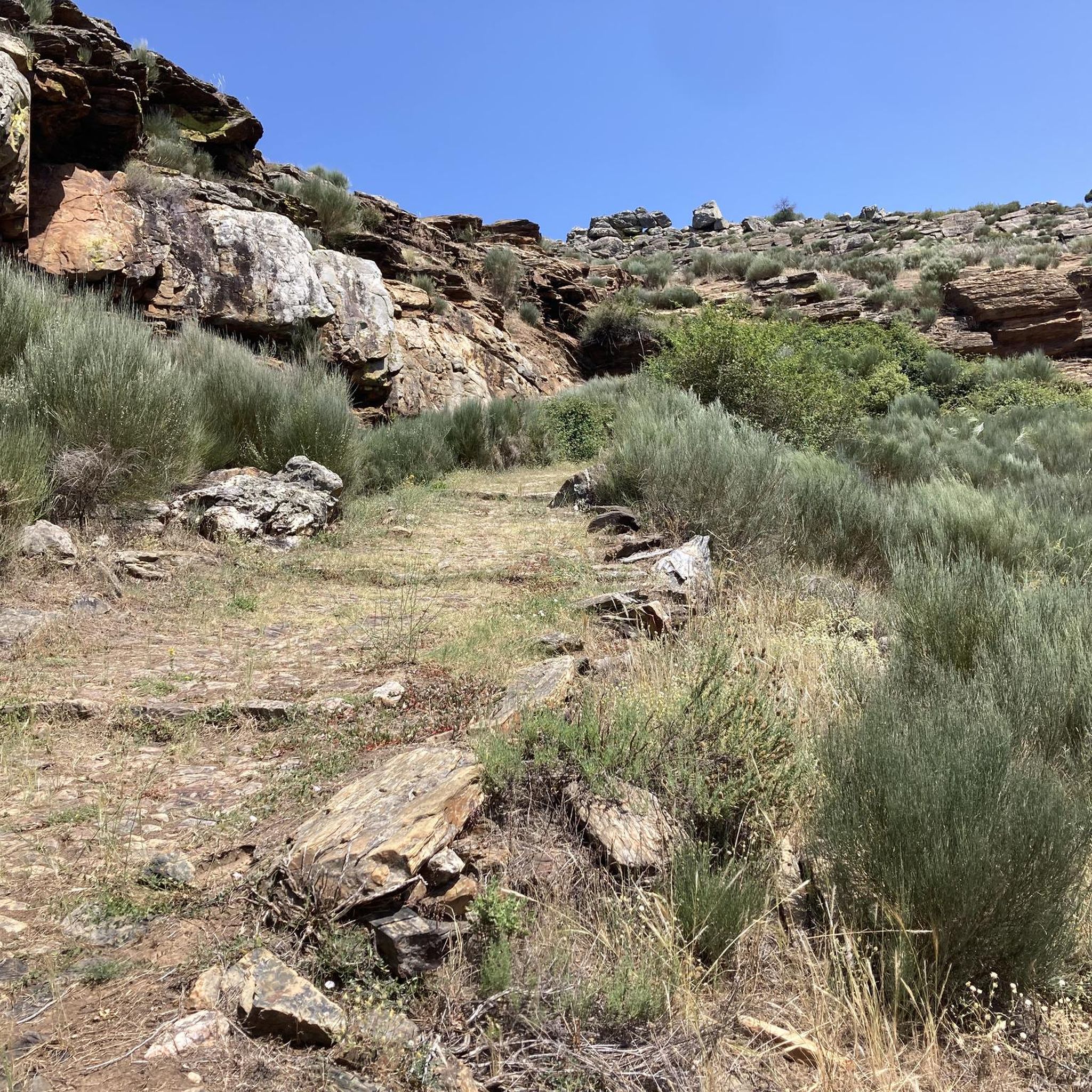
The Calçada de Alpajares winds through the landscape as a testament to times gone by: a medieval path, perhaps forged during the era of the first dynasty. For centuries, it was a very important route, especially until the beginning of the 20th century, before the Estado Novo roads redesigned the country's routes. This ancient route linked the north, the lands of Miranda, to the south, the Ribacôa region. Its original course approached the Douro River, descending to Freixo de Espada à Cinta, before heading along the slopes of the Poiares mountain range towards the village that shares the same name.
2
0

Camino de Hierro is a 17-kilometer-long pedestrian path that runs along a section of a closed-to-traffic, renovated railway line. It combines the grandeur of the most representative civil engineering (tunnels and viaducts) of the 19th century with spectacular natural beauty.
11
1
The bridge is notable for its six curvilinear polygonal arches, with a total length of 232 metres. In 1973, it was named after Admiral Sarmento Rodrigues, a prominent Portuguese politician and military man. The structure is an outstanding example of bridge engineering of the period and remains an important landmark in the region.
9
0
The monument to Professor Agostinho da Silva in Barca d’Alva is a beautiful sculpture created by the sculptor Eugénio Macedo. This monument pays tribute to Agostinho da Silva, a prominent Portuguese philosopher, poet and essayist. The sculpture represents Agostinho da Silva sitting on a bench, in life size, and is located in the open-air amphitheater of the river port of Barca d’Alva. This place allows visitors to sit next to the figure of the philosopher, offering a space for reflection and contemplation of the landscape.
10
0
Frequently Asked Questions
What outdoor activities can I enjoy around Poiares?
The region around Poiares offers a variety of outdoor activities. You can explore numerous trails for mountain biking, hiking, and road cycling. The mountain and river landscapes, including the Mondego and Alva rivers, are also ideal for adventure sports like river descents, canoeing, and sport fishing.
Are there any unique cultural or historical sites to visit in Poiares?
Yes, Poiares has unique cultural insights. You can visit Barca d'Alva, a settlement historically important as a border station with Spain. For local crafts, explore LBP – Barro Preto Olho Marinho, about 7 km from Poiares, to learn about traditional black clay pottery used for the local dish, Chanfana. The Monument to Agostinho da Silva in Barca d’Alva also offers a reflective cultural stop.
Where can I find scenic viewpoints or natural features near Poiares?
For breathtaking views, visit Penedo da Saudade, an iconic viewpoint offering mesmerizing scenery and vast stretches of trees. The Ponte Almirante Sarmento Rodrigues, a notable bridge over the Douro, also offers scenic perspectives. Additionally, the Cascata das Tres Entradas (Three Entrances Waterfall) is a stunning natural feature, particularly captivating in spring.
Are there family-friendly attractions or activities in the Poiares area?
Yes, several attractions are suitable for families. The Municipal Garden in the center of Poiares offers a pleasant spot to relax. Barca d'Alva is considered family-friendly, and the Vega Terrón River Pier and Railway Bridge has facilities like a restaurant and information center for children. The nearby Reconquinho River Beach in Penacova is also a great spot for family outings.
What is the Camino de Hierro and where is it located?
The Camino de Hierro is a 17-kilometer pedestrian path that follows a renovated, closed railway line. It's known for combining 19th-century civil engineering, including tunnels and viaducts, with spectacular natural beauty. It's a popular trail for those seeking a unique walking experience.
Are there any historical castles or ancient structures nearby?
Yes, the Lousã Castle (Castelo de Arouce) is just a short drive from Poiares. Built in the second half of the 11th century, it offers free entry and parking, serving as a great starting point for trails through schist villages and magical forests.
What is the significance of Poiares for travelers on National Road No. 2?
Poiares is a must-stop for those traveling along National Road No. 2, a famous route through Portugal. Many visitors get their passports stamped here as part of their journey, making it a memorable point on this iconic road.
Can I find museums or learn more about the local heritage?
Yes, the Museu Etnográfico e Arqueológico showcases artifacts highlighting ethnographic elements of daily life through generations, along with archaeological finds dating back centuries. This museum provides a deep dive into the region's heritage.
What is there to see in the center of Vila Nova de Poiares?
In the center of Vila Nova de Poiares, you can easily explore the Main Church and the Municipal Garden, which is located directly in front of the church. The garden offers a pleasant spot to relax at its terrace. The Praça do Município is also a lively square with cafes and shops.
Are there any attractions around Poiares that are wheelchair accessible?
Yes, the Ponte Almirante Sarmento Rodrigues and the Monument to Agostinho da Silva in Barca d’Alva are noted as wheelchair accessible, allowing more visitors to enjoy these sites.
What is the best time of year to visit the natural attractions around Poiares?
While Poiares is beautiful year-round, the Cascata das Tres Entradas (Three Entrances Waterfall) is particularly captivating in spring when water flow is abundant. Generally, spring and autumn offer pleasant temperatures for exploring outdoor trails and natural landscapes.
Are there options for swimming or river activities near Poiares?
Yes, the region is situated amidst river landscapes, including the Mondego and Alva rivers, which are suitable for river activities. The Reconquinho River Beach in Penacova, about 11 km away, is a suggested nearby place for swimming and relaxing by the water.
Most popular routes around Poiares
Most popular attractions around Poiares

Get inspired with the komoot mobile app


Explore more
Still not found the Highlight you’re looking for? See guides of the top attractions in other regions:
