Attractions and Places To See around Aljubarrota - Top 20
Best attractions and places to see around Aljubarrota include historical sites and cultural landmarks in central Portugal. The region offers a mix of ancient monastic complexes, significant monuments, and coastal views. Visitors can explore sites that reflect centuries of history and local traditions. Aljubarrota is a destination for those interested in historical exploration and cultural insights.
Best attractions and places to see around Aljubarrota
- The most popular attractions is Alcobaça Monastery, a religious building that was established in 1153…
Last updated: October 4, 2026
Alcobaça Monastery
Highlight • Religious Site
Tip by

Memory Arch
Highlight • Monument
On the historical aspect, it was built by the Cistercian monks, it measures 4 meters high …
Translated by Google •
Tip by

Sign up now to discover places like this
Get recommendations on the best single tracks, peaks, & plenty of other exciting outdoor places.
Clube Naval da Nazaré
Highlight • Structure
Translated by Google •
Tip by

I:REVERSIBLE - Street Art by YZ Yseult + Tamara Alves (2022)
Highlight • Monument
The pair created “I:REVERSIBLE”, a tribute …
Tip by

Boatyard of São Martinho do Porto
Highlight • Structure
Translated by Google •
Tip by
Sign up for free to discover even more attractions around Aljubarrota.
Already have an account?
Start today with a free account
Your next adventure awaits.
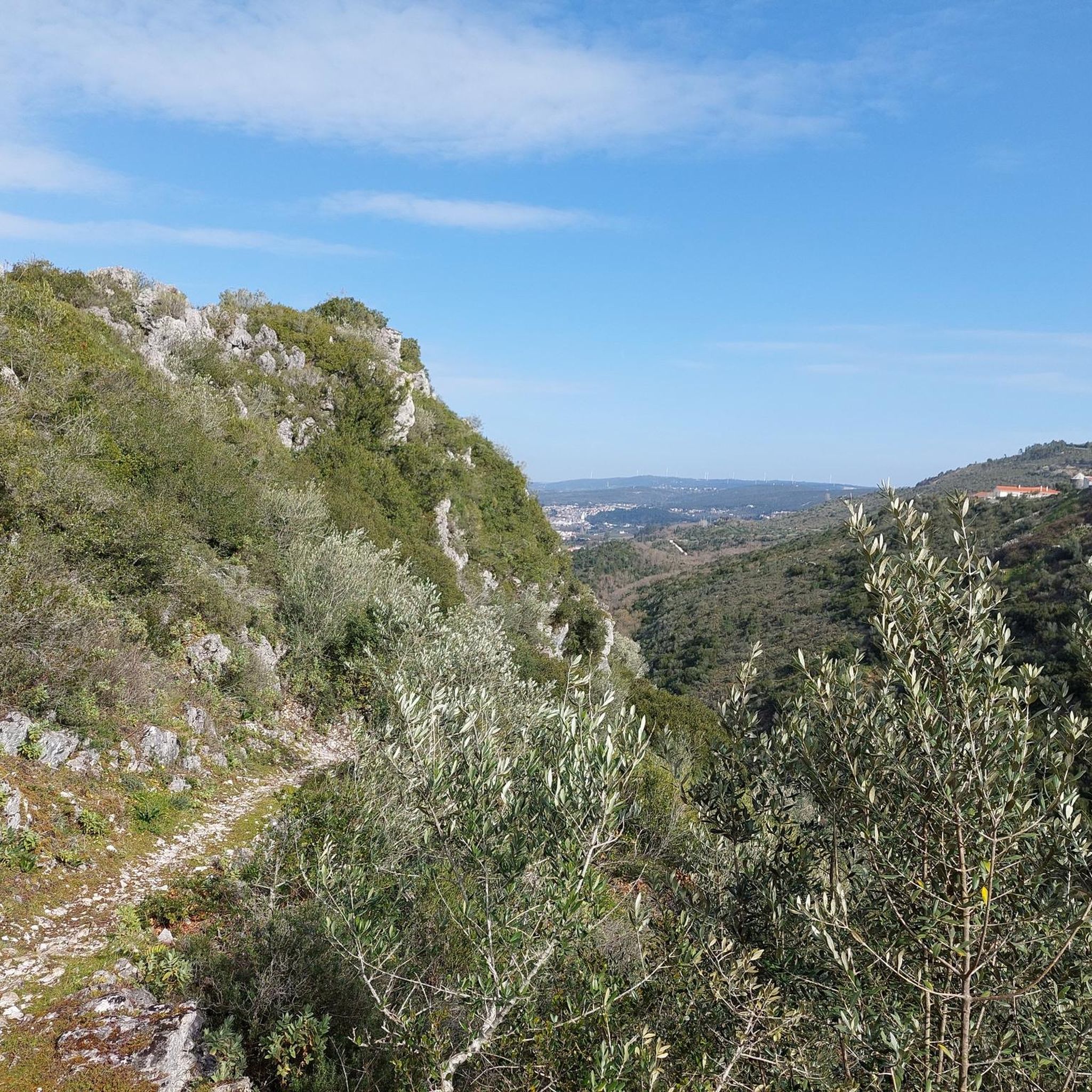
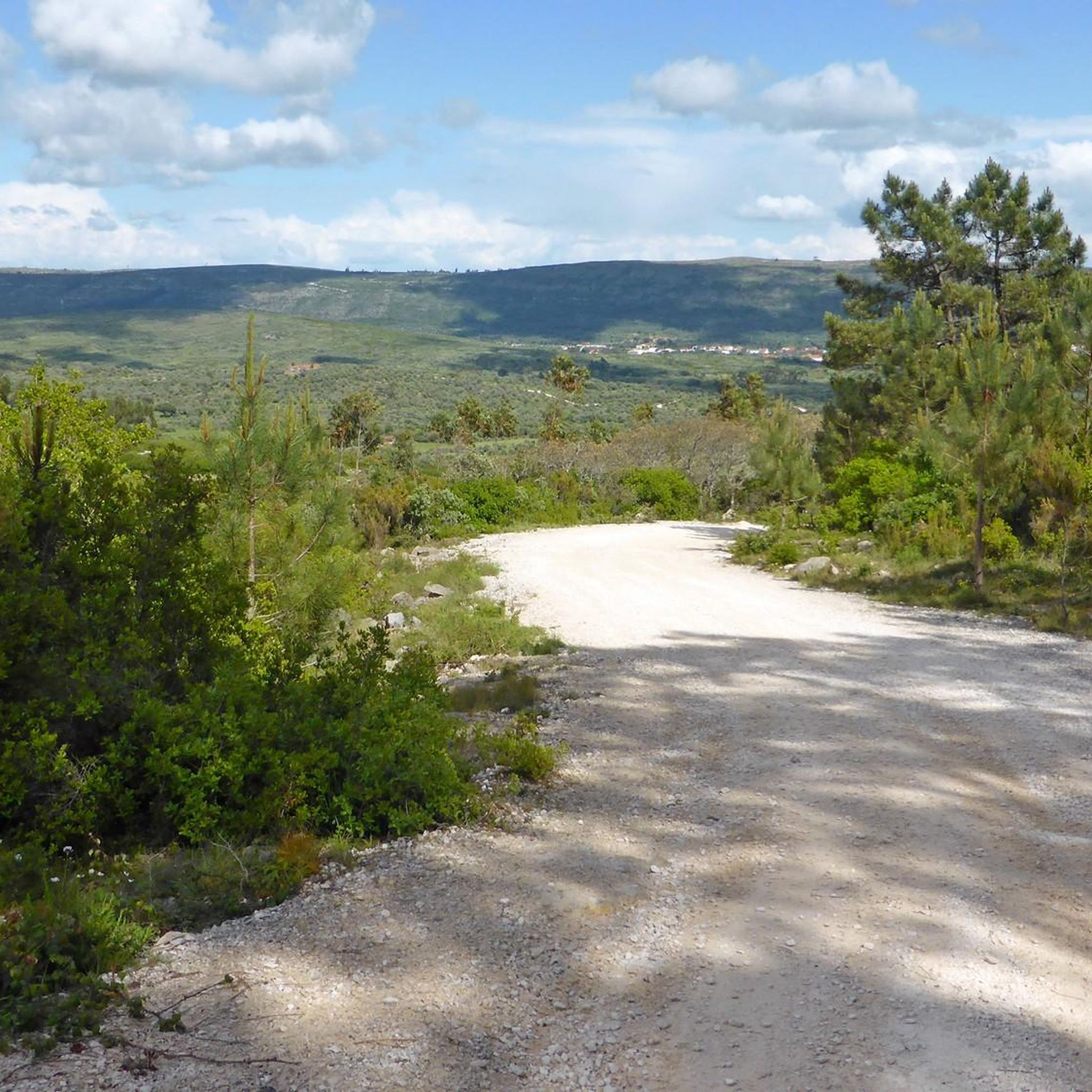
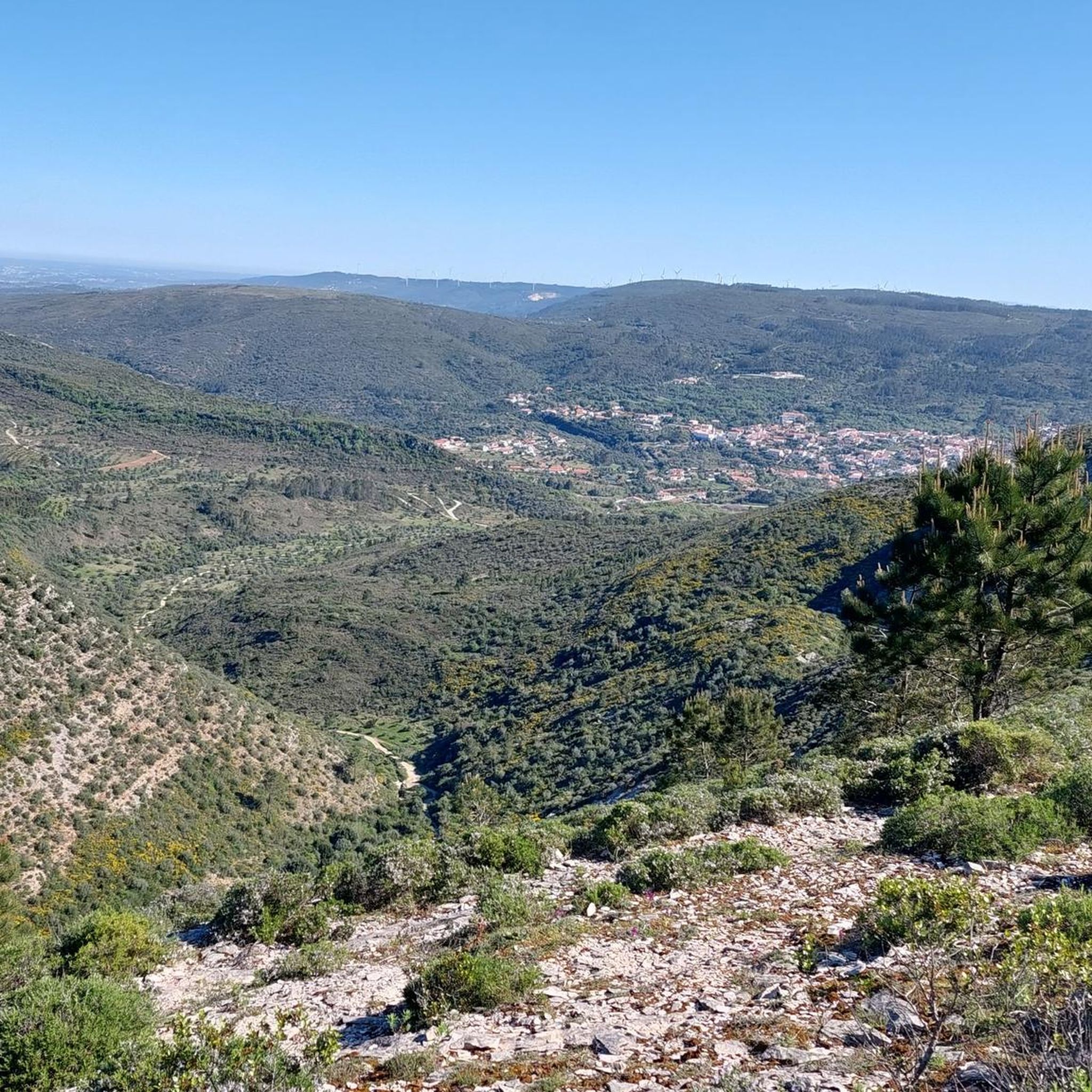
Tips from the Community

From the chapter house on the ground floor, a staircase leads up to the dormitory. This staircase was rediscovered during renovations beginning in 1930. Located on the first floor, the dormitory extends 66.5 meters in length and 21.5 to 17.5 meters in width along the entire east side of the medieval part of the abbey, thus covering an area of almost 1,300 square meters. In its current form, restored through renovation, it presents itself in its original medieval state. At the southern end, the dormitory opens with a large round-arched doorway to the northern transept of the church. A staircase formerly led down from there, as the Cistercian rule required two separate entrances to the communal sleeping quarters. At the northern end of the dormitory were the latrines, which—again according to a general rule of the order—had to be separated from the sleeping quarters by a separate room. The wastewater flowed into the abbey's garden on the north side. The monks slept together in the dormitory, fully clothed, separated from their neighbors only by a movable partition. The abbot alone had his own cell, located on the south side facing the church. This arrangement is typical of most Cistercian monasteries of this period. A narrow door in the center of the western side leads to a narrow spiral staircase, which today provides access to the kitchen, but in the Middle Ages led to the calefactory (warming room, see below). This staircase also provided access to the upper cloister. https://de.wikipedia.org/wiki/Kloster_Alcoba%C3%A7a
2
0
The entrance to the chapter house features a particularly striking facade with staggered columns. The chapter house served as the meeting place for the monks and was, after the church, the most important room in the monastery. It bears this name because the chapters of the Rule of St. Benedict were read aloud there daily. Elections and similar communal ceremonies of the monks also took place there. In the entrance area to the chapter house is the gravestone of an abbot whose identity is no longer known. The floor of the chapter house was formerly completely covered with such gravestones, as a Cistercian rule from 1180 stipulated that abbots had to be buried in the chapter house, meaning that the monks made their decisions on the graves of their deceased abbots. This type of burial was a significant exception to the general Cistercian rule, which forbade the burial of monks within the monastery. That's why you'll find a door leading south in the southern transept called the Porta da Morte (Door of Death), because deceased monks were carried out through it for burial. https://de.wikipedia.org/wiki/Kloster_Alcoba%C3%A7a
1
0
To the west of the new kitchen lies the refectory, the dining hall for the monks, a three-aisled hall measuring approximately 620 square meters (29 x 21.5 meters). Above its entrance, in medieval Latin, is the difficult-to-interpret inscription: "respicte quia peccata populi comeditis," meaning: "Remember that you are eating the sins of the people." The room impresses with its beautiful proportions. It has windows facing north and east, overlooking the new kitchen. On the west side, a stone staircase leads to the pulpit of the lector, who read from monastic texts during meals. The monks sat facing the walls and ate their meals in silence. The abbot sat with his back to the north wall, observing the proceedings. At the southern end of the west side, the refectory opens into the former medieval kitchen, now a side room leading to the cloister of the Cathedral of Afonso VI. A few meters further along, another opening can be found in the same wall, two meters high and 32 cm wide. It leads to the aforementioned side room, and there is no scientifically sound explanation for it. A long-standing legend claims that this opening served to monitor the monks' weight. They were supposed to pass through this door once a month, which is only possible by leaning sideways. If they were too heavy, they were put on a diet. The damage caused by the conversion of the refectory into a theater in 1840 (with 301 seats, 120 of which were in the galleries, and 5 boxes) was largely repaired during the restoration. https://de.wikipedia.org/wiki/Kloster_Alcoba%C3%A7a
1
0
The exact date of the monastery kitchen's reconstruction is disputed, despite a date of 1712 inscribed within the kitchen. However, it is assumed that the new kitchen was completed before the construction of King Afonso VI's cloister, thus likely towards the end of the 17th century. In the center of the kitchen, a chimney was built over a base of approximately 3 x 8 meters and reached a height of about 25 meters. Two flanking chimneys of the same height flanked the kitchen, forming the highest point in the monastery's roofscape after the church and its nave. Such structures existed in Portugal only at the Convent of Christ in Tomar and the Royal National Palace in Sintra. The hearth of the main chimney is recessed to hold the embers, so that these facilities—after centuries of abstaining from meat—were now suitable for grilling and roasting whole cattle. A ditch of the levada, the artificial side channel of the Alcoa River, flows beneath the kitchen floor. On the west side of the kitchen are seven large stone basins, each with two spouts depicting mythical faces or grotesque masks. Water flowed into these tub-sized basins, fed by a channel running inside the wall. In 1762, the kitchen received its current tiles, which cover both the walls and ceiling. https://de.wikipedia.org/wiki/Kloster_Alcoba%C3%A7a
2
0
The first cloister was probably completed around 1240, along with the church, but it may have collapsed. It was replaced around 1308–1311 by the present-day Claustro de Dom Dinis, also known as the Claustro de Silencio (Cloister of Silence, because speaking was forbidden there). It has a circumference of 203 meters and an average height of 5 meters on the ground floor. At the beginning of the 16th century, a second story was added to the cloister by order of King Manuel I (1469–1521), giving it two levels. Access to the upper level of the cloister is via a spiral staircase in the northeast corner, which also connects the kitchen to the dormitory. https://de.wikipedia.org/wiki/Kloster_Alcoba%C3%A7a
2
0

On the southwest hillside of Cabeço Gordo, almost coinciding with the administrative boundaries between Porto de Mos municipalities and Alcobaça, the Memory Arc it was built, probably in the late sixteenth and early seventeenth century and was restored in 1830, by King Miguel, as shown in one of its inscriptions. The bow, perfectly round, has only two inscriptions, one in Latin almost imperceptible, due to stone erosion, registered in 1758 and composed by Friar Bernardo de Brito, in the beginning of the seventeenth century at the behest of Alcobaça Monastery Abbot. According to tradition, that History denies, the monument was built by the monks of the Cistercian Order, for marking the land donated by the Portuguese first King Afonso Henriques. However, its construction only intended to give material evidences of the vow of D. Afonso Henriques, invented by Alcobaça chroniclers.
1
0

This spot offers a magnificent panorama of the coast and a 360 degree view. On the historical aspect, it was built by the Cistercian monks, it measures 4 meters high and 3.62 meters wide. The arch has no decoration, only two inscriptions: the first, the oldest written in Latin, testifies to its creation. The second inscription refers to the reconstruction of the monument, carried out by D. Michael in 1830.
1
0
For the “(No) Borders” project Underdogs Gallery invited French artist YZ Yseult and Portuguese artist Tamara Alves to create a collaborative intervention in Nazaré. The pair created “I:REVERSIBLE”, a tribute to the ancestral and predominantly female practice of fish drying in Nazaré, which is in danger of disappearing. Giving it pride of place in a privileged part of the city, YZ developed a portrait of one the last guardians of this valuable knowledge, standing as a warning about the loss of tradition and leading us to think about what can and should be done to preserve it. In turn, Tamara Alves created a composition of a young female figure, representing the possibilities for the future and questioning how we can cherish this practice while creating a new narrative in which women are in full control of their decisions, choices and destinies. Developed in the scope of Saison France-Portugal 2022 “(No) Borders” is a project that invites Portuguese and French artists to come together and create collaborative public art interventions in four coastal sister cities between Portugal and France: Nazaré – Capbreton & Porto – Bordeaux.”
1
0
Frequently Asked Questions
What historical and cultural sites can I visit around Aljubarrota?
The region around Aljubarrota is rich in history. A prominent site is the Alcobaça Monastery, a UNESCO World Heritage Site established in 1153, known for its impressive architecture, church, and cloister. You can also explore the Memory Arch, a man-made monument built by Cistercian monks that offers panoramic coastal views.
Are there any family-friendly attractions near Aljubarrota?
Yes, several attractions around Aljubarrota are suitable for families. The Alcobaça Monastery is considered family-friendly, offering a fascinating historical experience. Additionally, the Clube Naval da Nazaré, with its marina, provides an interesting spot for families to stroll and observe boats.
What kind of outdoor activities can I do near Aljubarrota?
Aljubarrota offers various outdoor activities, especially cycling. You can find numerous routes for mountain biking, gravel biking, and road cycling. For example, there are challenging MTB trails like the 'Alcobaça Monastery – Singletrack Through Forest loop' or more moderate gravel biking options such as the 'Chafariz da Cela Nova loop'. Explore more routes in the MTB Trails around Aljubarrota, Gravel biking around Aljubarrota, and Road Cycling Routes around Aljubarrota guides.
Are there any viewpoints with scenic panoramas in the Aljubarrota area?
Absolutely. The Memory Arch is a notable viewpoint offering a magnificent panorama of the coast and a 360-degree view of the surrounding landscape. It's a great spot to appreciate the natural beauty of the region.
Are there any wheelchair accessible attractions around Aljubarrota?
Yes, the street art intervention I:REVERSIBLE - Street Art by YZ Yseult + Tamara Alves (2022) is noted as wheelchair accessible. This collaborative piece in Nazaré pays tribute to the ancestral practice of fish drying and explores themes of tradition and future possibilities.
What is the best time of year to visit Aljubarrota?
The central Portugal region, including Aljubarrota, generally enjoys a Mediterranean climate. Spring (April-May) and early autumn (September-October) are often considered ideal, offering pleasant temperatures for exploring historical sites and engaging in outdoor activities without the intense heat of summer or the cooler, wetter conditions of winter.
What unique cultural experiences can I find near Aljubarrota?
Beyond historical monuments, you can discover unique cultural expressions like the I:REVERSIBLE - Street Art by YZ Yseult + Tamara Alves (2022) in Nazaré. This collaborative street art project is a tribute to the ancestral and predominantly female practice of fish drying, reflecting on local traditions and future narratives.
Where can I see interesting boats or maritime activity?
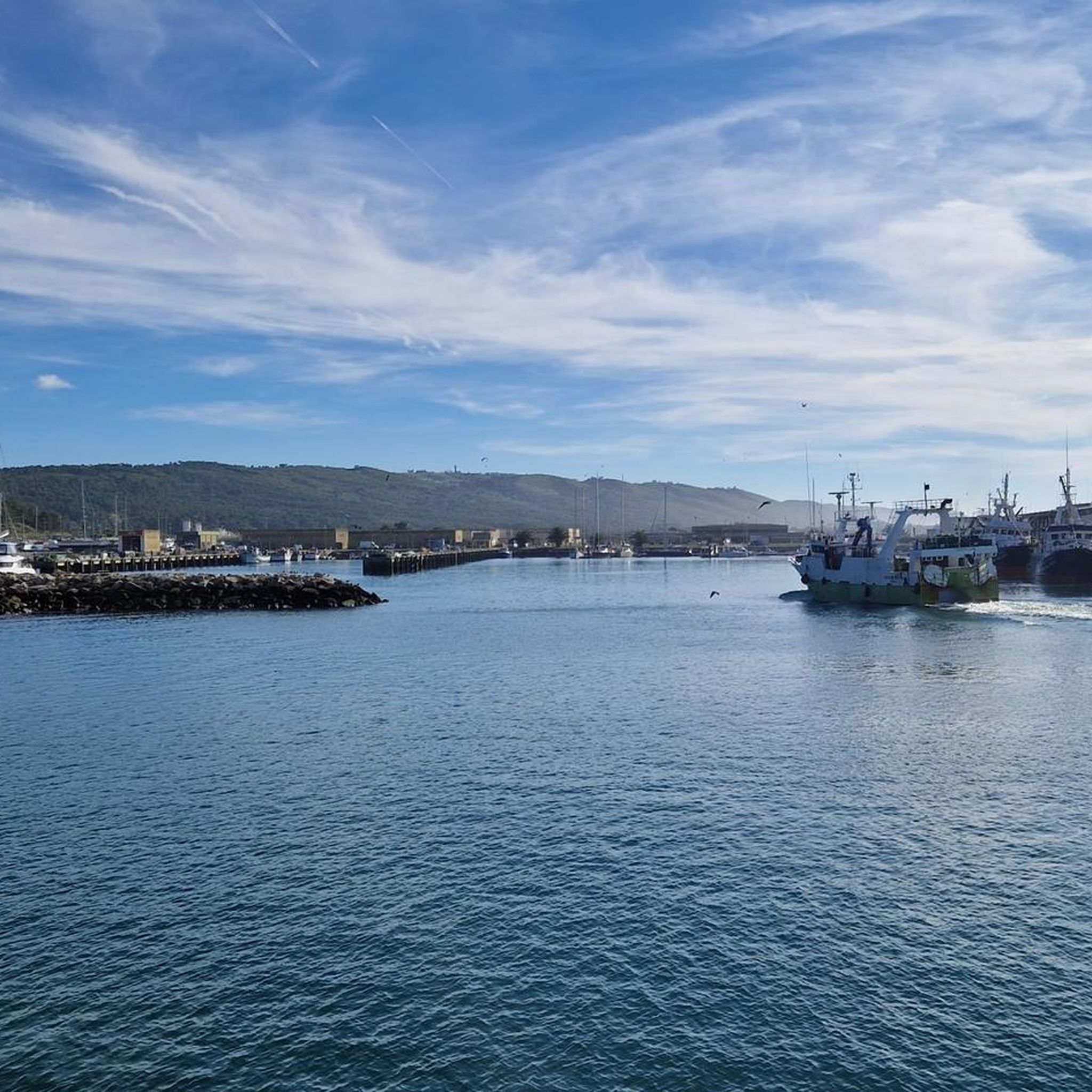
For those interested in maritime culture, the Boatyard of São Martinho do Porto offers an interesting look at ships of all ages, some undergoing restoration. Nearby, the Clube Naval da Nazaré provides a view of a modern marina, a hub for local fishing and recreational boats.
What do visitors enjoy most about the attractions around Aljubarrota?
Visitors frequently appreciate the rich historical significance and architectural beauty of sites like the Alcobaça Monastery. The panoramic coastal views from the Memory Arch are also highly praised. The blend of ancient history, cultural insights, and scenic landscapes makes the area appealing.
Are there any specific tips for visiting the Alcobaça Monastery?
When visiting the Alcobaça Monastery, be sure to allocate enough time to explore its Roman Catholic monastic complex, including the church and cloister. It's a UNESCO World Heritage Site, so its historical and architectural details are particularly noteworthy. Consider visiting during off-peak hours for a more serene experience.
Can I find cafes or places to eat near the viewpoints?
While specific cafes directly adjacent to the Memory Arch viewpoint are not detailed, the arch is located near the administrative boundaries of Porto de Mós and Alcobaça municipalities. Both towns offer various dining options where you can find cafes and restaurants to enjoy after taking in the views.
Most popular attractions around Aljubarrota

Get inspired with the komoot mobile app


Explore more
Still not found the Highlight you’re looking for? See guides of the top attractions in other regions:
