Mt. Charleston Wilderness
Mt. Charleston Wilderness
The best running trails in Mt. Charleston Wilderness
22
runners
3
runs
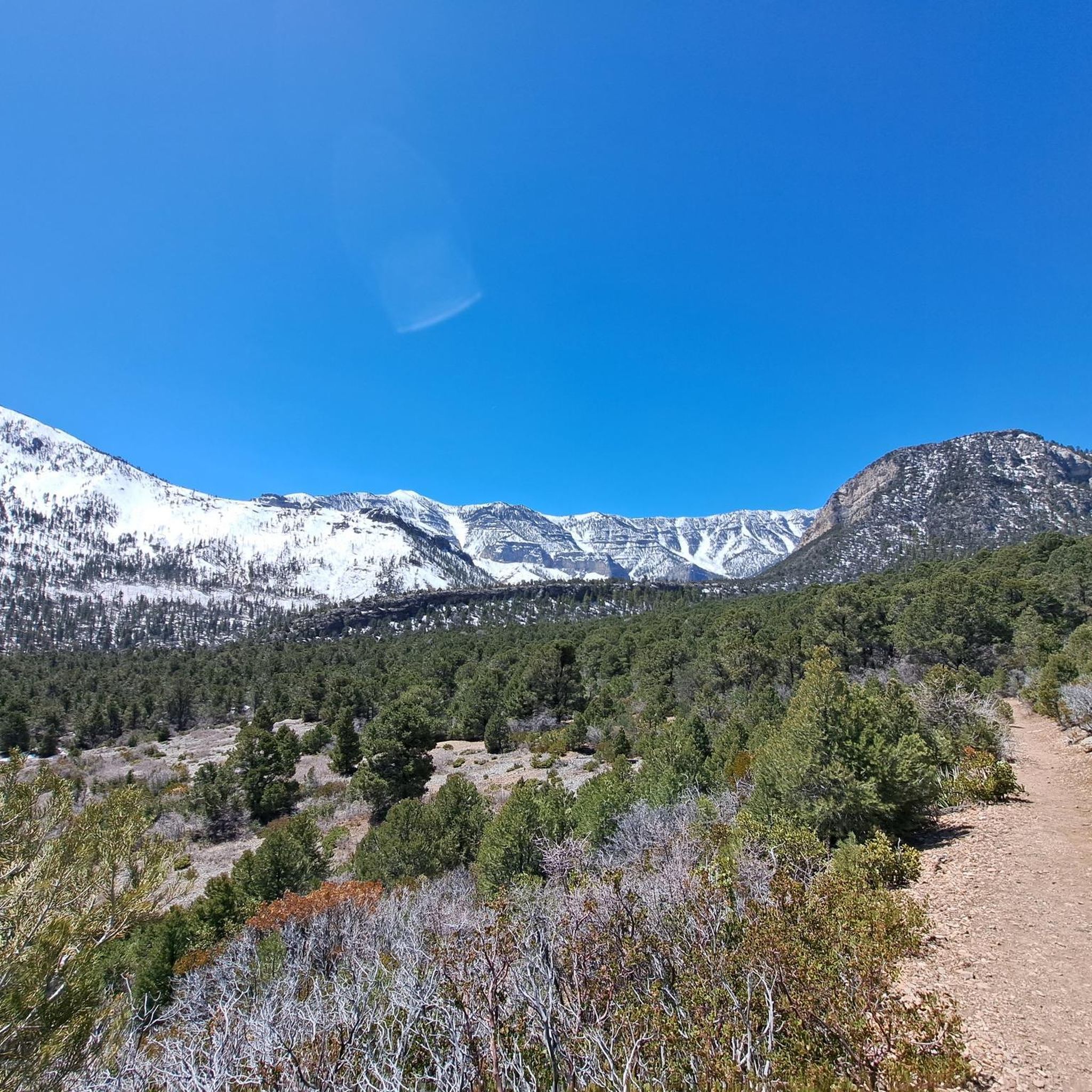
Jogging in Mt. Charleston Wilderness offers a unique escape into a "sky island" environment, characterized by significant elevation changes from 4,440 feet to nearly 12,000 feet. The region features diverse landscapes, including ancient bristlecone pine forests, rugged limestone formations, and deep canyons. These varied terrains provide a refreshing setting for running, with cooler mountain air at higher elevations.
Best jogging routes in Mt. Charleston Wilderness
- The most popular jogging route is North Loop Trailhead – Echo Canyon Overlook loop from…
Last updated: May 12, 2026
11
runners
41.6km
06:24
2,200m
2,200m
Hard run. Very good fitness required. Mostly paved surfaces. Suitable for all skill levels.
7
runners
30.8km
03:58
890m
890m
Hard run. Very good fitness required. Mostly paved surfaces. Suitable for all skill levels.

Sign up for free
4
runners
12.0km
01:28
370m
370m
Hard run. Very good fitness required. Mostly paved surfaces. Suitable for all skill levels.
Our route recommendations are based on thousands of hikes, rides, and runs completed by other people on komoot.
Start today with a free account
Your next adventure awaits.
Login or Signup
Popular around Mt. Charleston Wilderness
Tips from the Community

A saddle point on the north loop which is perfect for a breather or a break to make a hot drink and take in the views.
0
0

This segment of Step Ladder is a nice climb that follows a combination of singletrack and dirt roads to get you to the intersection with Shady Hollow, Tin Can Alley, and the top of the Scar.
0
0
This is the trailhead for the North Loop Trail. This popular, but challenging, trail is one of the most common ways to summit Mount Charleston. You can also access Fletcher Peak, Mummy Mountain, Mummy Springs, Trail Canyon, Cave Springs, and the incredible Raintree (the oldest living organism in Nevada) from this trailhead.
0
2
The Trail Canyon Trailhead is where the Trail Canyon Trail begins. There is a large gravel parking area, pit toilets, an informational sign, and benches near by to put on your hiking shoes and relax. Trail Canyon Trail is a popular trail for hikers and climbers, and a good way to reach the North Loop Trail from Kyle Canyon. You get great views of towering limestone cliffs from this trailhead that only get better as you begin your hike up Trail Canyon.
0
0
This section of trail switchbacks up loose cliff sides dotted with ancient Bristlecone Pines before reaching a prominent outcropping known as the "Devil's Thumb." Past the Devil's Thumb, the trail contours around exposed, steep slopes on the east face of Mount Charleston before reaching a series of final short, but steep, switchbacks to the summit. This entire section of trail features loose scree, steep drop offs, and some fairly significant exposures. The trail is well marked, however, and with hard work and careful footing, you are rewarded with challenging, exciting hiking in a beautiful, remote-feeling position.
0
0
Standing at 11,916 feet, Mount Charleston is the eighth highest mountain in Nevada and the highest mountain in Spring Mountains. This exposed, prominent peak is a proud accomplishment; whether you took the North or South Loops or combined the two to reach the summit, it is an over 16-mile round trip excursion with over 4,000 feet of climbing. At the summit you are rewarded with panoramic views of the entire Spring Mountains area, the Sierra Nevada, Death Valley, and the Las Vegas valley. This exposed, rocky summit is a great place to rest, eat snacks, drink water, sign the summit register, and take photos before beginning the long descent to the trailhead.
0
0
Once you reach the top of the first series of steep switchbacks on the South Loop Trail, you arrive at a great overlook with panoramic views of Echo Canyon, Trail Canyon, Mummy Mountain, and Mount Charleston. You also get fantastic views into the valley below; you can even see the trailhead that you started from! This is a great place to rest, drink water and take photographs before heading up to the saddle between Mount Charleston and Griffith Peak. This overlook is also an excellent goal in and of itself if you're looking for a shorter hike than Griffith Peak or Mount Charleston on the South Loop Trail.
0
0
The Griffith Saddle is where the trail junction for summits of Mount Charleston and Griffith Peak is located. You get amazing views of the two mountains and the surrounding area from this ridge. This long saddle and trail junction is a great place to stop, eat a snack, take some photos, and rest before the final push to either mountain (or both!).
0
0
Frequently Asked Questions
How many running routes are available in Mt. Charleston Wilderness?
Mt. Charleston Wilderness offers an extensive network of over 60 miles of trails, with about 40 miles specifically within the wilderness area, providing numerous options for joggers. Our guide highlights several top routes, and over 28 runners have already used komoot to explore this diverse terrain.
Are there running routes suitable for beginners in Mt. Charleston Wilderness?
While many trails in Mt. Charleston Wilderness feature significant elevation changes and can be challenging, there are options for various skill levels. The region research mentions easy, family-friendly options, though our guide's featured running routes tend towards moderate to difficult. For a less strenuous experience, consider exploring the Lower Bristlecone Trail, which offers an easier, shorter loop with scenic views of Mummy Mountain and Mount Charleston.
What are some challenging running routes for experienced trail runners?
For experienced trail runners seeking a challenge, Mt. Charleston Wilderness offers strenuous routes with substantial elevation gain. The North Loop Trailhead – Echo Canyon Overlook loop from North Loop Trailhead is a difficult 25.6-mile route with over 7,000 feet of elevation gain, offering expansive mountain vistas. Another rigorous option is the North Loop Trailhead – Step Ladder loop from North Loop Trailhead, a difficult 19.1-mile path navigating varied mountain terrain.
Can I find loop running routes in Mt. Charleston Wilderness?
Yes, loop routes are available for runners who prefer to start and end at the same point. The North Loop Trailhead – Echo Canyon Overlook loop from North Loop Trailhead is a popular and challenging loop. Additionally, the Lower Bristlecone Trail is an easier loop option, and the North Loop and South Loop Trails are known for offering extensive loop possibilities for endurance runners.
Are there any waterfalls or unique natural features to see along the running trails?
Absolutely! Mt. Charleston Wilderness is home to several unique natural features. You can visit Mary Jane Falls, a scenic seasonal waterfall fed by snowmelt and rainfall. Another notable feature is The Raintree, an ancient bristlecone pine estimated to be 3,000 years old. The Fletcher Canyon Narrows also offers a unique experience with its sheer, water-polished limestone cliffs.
What is the best time of year to go running in Mt. Charleston Wilderness?
The higher elevations of Mt. Charleston Wilderness offer cooler temperatures, making it an appealing destination for running, especially during warmer months when the surrounding desert can be very hot. Spring and fall generally provide the most pleasant conditions. Winter running is possible, but some trails may be covered in snow, requiring appropriate gear and caution.
Are there any specific permits required for jogging in Mt. Charleston Wilderness?
Generally, permits are not required for day-use activities like jogging on established trails in Mt. Charleston Wilderness. However, it's always advisable to check with the land management agency for any current regulations or specific requirements, especially if you plan to camp or engage in other activities. You can find more information on the Bureau of Land Management's website: blm.gov.
What kind of wildlife might I spot while running in the wilderness?
Mt. Charleston Wilderness is a diverse ecosystem, and you might encounter various wildlife. Keep an eye out for mule deer, bighorn sheep, and numerous bird species. The 'sky island' effect creates distinct life zones, supporting a variety of flora and fauna not found in the lower desert. Always maintain a respectful distance and do not disturb animals.
Are there family-friendly running options in Mt. Charleston Wilderness?
Yes, the wilderness offers trails suitable for families, though some of the featured running routes are more challenging. The Mary Jane Falls Trail is a popular option that leads to a scenic seasonal waterfall and can be enjoyed by families. The Lower Bristlecone Trail is another easier, shorter loop that provides a pleasant experience for all ages.
Where can I park when accessing the running trails?
Parking is generally available at trailheads throughout Mt. Charleston Wilderness. Specific parking areas are typically designated for popular trails like the North Loop Trailhead, Mary Jane Falls Trail, and Cathedral Rock Trail. It's recommended to arrive early during peak seasons to secure a spot, especially on weekends.
What should I wear for running in Mt. Charleston Wilderness, especially in summer?
Even in summer, the higher elevations of Mt. Charleston Wilderness can be significantly cooler than the Las Vegas valley. It's best to dress in layers, as temperatures can change rapidly. Opt for moisture-wicking athletic wear. Sun protection (hat, sunglasses, sunscreen) is crucial due to the high altitude. Always carry sufficient water, as natural springs may not be reliable sources.
What makes Mt. Charleston Wilderness a unique place for running?
Mt. Charleston Wilderness is often called a 'sky island' due to its impressive elevation range, from 4,440 feet to nearly 12,000 feet. This creates distinct life zones with diverse landscapes, from ancient bristlecone pine forests to rugged limestone formations and deep canyons. The cooler mountain air at higher elevations provides a refreshing escape from the desert heat, making it an ideal and unique setting for running.
Most popular routes in Mt. Charleston Wilderness
Most popular attractions in Mt. Charleston Wilderness

Get inspired with the komoot mobile app


Explore more
Browse the best Running Trails & Routes in other regions.
