Mt. Charleston Wilderness
Mt. Charleston Wilderness
The best walks and hikes in Mt. Charleston Wilderness
4.7
(37)
787
hikers
41
hikes
Hiking in Mt. Charleston Wilderness offers trails through a diverse landscape within the Spring Mountains National Recreation Area. The region is characterized by significant elevation changes, ranging from desert scrub to high-altitude pine forests and alpine environments. Deep canyons and rocky outcrops are common features, providing varied terrain for outdoor activities.
Best hiking trails in Mt. Charleston Wilderness
- The most popular hiking route is Mary Jane Falls — Kyle Canyon — Spring Mountains National Recreation Area, a 2.8 miles…
Last updated: May 12, 2026
1
hikers
7.71km
02:53
850m
0m
Hike the Bonanza Peak Trail in Spring Mountains National Recreation Area, a moderate 4.8-mile route with 2774 feet of gain and panoramic vie
22
hikers
4.56km
01:44
320m
320m
Embark on the Mary Jane Falls Trail, a moderate hike that leads you through a deep, forested canyon. You'll pass towering ponderosa pines and quaking aspens, including a beautiful Aspen…

Sign up for free
17
hikers
7.90km
03:00
580m
580m
Hike the moderate Trail Canyon Trail in Spring Mountains National Recreation Area, featuring diverse terrain and a 40-foot waterfall.
5.0
(1)
8
hikers
3.37km
01:09
180m
180m
Hike the easy 2.1-mile Stanley B Springs Trail in Spring Mountains National Recreation Area, featuring scenic views and historical mines.
10
hikers
28.9km
09:45
1,460m
1,470m
Hard hike. Very good fitness required. Easily-accessible paths. Suitable for all skill levels.
Get access to more routes and recommendations from other explorers.
Sign up for free
Already have an account?
Our route recommendations are based on thousands of hikes, rides, and runs completed by other people on komoot.
Start today with a free account
Your next adventure awaits.
Login or Signup
Popular around Mt. Charleston Wilderness
Tips from the Community

From the confluence and mining claim sign head northeast (right) up a social trail to reach the first grated mine. There is a sign about how the mine is a protected and important bat habitat next to it. You can often see water trickling out of this mine. Just a few hundred yards past this mine, above a tailing pile (the leftover material after miners extracted whatever they were mining) is a second grated mine and some old wooden support beams. Aside from the mines, there are seasonal wildflowers and large ponderosa pines in this sunny and open spot. This is an interesting, peaceful place to explore that also highlights the mining history of Kyle Canyon.
0
0
After merging with an old mining road, you briefly exit the forest and have views of Harris Peak, and Mummy Mountain over some low shrubs and grasses. You also get particurlaly good views of Echo Cliffs; its sheer limestone faces stand out against the green trees of the surrounding peaks.
0
0
At the confluence of two small, seasonal streams (you can see water more consistently from a pipe just above the confluence if you wish) is a small, metal mining claim sign. Nailed rather high up on a Ponderosa Pine tree it reads: "Leroy Mining Claim, DE Nelson, Owner." This shady spot is a nice place to stop and sip some water by the streams before continuing on to explore the historical mines in the area.
0
0
At the top of Trail Canyon you reach a ponderosa pine covered saddle, which is also the junction for Trail Canyon Trail and the North Loop Trail. You get fantastic views of the towering limestone Echo Cliffs and the "Mummy's Toe." You can also see Mount Charleston peaking through the trees. This trail junction is a great place to rest and sip some water before continuing onward.
0
0
Not long after passing a municipal water tank, you enter a large stand of fir, pine, and aspen trees and cross into the Mount Charleston Wilderness area, which is marked by a wooden sign. This is a great place to sip some water in the shade before the trail trends more steeply up Trail Canyon. You can also see and access a famous climbing area known as "The Hood" a few hundred feet past this Wilderness Boundary Sign.
0
0
The Trail Canyon Trailhead is where the Trail Canyon Trail begins. There is a large gravel parking area, pit toilets, an informational sign, and benches near by to put on your hiking shoes and relax. Trail Canyon Trail is a popular trail for hikers and climbers, and a good way to reach the North Loop Trail from Kyle Canyon. You get great views of towering limestone cliffs from this trailhead that only get better as you begin your hike up Trail Canyon.
0
0
Just a short distance up from the North Loop Trail is Cave Spring, where water drips down an algae-covered, limestone cliff in a large cave. This unique area is a fun place to explore and rest in the shade. Some of the water from Cave Spring also filters down into a large trough carved out of a single, large log, just off the main trail. This basin was used for livestock, but now provides water for many local wild animals.
0
0
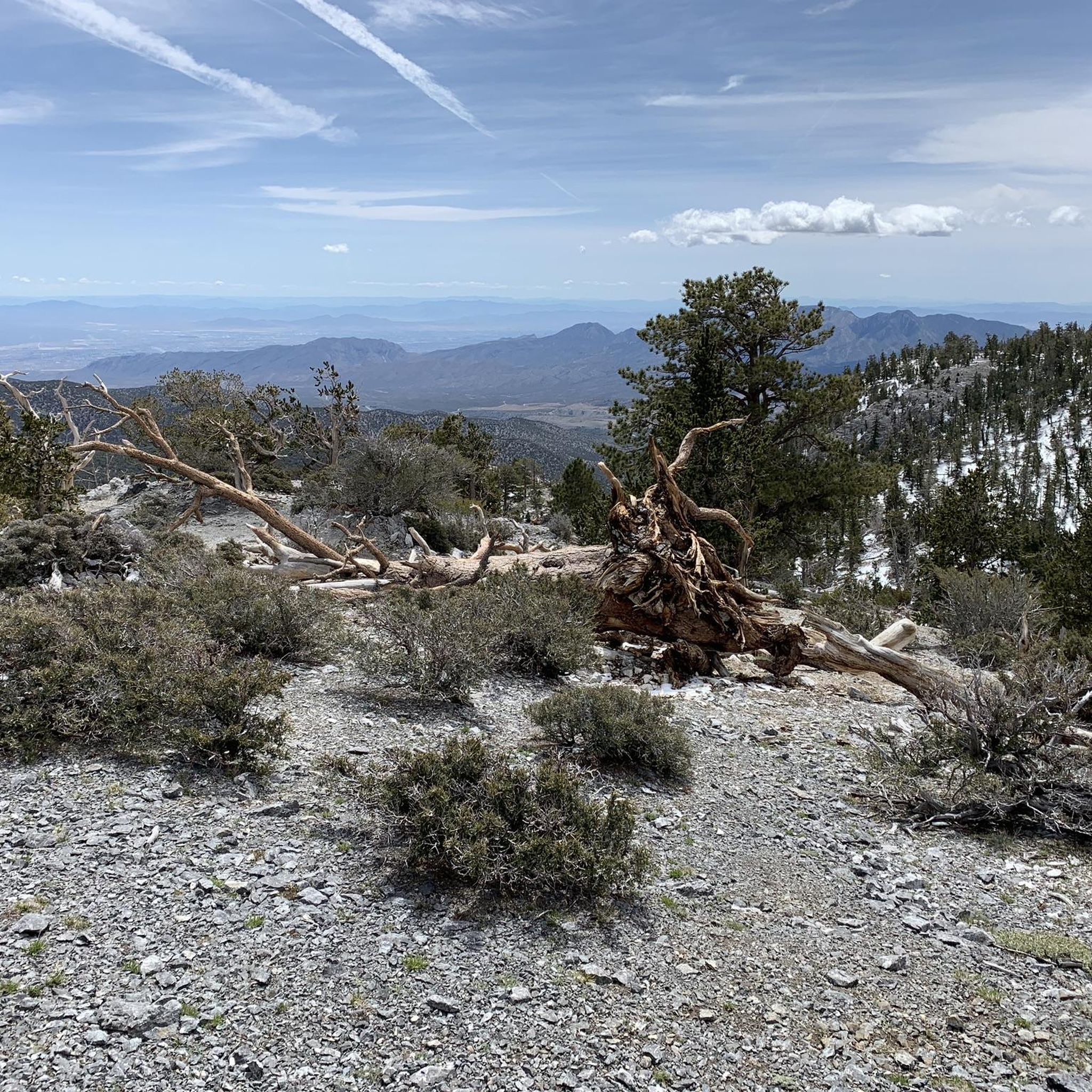
This section of trail switchbacks up loose cliff sides dotted with ancient Bristlecone Pines before reaching a prominent outcropping known as the "Devil's Thumb." Past the Devil's Thumb, the trail contours around exposed, steep slopes on the east face of Mount Charleston before reaching a series of final short, but steep, switchbacks to the summit. This entire section of trail features loose scree, steep drop offs, and some fairly significant exposures. The trail is well marked, however, and with hard work and careful footing, you are rewarded with challenging, exciting hiking in a beautiful, remote-feeling position.
0
0
Frequently Asked Questions
How many hiking trails are available in Mt. Charleston Wilderness?
Mt. Charleston Wilderness offers nearly 30 hiking trails. These routes cater to various skill levels, with 8 easy, 16 moderate, and 5 difficult options to explore.
What types of landscapes can I expect to see while hiking in Mt. Charleston Wilderness?
The region features a diverse landscape, characterized by significant elevation changes. You'll encounter everything from desert scrub at lower altitudes to high-altitude pine forests and alpine environments. Deep canyons and rocky outcrops are common, providing varied and scenic terrain.
Are there any family-friendly hiking trails in Mt. Charleston Wilderness?
Yes, there are several easy trails suitable for families. For example, the Stanley B. Springs Trail — Kyle Canyon — Spring Mountains National Recreation Area is an easy 2.1-mile path through forested areas, often completed in about 1 hour 10 minutes, making it a good option for a shorter outing.
What are some notable natural attractions or landmarks to see along the trails?
Hikers can discover several natural attractions. The Mary Jane Falls is a popular seasonal waterfall, and Fletcher Canyon Narrows offers impressive canyon scenery. You might also encounter Mummy Spring or the ancient bristlecone pine known as The Raintree.
Are there any circular hiking routes in Mt. Charleston Wilderness?
Yes, there are circular routes available. One challenging option is the Mount Charleston Summit – Echo Canyon Overlook loop from Mount Charleston, which is a difficult 17.6-mile trail. For a moderate loop, consider the Views of the Mummy Toe – Mummy Spring loop from Mount Charleston, spanning 7.8 miles.
What is the typical duration for hikes in Mt. Charleston Wilderness?
Hike durations vary significantly depending on the trail's length and difficulty. For instance, the easy Stanley B. Springs Trail takes about 1 hour 10 minutes, while the moderate Trail Canyon to Cave Spring can take around 3 hours. More challenging routes, like the Mount Charleston Summit loop, can extend to 9-10 hours.
What do other hikers enjoy most about Mt. Charleston Wilderness?
The area is highly rated by the komoot community, with an average score of 4.7 stars from over 40 reviews. Hikers often praise the diverse terrain, from pine forests to deep canyons, and the variety of routes suitable for different ability levels.
Are there any less crowded hiking options in Mt. Charleston Wilderness?
While popular trails like Mary Jane Falls can see more visitors, exploring some of the longer or more challenging routes, or visiting during off-peak hours and weekdays, can often lead to a more secluded experience. The Trail Canyon to Cave Spring offers a moderate, slightly longer option that might be less frequented than the shortest paths.
What is the best time of year to hike in Mt. Charleston Wilderness?
Due to significant elevation changes, the best time to hike can vary. Lower elevation trails are often accessible year-round, though summer can be very hot. Higher elevation trails are best enjoyed from late spring through fall, as winter brings snow and challenging conditions. Always check local weather and trail conditions before heading out.
What should I know about winter hiking in Mt. Charleston Wilderness?
Winter hiking in Mt. Charleston Wilderness can be beautiful but requires preparation. Higher elevations receive substantial snowfall, making trails impassable without proper gear like snowshoes or microspikes. Conditions can change rapidly, so it's crucial to check forecasts, trail reports, and be aware of avalanche risks in certain areas. Stick to lower, well-trafficked trails if you're not experienced with winter conditions.
Are there any trails that lead to waterfalls in the area?
Yes, the Mary Jane Falls — Kyle Canyon — Spring Mountains National Recreation Area trail is a popular choice, leading directly to the seasonal Mary Jane Falls. The waterfall's flow is dependent on recent precipitation and snowmelt, so it's best to visit in spring or early summer for the best chance to see it.
Most popular routes in Mt. Charleston Wilderness
Most popular attractions in Mt. Charleston Wilderness

Get inspired with the komoot mobile app


Explore more
Browse the best Hikes in other regions.
