Attractions and Places To See around Poggersdorf - Top 20
Best attractions and places to see around Poggersdorf include a blend of historical landmarks, cultural sites, and natural beauty within this market municipality in Carinthia, Austria. The region is characterized by wide green spaces and wooded hills, offering a pleasant natural environment. Poggersdorf also provides access to the Drau River, a significant natural feature.
Best attractions and places to see around Poggersdorf
- The most popular attractions is Drau Cycle Path (Drava Cycle Path), a five-star long-distance cycle path that…
Last updated: July 20, 2026
Drau Cycle Path (Drava Cycle Path)
Highlight • Cycleway
Translated by Google •
Tip by

Annabrücke Hydroelectric Power Plant
Highlight • Structure
Translated by Google •
Tip by

Sign up now to discover places like this
Get recommendations on the best single tracks, peaks, & plenty of other exciting outdoor places.
Sign up for free
Lake Klopein
Highlight • Lake
Translated by Google •
Tip by

Völkermarkt reservoir bridge
Highlight • Lake
Translated by Google •
Tip by
Drau Cycle Path Near Ferlach
Highlight (Segment) • Cycleway
Translated by Google •
Tip by
Sign up for free to discover even more attractions around Poggersdorf.
Sign up for free
Already have an account?
Start today with a free account
Your next adventure awaits.
Login or Signup


Tips from the Community

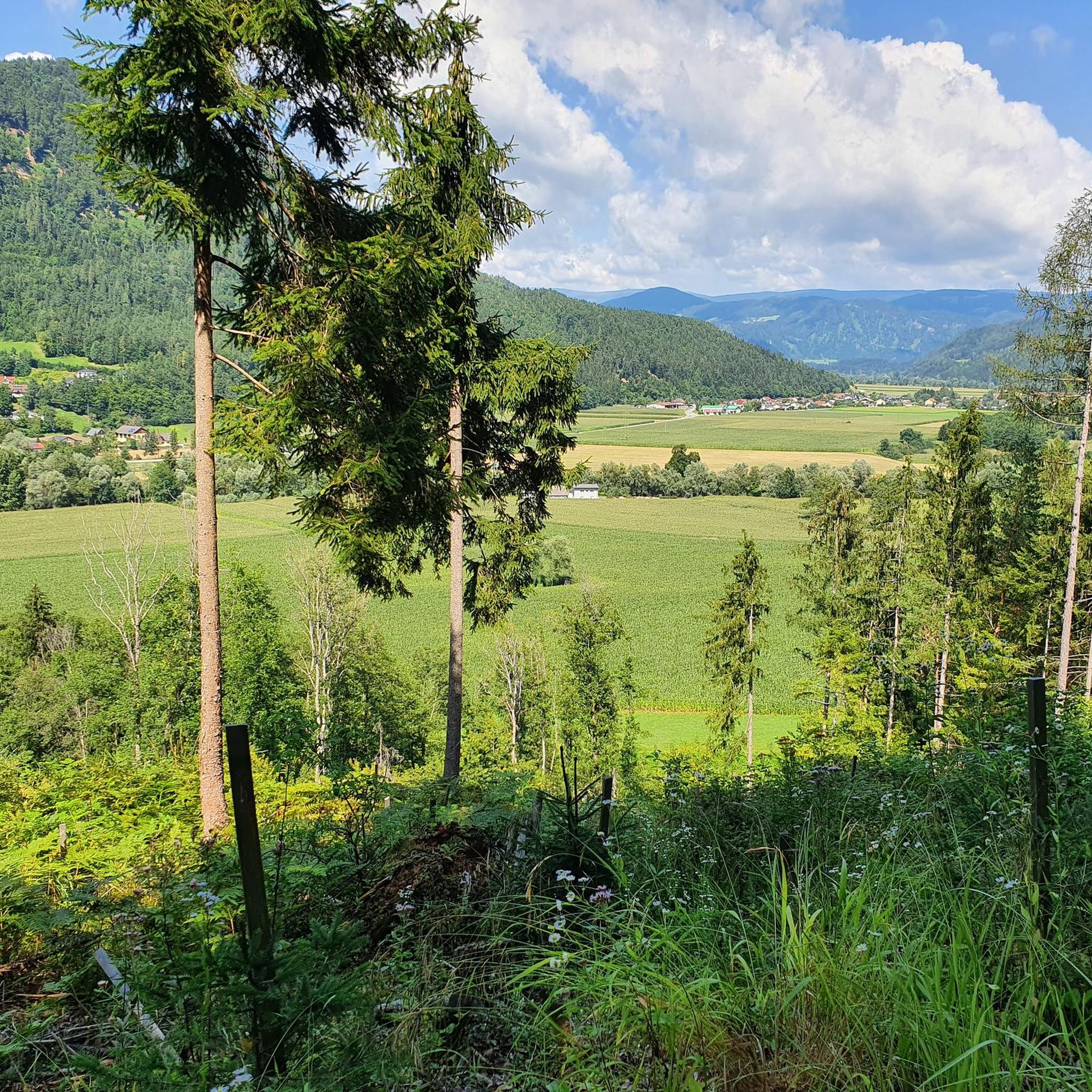
A large part of the cycle route runs through Austrian Carinthia and enters Slovenia at the Vič border, where the route leads from Dravograd via Radlje ob Dravi, Maribor, Ptuj, Ormož and Središče ob Dravi to Croatia after its 145 km.
3
0
The fishing area of the municipality of Völkermarkt is located on the left bank of the Völkermarkt reservoir and has a total length of 12,440 m. The fishing water extends from the Drau bridge 3 km upstream towards Tainach and after the dam wall towards Lavamünd to the mouth of the Lorenzibach
3
0

Nice rest stop in Völkermarkt, right on the Drau cycle path.
2
0

The Drau (less often Drave; Italian, Slovenian and Croatian Drava, Hungarian Dráva) is a tributary of the Danube that rises in the Italian South Tyrol, then flows through East Tyrol and Carinthia (Austria) as well as through Lower Styria (Slovenia), Croatia and Hungary. With a length of 749 km and an average discharge of 670 m³/s, it is the fourth longest tributary of the Danube after the Tisza, Pruth and Sava.
4
1

The fall height is 25 meters. This means there is enough power to drive the turbines.
4
0

Very nice cycle path that leads through beautiful nature. The views are mesmerizing.
3
0
Wonderful cycle path directly on the Drau. Here you can enjoy nature and cycling!
2
0

Wonderfully smooth to drive. Time has passed like nothing. Always stopped and enjoyed the landscape! Always my pleasure
4
0
Frequently Asked Questions
What natural features can I explore around Poggersdorf?
Poggersdorf is surrounded by wide green spaces and wooded hills. A significant natural feature is the Drau River, which is part of the Drau Cycle Path (Drava Cycle Path). You can also visit Lake Klopein, known for its warm summer temperatures, and the scenic Völkermarkt Reservoir, which features a notable bridge.
What historical landmarks can I visit in Poggersdorf?
The region boasts several historical sites. The fascinating Wabelsdorf Celtic Well is a reconstructed Celtic-Roman temple sanctuary. You can also explore the Parish Church of Poggersdorf, dating back to the 12th or 13th century, which contains remains of Roman grave inscriptions. Manor Rain is another monument listed in Poggersdorf.
Are there any unique cultural sites in Poggersdorf?
Yes, Poggersdorf offers a blend of cultural experiences. The Pagoda of the Light of the Dhamma, a striking white building with golden spires, is a modern cultural site belonging to the International Meditation Centre Austria. Additionally, the Gurk Rain Power Station, a historic facility from 1902, now functions as a technical museum and generates green energy.
What cycling opportunities are available near Poggersdorf?
The area is excellent for cycling. The Drau Cycle Path (Drava Cycle Path) is a five-star long-distance route offering picturesque views along the Drau River. For more varied terrain, you can explore numerous gravel biking and road cycling routes. Find detailed routes in the Gravel biking around Poggersdorf and Road Cycling Routes around Poggersdorf guides.
Are there hiking trails suitable for different fitness levels around Poggersdorf?
Yes, the region around Poggersdorf provides numerous hiking trails. Options range from challenging ascents, such as to the Pyramidenkogel for panoramic views, to easier circular trails through forests, past streams, and ponds. The 'Three Lakes Hiking Trail' is another popular choice. For more specific routes, check out the various hiking guides available.
Are there family-friendly activities or attractions in Poggersdorf?
Many attractions around Poggersdorf are suitable for families. Lake Klopein is a great spot for swimming and relaxing. The Völkermarkt reservoir bridge and sections of the Drau Cycle Path are also noted as family-friendly. Additionally, some easier hiking trails include playgrounds, making them ideal for families with children.
What makes Lake Klopein a popular destination?
Lake Klopein is renowned for being one of the warmest lakes in Austria, with summer water temperatures reaching up to 29°C. Its pleasant temperatures, even in May, invite visitors to swim and relax. The lake also features a unique lakeside promenade, perfect for strolls, fishing, or simply enjoying the well-kept beach resorts.
What do visitors particularly enjoy about the Drau Cycle Path near Poggersdorf?
Visitors appreciate the Drau Cycle Path (Drava Cycle Path) for its scenic beauty and its role as a five-star long-distance route connecting multiple countries. The sections near Poggersdorf offer picturesque views, passing through reservoirs and providing opportunities for cycling amidst beautiful nature. It's a well-maintained path, largely made of gravel, offering a smooth ride.
What options are available for those traveling with dogs?
While specific dog-friendly trails are not detailed in the highlights, the general outdoor environment of Poggersdorf, with its wide green spaces and wooded hills, offers many opportunities for walks with dogs. It's always recommended to check local regulations for specific trails or attractions regarding pets.
Are there any scenic viewpoints in the Poggersdorf area?
Yes, the region offers several scenic viewpoints. The Völkermarkt reservoir bridge provides excellent views of the reservoir. The Annabrücke Hydroelectric Power Plant is also listed as a viewpoint. For panoramic vistas, a challenging hike to the Pyramidenkogel is highly recommended, offering views of Lake Wörthersee and the Alps.
What is the best time of year to visit Poggersdorf for outdoor activities?
The summer months are ideal for visiting Poggersdorf, especially if you plan to enjoy water activities at Lake Klopein, where water temperatures can reach up to 29°C. Spring and autumn also offer pleasant conditions for cycling and hiking, with milder temperatures and beautiful natural scenery.
Where can I learn about the region's industrial heritage?
You can learn about the region's industrial heritage at the Gurk Rain Power Station (Gurkkraftwerk Rain). This historic facility, which began operation in 1902, is now considered a technical museum. It played a significant role in supplying electricity to Klagenfurt and later to all of Central Carinthia, and today it continues to generate green energy from hydropower.
Most popular attractions around Poggersdorf

Get inspired with the komoot mobile app


Explore more
Still not found the Highlight you’re looking for? See guides of the top attractions in other regions:
