Attractions and Places To See around River Point - Top 20
Attractions and places to see around River Point include historical sites, significant monuments, and natural trails near the Columbia River mouth. This region offers insights into early American exploration, with sites commemorating the Lewis and Clark Expedition. Visitors can explore diverse landscapes, from coastal forests to river views, providing opportunities for various outdoor activities. The area features both man-made structures and natural preserves, making it a destination for history enthusiasts and nature lovers.
Best attractions and places to see around…
Last updated: May 15, 2026
Astoria Column
Highlight • Monument
Translated by Google •
Tip by

Columbia River Maritime Museum
Highlight • Monument
Tip by

Sign up now to discover places like this
Get recommendations on the best single tracks, peaks, & plenty of other exciting outdoor places.
Sign up for free
Fort Clatsop
Highlight • Historical Site
Tip by

Astoria–Megler Bridge
Highlight • Bridge
Tip by
Netul Landing
Highlight • Rest Area
Tip by

Sign up for free to discover even more attractions around River Point.
Sign up for free
Already have an account?
Start today with a free account
Your next adventure awaits.
Login or Signup


Tips from the Community

This site marks the Corps of Discovery’s winter encampment of 1805–06, where Lewis and Clark and their party spent 106 days before beginning the return journey east. Today it’s preserved as part of Lewis and Clark National Historical Park, with a reconstructed fort, interpretive center, and trails through the surrounding coastal forest. For modern travelers, it’s both a symbolic and historic milestone—the point where the long westward trek meets the Pacific coast.
0
0


The fort you can visit today is a already the second replica of the original Fort Clatsop that was built in 1805 as an encampment for the Corps of Discovery (the official name for the Lewis and Clark Expedition) to spend the winter. 33 men, a woman, a baby, and a dog stayed at the confluence of the Columbia River and today's Lewis and Clark River and prepared the return back to their starting point in St. Louis, Missouri. Take a walk through the museum, bookstore and the nearby viewing platform at the Lewis and Clark River. A hike along the trails through the beautiful National Historical Park is highly recommended. Rangers at the visitor center will provide you with a map and additional information.
2
0

The Columbia River Maritime Museum is worth visiting if you're interested in maritime history and seafaring. The museum boasts impressive exhibits, from historic vessels and naval artifacts to fine art pieces. The museum has a $16 admission fee, or you can visit the Lightship Columbia only for $5.
0
0
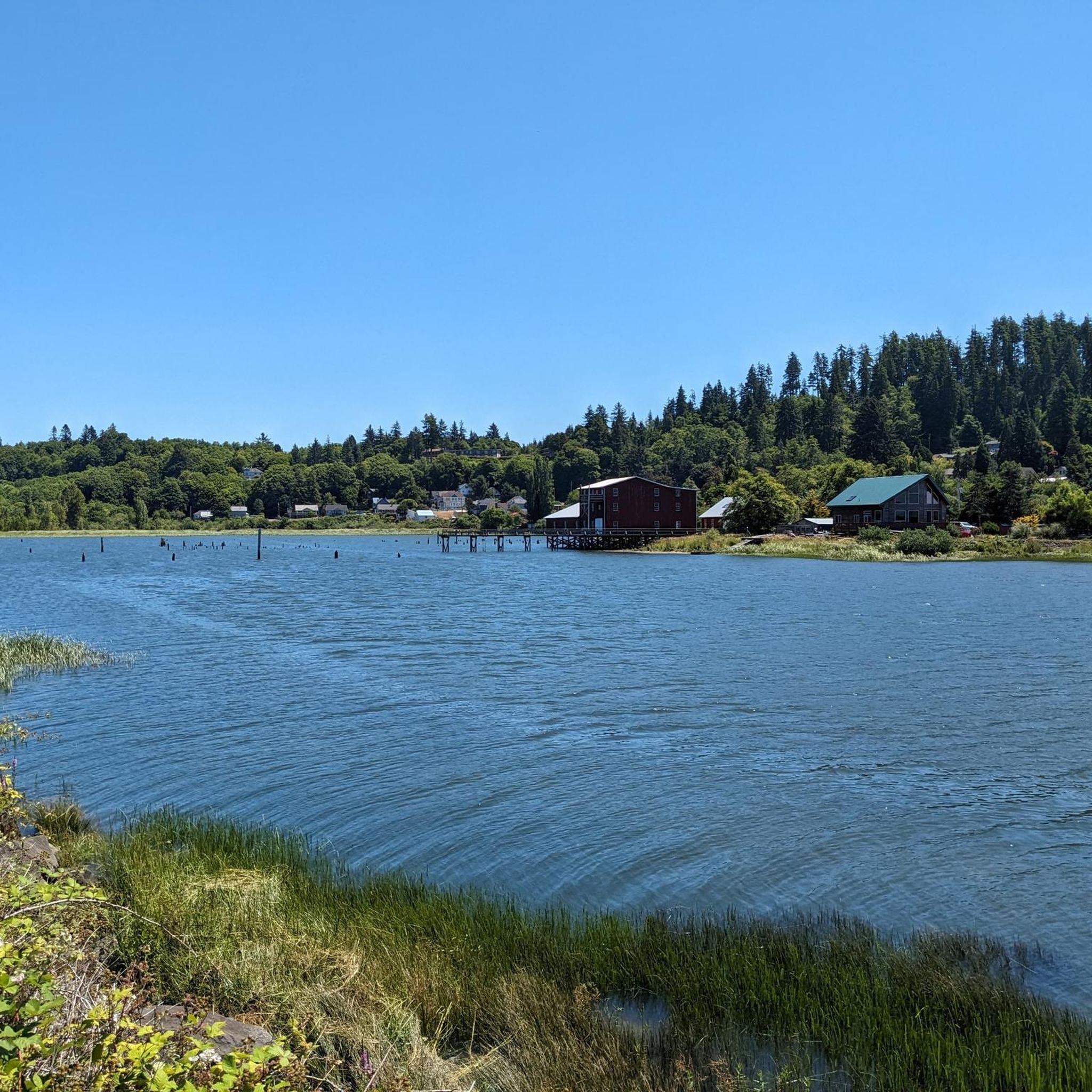
In 1805, explorers Meriwether Lewis and William Clark, along with their crew, navigated the Netul River, which is now known as the Lewis and Clark River. Netul Landing, which is a part of the Lewis and Clark Columbia River Water Trail, is an ideal location to begin a kayaking or canoeing adventure. The water trail spans 146 miles (234.96 km) and follows the explorers' path along the Lower Columbia River from Bonneville Dam to Ilwaco, Wash., where it meets the Pacific Ocean.
0
0

The Astoria Column is a tower in the northwestern United States that overlooks the mouth of the Columbia River on Coxcomb Hill in Astoria, Oregon. The concrete and steel structure, built in 1926, is part of a 30-hectare city park.
0
0
The Astoria Bridge is the last bridge before the mouth of the Columbia River into the Pacific, about 20 km away. She was the missing link to the U.S. To make Route 101 continuously passable along the West Coast of the USA between Olympia in the north and Los Angeles in the south. The southern end of the bridge is in Astoria (Oregon), the other end is at Point Ellice, a mountain promontory near the settlement of Megler, where the jetty for the ferry to Astoria used to be. The river is around 6 km wide at this point, but mostly flat. The 12.19 m (40 ft) deep and narrow channel for ocean-going ships traveling to Portland runs directly in front of the town of Astoria; beyond it lie the Desdemona Sands, a sandbank that extends beyond the middle of the river and partially runs dry at low tide. Off the northern bank there are variable channels with slightly deeper water that can be navigated by smaller ships.
0
0
The Astoria Column is a fantastic monument built in 1926 under the supervision of Ralph Budd, the president of the Great Northern Railroad. It depicts the Euro-American history of the Columbia River mouth and offers a panoramic view from the viewing platform, reached by climbing the 164 steps in a narrow, spiral staircase. The monument is modeled after Trajan's Column in Rome and is a must-see for anyone visiting Astoria.
0
0
Frequently Asked Questions
What historical sites can I explore around River Point?
The River Point area is rich in history, particularly related to the Lewis and Clark Expedition. You can visit Fort Clatsop, a reconstructed fort marking the Corps of Discovery’s winter encampment of 1805–06. Another significant historical landmark is the Astoria Column, which depicts the Euro-American history of the Columbia River mouth.
Are there family-friendly attractions in the River Point area?
Yes, several attractions are suitable for families. Fort Clatsop, part of the Lewis and Clark National Historical Park, offers an engaging historical experience. The Rewilding the Woods Trail within the park is also family-friendly, offering easy walks through lush rainforests. The Astoria–Megler Bridge is another interesting sight for all ages.
What kind of outdoor activities can I do near River Point attractions?
The area offers a variety of outdoor activities. You can explore over 14.5 miles of trails within the Lewis and Clark National Historical Park, perfect for hiking and running. For cycling enthusiasts, there are numerous routes, including the Astoria Riverwalk. You can find more details on specific routes in the Road Cycling Routes around River Point, Running Trails around River Point, and Cycling around River Point guides.
Are there accessible options for visitors with mobility needs?
Yes, some attractions offer accessibility. The Astoria–Megler Bridge is wheelchair accessible, providing views across the Columbia River. Additionally, Netul Landing, a part of the Lewis and Clark Columbia River Water Trail, is also wheelchair accessible and serves as an ideal spot for kayaking or canoeing.
Where can I find scenic views around River Point?
For breathtaking panoramic views, climb the 164 steps of the Astoria Column. From its viewing platform, you get a 360° vista of the surrounding area, including the Columbia River mouth. The Astoria–Megler Bridge also offers stunning views as it spans the Columbia River, connecting Oregon and Washington.
Can I bring my dog to attractions or trails in the area?
Yes, the Rewilding the Woods Trail within the Lewis and Clark National Historical Park is dog-friendly, allowing you to enjoy the lush rainforests and coastal vistas with your canine companion. Netul Landing is also dog-friendly, providing a great starting point for water activities or riverside walks.
What are some easy hiking trails near River Point?
The Lewis and Clark National Historical Park offers a variety of trails. The Rewilding the Woods Trail is well-maintained and provides options for short or extended easy walks through beautiful settings. For more options, you can explore the Running Trails around River Point guide, which includes several easy routes like the Astoria Riverwalk Trail.
What is the significance of the Lewis and Clark Expedition in this area?
The River Point area holds immense historical significance for the Lewis and Clark Expedition. Fort Clatsop marks the site where the Corps of Discovery spent the winter of 1805–06 before their return journey. The Lewis and Clark National Historical Park, including sites like Rewilding the Woods Trail and Netul Landing, commemorates their journey along the Columbia River and the Pacific Coast.
Where can I launch a kayak or canoe?
Netul Landing is an ideal location to begin a kayaking or canoeing adventure. It is part of the Lewis and Clark Columbia River Water Trail, which spans 146 miles and follows the explorers' path along the Lower Columbia River.
Are there any unique natural features to see?
The area is characterized by its diverse landscapes, from coastal forests to river views. The Lewis and Clark National Historical Park features lush rainforests and stunning coastal vistas. The Columbia River itself, particularly at its mouth, is a significant natural feature, offering opportunities for wildlife observation and scenic beauty.
How long should I plan for a visit to the main attractions?
To fully experience the main attractions like the Astoria Column and Fort Clatsop, along with exploring some of the trails in the Lewis and Clark National Historical Park, planning at least a full day is recommended. If you wish to engage in more extensive outdoor activities like longer hikes or cycling, consider a multi-day visit.
What do visitors typically enjoy most about the attractions here?
Visitors frequently highlight the historical significance and the stunning views. Climbing the Astoria Column for its panoramic vistas is a popular activity. The immersive historical experience at Fort Clatsop and the opportunity to follow in the footsteps of Lewis and Clark through the national historical park are also highly appreciated.
Most popular routes around River Point

Get inspired with the komoot mobile app


Explore more
Still not found the Highlight you’re looking for? See guides of the top attractions in other regions:
