Lassen Volcanic National Park
Lassen Volcanic National Park
The 5 Most Amazing Peaks in Lassen Volcanic National Park
Best mountain peaks in Lassen Volcanic National Park showcase a geologically active area in northeastern California. The park features all four major types of volcanoes: plug dome, shield, cinder cone, and stratovolcano. This makes it a significant location for geological study and offers diverse landscapes. Visitors can explore various mountain peaks and volcanic formations within the park.
Best mountain peaks in Lassen Volcanic National Park
- The most popular mountain peaks is Lassen Peak Summit, a summit that is the…
Last updated: May 11, 2026
Lassen Peak Summit
Highlight • Summit
Tip by

Brokeoff Mountain (9,235 ft) — Lassen Volcanic National Park
Highlight • Summit
Tip by

Sign up now to discover places like this
Get recommendations on the best single tracks, peaks, & plenty of other exciting outdoor places.
Sign up for free
Mount Harkness Fire Lookout
Highlight • Monument
Tip by

Start today with a free account
Your next adventure awaits.
Login or Signup
Other adventures in Lassen Volcanic National Park


Tips from the Community

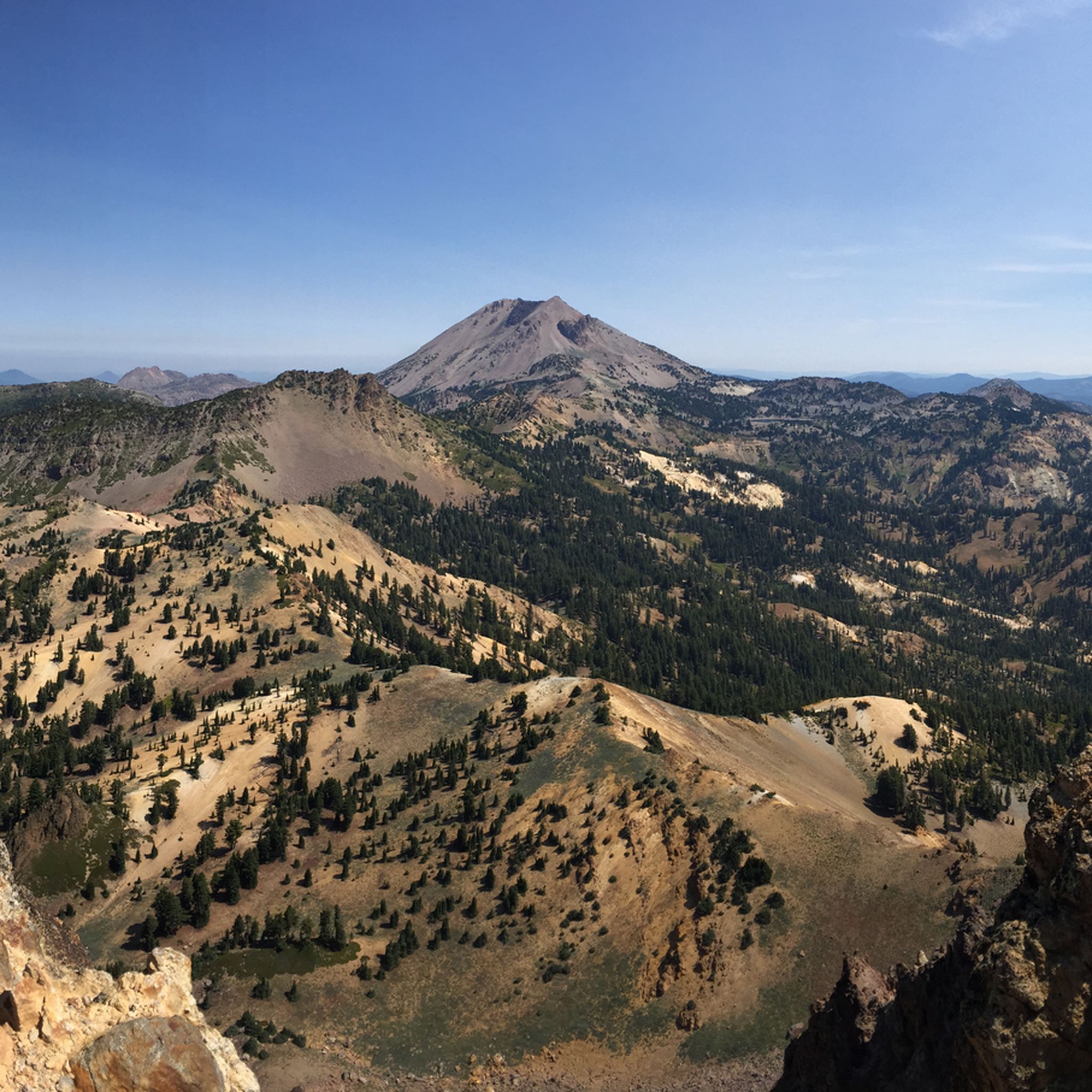
Lassen Peak, or Mount Lassen, is a 10,457-foot lava dome volcano and highest peak in Lassen Volcanic National Park in Northern California. It is the southernmost active volcano in the Cascade Range of the Western United States. This is a steep, challenging climb from the parking lot at roughly 8,450 feet with fantastic panoramic views from the summit. Please be aware that this is still an active volcano so before you set out, be sure to check in with park officials!
0
0

The Mount Harkness Fire Lookout sits on the summit of Mount Harkness. The lookout has been in operation since its construction in 1930. Seasonal staff stationed at the lookout continue the vigil today and are often available to answer visitor questions and demonstrate fire lookout techniques. At an elevation over 8,000 feet, Mount Harkness provides excellent views of the park and distant mountain ranges.
0
0
The tallest remaining portion of the eroded andesitic stratovolcano, Mount Tehama, Brokeoff Mountain has the second-highest elevation in the park, behind Lassen Peak, which is connected to Brokeoff Mountain, geologically, and can be seen from the summit.
0
0

Mount Lassen in Lassen Volcanic National Park is the southernmost active volcano in the Cascade Range that stretches from Northern California all the way up to British Columbia in Canada. The 10,457 feet lava dome volcano offers a stunning view over the National Park which was severely damaged by the Dixie Wildfire in 2021 and over to the snow-capped Mount Shasta, the closest volcano of the Cascades.
5
0


In summer the summit is snow-free and accessible via a steep but not very technical hiking trail. In winter snow-shoes or ski with skins and crampons are typically required.
1
0
Brokeoff Mt is the second highest point in the Lassen Volcanic National Park. It sees year-round activity because of it’s easy access from Highway 89. The round trip from the trailhead (approximately 6,600’) to the summit (9,235ft / 2814m) is 7 miles on the summer trail, and about 6 miles during the winter with a direct snow approach. The southern slopes offer excellent ski and snowboard descents all the way to the car on moderately steep pitches. Views from the summit are of Mt Shasta to the north and Mt Lassen to the northeast. Brokeoff Mt is the furthest west mountain in the park and is adjacent to the parks Southwest entrance. It is three miles southwest of Lassen, and connected to it via a ridgeline. This ridge linking Brokeoff and Lassen includes Mt Diller, Pilot Pinnacle, Ski Heil Peak and Eagle Peak. It is possible to make a ridgeline traverse linking Brokeoff to Lassen. This traverse would involve a few technical sections. Brokeoff Mt is one of the last remaining remnants of a large volcano called Mt Tehama that was at it’s maximum height and girth around 300,000 years ago. Mt Tehama was a stratovolcano that was about 11,000’ and similar in size and shape to Oregon’s Mt Hood. Because of it’s existence during the Ice Age, Mt Tehama was heavily carved away by massive glaciers which left only fragments from Brokeoff Mt to Mt Conard to the east and Mt Diller to the north. The glaciers left Brokeoff with an impressive vertical north face with an appearance that half of the mountain ‘broke off’. https://www.summitpost.org/brokeoff-mountain/150928
1
0
Southermost vulcano in the Cascade vulcano range which stretches north from here, including Mt Shasta in California, and then continues into Oregon. The road to the plateau below the summit can be reached by car in late summer, making it a short 1 hour hike to the summit. During the rest of the year the road is closed, and the summit is usually approached on ski or snow shoes as a long day trip, or with a one night camp at Lake Helen. If the road on the north side of the park is ploughed or melted out in spring, it is possible to shuttle a car there a day earlier and descend the North Face from the summit vi a the Devastated Area from the last eruption https://www.komoot.de/tour/9088250
0
0
Frequently Asked Questions
What are the most popular mountain peaks to visit in Lassen Volcanic National Park?
Among the most popular peaks are Lassen Peak Summit, the park's dominant feature and largest plug dome volcano, offering panoramic views. Another favorite is Brokeoff Mountain, the second-highest peak, known for its expansive 360-degree vistas. Visitors also appreciate the Mount Harkness Fire Lookout for its historical significance and excellent views.
What kind of volcanic features can I expect to see in Lassen Volcanic National Park?
Lassen Volcanic National Park is unique for showcasing all four major types of volcanoes: plug dome (like Lassen Peak), shield (such as Mount Harkness, Red Mountain, Prospect Peak, and Raker Peak), cinder cone (like Cinder Cone), and stratovolcano (remnants of the ancient Mount Tehama, from which Brokeoff Mountain originated). You'll also find active hydrothermal features like boiling mudpots, fumaroles, and hot springs, especially near Lassen Peak.
Are there family-friendly hiking options around the mountain peaks in Lassen Volcanic National Park?
While many peak hikes are challenging, there are easier trails in the park suitable for families. For instance, you can explore the Manzanita Lake Loop or the Bumpass Hell Trail, which offer accessible ways to experience the park's natural beauty without extreme elevation gains. Always check trail conditions before heading out.
What is the best time of year to hike the mountain peaks in Lassen Volcanic National Park?
The best time to hike most mountain peaks, including Lassen Peak, is typically in summer when trails are snow-free and accessible. Late summer can be ideal for some peaks as roads to trailheads may be open, shortening the hike duration. In winter, snowshoes or skis are generally required for summit attempts due to heavy snow cover.
What are the hiking conditions and difficulty levels for the main peaks?
The trail to Lassen Peak Summit is a challenging 2.5-mile one-way hike with a 2,000-foot elevation gain, considered steep but not technical. Brokeoff Mountain offers a strenuous 7.4-mile round trip with over 2,600 feet of elevation gain. The climb up Cinder Cone is also strenuous due to loose cinders. Always be prepared for continuous climbing and high elevation.
Can I see Mount Shasta from the peaks in Lassen Volcanic National Park?
Yes, on clear days, you can enjoy spectacular views of Mount Shasta from several peaks within Lassen Volcanic National Park. Both Lassen Peak Summit and Brokeoff Mountain offer excellent vantage points to see Mount Shasta to the north.
What other outdoor activities can I do near the mountain peaks in Lassen Volcanic National Park?
Beyond hiking, the park offers various outdoor activities. You can find road cycling routes, such as the Emerald Lake – Lake Helen loop. There are also waterfall hikes like the Mill Creek Falls Trail, providing diverse ways to explore the park's natural beauty.
What historical features are associated with the mountain peaks in the park?
The park's peaks are rich in geological history. Brokeoff Mountain is a significant remnant of the ancient Mount Tehama, a massive stratovolcano that once stood at 11,000 feet. Additionally, the Mount Harkness Fire Lookout, in operation since 1930, represents a historical human presence in the park's landscape.
Are there any unique geological formations besides the main peaks?
Absolutely. Beyond the major peaks, you can explore the striking Fantastic Lava Beds and the vividly colored Painted Dunes, both created by the last eruption of Cinder Cone. The Chaos Crags, dacitic lava domes, are another notable formation, responsible for the creation of Manzanita Lake.
What should I know about visiting Lassen Peak in winter?
In winter, the road to the plateau below Lassen Peak Summit is typically closed. Accessing the summit usually requires snowshoes or skis, often as a long day trip or with an overnight camp at Lake Helen. Winter conditions can be challenging, so proper gear and experience are essential.
What views can I expect from the summit of Brokeoff Mountain?
From the summit of Brokeoff Mountain, hikers are rewarded with expansive 360-degree views. These include clear sights of Lassen Peak, Chaos Jumbles, Cinder Cone, and even Mount Shasta on a clear day. It's considered one of the best viewpoints in the park.
What makes Cinder Cone a unique peak to visit?
Cinder Cone is a classic example of its volcano type, known for its last eruption creating the striking Fantastic Lava Beds and the vibrant Painted Dunes. The strenuous hike to its summit offers spectacular views of these unique geological features, and you can even explore the inside of its crater.
Most popular routes in Lassen Volcanic National Park
Most popular attractions in Lassen Volcanic National Park

Get inspired with the komoot mobile app


