Attractions and Places To See around Welsh Newton - Top 20
Best attractions and places to see around Welsh Newton include a blend of historical sites and natural features in Herefordshire, England, near the Welsh border. The region offers views overlooking the Wye Valley, a significant natural landscape. Visitors can explore local landmarks and natural points of interest. The area is characterized by its rich historical past and diverse natural environment.
Best attractions and places to see around Welsh Newton
- The most popular attractions is Biblins Suspension Bridge, a viewpoint…
Last updated: August 16, 2026
Biblins Suspension Bridge
Highlight • Viewpoint
Tip by

Verderers' Trail (Blue), Forest of Dean
Highlight • Forest
A mix of hardpack and single trail. …
Tip by

Sign up now to discover places like this
Get recommendations on the best single tracks, peaks, & plenty of other exciting outdoor places.
Sign up for free
King Arthur's Cave
Highlight • Cave
Tip by

Kerne Bridge over the River Wye
Highlight • Viewpoint
Tip by

Monmouth Town Centre
Highlight • Settlement
Tip by

Sign up for free to discover even more attractions around Welsh Newton.
Sign up for free
Already have an account?
Start today with a free account
Your next adventure awaits.
Login or Signup
Tips from the Community

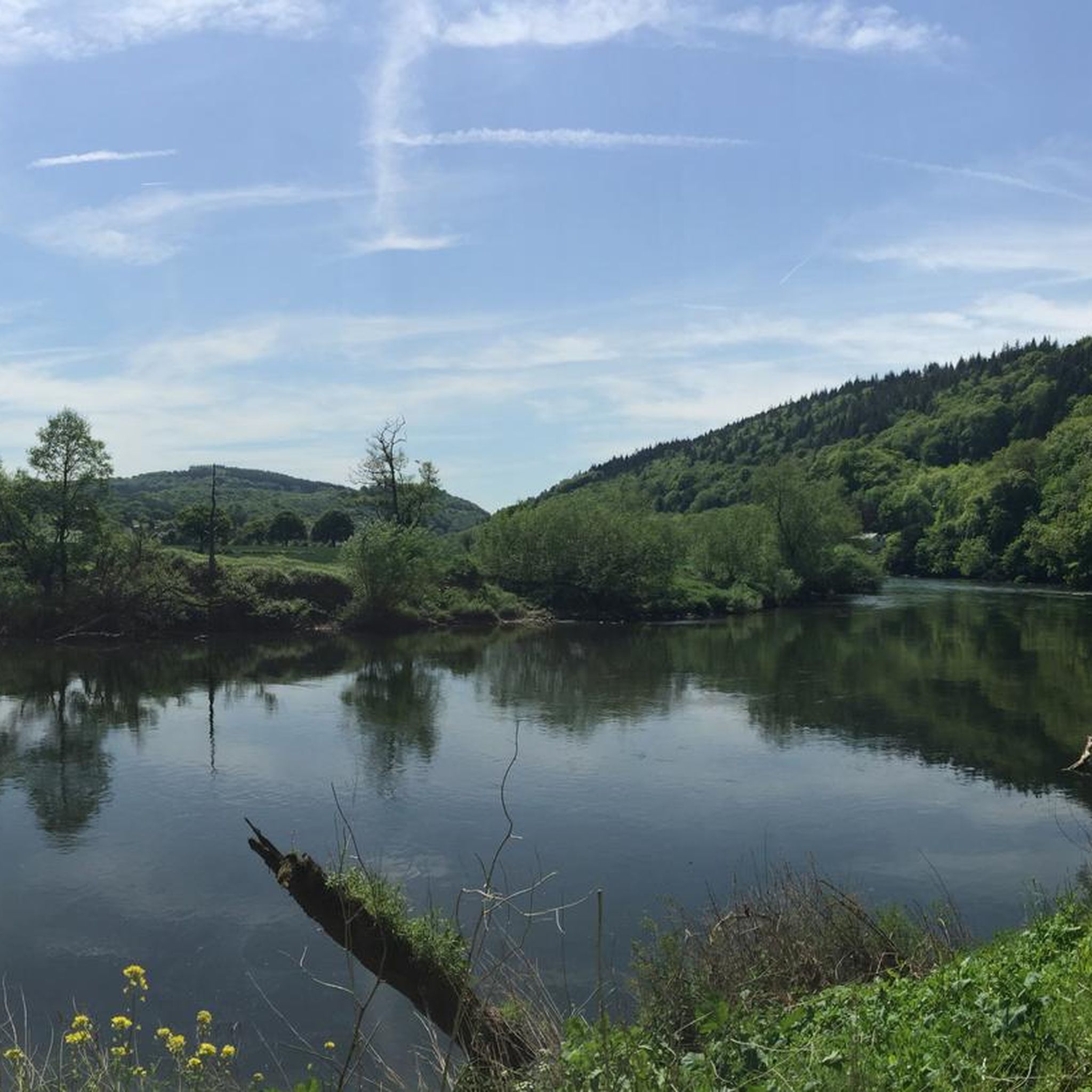
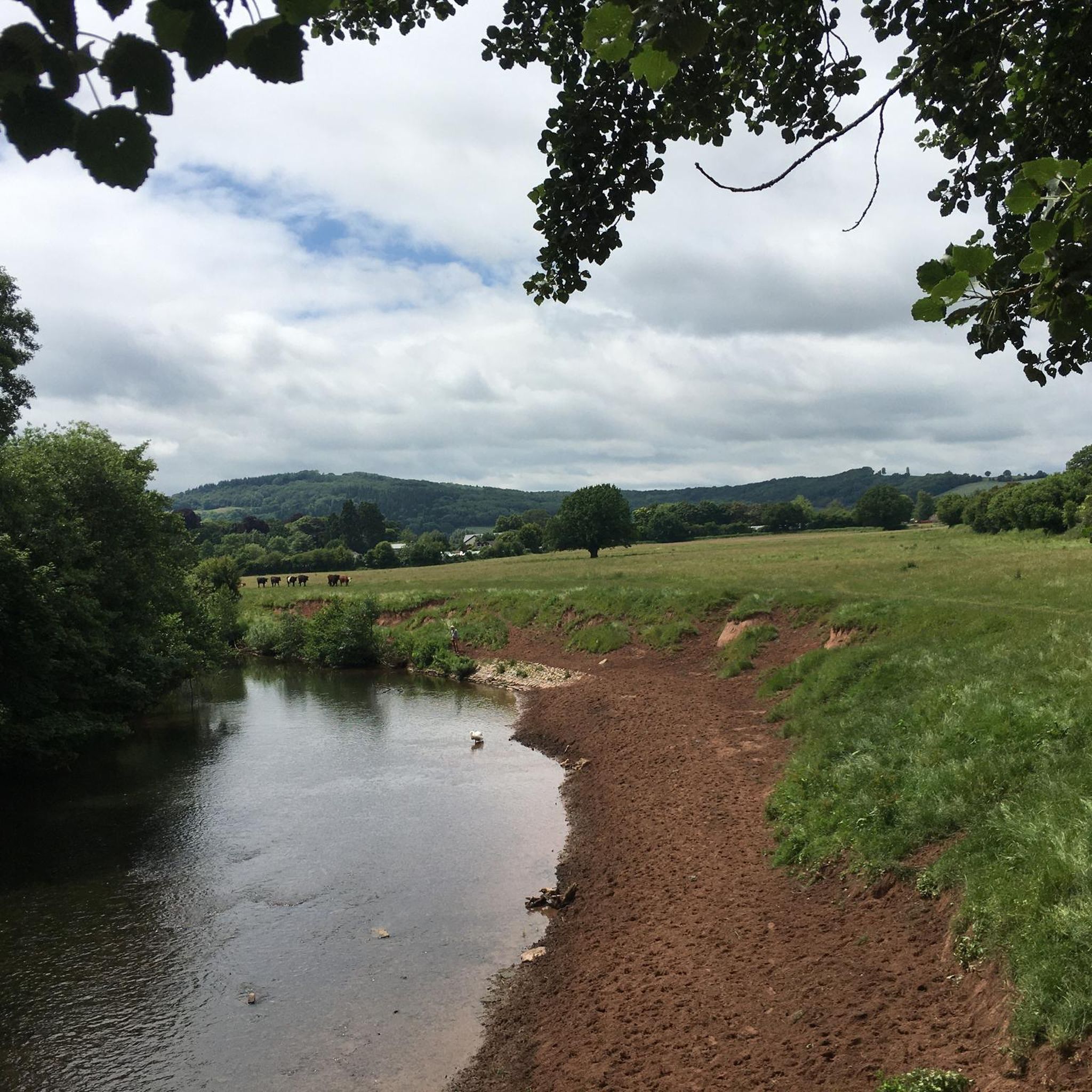
Monmouth is a charming historic market town that sits right on the confluence of Rivers Wye and Monnow. It's noted for its 13th-century gated bridge and being the birthplace of Henry V. The River Wye separates the town of Monmouth to the east from Wyesham to the west and provides a scenic wonderland for many river activities. I have finished many a DOE gold award canoe trip at this point.
0
0

Intermediate to advance ride, moderate fitness level. Some steep climbs but great fun. Can get really busy with visitors on the weekend, so arrive early. Beautiful, serene, thrilling in places, really great fun. I found the 2nd half of the ride the most enjoyable, with rollers, loads of berms, and switchbacks. Honestly a great locations, lots of different levels of trail to try after you finish on this one.
1
0

The Verderer blue run needs decent fitness & moderate skill level, we hired EMTB’s from “Wye Bikes” so was easy on the inclines. We picked up the last part of the red which was technical, narrow & the tight turns made it more challenging on a heavy emtb , Canop is a great place , food avail £8.50 for a burrito so expensive
0
0

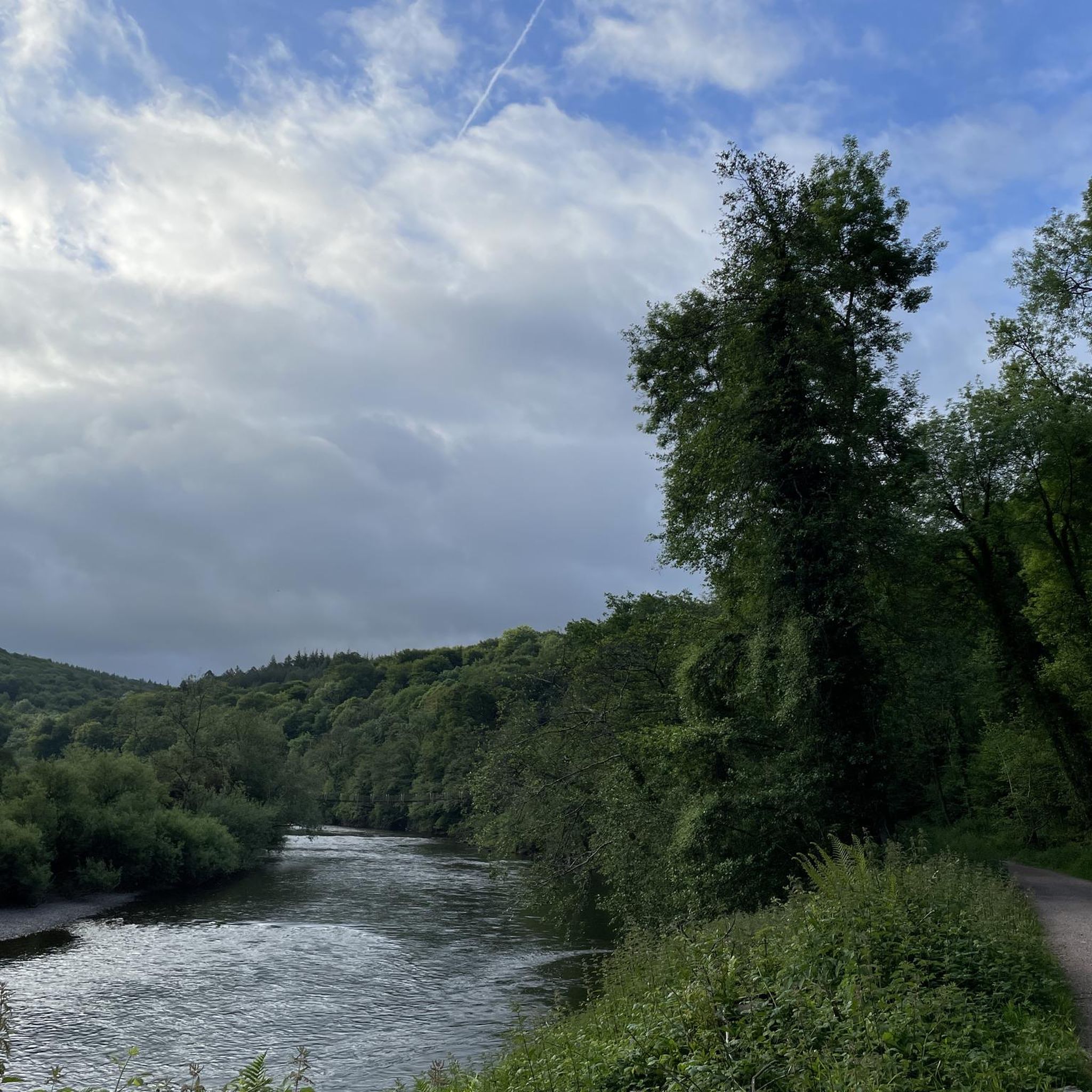
Great viewpoint gor the river Wye and Goodrich castle.
0
0

It was a very nice and enjoyable walk good if you don't like very hill walks. when we got to the caves we decided to take another footpath that said it was quicker and because it was raining and the path was next to a cliff face we were stuck for like half an hour until we found a dirt road that lead down the hill . other than that good walk and cool bridge
1
0
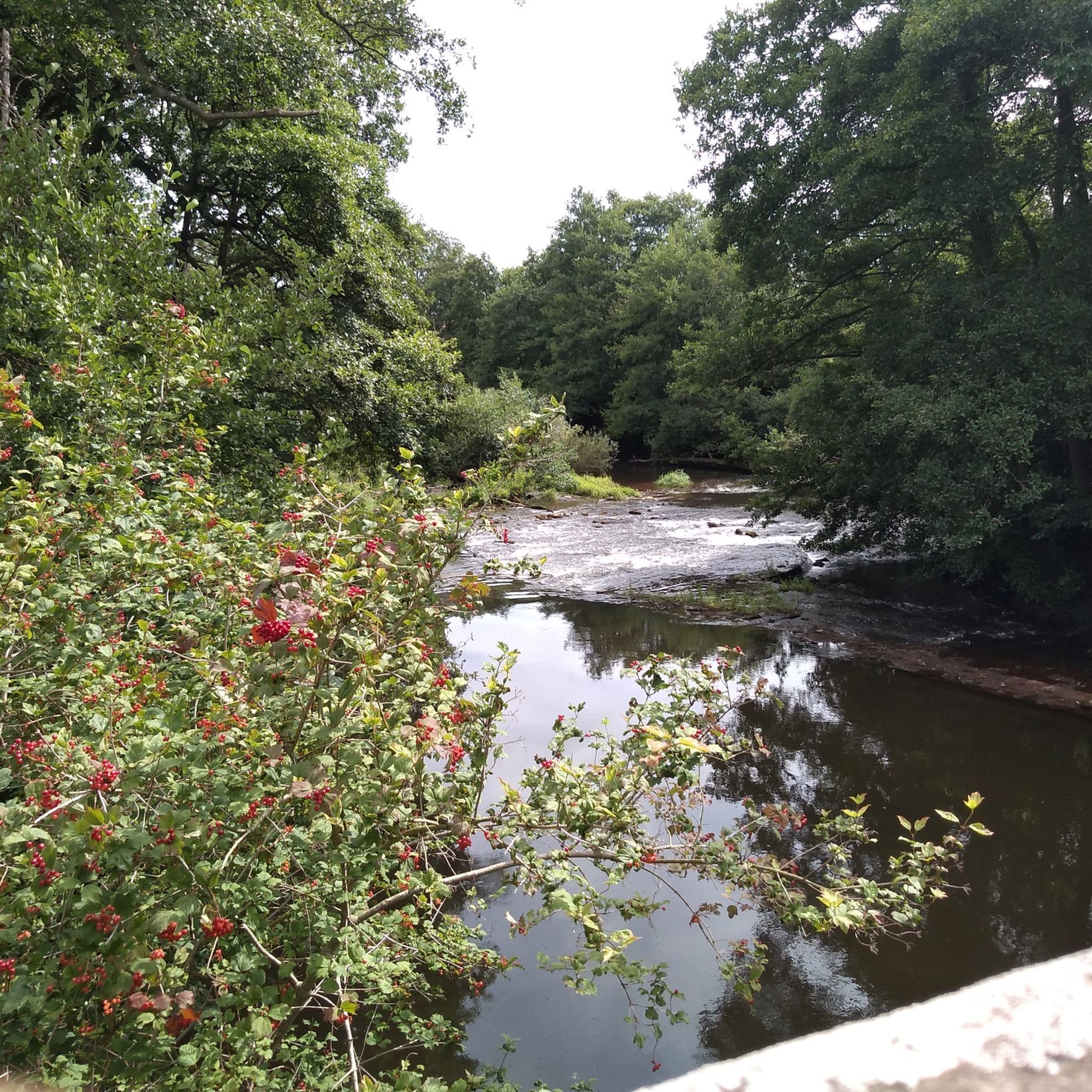
Quite a local landmark hereabouts, especially if you are on the river. An ancient crossing point that has been about in one way or another since roman times. An important bridge connection on the Wye that at one stage was tolled. Failure to pay the toll made you liable to a £5 fine. Some things have never changed!
0
0

Just to the side of the bridge are some basic bike tools and track pump
1
0

Kerne Bridge was built over the River Wye in the County of Herefordshire, England in 1825–28, on the site of an ancient ford crossing known as Flanesford. It is designated as a Scheduled Monument. Carrying the B4229 road, it connects the parishes of Walford on the river's left bank and Goodrich on the right. It is situated in the heart of the Wye Valley Area of Outstanding Natural Beauty and marks the northern end of the Upper Wye Gorge. Kerne Bridge was built on the site of a Pre-Roman ford across the River Wye. This ancient crossing came to be known as Flanesford long before 1346 when the first stone of Flanesford Priory was laid nearby "in loco Flanesford vulgariter nuncupato" (in the place commonly called Flanesford). The origins of the name Flanesford are obscure. It has been suggested that it was derived from an English-Welsh conjunction, the Welsh llan (church or enclosure) joined to the English ford, or possibly the Welsh ffordd (way) but it is more likely the prefix is the Old English flanes from flan (arrow). On the Forest of Dean side of the ford, on the left bank, a primitive manually-operated mill for grinding corn came to be established. This type of mill was known in Old English as a cweorn. The presence of the mill gave the name - The Cweorn - to the small settlement which became established there. Over time the spelling of the name of the settlement was simplified to The Quern. Records show that it was still known that way until at least 1815, but by the mid-1820s spelling simplification had further altered its name to The Kerne. Flanesford became an increasingly crucial river crossing for trade and the delivery of commodities from the Forest of Dean to the city of Hereford and south Herefordshire generally. Of most importance was the transport of iron from the Bishopswood ironworks on the left bank of the Wye just downstream from Flanesford, and of coal from the collieries of the Forest of Dean (particularly as the fast-growing population and industry of Hereford required increasing amounts of coal). As well as iron and coal the 18th and 19th centuries saw a steady growth in south Herefordshire "in the numbers of wagons and carts drawn by horses or oxen. Daily commodities of stone, brick, timber, poles, lathes, lime, ... corn, hay and manure were conveyed.". The ford, however, could only be used when the river was not in flood. While travellers on foot deemed it acceptable to wade across up to armpit depth and horses could be taken across up to chest height the river had a tendency to flood extremely quickly following poor weather upstream, which writers of the early nineteenth century wrote gave the river "a force which defies all the ordinary means of resistance and control". When Flanesford and other fords nearby were unusable, and the local ferries capable of carrying animals were unable to sail, the only alternatives for road transport were the bridges upstream at Wilton, near Ross-on-Wye, and downstream at Monmouth (Trefynwy). They were 21 river-miles apart and because of the poor roads and the mileage involved, diversions via the bridges were long, time-consuming and expensive. An alternative means of transport - using barges on the river - was equally unfeasible at times of flood, or in dry summer when the river bed was "barely covered with the stream". The 35-miles distance to Hereford by the river was also two-thirds further than by road. A further obstruction to trade was that the roads in Herefordshire were historically in a neglected and wretched condition. One Herefordshire historian has described the roads in the county as "impenetrable and impassable, churned into mud by horses hooves and deeply rutted by wheeled vehicles". Though the county's roads were being steadily improved after the mid-eighteenth century by the introduction of turnpike trusts, in 1825 the first few miles of parish roads from Flanesford towards Hereford remained in an appalling state. Source: Wikipedia
0
0
Frequently Asked Questions
What are the most popular attractions around Welsh Newton?
Visitors frequently enjoy the unique experience of crossing the Biblins Suspension Bridge, which offers lovely views upstream over the River Wye. Another highly rated spot is King Arthur's Cave, a fascinating limestone cavern with historical significance. For those seeking active adventures, the Verderers' Trail (Blue), Forest of Dean, is a popular mountain biking destination.
Are there historical sites to visit near Welsh Newton?
Yes, Welsh Newton and its surroundings are rich in history. You can explore King Arthur's Cave, a limestone cavern with evidence of human occupation dating back to the Upper Palaeolithic era. The Kerne Bridge over the River Wye is another historical landmark, an ancient crossing point that is now a scheduled monument. Additionally, the village itself is home to the historic St Mary the Virgin Church, known for its Norman architecture and as the burial place of St John Kemble.
What natural features can I explore around Welsh Newton?
The region boasts several natural attractions. The King Arthur's Cave is not only historical but also a protected nature reserve. You can also enjoy panoramic views of the Wye Valley from various points, including near Welsh Newton Common. The Wye Valley itself is a significant natural landscape, offering opportunities to appreciate the River Wye and its surrounding flora.
Are there family-friendly attractions in the area?
Absolutely. The Biblins Suspension Bridge is a fun and quirky river crossing that families often enjoy. The nearby Wye Valley Butterfly Zoo offers an engaging experience for all ages. For outdoor activities, many of the easy hiking routes around the Wye Valley, such as those found in the Easy hikes around Welsh Newton guide, are suitable for families.
What kind of outdoor activities can I do near Welsh Newton?
The area is excellent for outdoor enthusiasts. You can enjoy mountain biking on trails like the Verderers' Trail (Blue), Forest of Dean. There are also numerous hiking opportunities, including easy routes like the 'King Arthur's Cave – Biblins Suspension Bridge loop' which you can find in the Easy hikes around Welsh Newton guide. Road cycling is also popular, with routes such as the 'Skenfrith Castle – Monnow Bridge loop' detailed in the Road Cycling Routes around Welsh Newton guide.
Where can I find scenic viewpoints around Welsh Newton?
For scenic views, the Biblins Suspension Bridge offers picturesque vistas upstream along the River Wye. Yat Rock, a short distance away, is renowned for its panoramic views of the Wye Valley. Additionally, Welsh Newton Common itself provides elevated perspectives overlooking the beautiful Wye Valley.
Are there any charming towns or villages to visit nearby?
Yes, the charming market town of Ross-on-Wye is a short distance away and is considered a gateway to the Wye Valley and Forest of Dean. It features independent stores, historical architecture like the Ross-on-Wye Market House, and a picturesque setting by the River Wye. It's a great place to find cafes and pubs.
What are some lesser-known historical sites or 'hidden gems' in the area?
Beyond the main attractions, the parish of Welsh Newton itself contains at least thirty-one archaeological sites, hinting at a rich historical past. The St Mary the Virgin Church, with its Norman architecture and the tomb of St John Kemble, offers a quiet historical pilgrimage site. While now a farmhouse, Pembridge Castle, built prior to the 13th century, is another historical landmark in the vicinity.
What kind of cycling trails are available near Welsh Newton?
The area offers a variety of cycling experiences. Mountain bikers can enjoy the Verderers' Trail (Blue), Forest of Dean, which features climbs and descents suitable for different skill levels. For road cyclists, there are routes like the 'Skenfrith Castle – Monnow Bridge loop' and the 'Ross-on-Wye Market House – Foy Suspension Bridge loop', which can be found in the Road Cycling Routes around Welsh Newton guide.
What do visitors enjoy most about the attractions around Welsh Newton?
Visitors particularly appreciate the blend of historical intrigue and natural beauty. The unique experience of crossing the Biblins Suspension Bridge and the historical depth of King Arthur's Cave are frequently highlighted. Many also enjoy the challenging yet rewarding mountain biking on trails like the Verderers' Trail, and the overall scenic views of the Wye Valley.
Are there other castles to visit within a reasonable distance of Welsh Newton?
Yes, several other historic castles are accessible from Welsh Newton, offering further exploration into the region's past. These include Goodrich Castle, Raglan Castle, Grosmont Castle, and Skenfrith Castle, all providing unique insights into medieval history.
Most popular routes around Welsh Newton
Most popular attractions around Welsh Newton

Get inspired with the komoot mobile app


Explore more
Still not found the Highlight you’re looking for? See guides of the top attractions in other regions:
