The best road cycling routes around Castellfollit Del Boix
4.6
(202)
11,365
riders
142
rides
Road cycling around Castellfollit Del Boix offers routes through the Bages region of Catalonia, characterized by rolling hills and forests of holm oaks and pine trees. The area provides a serene setting for road cyclists seeking varied terrain. Routes often traverse local, less-trafficked roads, connecting to the broader Catalan cycling network. This region provides a mix of ascents and descents suitable for different cycling preferences.
Best road cycling routes around Castellfollit Del Boix
- The most popular road cycling route is…
Last updated: November 1, 2026
71
riders
Moderate road ride. Good fitness required. Some segments of this route may be unpaved and difficult to ride.
52
riders
Moderate road ride. Good fitness required. Mostly well-paved surfaces and easy to ride.

47
riders
94.9km
04:57
1,340m
1,340m
Hard road ride. Very good fitness required. Some segments of this route may be unpaved and difficult to ride.
2.0
(2)
28
riders
25.8km
01:25
500m
500m
Moderate road ride. Good fitness required. Mostly well-paved surfaces and easy to ride.
17
riders
21.9km
01:04
320m
320m
Moderate road ride. Good fitness required. Mostly well-paved surfaces and easy to ride.
Get access to more routes and recommendations from other explorers.
Already have an account?
Our route recommendations are based on thousands of hikes, rides, and runs completed by other people on komoot.
Start today with a free account
Your next adventure awaits.
Other adventures around Castellfollit Del Boix

Tips from the Community

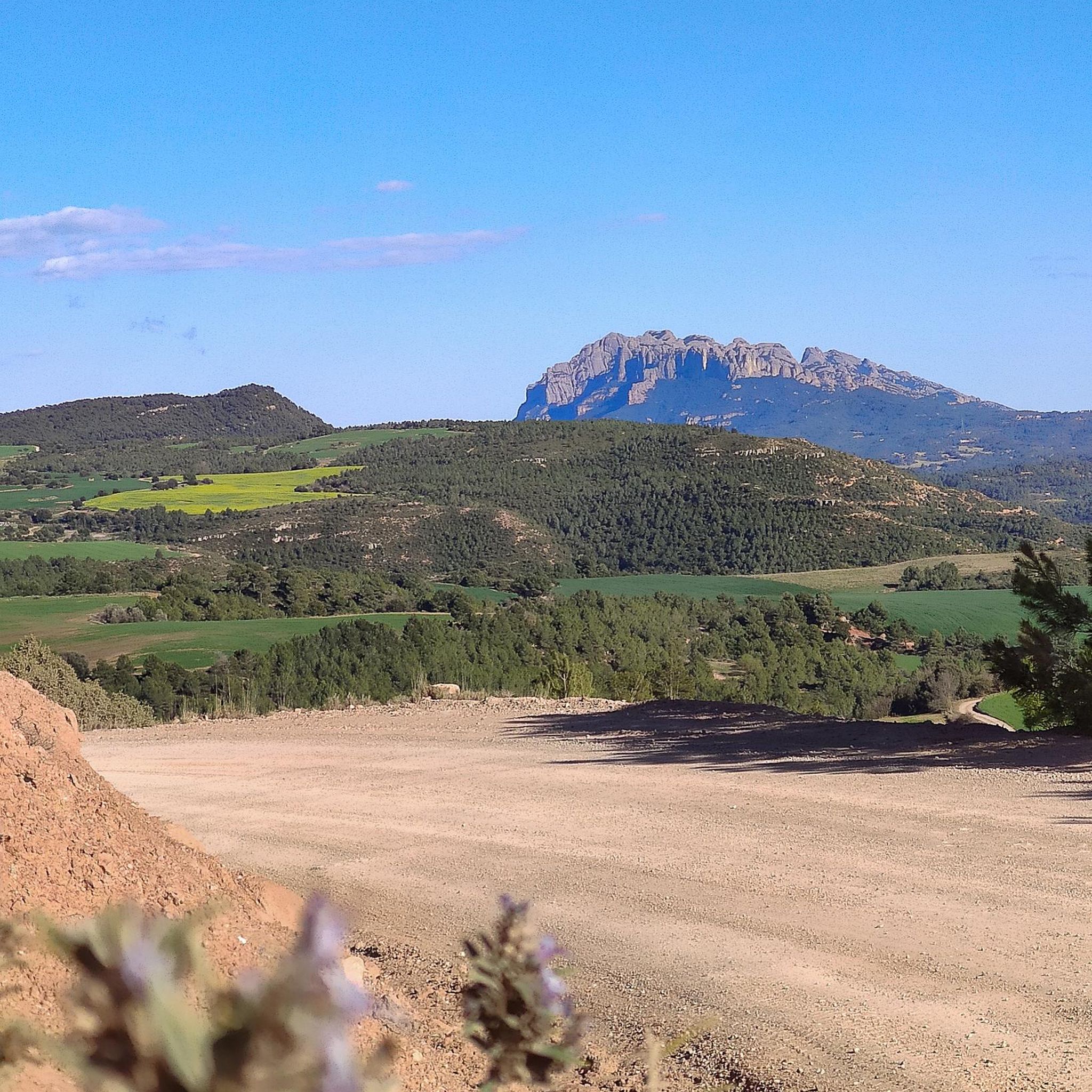
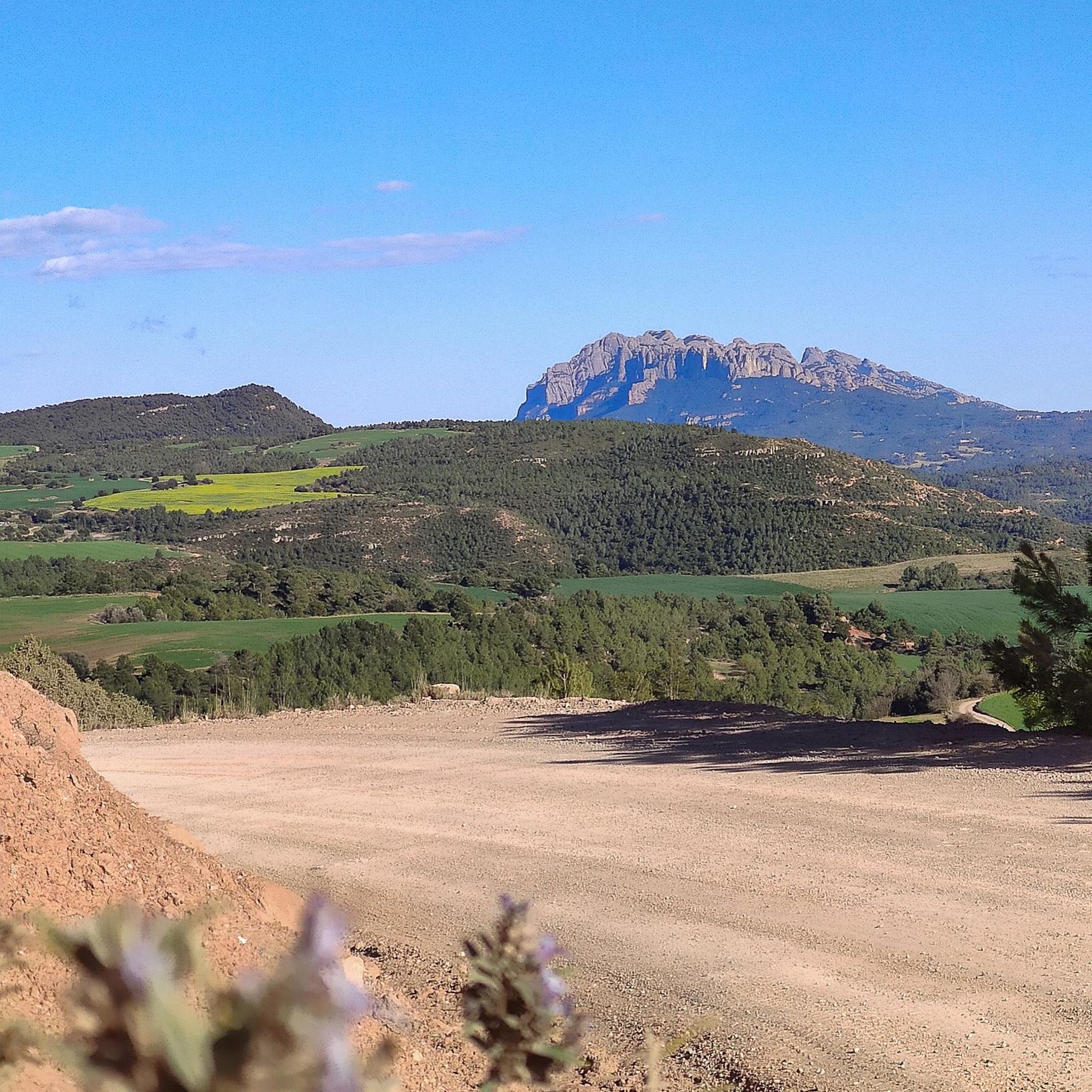
The ascent to the castle and observatory of Castelltallat is one of the cycling classics of this sparsely populated area. In this mountain range there are only a few farmhouses, which contributes to the low light pollution and makes the installation of an observatory ideal. On the ascent, the views of Montserrat are spectacular.
1
0

I grew up there, long before the observatory and the archaeological works at the Castle. When we were little, it seemed to us that the idea that there was a castle behind the church was a chimera. When it was brought to light, it seemed like magic.
0
0

You'll have good luck if you see the Magical mountain, and the descent after is fantastic :-)
0
0
Good climb to get here, and a fun descent back towards St.Salvador de Guardiola
0
0

At the first bend of the track we find an excellent viewpoint, with an information panel and from where we can enjoy good views of the Sant Amanç farmhouse, the Serra de la Vall, the summit of Xamal and the valley that it forms the Rajadell stream, through which the Eix Tranversal passes. Sant Amanç and Can Viladés are, together with the castle, one of the most important historical sites of interest in Rajadell. It is a place that preserves vestiges of the Roman period and of which it has practically the only example of Romanesque in the area. Of its architecture that we can find, several elements stand out, such as the owner's house, the beating house, the warehouse and the set of tubs. The current houses are from the 18th and 19th centuries. Located at a strategic point, where the Rajadell plan ends, the heritage complex becomes a mandatory passage point for the old rural road, right where it joined the course of the Rajadell stream. In addition, the situation for the agricultural exploitation of Can Viladés becomes unbeatable, since it is located in a space with an abundance of water and with large areas of cultivation. The whole is a grouping of several separate buildings that almost form a small town. There are three houses (the owner's, the farmhouse and a third building), distributed around a kind of square, the church of Sant Amanç, with a small cemetery, two beating houses, a mill, a set of vats and a pond among others . To find the origin of the settlement in the Sant Amanç sector we have to go back to Roman times, since a few meters away we find the Roman villa of Sant Amanç, built on an Iberian settlement. Centuries later, a sacrera would be formed, starting from the church, which would give rise to the most important population center in the area of Rajadell in the 13th century. Even so, around 1500 the number of inhabitants decreases and only two farmhouses remain: Mas Planell and Mas Mestre. In 1598 the Mas Planell was sold to Joan Viladés, who gave rise to the current name and therefore, this name of the complex would have no relation to the original Roman villa. The church, which was still under construction, would not be completed until 1632.
0
0

Entrance to the Villa of St. Joan de Vilatorrada from the C-55, nearby you can find supermarkets and some bar-restaurants for refreshments. Entrance sign to a town that is a brevet control point.
1
0

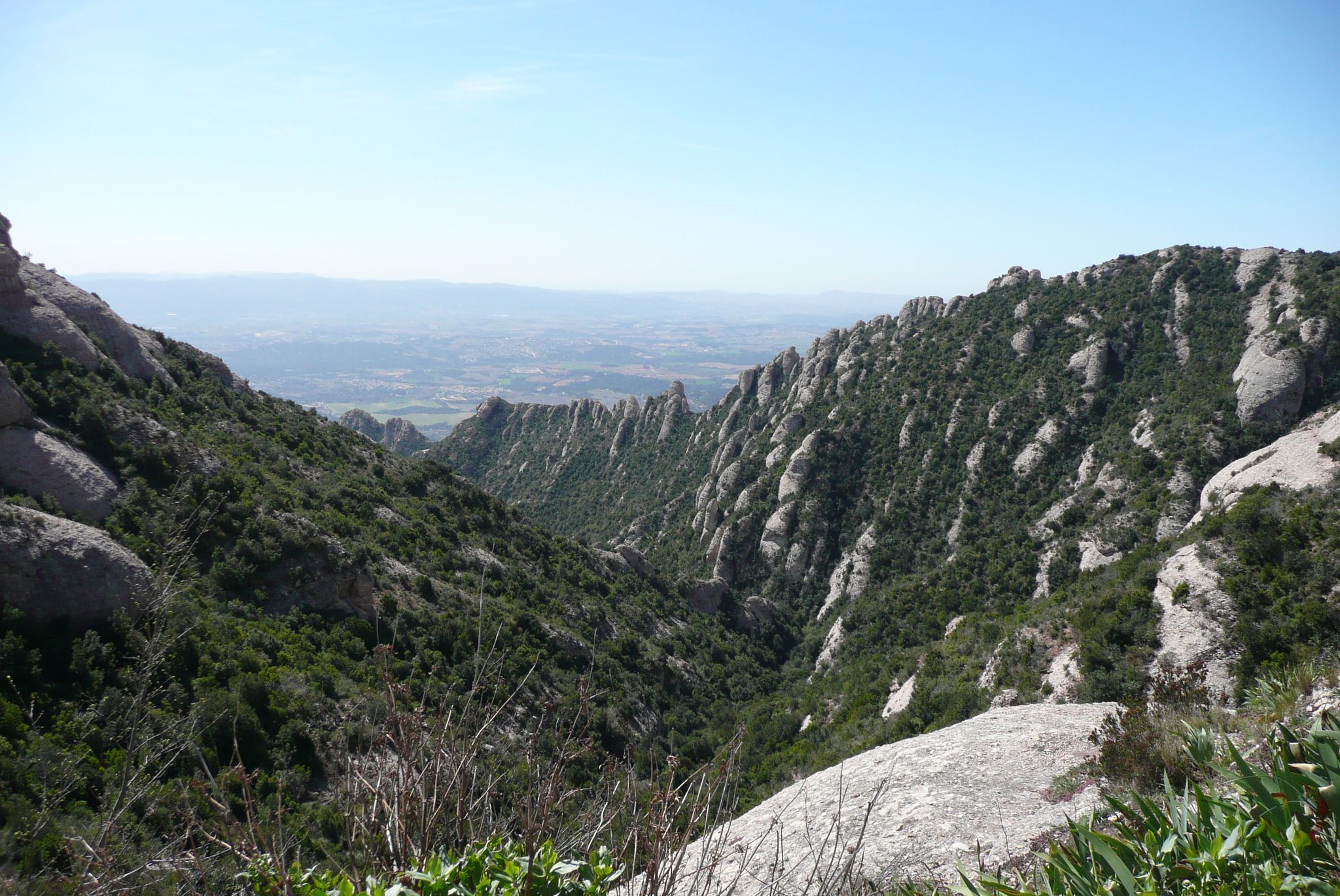
Can Maçana is an old farmhouse that gives its name to the hill in the westernmost part of the Montserrat massif. The pass is one of the natural passes between the regions of Bages and Anoia. The farmhouse belonged to the Maçana (or Massana) family during the 16th and 17th centuries. It later became the property of the Montserrat monastery (on the door you can see the coat of arms of the monastery, dated 1791). This part of the massif is known for its famous stone needles (the area is known as "the labyrinth of needles"). At this point there is a car park and it is the starting point of numerous signposted routes, such as those that go to Sant Pau Vell (ancient Romanesque church) or the historical space of the Battle of Bruc.
1
0

This section, which runs between Molins and Rajadell, parallel to the train track, is well known and frequented by local cyclists.
0
0
Frequently Asked Questions
How many road cycling routes are available around Castellfollit Del Boix?
You'll find a wide selection of road cycling routes in the area, with over 120 options available. These routes cater to various skill levels, including 7 easy, 40 moderate, and 82 difficult trails, ensuring there's something for every road cyclist.
What kind of terrain should I expect when road cycling in Castellfollit Del Boix?
The region around Castellfollit Del Boix is characterized by rolling hills and lush forests of holm oaks and pine trees. You can expect a mix of ascents and descents, offering varied terrain that ranges from gentle slopes to more challenging climbs through wooded areas and open countryside.
Are there any family-friendly road cycling routes in Castellfollit Del Boix?
Yes, there are several easier routes suitable for families or those looking for a more relaxed ride. The area offers 7 routes classified as easy, providing a good starting point for less experienced cyclists or family outings.
What are some notable landmarks or viewpoints I can see while cycling in the area?
While cycling, you can explore various points of interest. The broader region offers natural and historical sites such as the Sant Jeroni Summit and Sant Jeroni Chapel. You might also encounter ancient farmhouses and small hermitages that reflect the region's history.
What do other road cyclists enjoy most about the routes in Castellfollit Del Boix?
The road cycling routes around Castellfollit Del Boix are highly rated by the komoot community, with an average score of 4.6 stars from over 100 reviews. Cyclists often praise the serene setting, the varied terrain, and the opportunity to explore less-trafficked roads within the beautiful Bages region.
Are there any routes that offer significant climbs for experienced cyclists?
Absolutely. For experienced cyclists seeking a challenge, many routes feature sustained climbs and descents. For example, the Coll de Can Maçana – Bruc to Can Maçana Road loop from Estació de trens d'Igualada is a difficult 60.4-mile trail with significant elevation changes, often completed in about 5 hours 22 minutes.
Can I find circular road cycling routes in this region?
Yes, many of the road cycling routes around Castellfollit Del Boix are designed as loops, allowing you to start and finish at the same point. An example is the El Prats del Rei and Copons - loop near Igualada, a moderate 18.5-mile trail.
Is Castellfollit Del Boix the same as Castellfollit de la Roca?
No, it's important to distinguish between the two. Castellfollit del Boix is in the Bages region, offering a serene setting with rolling hills. Castellfollit de la Roca, located in the Garrotxa Volcanic Zone, is famous for its dramatic basalt cliff and is also a popular cycling destination, but it is a different location.
Are there any historical sites or ancient structures to discover along the routes?
Yes, the region is dotted with historical elements. Beyond natural features, you might encounter ancient farmhouses (masías) and small hermitages that offer a glimpse into the area's rich history and traditions. For example, you could explore routes near the Castell d'Òdena or the Rajadell Castle.
What is the best time of year for road cycling in Castellfollit Del Boix?
While specific seasonal data isn't provided, the broader Catalan region is renowned for its cycling opportunities year-round. Spring and autumn generally offer the most pleasant temperatures for cycling, avoiding the peak heat of summer and potential chill of winter, making them ideal for exploring the rolling hills and forests.
Are there any routes that pass by caves or unique geological formations?
Yes, the area has some interesting geological features. While cycling, you might find routes that pass near highlights such as the Cap de Mort rock formation. There are also several caves in the wider region, including Font de l'Esllavissada and Cova de l'Arcada, which could be explored as part of a longer ride or a separate visit.
Can I access the road cycling routes using public transport?
Some routes are accessible via public transport connections. For instance, routes like the La Llacuna – Font del Bosc loop and the Coll de Can Maçana – Bruc to Can Maçana Road loop start from Estació de trens d'Igualada, making them convenient for those traveling by train.
Most popular routes around Castellfollit Del Boix
Most popular attractions around Castellfollit Del Boix

Get inspired with the komoot mobile app


Explore more
Browse the best Road cycling routes in other regions.
